

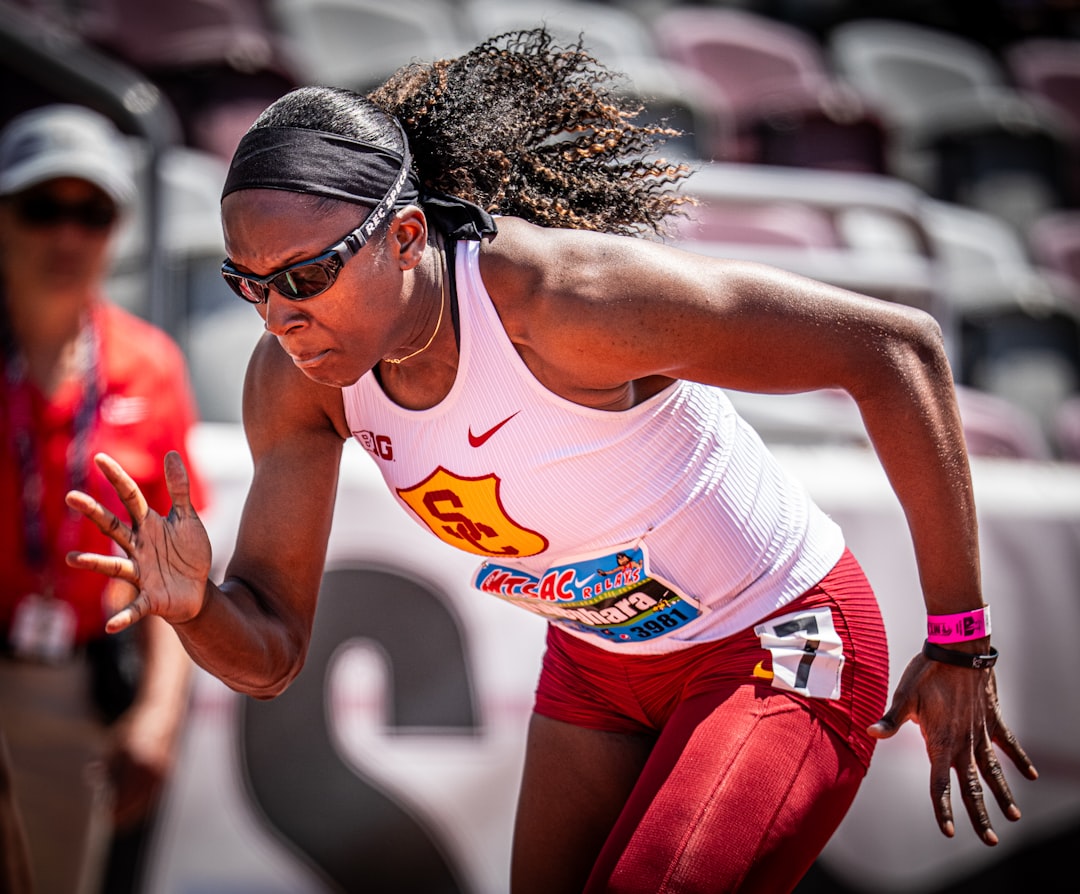




There's a jersey in the back of your closet. Maybe it's folded. Maybe it's hanging on the door where you can actually see it. Either way, you know exactly where it is.
And every fall — especially around homecoming — something pulls you toward it.
Understanding why former athletes wear sports gear isn't just a casual question. It touches something real about who you are, how you built yourself, and why a number on a piece of fabric can still mean something two, ten, or thirty years after the last game. This isn't about nostalgia in the soft, fuzzy sense people use to dismiss things. It's about identity — one of the most powerful psychological forces that shapes human behavior.
If you've ever felt that pull, this piece is for you.
Athletic Identity Is Real — And It Doesn't Retire When You Do
Sport psychologists have a specific term for what you're carrying: athletic identity — the degree to which a person defines themselves through their role as an athlete. It's measured, studied, and documented. And critically, it doesn't simply dissolve when eligibility ends, the final whistle blows, or the last season closes.
Research published in the Journal of Applied Sport Psychology has tracked how strongly athletes internalize the athlete role — and found that those with high athletic identity experience a complicated, sometimes turbulent transition out of competitive sport. Not because they were weak or unprepared, but because the identity was genuinely real. It was built through thousands of hours of practice, competition, failure, and teamwork. You don't unmake that with a graduation ceremony.
What most people don't understand about athletic identity is that it operates on multiple levels simultaneously:
- Social identity — you were someone specific on that team. You had a role, a reputation, a number. People knew what you brought.
- Physical identity — your body learned to do things that most people's bodies never did. That muscle memory doesn't disappear.
- Emotional identity — competition, pressure, and the particular joy of executing something difficult under stakes left marks that define how you process challenge for the rest of your life.
Wearing gear that says you played isn't a failure to move on. It's an accurate reflection of an identity that is still genuinely yours.
The Homecoming Effect: Why Fall Brings It Forward
There's a reason homecoming season is when the jersey comes out of the closet.


Homecoming is one of the few cultural moments that explicitly invites former athletes back into their competitive story. It's structured memory — the school, the town, the community saying: what you did here mattered. That social permission unlocks something that might otherwise stay dormant. You're not reaching for the jersey because you're stuck in the past. You're reaching for it because the present moment specifically calls that part of you forward.
Seasonal cues are powerful in identity psychology. The smell of fall air, the sound of a marching band, the particular quality of October stadium lights — these are sensory anchors tied to some of the most emotionally intense experiences of your life. They're not triggers in a negative sense. They're doorways.
In our experience talking with former athletes across dozens of sports, homecoming is consistently the moment when people feel most clearly that two things are both true at once: I'm not that player anymore and I am absolutely still that player. Both statements coexist without contradiction. That's not confusion — that's the full picture of a complex identity.
What the Gear Actually Communicates
When a former athlete puts on gear that references their playing days — a letterman jacket, a custom jersey, a custom number — they're communicating something specific to at least three different audiences.
To themselves: The gear is a physical anchor to a self-concept that still has value. Psychologists call this self-affirmation — using symbols and artifacts to reinforce a positive self-view when it might otherwise be challenged. Wearing the gear doesn't mean you think you could still play at that level. It means you acknowledge that the person who did play at that level is still part of who you are.
To their community: There is a specific social language in athletic gear. A former player showing up to homecoming in their team's colors, or better yet their actual number, communicates belonging — I was part of this, I earned this — in a way that words rarely match. It's a credential and a greeting simultaneously.
To younger players or fans: Former athletes wearing their gear model something important: that playing matters beyond the last game. That the work you put in becomes part of you permanently. When a former player shows up visibly proud of their athletic history, they're telling current players that this identity is worth building and worth keeping — and when that current player is your own kid, the handoff of athletic identity becomes its own profound experience.
Here's a distinction that often gets missed: some former athletes wear their gear everywhere, and some almost never wear it at all — and both are doing the same thing. Sport sociologists who study what they call sporting consecration objects have noticed that the jersey in the back of your closet is often treated less like clothing and more like something set apart. For some, wearing it is everyday self-expression: the homecoming game, the alumni tailgate, the casual Saturday. For others, that same jersey is effectively sacralised — kept folded, saved for a moment that feels worthy of it, because wearing it "is for something very precise" and they don't want to dull its importance by making it ordinary. That hesitation isn't indifference. It's a different resolution of the same tension. Both people are telling the truth about an identity that still matters: one wears it into the world, the other keeps it safe from the world. The jersey means the same thing either way.
Marcus T., 34, Was Running Late to His High School's Homecoming Game
He almost didn't change. He'd come straight from work, dressed in business clothes, feeling like the gap between who he was at 17 and who he was now was wider than the parking lot. His wife had packed his old jersey in the car — a custom jersey she'd had made with his actual number because the original had long since disappeared. He put it on in the parking lot, halfheartedly.
By the time he walked through the gate, three former teammates had spotted the number and crossed the field to find him. He didn't feel late. He felt like he'd arrived exactly on time, exactly as himself.
That jersey didn't lie about who he is. It told the truth about who he's always been.
The Science Behind "Once an Athlete, Always an Athlete"
The cliché exists because it's accurate. Here's the specific mechanism.
Athletic training during developmental years — particularly from adolescence through early adulthood — coincides with the period when identity is most actively being constructed. According to developmental psychologist Erik Erikson's framework on identity formation, the experiences that occur during this stage become foundational to how a person understands themselves across a lifetime. Sport provides exactly the conditions Erikson identified as identity-forming: clear roles, earned status, group belonging, measurable achievement, and the experience of navigating failure.
This means that for athletes who competed seriously during those years, the athletic identity wasn't layered on top of a pre-existing self. In many cases, it was the primary self being constructed. The team, the competition, the discipline — these weren't extracurricular. They were the curriculum.
Which explains something important about why former athletes wear sports gear even decades later: they're not dressing up as someone they used to be. They're dressing as someone they still are, expressing a layer of identity that was built too deep to simply retire.
The gear is not a costume. It's a document.
How Athletic Identity Shapes Life After Sport
This matters beyond homecoming weekends.
Former athletes consistently report that the traits built through sport — coachability, tolerance for discomfort, competitive drive, team orientation — don't just appear in athletic contexts. They show up in careers, relationships, parenting, and the way people handle adversity. The identity doesn't stay in a box labeled "sports." It permeates.
That's why the gear carries weight. It's shorthand for a whole set of values and capacities. When a former athlete displays their athletic identity, they're not waving a flag for a specific sport. They're signaling an entire framework for how they move through the world.
Consider what wearing a jersey with your name and number actually asserts:
- I committed to something difficult
- I showed up when it was hard
- I was part of something larger than myself
- I earned this identification
Those statements are as true today as they were the day you last wore it. Nothing that happened after sport erased them.
And there's one more reason this matters, and it's worth naming precisely. The people who worry that wearing your number means you "peaked in high school" are aiming at a real idea but missing the target. Sport psychologists don't flag high athletic identity as the problem — they flag exclusivity: building yourself so completely around being an athlete that no other parts of the self ever got developed. The field has a term for the unhealthy version: identity foreclosure, committing to one role so early and so fully that other roles never got a chance to form. That's the actual line. Wearing your number, showing up to homecoming as yourself, carrying the identity you built into the rest of your life — none of that is foreclosure. It's the opposite: it's integrating a real part of yourself into a full, continuing life. The concern is only ever when the athletic role is the only role. If your jersey is one true thing among many, you're not stuck. You're whole.
The Custom Jersey and What It Resolves
Here's a practical reality: the original jersey is usually gone. Lost in a move, worn out, borrowed and never returned, or simply not something that was preserved carefully enough at 18.
This creates a specific tension for former athletes — especially around homecoming season — where the identity is clearly present and the desire to express it is real, but the physical artifact that anchored it has disappeared.
A custom jersey resolves that tension precisely. Your name. Your number. Your school's colors. Made the way you actually remember it, not a generic approximation.
There's nothing nostalgic or backwards-looking about having one made. It's a present-tense decision about how you want to represent yourself — at homecoming, at alumni events, at the kind of casual Saturday where you just want to feel like the full version of yourself.
In our experience, former athletes who have a jersey that accurately reflects their playing identity describe a specific relief — not euphoria, not sentiment exactly, but accuracy. The gear matches the internal reality. That alignment matters more than most people expect.
Why This Is Stronger at Homecoming Than at Any Other Time
Most of the year, the athletic identity runs quietly in the background. It shapes behavior and decision-making without demanding visible expression. But homecoming creates conditions where that identity wants to surface — and the social environment actively supports it doing so.
Four things converge at homecoming that don't converge at other moments:
- The physical return to the specific place where the identity was built — the field, the gym, the court. Place memory is real and powerful.
- Community recognition — other people who knew you as that athlete are present. Your social identity is legible in context.
- Generational contrast — watching current players compete creates a specific reflective state where you're simultaneously in the past and the present.
- Permission — homecoming is socially structured to celebrate athletic history. You're not being self-indulgent by showing up in your number. You're doing exactly what the event is for.
These conditions make homecoming the single moment in most former athletes' year when wearing sports gear feels not just appropriate but genuinely right. The psychology isn't manufactured. The event creates the conditions, and the identity fills them.
Your jersey is still out there waiting.
Design yours in minutes and see your name and number just the way you remember it.
Not ready to design yet? See how they turn out in the gallery of jerseys other former athletes have made.
Frequently Asked Questions
Is it weird to wear your old sports gear if you haven't played in years?
No — and the psychology backs this up. Athletic identity is a genuine, documented psychological construct that persists long after competitive playing ends. Wearing gear that reflects your playing history isn't a failure to move on; it's an accurate expression of an identity that was built during some of the most formative years of your life. Most former athletes report that the identity doesn't disappear — it just finds different expressions. The gear is one of the most direct and honest ones.
Why do former athletes feel such a strong pull during homecoming specifically?
Homecoming creates a specific convergence of conditions that don't exist at other times of year: physical return to the place where the identity was formed, the presence of a community that recognizes that identity, and explicit social permission to celebrate athletic history. Add the sensory anchors of fall — the stadium lights, the band, the particular smell of October — and you have a powerful collection of triggers that bring a dormant identity fully forward. The pull isn't random. It's a response to a very specific set of environmental and social cues.
What's the difference between nostalgia and athletic identity expression?
Nostalgia is a generalized emotional longing for the past — it's soft, diffuse, and fundamentally about wishing things were different than they are now. Athletic identity expression is something more specific and present-tense: it's the accurate representation of a self-concept that was built in the past and is still genuinely operative today. A former athlete who wears their number isn't wishing they were 17 again. They're asserting that the person who played at that level is still the person standing in front of you. That's not nostalgia. That's clarity about who you are.
Can getting a custom jersey actually replace the feeling of the original?
In some ways it's better. The original jersey was never made for you the way a custom jersey is — it was a uniform, sized for availability, probably not preserved. A custom jersey is made specifically with your name, your number, your colors, just as you remember them. Former athletes who've had custom jerseys made consistently describe it as more accurate to their mental image of their playing identity than the original uniform ever was. The feeling isn't replacement — it's resolution. The internal identity finally has an external representation that matches it.
See also: athletic identity after high school | personalized gear that makes a former athlete feel seen | what saying 'I played' really means | what to do with your old varsity letter jacket | the difference between a sports fan and someone who actually played