

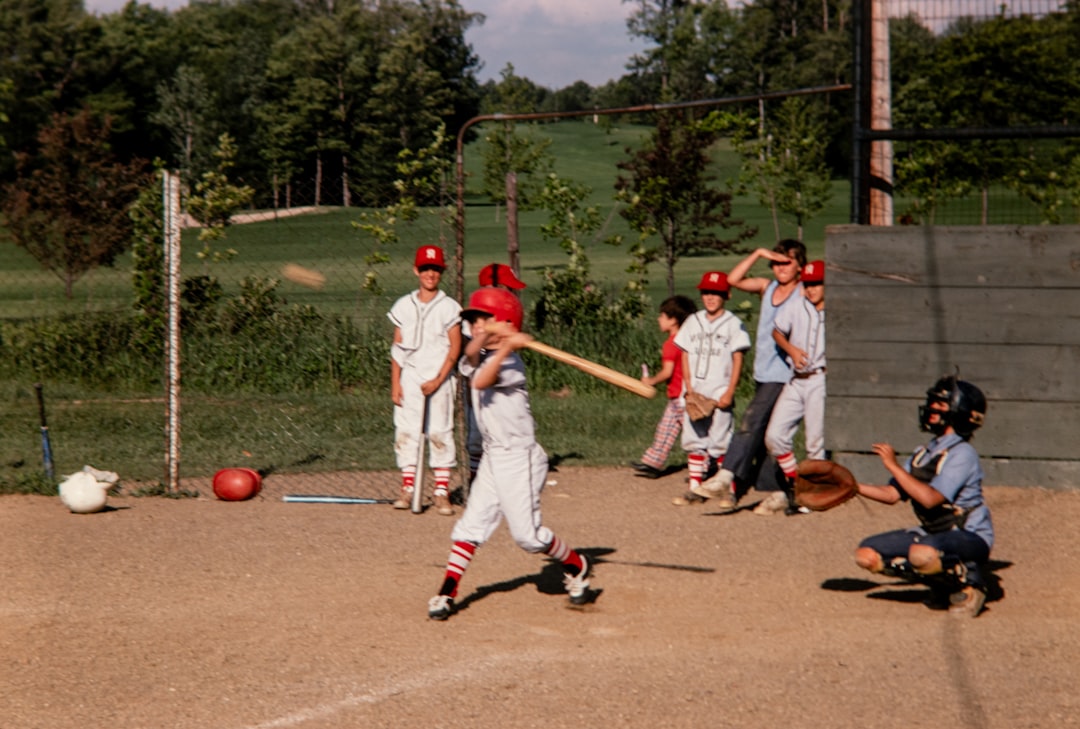




Former athlete parenting sports is one of the most disorienting chapters of adult life — and almost nobody talks about it honestly.
Not because it's painful, exactly. Because it's complicated in a way that doesn't fit neatly into the stories we tell about parenthood or about sport. You expected to feel proud. You expected to feel invested. What you maybe didn't expect was the way your own playing days would come flooding back — not as nostalgia, but as something more physical. Something that lives in your hands and your legs and the part of your chest that used to tighten before a big game.
That's the handoff. The moment your athletic identity — which you carried quietly through career changes and mortgages and the slow drift of ordinary life — suddenly has somewhere new to go. Or maybe discovers it doesn't. And you have to figure out which it is before the next practice.
This piece is for the former athletes standing on those sidelines right now. The ones who played and know what that meant — and are now watching someone they love begin the same journey from the very beginning.
The Athletic Identity You Never Actually Put Down
Every former athlete remembers their last game differently. Some knew it was the last one. Most didn't get that clarity until much later, when the absence became undeniable.
What almost nobody tells you is that the identity doesn't leave when the uniform does. You don't stop being an athlete because you stopped competing. A 2019 study published in the Journal of Applied Sport Psychology found that former elite athletes who strongly identified with their athletic role experienced the transition out of sport as a genuine identity disruption — not just a change in schedule, but a loss of self-concept. Not a phase. A reorganization of who they understood themselves to be.


You built something real during those years. Not just a record or a highlight reel — a way of reading competition. A relationship with pressure that most people never develop. A fluency with effort that civilians, people who never played, sometimes can't quite access. You learned how to lose and come back the next day. How to win without losing your grip on yourself. How to trust the person next to you when the margin was thin.
That doesn't disappear. It waits.
And then your kid pulls on a uniform for the first time — and it wakes back up. When your kids start playing, the memories you thought you'd filed away come roaring back — often when you least expect them.
If you played, you know the exact feeling. It isn't pride alone. It's recognition. The body remembers things the brain had filed away years ago.
What the Handoff Actually Feels Like From the Inside
The handoff is not a single conversation. It's not a decision you consciously make on a particular Tuesday. It happens in pieces, across seasons, in small unremarkable moments that accumulate into something significant.
It starts with something minor. You're showing your kid how to position their hands and the muscle memory fires before you've finished the thought. You're watching them run a drill and you find yourself counting their footwork the way a coach once counted yours. They come home after a loss and you feel it in your stomach — that specific, hollow weight you recognize from your own playing days — and you realize something important: you are not a neutral observer here.
You are in it.
The handoff is the moment you recognize that your playing days aren't over in the way you assumed they were. They are transformed. The story continues — different character, different jersey number, the same essential questions running underneath it all.
But the handoff can also go sideways. You've seen it from the outside, even if you haven't named it. The parent who cannot stop coaching from the bleachers — the pull to coach your kid's team even when nobody asked you to. The one whose face tells their kid after every possession whether they succeeded or failed. These aren't bad people with bad intentions. They are former athletes who received the handoff before they were ready and had nowhere productive to put what came with it.
The Two Things the Handoff Requires
Two things determine whether the handoff becomes a gift your child carries forward or a weight they learn to perform around.
Self-awareness comes first. Not self-criticism — self-awareness. The same honest read of the situation you applied to your own competition. When you feel frustration watching your kid struggle with something that came naturally to you, you need to know whose need is actually driving that frustration. When you can't stop analyzing the drive home, ask who that analysis is serving. Reading the real situation accurately is not a soft skill. It's the foundational discipline.
Generosity comes second. Not the sacrificial kind — you've already given the years. The releasing kind. Your athletic story is yours. Your child's athletic story is theirs. The handoff is the offering of everything you learned — the resilience, the respect for the work, the ability to sit inside hard moments — without attaching the obligation to use it the way you did.
That distinction is the whole game.
What You Know That Other Parents on That Sideline Don't
Here is what separates former athletes from every other parent watching practice: you know what it actually costs.
Not the romantic version — not the highlight packages and the award banquets. The real cost. The early mornings that felt meaningless until they didn't. The practices that happened in weather nobody would have chosen. The coaches who demanded things from you that felt unreasonable until years later when you understood exactly what they were building. The teammates who became permanent parts of how you understand loyalty. The losses that taught you things winning never could have reached.
You know that sport doesn't build character the way the banners in the gym claim it does. Sport reveals character. It constructs the conditions in which character either emerges or doesn't — depending entirely on what a young person chooses to do with the hardest moments.
You know this from the inside. You were that young person. You made choices in those moments that you still think about, for better or worse.
That knowledge is the real inheritance you're positioned to pass down. Not the mechanics of a release or a defensive stance — any qualified coach handles that. What you carry is the intangible curriculum: what you do when you're down late and the crowd has gone quiet. How you treat the teammate who took your spot. Whether you compete against yourself or against everyone else, and why that distinction changes everything about the experience.
If you played, you know the difference between those two ways of competing. That knowledge, offered at the right moment in the right way, is worth more than any technical instruction you could give.
Darius's Story: The Moment on the Sideline
Darius M., 41, played college basketball and spent the years after building the kind of career that kept him too busy to examine what he'd left behind on the court. Then his son Marcus made a travel basketball team at age ten.
The first real game, Darius stood in the bleachers and felt something he hadn't accessed since his playing days — not nervousness exactly, something older and more specific. He recognized it as the sensation he used to get in the tunnel before tip-off. His body, for a moment, thought it was going to play.
He had to decide in real time, without a playbook, what to do with that feeling. He didn't shout instructions. He didn't run a postgame film session on the drive home. He watched Marcus make a defensive mistake, recover, and execute the right read on the very next possession — and Darius said he felt something settle in him. The recognition that Marcus was building his own relationship with the game, and that Darius's job was to be someone worth talking to afterward.
That's what a good handoff looks like from the inside.
The Jersey Question
There is a conversation that happens in former-athlete households at some point during this chapter. It's rarely dramatic. It might happen in the car on the way to a registration, or at a kitchen table filling out a form with a number field.
Your kid wants to pick their number. And you have a number. You've always had a number. It lived on your back for years. It's in the photo in the hallway. It's in the box in the closet with the other things from that time. And if you're honest with yourself, it's still somewhere in how you think about who you are.
What do you do with that?
Some former athletes share the number and the story — not as expectation, but as connection. The number becomes a thread in the family's story, worn by someone who chose it knowing what it meant before it meant something to them.
Some kids pick a completely different number. And that's the handoff too — the recognition that they are writing their own story, and the right response from you is to hand them the pen without conditions.
What matters is that the conversation happens at all. That the jersey is treated as an opportunity rather than just equipment. The specific, honest conversations about what the game meant to you — what you loved, what you lost, what you'd do differently knowing what you know now — are the part of former athlete parenting sports that nobody puts in the brochure. Knowing how to talk to your kids about your own playing days without making it about you is the difference between connection and a monologue.
They are also the part that leaves the most lasting mark.
What Your Kid Actually Sees When They Look at You
This is the question worth sitting with.
When your child looks at you from across the field, or across the dinner table after a hard game, or in the rearview mirror during the drive home from a loss — what are they reading?
They see someone who played. Who has a real, embodied relationship with competition. Who has been where they are standing, at least in the ways that matter most. That's already significant. That's a form of connection most parents in those bleachers cannot offer.
But they're also reading something underneath that. They're watching how you carry your athletic past. Whether it is a source of genuine warmth and meaning for you, or a source of unresolved grief, or a standard you have unconsciously decided they must live up to. Children are precise readers of emotional temperature. They feel the atmosphere of the car ride before they process a single word.
If they see someone who loved the game and carries that love without conditions — someone for whom the best memories live in the effort, the team, the specific texture of competing, not just in the outcome — they will feel permitted to have that same relationship with the sport.
If they sense someone whose identity is still unresolved around what they gave to sport and what they got back, they will carry that weight without being able to name it.
This is not blame. Every former athlete is somewhere in the ongoing process of understanding what the playing years meant and what they mean now. That process is legitimate. The invitation is simply to do it consciously — to know that it's happening, so that the sideline and the number conversation and the drive home can be what they should be: the opening chapters of your child's story, not an unfinished draft of yours.
The Legacy That Outlasts the Sport
The percentage of kids who continue playing their parent's specific sport through high school and beyond is modest. Most youth athletes, at some point, make different choices. They find other sports, other interests, or simply move through the version of competition that felt right at ten and discover something else pulling at them by fifteen.
What lasts is not the sport. What lasts is everything the sport was a vehicle for carrying.
The work ethic you modeled in how you talked about your own playing days. The way you framed competition — as something that reveals rather than defines a person. The specific moments when they came to you after a bad game and you knew exactly what to say, because you had been exactly there yourself. The number of times you chose their enjoyment over your preferred outcome.
Those are what they take into whatever comes next. That is the athletic legacy worth intentionally building.
Former athlete parenting sports is not a project of creating a smaller version of your own athletic career. It's the opportunity to become the guide you wish someone had been for you — someone who had genuinely been through it, who could translate the experience without sanitizing it, who understood that the hardest thing in sport is never the opponent across the field.
The hardest thing is learning what you're actually made of when it matters.
And the most valuable thing a former athlete parent can offer is being someone who has already learned that — and still shows up, without making their kid carry the proof.
That's the handoff. It starts the moment they put the jersey on. And it continues, in the small moments, long after the last game of every season.
Your jersey is still out there waiting.
Design yours in minutes and see your name and number exactly the way you remember it.
Not sure where to start? Browse the gallery of jerseys other former athletes have already designed.
Frequently Asked Questions
How do former athletes avoid projecting their own expectations onto their child's athletic experience?
The most direct approach is to separate your memories from their present — actively and repeatedly. Before games and practices, remind yourself that your child is not running your story forward. They are running theirs. When you notice urgency or frustration rising in yourself, ask one honest question: is this about their performance, or about my identity needing a particular outcome? That question, asked with real honesty and asked often, changes the quality of every interaction on the sideline and in the car afterward. Former athletes who do this work consciously tend to become the parents their kids genuinely want in the stands.
Is it normal to feel grief when your child starts playing the sport you played?
Yes — and far more common than most former athletes acknowledge out loud. Watching your child begin a journey you remember at a cellular level can surface genuine grief for the version of yourself that lived inside that sport. The competitive edge, the physical ability, the specific community of a locker room — those things don't return through your child's career, and some honest part of you knows it. What you're grieving is not weakness. It's the clear-eyed recognition that a formative chapter is complete, and that what comes next is different and valuable, but not the same thing. Letting yourself feel that honestly, rather than converting it into coaching pressure, is almost always the more useful path forward.
What do you say when your child wants to quit the sport you played?
Listen before you respond — especially when the sport is one that mattered deeply to you. The instinct to talk them out of it is understandable and worth resisting until you understand what they're actually telling you. Wanting to quit a sport at a young age is rarely about the sport itself. It is usually about a coach, a social dynamic, a loss of enjoyment, or something else pulling their attention. Ask the specific questions: what stopped being fun? Is there something you want to try instead? Give their answer the same genuine weight you would have wanted your own answer to receive. The goal was never a child who plays your sport. The goal is a child who trusts you enough to tell you the truth.
How can a former athlete use their playing experience as an advantage in parenting without it becoming pressure?
The advantage lives in translation, not instruction. You know what it feels like to fail in front of people and come back the next day. You know what a locker room actually teaches that no classroom reaches. You know the difference between a coach who is demanding because they believe in you and one who is demanding because they can be — and that distinction only becomes clear in retrospect. Share those translations when the moment calls for them, not as lessons delivered from authority, but as honest accounts from your own experience. "Here's what I eventually figured out when something like that happened to me" is a fundamentally different conversation from "here's what you should have done." The first creates connection. The second creates distance.
See also: athletic identity after high school | the grief that comes with the end of your playing career | what high school sports taught you that nothing else could | the psychology of athletic nostalgia that never fully goes away