




There's a moment in volleyball that doesn't happen in most other sports.
It's not the kill shot. It's not the dive save. It's the half-second before the ball reaches you — when you know, before your body has even committed to the movement, that your teammate is already moving into position behind you. You don't look. You don't have to. You just know she's there.
That half-second is where the volleyball teamwork identity lessons actually live: in the moment when you let go of self-reliance completely and fold yourself into something larger than your own skill set, not in the drills or the film sessions.
Most sports celebrate individual excellence within a team structure. Volleyball dismantles individual excellence as a concept. The game doesn't allow it. A single player cannot get a ball to the floor in three contacts alone. The sport is structurally, architecturally, irreversibly relational. And if you played it long enough — through a full season, through the grind of back-to-back tournaments, through losses that felt personal and wins that felt collective — it did something to you that didn't undo itself when the season ended.
It taught you to trust the person next to you before you trusted yourself.
And for a lot of us, that was the first time anything had ever asked us to do that.
The Game That Refuses to Let You Go It Alone
Every former athlete remembers the moment they understood what their sport was actually asking of them. Beyond the rules and the technique, the deeper ask: the thing underneath the drills that was really the whole point.
In volleyball, that moment usually happens quietly. You're in a rotation. The serve comes in hot and deep. Your libero is already sprinting. Your setter is already reading the trajectory. Your outside hitter is already loading her approach. And the entire sequence — pass, set, swing — unfolds in under two seconds with a precision that looks like choreography but feels like something else entirely.


It feels like language.
A language you learned by existing inside the same space as five other people, day after day, until their movement patterns became a grammar you processed faster than thought. You absorbed it; you never had to study it.
Volleyball builds this kind of relational fluency at a speed that's almost uncomfortable if you pay attention to it. Because what it's really asking you to do is subordinate your individual instincts to a collective intelligence. The ball doesn't care how good your arm swing is in isolation. The ball only cares whether the right person is in the right place at the right time, and whether you trusted her enough to let her be there.
That's not a volleyball skill. That's a life skill. And the court is just where it gets installed.
When Trust Becomes Identity, Not Just Strategy
There's a difference between a team that trusts each other because the coach told them to, and a team that trusts each other because they've been through something together. Volleyball tends to produce the second kind, and faster than most sports.
Part of it is the nature of the serve receive. When a serve comes at you at 50 miles per hour and your platform has to redirect it to a target 30 feet away, there is no time to second-guess the person who set the play up, the person who's about to set it, or the person who's about to swing. You operate on a kind of pre-agreed faith. And when that faith is confirmed — when the pass is clean, the set is accurate, the swing finds the floor — what you feel is something closer to recognition than pride.
We did it right because we trusted each other enough to do it right.
Do that ten thousand times and something shifts in your identity architecture.
If you played volleyball at any serious level, you know what that shift feels like. You stop thinking about what you bring to a situation and start automatically thinking about what the situation needs and who around you is best positioned to provide it. You stop measuring your value by your solo output and start measuring it by the quality of the connections you make and enable.
You become, in a very specific and permanent way, a person who leads by trusting first.
The Specific Lessons the Court Puts in Your Body
Volleyball teamwork lessons are different from the general teamwork lessons you hear about in leadership seminars. They're physical rather than abstract. They live in muscle memory and spatial awareness, and they express themselves in your real life in ways that are specific and recognizable.
Here are the ones that don't go away.
You learn to cover without being asked. In volleyball, covering the hitter, positioning yourself to dig the ball if the attack gets blocked back, is something you do because you read the situation, not because someone tells you to move. That instinct to be in the right place before anyone notices you're needed? It transfers directly. Into project teams, into friendships, into every professional environment where showing up early and often matters more than waiting to be assigned a role.
You learn that the best players make other players better. The setter who makes a mediocre hitter look dangerous understands something profound about leadership. She's managing the confidence of everyone on the court, not the ball. If you played alongside a setter like that — and you know if you did — it rewired your understanding of what excellence actually looks like. It's the one that makes the team hum, not the loudest performance.
You learn that communication is physical before it's verbal. On a volleyball court, the chatter is constant — "mine," "help," "line," "cross," "got it" — but the real communication is positional. Where you stand, how you weight your feet, the angle of your platform when you're tracking the serve: these communicate to your teammates before any word leaves your mouth. That kind of fluency, reading what someone means before they say it, becomes a social skill that never fully sleeps.
You learn to trust in the dark. Practically. In the middle of a chaotic rally, when the ball deflects off two people and the rotation has everyone out of position, the players who recover fastest are the ones who have trained themselves to rely on their teammates' presence without needing to confirm it. They know where their team is because they know who their team is. That's a human thing, and the court just accelerates it into clarity.
You learn to recover from mistakes as a unit, without anyone turning on the person who made them. In volleyball, errors aren't rare events. They're part of the game's texture. The shanked pass. The missed serve. The swing that finds the block instead of the floor. What separates the teams that last from the ones that fall apart is what happens in the three seconds after a mistake, not how many mistakes they make. The teams that rally are the ones whose players don't pounce on the error but prop up the person who made it with a quick word, a hand on the shoulder, "get the next one," and then turn back to the next point as if nothing broke, because nothing did. You learned that composure is something a group lends to whoever falters, and the team that trusts each other harder when the score turns against them is the one that comes back.
Nicole's Story
Nicole F., 29, played libero for four years at a small Division II program in the Midwest. She describes herself now as someone who "reads rooms faster than I read people." At her first job out of college, account management at a logistics firm, her manager kept noting in reviews that she had an unusual ability to anticipate friction between departments before it surfaced. Nicole didn't have a name for what she was doing until a former teammate visited and watched her run a cross-functional meeting.
"You were covering," her teammate said afterward. "You were in serve receive mode the whole meeting. Reading where the ball was going to land."
Nicole hadn't realized it. But it was exactly right. The libero's instinct — stay low, read fast, get there before the situation becomes a crisis — had migrated from the court to the conference room wholesale. She'd never been taught that skill in any professional context. It had been installed in her body over four years of back-row volleyball, and it had never left.
What Volleyball Does to the Way You See Other People
If you played, you know this one. You meet someone new, in a work context, at a party, anywhere, and within a few exchanges, you've already begun unconsciously mapping their tendencies. How they handle surprise. Whether they lean into pressure or away from it. How their confidence moves. What they do with uncertainty.
You're doing serve receive on human beings.
It's a kind of deep attentiveness that volleyball builds into you because the game demands it, and there's nothing cold or calculating about it. You cannot play at a high level without being genuinely, continuously calibrated to the people around you. And once that calibration reflex is developed, it doesn't switch off when the whistle blows.
The volleyball players who became the best leaders, the deepest friends, the most reliable partners often can't fully explain how they got that way. They just know that at some point in their playing years, they stopped orienting around themselves as the center of every situation and started orienting around the collective geometry of everyone in the room.
The court taught them to see the whole system, not just their own position in it.
The Sisterhood That Doesn't Need Explanation
There's a specific kind of bond that forms between volleyball players that people who didn't play sometimes struggle to understand. It runs deeper than friendship and deeper than the shared experience of training together. It's something more structural.
It's the bond that forms when two people have, hundreds of times, made themselves vulnerable to each other's competence. When the libero trusts the setter to put the ball somewhere she can dig. When the setter trusts the outside hitter to swing on a ball she set under pressure. When the middle trusts the setter to run the quick even when the timing is off by a fraction.
That kind of trust, repeated, tested, confirmed and occasionally broken and rebuilt, produces a relational depth that's hard to manufacture any other way. You have evidence about them, not just liking. You know exactly what they do when it gets hard. You know whether they get louder or quieter. You know whether the fire in their eyes at 18-20 is focus or panic. You know things about the people you played with that years of friendship alone would never have told you.
That's what the court actually builds. Not a team. A fluency. A living record of who these people are under pressure.
And the women who've played on the same side of the net for long enough, they carry that record forward. They'll recognize each other across decades at distances other people can't quite see.
The Thing You Carry Off the Court
The lasting gift of volleyball is the permanent revision of your operating system, not the physicality or the awards or the records or the statistics that no one outside your program ever checked.
You learned, at a kinetic and pre-conscious level, that the best outcomes emerge from relational trust, not from individual brilliance. You learned that showing up for someone else before you're needed is more valuable than showing up at the last moment with something spectacular. You learned that silence and presence communicate as much as words. You learned that the person covering you has already decided you're worth covering, and that the only appropriate response is to deserve it.
Those aren't volleyball lessons. They stopped being volleyball lessons the day you left the court for the last time.
They're the lessons that stayed.
And if you're honest with yourself, if you've watched how you move through teams, through friendships, through every situation that asks you to coordinate with another human being, you can probably trace something essential about how you operate straight back to a gym, a rotation, a serve coming in fast, and a teammate you trusted before you trusted yourself.
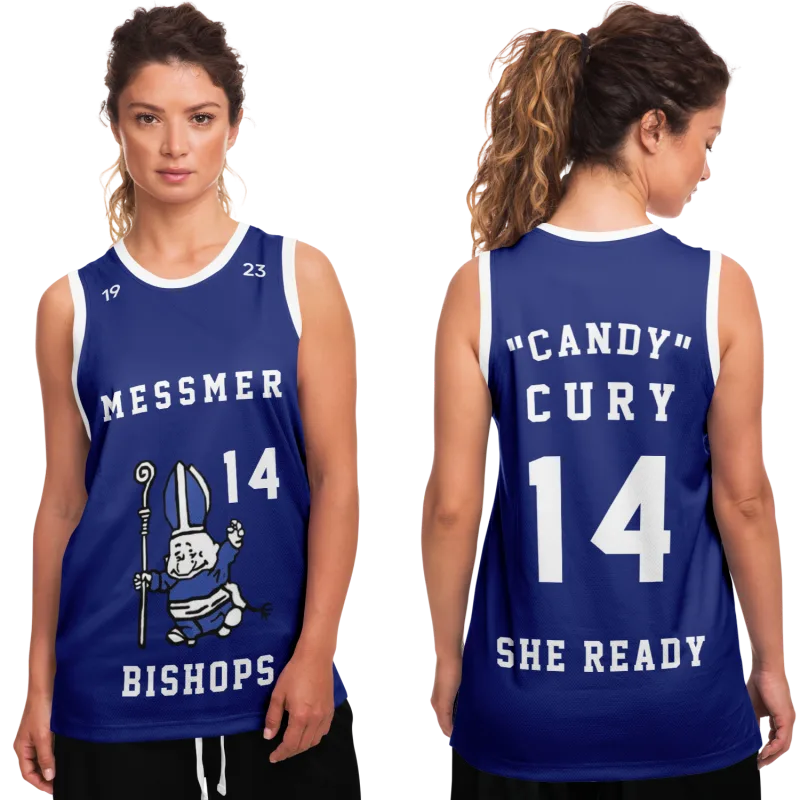
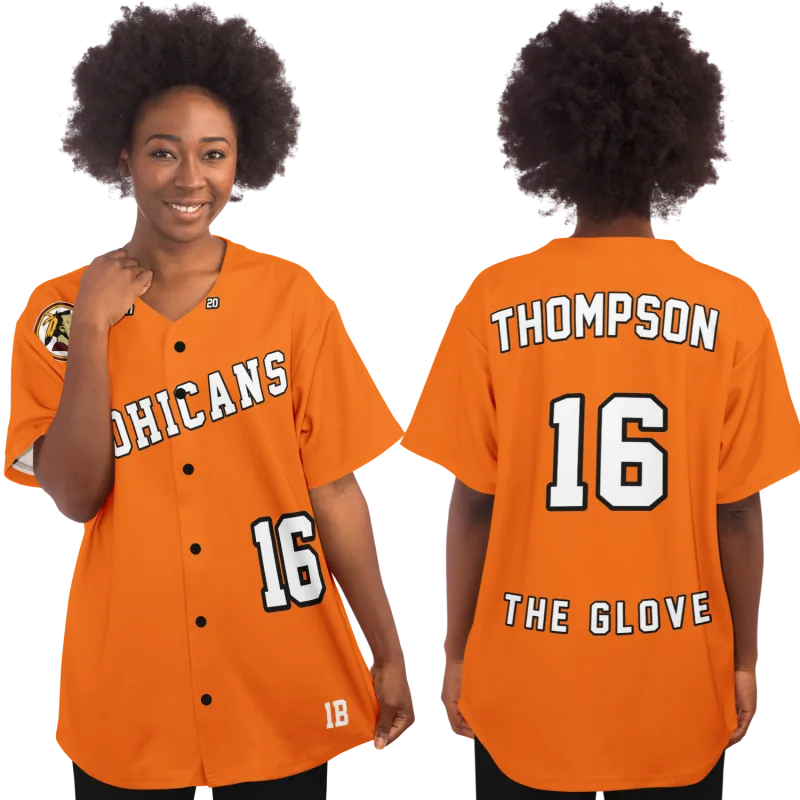
Your jersey is still out there waiting.
Design yours in minutes and see your name and number exactly the way you remember it.
Frequently Asked Questions
How does volleyball specifically build trust between teammates differently from other team sports?
Volleyball is structurally unique in that no single player can complete the core sequence of the game alone: a ball must be contacted by multiple players to score a point legally. This forces every player to rely on teammates not as a strategy choice but as a mechanical requirement of the game. The trust that develops isn't motivational or social first — it's functional and repetitive. After thousands of contacts across a season, that functional trust becomes identity-level. Players who've built that kind of relational fluency often describe it as something that transfers automatically to non-sport contexts without any conscious effort.
Can the teamwork identity lessons from volleyball apply to people who only played recreationally?
Yes — the structural elements of volleyball that produce relational trust are present at every level of the game, including recreational leagues and club play. The depth of the lessons scales with the intensity and duration of participation, but even casual players often report the same core shift: an increased attentiveness to the people around them, a tendency to cover and anticipate, and a default toward collective positioning over individual positioning. The court installs these patterns regardless of the competitive level, because the game itself requires them.
Why do so many former volleyball players describe their team relationships as distinctly different from other friendships?
The difference is evidentiary. In most friendships, you learn about someone gradually through conversation and shared experience over time. In volleyball, you learn about someone under pressure, repeatedly, with real stakes attached to what you discover. You watch them fail and recover. You watch them come through when it counts. You watch what they do at 24-25 in the fifth set. That kind of knowledge — direct, tested, confirmed across hundreds of high-pressure moments — produces a different quality of bond than almost any other social context. Former volleyball players often describe their teammates as people they know at a level that feels out of proportion to the amount of time they actually spent together. That's not nostalgia. That's the specific product of what the game asks players to do with each other.
What does "relational identity" mean in the context of volleyball, and how does it differ from athletic identity?
Athletic identity is how you see yourself as a player — your position, your strengths, your statistics, your role on the court. Relational identity is how you understand yourself in relation to others — as a connector, a reader of situations, a person who moves toward rather than away from the people around them when things get uncertain. Volleyball tends to develop relational identity more deliberately than athletic identity, because the game consistently rewards players who subordinate individual performance to collective function. Many former volleyball players find that their athletic identity fades naturally after they stop competing, but their relational identity — the orientation toward trust, coverage, and collective coordination — stays with them for life.
See also: athletic identity after high school | what high school sports teach you that nothing else could | the grief that comes when that chapter closes | why those shared experiences still live so vividly in your memory | reconnect with the teammates who shaped who you became