

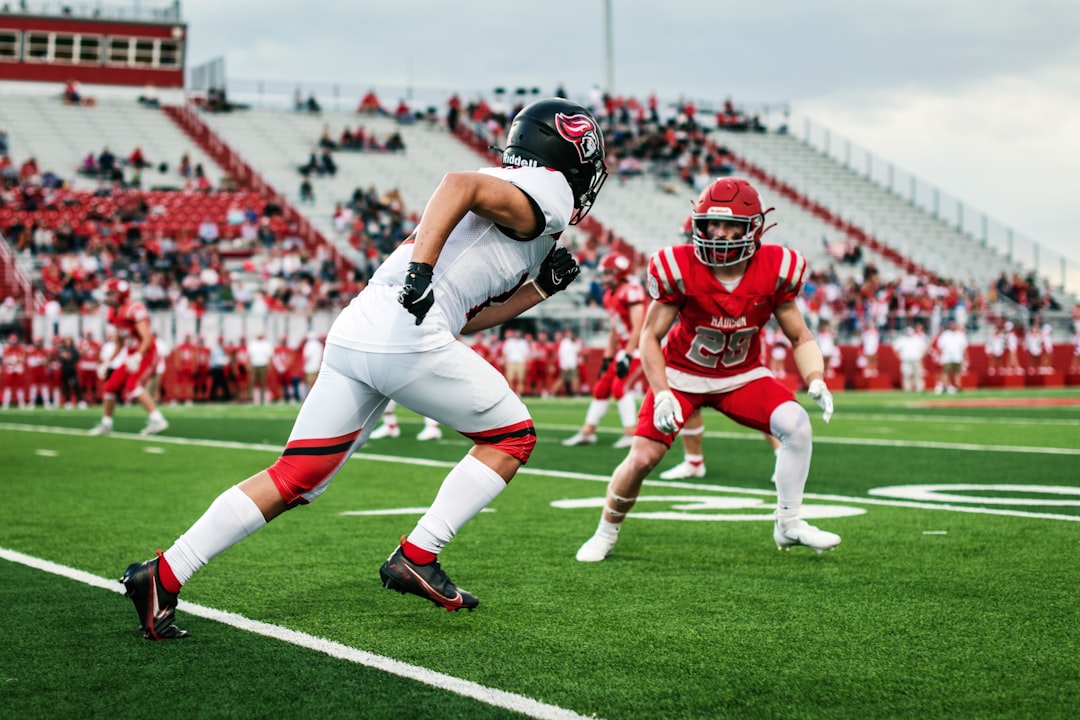




Nobody handed you a microphone. There was no ceremony, no slow walk to center court, no retiring of your number. If you're grieving the end of high school sports, you already know how abruptly it happened — the final game just stopped, the season dissolved into a Tuesday, and the world expected you to move on by the following Monday.
You did move on. Mostly. But something stayed.
This article is for the person who still feels it — the 22-year-old who tenses up driving past their old stadium, the 35-year-old who catches a Friday night game on local TV and has to set down whatever they were holding. It's for the athlete whose career ended not in a stadium with a microphone but in a high school gym with folding chairs, and who has never once seen that loss described as what it actually is: grief.
It's real grief. Here's why — and here's what to do with it.
When the Season Ends and the Identity Doesn't Know It Yet
The dominant conversation about athlete grief belongs to professional sports. We have documentaries about it. Retirement ceremonies. Farewell tours with standing ovations. The cultural machinery exists to mark the ending of a pro career as significant — worthy of mourning, worthy of tribute.
The high school athlete gets none of that.
Your last game looked like every other game, until it didn't. You may have lost, which robbed you of even the small mercy of going out on your own terms. Or you won, and celebrated, and didn't yet know the celebration was also a funeral. The bus ride home was just a bus ride home. By the following week, practice had been replaced by something ordinary — a job, college applications, family dinner. And everyone around you assumed the transition was happening smoothly because you weren't saying anything about it.

You weren't saying anything because you didn't have the language for what was happening.
Here is the language: what you lost at the end of your final season was not just a sport. You lost a structured identity — a role, a community, a daily sense of purpose and belonging that had been the organizing principle of your life for years. Grief psychology identifies this as role exit grief, and research into athlete transitions confirms that it operates through the same psychological mechanisms as other major losses: disruption of identity, loss of community, disruption of daily routine, and the removal of a primary source of competence and self-worth.
This is not being dramatic. This is what was actually happening in your nervous system.
Why the High School Athlete's Loss Is Harder to Grieve
Professional athletes grieve publicly. The culture gives them permission — even expects it. When a career ends at the highest level, the loss is proportionate to the public attention the career received.
The high school athlete grieves alone, and in silence, for two reasons.
First: the comparison problem. Every cultural message available to a grieving high school athlete tells them their loss is smaller than a pro's loss, and therefore less legitimate. You weren't making millions. You weren't famous. Who are you to be devastated?
But grief doesn't calculate salary. Grief measures meaning. For the athlete who organized their entire identity around their sport from age eight to eighteen, the loss of that sport is total — it touches every part of how they understand themselves. The professional athlete grieving a career end loses a career. The high school athlete grieving a season end often loses the only version of themselves they have ever fully inhabited.
Second: the invisibility of the transition. When a pro retires, everyone sees the ending. When a high school season concludes, no one marks it as an ending at all. There is no cultural frame for it. Parents are proud. Coaches move on to next year's roster. Friends are thinking about prom. The community that built itself around your athletic life simply redistributes, quietly, without ceremony.
The Disenfranchised Grief That High School Athletes Carry Alone
Sociologist Kenneth Doka, who developed the concept of disenfranchised grief, defined it as "grief that persons experience when they incur a loss that is not or cannot be openly acknowledged, publicly mourned, or socially supported." The end of a high school athletic career is a textbook case.
The loss is disenfranchised because the culture does not recognize it as a legitimate grief event. Friends say "at least you had the experience." Parents say "you will make new friends in college." Coaches say "you can always play intramurals." None of these responses are malicious, and all of them are wrong. They are wrong because they treat the loss as a schedule change rather than what it is: the death of an identity-creating structure that organized years of a young person's life.
Naming this as disenfranchised grief matters because it shifts the problem from an internal failure ("why can't I get over this?") to a cultural one ("our society does not have a framework for this loss"). The first question leads to shame. The second leads to understanding.
When grief cannot be spoken, it circulates longer. Giving it the language it deserves -- disenfranchised grief, role exit grief, athlete identity loss -- is itself an intervention. You cannot process a loss you cannot name.
You are left to figure out, alone, what to do with an identity that no longer has a home.
What Athlete Identity Loss Actually Feels Like
Grief has a literature. Elisabeth Kübler-Ross gave us the stages. Therapists have frameworks. But most grief frameworks were built around death — the loss of a person. Athlete identity loss is different because what you are grieving is still alive. Your sport still exists. Other people are playing it right now. The field is still there.
This creates a specific texture of grief that is worth naming precisely.
The comparison spiral. You watch someone playing your sport and feel two things simultaneously: joy for them and something that sits uncomfortably close to envy. You root for them, but something in the rooting costs you. This is not a character flaw. This is grief responding to the presence of what it has lost.
The hollow Fridays. For years, Friday nights had a shape. There was somewhere to be, something at stake, people counting on you to show up ready. The hollow Fridays that follow the end of a season — and the years of them afterward — are not just boredom. They are the specific absence of a ritual that structured your sense of self and belonging.
The body memory. Your body remembers. Athletes who trained for years carry that training in their nervous system long after the last game. The instinct to move a certain way, to warm up before something significant, to feel the specific quality of attention that competition produces — these don't dissolve when the season ends. They circulate without an outlet, and the circulating can feel like restlessness, anxiety, or a low-grade sadness that's hard to explain.
The identity gap. For most high school athletes, sport was not something they did — it was something they were. The transition out of sport is therefore not a schedule change. It is an identity renegotiation. Who am I if not an athlete? That question, unasked or half-asked, sits underneath much of the sadness that follows the final game.
A Story That Might Sound Familiar
Marisol V., 29, was a standout volleyball player at her high school in central Texas — libero, all-district two years running, the kind of player whose teammates looked to during timeouts. Her senior season ended in the regional semifinals. The bus ride home was quiet. She cried a little, then didn't, because the other girls were crying and someone had to hold it together.
By graduation, she thought she was over it. She wasn't. At 24, she took a job near her old high school and spent two years reflexively looking away from the gym every time she walked past it. It wasn't until she was telling the story to a therapist — as background context, she thought, not the main issue — that the therapist stopped her and said: "That sounds like grief."
It was the first time anyone had used that word about something that happened in a high school gymnasium.
Why the Grief Stays So Long
The mourning your athletic career deserves doesn't happen in the weeks after the final game. It usually surfaces years later, triggered by something small — a smell, a sound, a particular quality of autumn light that your nervous system associates with game day.
This delayed emergence is normal, and it has a specific cause.
When the season ended, you were eighteen. You had neither the developmental maturity nor the cultural permission to sit with the loss. The world was accelerating — graduation, college, the next thing. Grief requires stillness, and your life at eighteen had no structure that supported stillness around this particular loss. So it was set aside. Not resolved. Set aside.
Years later, when life creates a moment of quiet — a change in routine, a life transition, a Friday that feels particularly hollow — the set-aside grief resurfaces. It is not pathological. It is the natural completion of a mourning process that was interrupted before it could finish.
In our experience talking with former athletes, the most consistent pattern is this: the grief doesn't get smaller over time on its own. It gets smaller when it finally gets named.
How to Actually Grieve This — Specific, Useful Steps
Naming the loss is the beginning. Here is what comes next, in the order that tends to work.
1. Give the ending a real ceremony, even now
The grief persists partly because the ending had none of the markers that endings deserve. You can create those markers retroactively, at any age. This is not strange — it is how humans have always processed delayed grief.
Write the tribute you deserved. Not for an audience — for yourself. Name the specific things you gave to your sport — or sports, if you were one of the athletes who played multiple sports — the early mornings, the specific games, the teammates who made the experience what it was. Name what the sport gave you in return. This act of specific naming — not general fondness, but the particular Tuesday afternoon practice when something clicked, the specific game where you were more yourself than you had ever been — is what allows the grief to move rather than stay suspended.
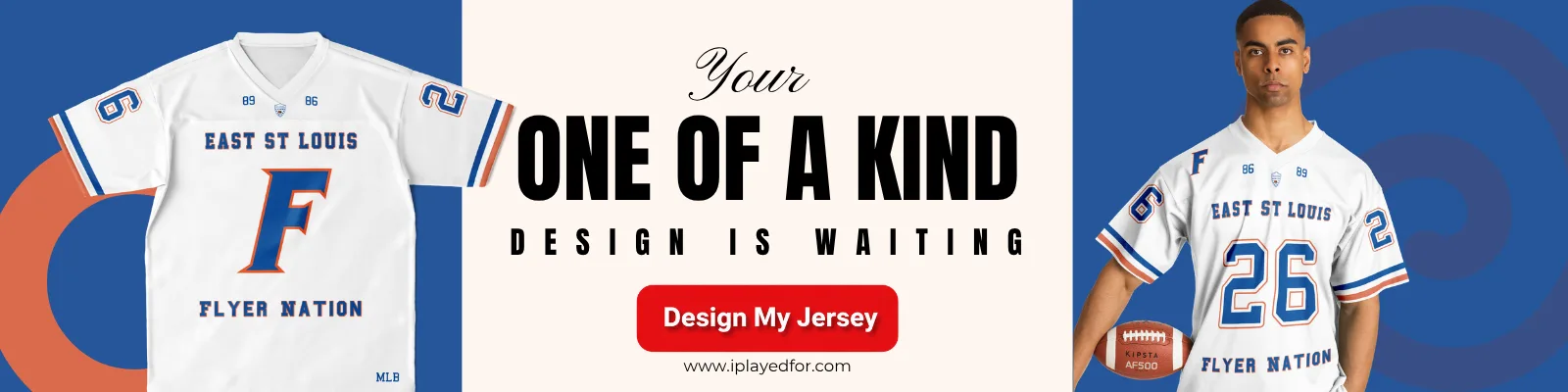
Some former athletes find the physical version of this more powerful than the written version. Getting back something tangible — a custom of the jersey, the number you wore, your name on the back — creates a physical anchor for the grief. It says: this was real. It counted. In our experience, the athletes who find this most meaningful are the ones who never received anything to hold onto. The final game ended and the uniform went back into the equipment room. The physical absence of a marker intensified the psychological absence of ceremony.
2. Separate the sport from the identity
Part of the grief is the fear that losing the sport means losing yourself. This fear is worth examining directly.
The qualities that made you an athlete — discipline, tolerance for discomfort, the ability to perform under pressure, the habit of working toward something long-term — did not retire when your season ended. They transferred. They are operating in your current life, possibly without you noticing them, because you are no longer in a context that labels them as athletic.
The identity renegotiation that athlete grief requires is not the abandonment of athletic identity. It is the recognition that athletic identity was always built on specific qualities of character — and those qualities are still yours.
3. Find the community thread
A significant portion of what you lost when the season ended was not the sport itself but the community structured around it. The daily belonging — the locker room, the practice field, the shared stakes — does not replicate easily in adult life. This is a real loss.
The coping with sports career ending that works isn't usually about finding a replacement sport. It's about consciously rebuilding the specific texture of belonging that sport provided: a shared challenge, accountability to others, a reason to show up on a specific day at a specific time and give something real.
Recreational leagues serve some of this function. So do team-based fitness communities, coaching roles, and officiating. The form matters less than the specific social architecture: people who are working toward something together, who need you to show up.
4. Let yourself talk about it
The sadness after last high school game is culturally orphaned. There is no Hallmark script for it. No one is going to ask you how you're doing about it at Thanksgiving, twenty years later.
This means you have to introduce the topic yourself — with a therapist, with another former athlete, with a partner who is willing to hear a story that doesn't resolve neatly. The act of speaking the loss aloud, to someone who receives it as legitimate, is often the specific thing that allows it to move.
If the first person you tell responds with "but you weren't going pro anyway" — find a different person to tell. That response is a measure of their vocabulary, not the validity of your experience.
How to Support a Former Athlete Through This Grief (For Parents, Partners, and Friends)
If you are reading this because someone you love is still carrying the weight of a high school athletic career that ended years ago, you cannot fix this grief. But you can witness it. That distinction is everything.
Here are four specific ways to support a former athlete through the grief they may not even have language for.
1. Don't Minimize -- Validate by Naming the Loss
The most common response former athletes hear when they finally speak about this loss is some version of "but you were just in high school." This response is devastating, not because it is mean, but because it teaches the grieving person that their loss is too small to be real.
The alternative is validation: "It sounds like that meant everything to you, and then it just ended." You do not need to understand the feeling to validate it. You only need to accept that the feeling is real for the person experiencing it.
Validation looks like: "Tell me what that season meant to you." Not "you will find something else." The first invites grief to be expressed. The second shuts it down.
2. Ask About a Specific Memory
Former athletes who are carrying unresolved grief often have trouble accessing it because the grief is attached to a general sense of loss rather than a specific event. Asking about a specific memory can release pressure that general questions cannot reach.
Try: "What is one game from your senior season that you still think about?" Or: "What did practice feel like on the days you did not want to be there?" Or: "What was your warm-up routine before games?"
Specificity matters because it signals genuine interest rather than polite inquiry. When you ask about the texture of someone's experience -- not just whether they liked playing -- you are giving them permission to inhabit a memory that may have been sitting untouched for years.
3. Offer to Create a Marker
The grief persists partly because the ending had no physical memorial. You can offer to create one.
A custom jersey with their name and number. A shadow box with their uniform and a photo from the season. A framed ticket stub from their last game. These are not commercial gestures -- they are grief-processing tools. An object that says this was real can do what words sometimes cannot.
The offer itself matters as much as the object. Saying "I want to help you honor what that chapter meant" is a form of witnessing that the former athlete almost certainly never received. Most former athletes' parents were proud at the time but never circled back, years later, to say "that mattered." You can be the person who does.
4. Know When to Refer
Supporting someone through athlete grief does not mean becoming their therapist. There is a line between grief and depression, and knowing when the line has been crossed is part of responsible support.
Clinical warning signs include: loss of function lasting more than two weeks (not going to work, not maintaining basic self-care), social withdrawal that goes beyond sadness into active isolation, persistent feelings of worthlessness that tie back to the loss of athletic identity, and thoughts of self-harm or statements about not mattering.
Grief is the appropriate response to loss. Depression is what happens when grief cannot move. If the person you are supporting shows signs of the latter, the most loving thing you can do is help them find a professional who understands athlete identity transitions.
You cannot fix this grief. But you can witness it. And for most former athletes, being witnessed is the specific thing that allows the grief to finally begin moving.
What You Were Doing Was Not "Just" Playing Sports
Here is what the sadness after your last high school game is actually about, stated plainly.
For years, you inhabited a structure that provided daily purpose, measurable progress, belonging, identity, and the specific dignity of being genuinely good at something in front of people who mattered to you. You showed up, repeatedly, for something that asked everything of you. You built a version of yourself inside that structure.
That version of yourself was real. The career was real — regardless of its level, regardless of whether it ended in a state championship or a first-round loss. A career measured in effort, in growth, in sacrifice and presence, is a career. The grief you feel for its ending is proportionate to what it actually was.
You were not a professional athlete. You were something more intimate than that: a person whose sport was the central architecture of your most formative years. The ending of that deserves to be grieved. Not quietly, not alone, not with the sense that you should have been over it by now.
It deserves what all real endings deserve — acknowledgment, ceremony, and the room to feel the full weight of what was there.
Your jersey is still out there waiting.
Design yours in minutes and see your name and number just as you remember it.
Frequently Asked Questions
Is it normal to still feel sad about the end of high school sports years — or even decades — later?
Yes, and the psychology supports this. Athlete identity is developed over years and becomes deeply integrated into a person's sense of self. When the athletic career ends without ceremony or processing, the grief is often deferred rather than resolved. It can resurface years later, triggered by specific sensory memories or life transitions. The delay doesn't make the feeling less legitimate — it makes it more understandable. Many adults report their first real processing of this loss happening in their late twenties or thirties, often in therapy or in conversation with another former athlete who names it first.
What's the difference between athlete identity loss and just being nostalgic about high school?
Nostalgia is a warm, selective memory of the past — you miss it, but you're not destabilized by it. Athlete identity loss is more disruptive. It tends to involve a persistent sense that something essential about yourself was left behind, difficulty finding equivalent meaning or belonging in adult life, and an emotional response to reminders of the sport that feels heavier than straightforward nostalgia. If seeing your old sport played triggers something that feels like grief — a tightening, a specific sadness, a sense of loss rather than simple fondness — that's more than nostalgia. That's the real thing.
How do I explain this grief to someone who never played competitive sports?
The most useful framing is this: "For most of my childhood and adolescence, my sport wasn't something I did — it was the primary structure of my identity, my community, and my daily purpose. When it ended, it wasn't just losing a hobby. It was losing the organizing framework of my life, overnight, without ceremony." Most people can understand the loss of a community, a role, and a daily sense of purpose — even if they don't have a specific sports reference point. Lead with those three elements and the specific texture of the loss tends to land.
Does grieving the end of my athletic career mean I'm not grateful for what I had?
No. Grief and gratitude are not opposites — they are proportionate responses to the same thing. The depth of grief for a loss is a measure of how much the thing that was lost mattered. Grieving your athletic career is not ingratitude. It is the accurate emotional response to having been given something genuinely meaningful, and then having it end. You can be deeply grateful for the years and still grieve their conclusion. Both responses are honest, and both are earned.
See also: athletic identity after high school | why high school sports still matter to adults | why so many former athletes still dream about high school games