

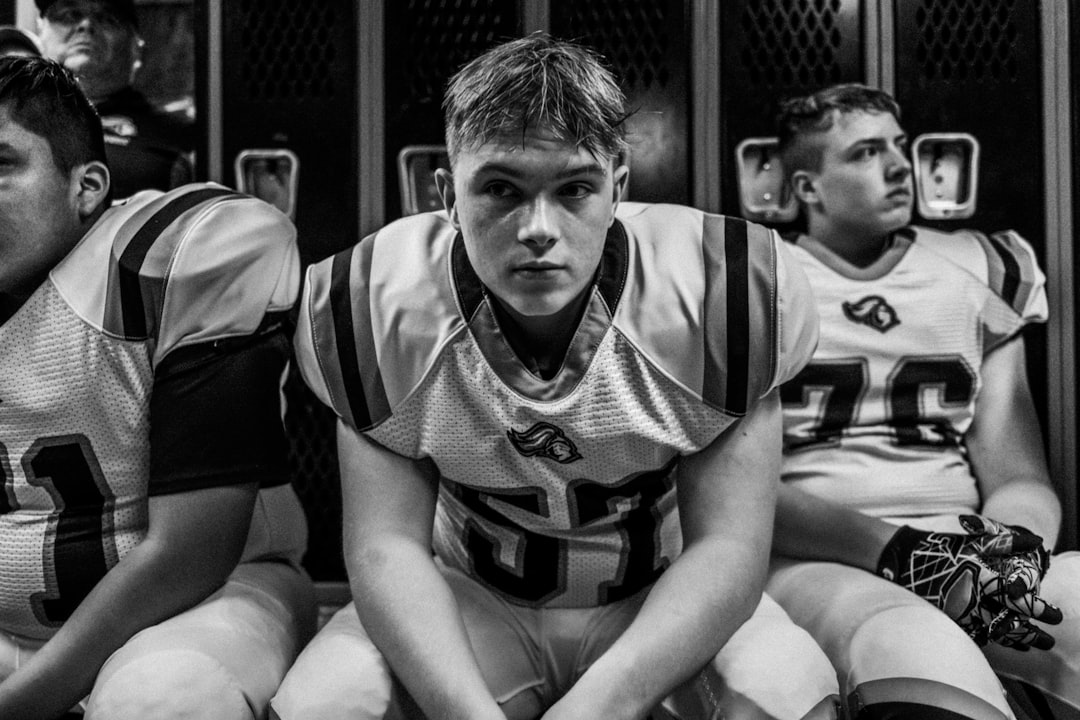



There was a last game. You probably didn't know it was the last one.
That's the part nobody prepares you for. Not a closing ceremony, not a farewell speech — just the final buzzer, the final whistle, the final out, and then the slow walk to the car. And then Monday came, and there was no practice. And the Monday after that. And somewhere in that silence, you started feeling something you didn't have a word for.
If you've been searching for answers about athletic identity after high school, this is the article that was missing. Not the one about college athletes losing scholarships, not the one about professionals retiring at 35. The one about you — the kid whose career ended at 18 with no fanfare and no roadmap for what came next.
Sports psychology has a framework for precisely this experience. It explains the disorientation, the low-grade grief, the strange feeling of not recognizing yourself in a mirror that has nothing to do with how you look. And the research goes deeper than identity alone — the specific sport you played may have literally shaped your personality in measurable ways, which is why how your high school sport shaped your personality type matters as more than a curiosity. This article walks through the identity framework specifically for the high school athlete — because your experience is distinct, under-documented, and far more common than anyone acknowledges.
You Weren't Just Playing a Sport. You Were Being Someone.
This is the part that takes most former athletes years to understand: sport was never just an activity. It was an identity architecture. From the time you were ten or eleven or twelve, sport structured your answer to the most fundamental question a young person faces — who am I?
You were the swimmer. The point guard. The pitcher. The midfielder. You didn't just play — you were. That distinction matters more than it sounds, because it explains why the ending hit differently than anyone expected.

Sports psychologists call this athletic identity — the degree to which a person defines themselves through their athletic role. Research from the field of sport and exercise psychology, including work built on Brewer, Van Raalte, and Linder's foundational Athletic Identity Measurement Scale, consistently shows that athletes who develop a strong, exclusive athletic identity — particularly during adolescence — face the sharpest transition crises when sport ends.
High school is precisely when identity is most fluid and most impressionable. The developmental window between 12 and 18 is when adolescents are doing the core work of answering "who am I?" For athletes in that window, sport provides a ready-made answer. It is an answer that comes with community, structure, purpose, status, and daily confirmation. The team needs you at 3:45. The coach knows your name. The scoreboard remembers your performance. The school hallway registers who you are.
Then it stops.
And suddenly the scaffolding that held the answer together is gone, and you're left holding a question you thought you'd already solved.
The Psychological Name for What You're Feeling
The experience has a clinical name: identity foreclosure.
In developmental psychology, identity foreclosure describes what happens when a person commits deeply to one identity before fully exploring the full range of who they might be. For athletes, this commitment is often encouraged — even celebrated. Specialization — a trend that makes the multi-sport athlete increasingly rare — year-round training, the "student-athlete" label that puts athlete second but means it first. The system rewards foreclosure.
The problem surfaces at the seam where the sport ends and the next chapter begins. When the single identity that organized your sense of self is no longer available, the psychological result is not just sadness. It is disorientation. You don't know how to introduce yourself at a party. You don't know what you're doing on a Saturday afternoon. You don't know what you're good at outside of a context that no longer exists.
This is not weakness. This is the predictable outcome of a system that asked you to be one thing completely — and then removed that thing without replacement.
The losing identity after sports ended that many former high school athletes describe is not metaphorical. It is the literal loss of the cognitive and emotional structure that organized daily life. Research on post-athletic transition consistently shows that athletes with high athletic identity and limited role exploration outside of sport experience the most significant adjustment difficulties after sport ends — including elevated rates of anxiety, depression, and what clinicians sometimes describe as existential emptiness.
Why High School Athletes Are the Forgotten Group in This Conversation
Nearly every published resource on athletic identity transition focuses on two populations: collegiate athletes losing scholarships, and professional athletes retiring with the financial and social weight of a public career.
The high school athlete doesn't fit either frame.
There is no scholarship to lose. There is no public identity to manage. There is no agent, no union, no sports psychologist on staff. There is just a last game, a season-ending dinner if you're lucky, and then the assumption from everyone around you that the natural next step is simply moving on.
"Moving on" is the advice that reveals how little most people understand about what ended. You don't move on from an identity the way you move on from a hobby. You have to rebuild — and rebuilding requires first understanding what was lost.
Mia C., 24, played varsity soccer for four years at a school where soccer was the centerpiece of the fall calendar. She describes the six months after her senior season as "walking around inside someone else's life." She still went to class, still talked to friends, still functioned — but the internal architecture was different. "I kept waiting to feel like myself again," she says. "I didn't realize that the self I was waiting to feel like was a self that had soccer in it. I had to build a different self."
That rebuilding is the work this article is about.
What Sports Psychology Actually Recommends for Former High School Athletes
The post-athlete identity crisis is not a permanent state. It is a transition — with a beginning, a middle, and an end that the reader gets to author. Sports psychology offers four specific frameworks for navigating it. Not platitudes. Frameworks with mechanisms.
1. Expand the Identity Before the Sport Ends — and If That Ship Has Sailed, Start Now
The ideal intervention for athletic identity transition happens before the transition. Athletes who maintain roles and relationships outside of sport — musician, artist, student leader, part-time worker, community member — carry a broader identity structure into the post-sport period. The loss of the athletic role doesn't hollow them out because there are other roles still standing.
If you're reading this after the fact, the principle still applies. The work is additive now, not preventive. The question is not "what should I have developed alongside sport?" but "what roles, communities, and pursuits am I going to invest in now?" Identity is not fixed at 18. The same plasticity that made athletic identity so formative in adolescence is available now — it just requires intentional cultivation rather than the passive cultivation that happened through sport participation.
In our experience working through this topic, the athletes who navigate transition most effectively are not the ones who immediately replace sport with another structured competition. They are the ones who invest in identity breadth — trying things that have nothing to do with athletic performance, finding communities organized around curiosity rather than competition, discovering capabilities that sport never made room for.
2. Name the Grief Before You Try to Fix It
Former athlete depression after quitting is frequently misread — by the athletes themselves and by the people around them. It looks like listlessness, like a lack of motivation, like disinterest in things that used to matter. It is often treated as a practical problem ("you need to get out more," "you need a new goal") when it is primarily an emotional one.
The grief is real. Something genuinely ended. The community, the structure, the daily confirmation of competence, the physical experience of the body performing at its peak — these were real goods that are now genuinely absent. Trying to problem-solve grief before acknowledging it typically prolongs it.
The specific practice that sports psychologists recommend at this stage is simple and uncomfortable: name the losses specifically. Not "I miss sports." But: I miss the feeling of being part of something larger than myself. I miss knowing precisely what I'm supposed to be doing at 3:45. I miss the way my body felt after a hard practice. I miss being known for something I was good at.
Each specific loss points toward a specific need. Named needs can be addressed. Unnamed grief is just fog.
3. Reconnect With Your Body on Its Own Terms
High-level athletic training creates a specific relationship with the body — one organized entirely around performance metrics. Speed, strength, endurance, technique. The body is a tool calibrated for competitive outcomes.
When competition ends, many former athletes either push that tool toward outcomes that no longer make sense (running half-marathons to prove something that no longer needs proving) or abandon physical activity entirely because it feels hollow without the competitive frame.
The middle path is what sports psychologist Dr. Britton Brewer's research on identity and physical activity suggests: movement pursued for intrinsic reasons rather than performance outcomes. Not "how fast" or "how much" but "how does this feel." Running because the morning is quiet. Swimming because the water is its own sensation. Lifting because the body likes being used.
This is not a lesser relationship with physical activity. For many former athletes, it is ultimately a richer one — the first time they have moved their body for themselves rather than for the scoreboard.
4. Rebuild the "Who Am I?" Answer Deliberately
The "who am I without sports" question that haunts the post-athlete period is not a rhetorical question. It is a project. And like any project, it benefits from deliberate effort rather than passive waiting.
Sports psychologists working in identity transition often use a structured reflection exercise: list every attribute, value, and capability that sport developed in you — and then identify which of those transfer directly to non-athletic contexts.
- Coachability becomes the capacity to receive feedback in professional and creative contexts
- Team orientation becomes the ability to collaborate without needing to be the star
- High-performance work ethic becomes the engine behind professional achievement
- Physical courage becomes the baseline for attempting things that feel risky
- The ability to lose without quitting becomes resilience in a form that most people who never competed in organized sport have to consciously develop
The athlete you were shaped the person you are. That doesn't disappear when the jersey goes away. The work of post-athletic identity is not starting from scratch — it's recognizing that the foundation was laid and choosing what to build on it.
5. Find the Adult Version of Your Sport
The athlete identity does not require a competitive arena to survive. It requires expression -- the chance to inhabit the body and mind that sport built, in a context that resembles the original experience.
For many former athletes, the most effective bridge out of identity crisis is not therapy (though that helps) and not replacement hobbies (though those matter). It is finding the adult version of the sport that defined them. This is not about chasing the same level of competition. It is about finding a context where the skills, instincts, and community structures of the sport still have a home.
Recreational leagues are the most obvious option, and they work for a specific reason: they restore the weekly rhythm of practice and game-day without the pressure of scholarships or standings. Your body does not know the difference between a rec-league game and a high school game at the level of nervous-system activation. The pregame nerves, the focus, the shared experience -- those transfer.
Coaching is a different kind of return. Coaching lets you stay inside the sport's architecture while shifting from performer to mentor. Former athletes who coach describe the experience as completing a circuit -- the knowledge and instinct developed over years of playing finds an outlet that feels purposeful rather than nostalgic.
Officiating offers proximity to the game from a perspective that most former athletes never considered. It is the sport from the inside, still demanding, still requiring the specific alertness that competition trained.
Pickup games -- informal, low-stakes, no uniforms required -- provide the purest form of the sport's pleasure: the game itself, without the weight of what the game used to mean. Many former athletes find that pickup basketball, Sunday-morning soccer, or adult softball leagues create the specific emotional texture they thought was gone forever.
The principle is this: your sport is not a closed chapter. It is a practice that can take different forms across a lifetime. The form changes. The belonging does not have to.
6. Get Something Physical That Proves It Happened
The post-athlete identity crisis is, at its core, a crisis of evidence. For years, your identity was confirmed daily by practice, games, coaches, teammates, the scoreboard. The evidence of who you were was everywhere. Then it was not.
Sports psychologists studying athletic identity transition have found that physical markers -- objects that represent the athletic identity -- play a measurable role in helping former athletes integrate their past identity into their present self-concept. The mechanism is externalization: when identity cannot live inside the activity, it can live inside the object.
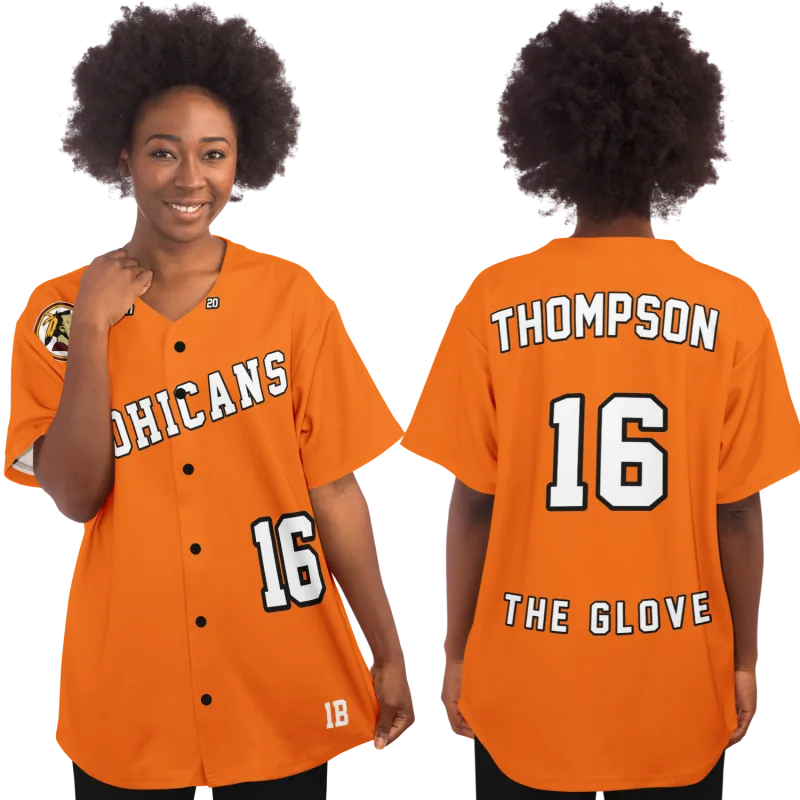
A jersey with your name and number serves this function. So does a shadow box containing your uniform. So does a framed photo from your final season, displayed somewhere visible. These are not decorations. They are external memory structures that tell your nervous system: this was real. You were that person. The person is still here.
The most effective objects are specific rather than generic. A trophy from seventh grade says less than a jersey with the specific number you wore, the specific spelling of your name, the specific colors of your school. Specificity matters because the identity you are externalizing is specific -- it belongs to a particular team, a particular season, a particular version of yourself.
Identity needs an address. If it cannot live in the sport, it can live in the object.
Former athletes who take this step describe the experience as surprisingly powerful: the object becomes a place where the old identity can rest, rather than circulating without a home. It is not about living in the past. It is about giving the past a container so the present can move forward.
The Last Game Was an Ending. It Was Also a Beginning You Didn't Know You Were Starting.
There is a specific kind of clarity that comes on the other side of an identity transition — not immediately, but eventually. Former athletes who navigate this well describe a version of themselves they value more than the athlete version, not because sport wasn't real or important, but because the person who survived losing sport and rebuilt something larger is demonstrably more complete.
The post athlete identity crisis is not a sign that something went wrong. It is a sign that something mattered — deeply, structurally, formatively. You were fully present to that thing, and when it ended, the absence was proportional to the presence.
The work now is to bring that same full-presence quality to the next identity. The same devotion. The same showing up. The same willingness to be known for something you care about.
You did it once. You know how.
Your jersey is still out there waiting.
Design yours in minutes and see your name and number just as you remember it.
Frequently Asked Questions
How long does the athletic identity crisis typically last after high school sports end?
There is no universal timeline, and that uncertainty is itself part of what makes the transition difficult. In our experience reviewing the sports psychology literature on this topic, most former athletes describe the sharpest period of disorientation lasting between six months and two years after sport ends. The duration correlates strongly with the exclusivity of the pre-transition athletic identity — athletes who defined themselves almost entirely through sport face longer transitions than those who maintained broader identities during their playing years. The transition is not a linear process. Many former athletes describe cycling through periods of acceptance and renewed grief, particularly around seasons, championships, or milestones that would have been meaningful in their athletic career.
Is it normal to feel depressed after high school sports end, even if nothing else in life is wrong?
Yes — and it is more common than most people admit or most conversations acknowledge. The depression that can follow the end of a high school athletic career does not require an external cause beyond the loss itself. The loss of daily structure, physical community, competitive purpose, and identity confirmation is a genuinely significant psychological event. It does not require rationalization or comparison to people with "real problems." If the low mood, disinterest, or sense of purposelessness persists beyond a few months or significantly impairs daily functioning, speaking with a therapist — ideally one with experience in sport transitions or adolescent identity development — is a practical and appropriate step, not a dramatic one.
Can you rebuild an identity as strong as your athletic identity after sport ends?
Not only can you — the evidence from athletes who have navigated this transition suggests that the rebuilt identity is often broader, more resilient, and ultimately more satisfying than the athletic identity it replaced. Athletic identity is strong in part because it is narrow: it provides a clear, specific answer to "who am I?" The identity built after sport tends to be more complex — it incorporates more of who the person actually is beyond their physical performance. The qualities that made someone a committed athlete — coachability, work ethic, team orientation, competitive discipline — do not disappear. They become available to every domain the former athlete chooses to invest in. The transition is genuinely difficult. The outcome, for those who engage it deliberately, is genuinely worth it.
Why does it feel like grief if I chose to stop playing?
Because grief is not contingent on whether a loss was chosen. Grief is the emotional response to the genuine absence of something that mattered. Many high school athletes "chose" to stop in the sense that they didn't pursue college athletics, or didn't try out for a team, or decided school or work came first — but the choice was made in a context of limited options, not a free decision made from a place of completion. The career ended because the structure that sustained it — high school, the team, the season — ended. Whether or not there was a conscious decision layered on top of that structural ending, the loss is real. Grief in response to real loss is not a sign of weakness or confusion. It is the appropriate response to something that genuinely mattered being genuinely absent.
See also: the grief nobody talks about: mourning the end of your athletic career at 18 | the grief nobody talks about: mourning the end of your athletic career at 18 | why high school sports still matter to adults long after graduation | why so many former athletes still dream about competing in high school games | personalized sports gifts that help a former athlete feel truly seen