


You haven't suited up in fifteen years. Maybe twenty. But when someone asks about your past — at a dinner party, a job interview, the first conversation with someone new — you say it almost before you decide to.
I played.
Not "I used to play." Not "back in high school, I was on the team." Just: I played. Present tense of a past life. And if you've ever wondered why that phrase still sits so close to the surface, why high school sports define identity in a way that AP calculus and debate club simply don't — the answer isn't nostalgia. It's neuroscience. It's developmental psychology. It's the specific, documented way that athletic experience gets wired into an adolescent brain at precisely the moment that brain is constructing its permanent sense of self.
This is the explanation former athletes have been searching for.
The Adolescent Brain Was Literally Built to Remember This
Between the ages of 14 and 18, the human brain undergoes its second major reorganization — the first being early childhood. The prefrontal cortex is still developing, the limbic system is running hot, and the brain is performing something neuroscientists call identity consolidation: the active, metabolically expensive process of deciding which experiences, roles, and self-concepts get encoded as permanent.
This is not a metaphor. It is a biological event.
During this window, the brain is selectively pruning neural pathways — a process called synaptic pruning — and simultaneously strengthening the connections that carry the most emotional and social charge. Experiences that happen repeatedly, at high intensity, within a strong social group, and attached to a clear identity role get encoded with a depth that simply isn't available to the adult brain. The technical term researchers use is reminiscence bump — the well-documented phenomenon in which adults disproportionately recall memories from ages 10 to 30, with the strongest clustering between 15 and 25.

High school sports hits every single trigger of that encoding process simultaneously.
You practiced every day (repetition). You competed under genuine stakes (high emotional intensity). You did it with a team whose opinion of you mattered more than almost anything else at that age (social group). And you wore a jersey with your name on it while people watched (explicit identity role assignment).
The brain didn't store those experiences the way it stored your sophomore history class. It stored them the way it stores the things that define who you are.
Physical Mastery Becomes Self-Concept in a Way Nothing Else Does
There's a reason "I played varsity" lands differently than "I got an A in chemistry." Both represent achievement. But only one of them produced physical mastery — and physical mastery, it turns out, is one of the most powerful inputs to self-concept formation that exists.
Psychologist Albert Bandura's work on self-efficacy — the belief in your own capacity to execute — identified athletic experience as a uniquely powerful source of what he called enactive mastery experiences: direct, embodied evidence that you can do hard things. When you learn to execute a perfect double-play or hit a corner kick under pressure or come off the blocks half a second faster than last week, your body knows it accomplished something. That knowledge doesn't live in declarative memory the way a fact does. It lives in procedural memory — the same deep system that remembers how to ride a bike.
Your body still knows how to do it. And that bodily knowledge is connected, neurologically, to your sense of who you are.
This is part of why the lasting impact of high school athletics outlasts the lasting impact of most other adolescent achievements. It is also why so many former athletes, decades removed from their last competition, still call themselves basketball players — or football players, or soccer players, or wrestlers. The identity outlasts the eligibility because the self-concept was forged in muscle memory, not in memory alone. A test score exists on paper. A skill your body internalized at 16 exists in you. Literally.
Psychologists have a name for this. It's called athletic identity — and unlike most things we casually call "part of who you are," it has been formally measured for over three decades. In 1993, Brewer and colleagues introduced the Athletic Identity Measurement Scale, or AIMS, to quantify the degree to which a person identifies with the athlete role. The scale measures three dimensions: social identity (how much you see yourself as an athlete in relation to others), exclusivity (how much your self-worth depends on the athlete role alone), and negative affectivity (how much distress you'd feel if you couldn't play). By that measure, athletic identity isn't a feeling you occasionally have — it's a stable, measurable component of self-concept.
Here's the part nobody expects: the identity doesn't weaken when the career ends. It strengthens. Researchers at Penn State ran experiments in which they reminded athletes that their playing careers were nearing an end — and instead of distancing themselves from the athlete role, those athletes reported stronger identification with it. It's a defensive response. When the thing that anchored your sense of self is threatened, the brain clings to it harder, not less. That's why the countdown to your last game often feels like an intensification rather than a winding down.
And the numbers bear out how universal this is. Athletic identity intensifies steadily between the ages of 10 and 15 and stays elevated long after the final whistle — work by Houle and colleagues (2010) mapped that trajectory. Meanwhile, roughly 97% of high school athletes never play at the collegiate level (Lyons et al., 2018). The overwhelming majority of athletes, in other words, see their athletic career end right there in high school — which means the identity they spend the rest of their lives defending is the one they built on a high school field. That's not a footnote. It's the whole reason "I played" still comes out in the present tense.
In our experience talking with the former athletes who find their way to iPlayedFor, the most common thing we hear isn't "I miss winning." It's "I miss knowing exactly what I was capable of." That's Bandura's self-efficacy talking — the specific, embodied confidence that came from having pushed a body to its edge and come out the other side.
The Jersey Was Doing More Work Than You Realized
Here is something most sports nostalgia articles completely miss: the uniform wasn't decoration. It was an identity technology.
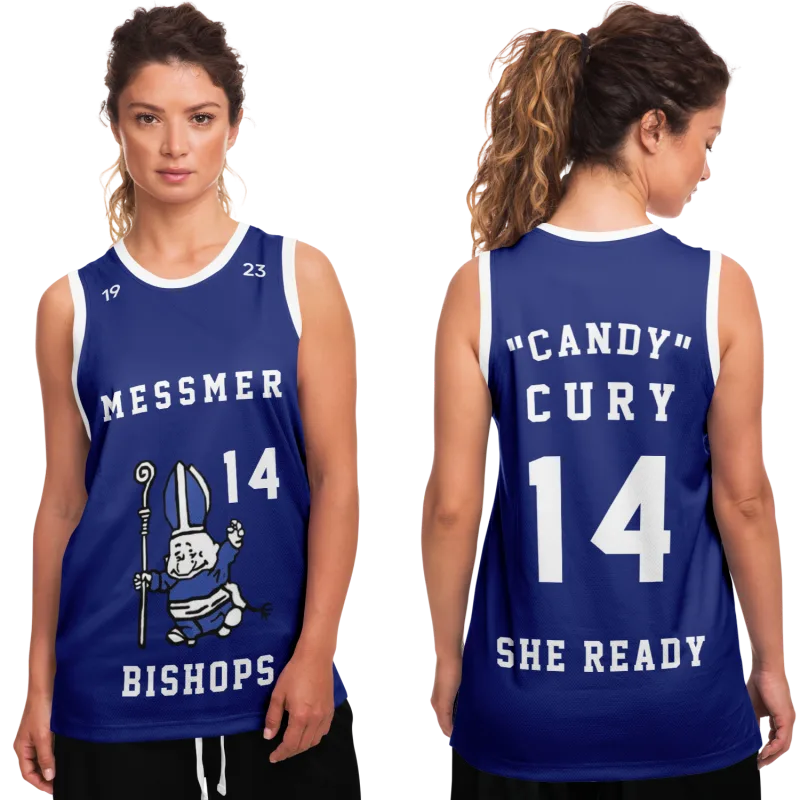
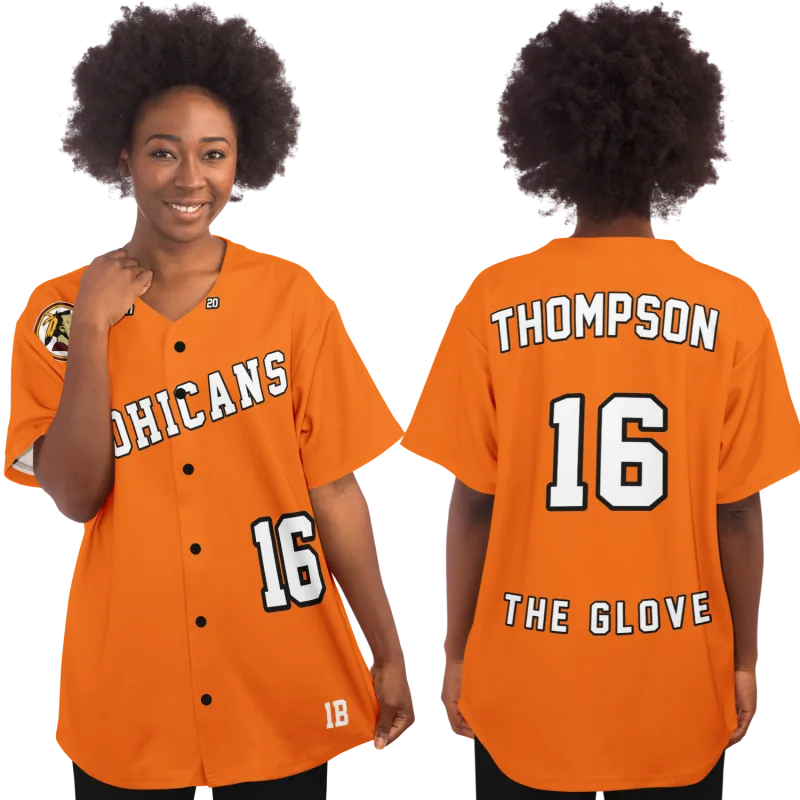
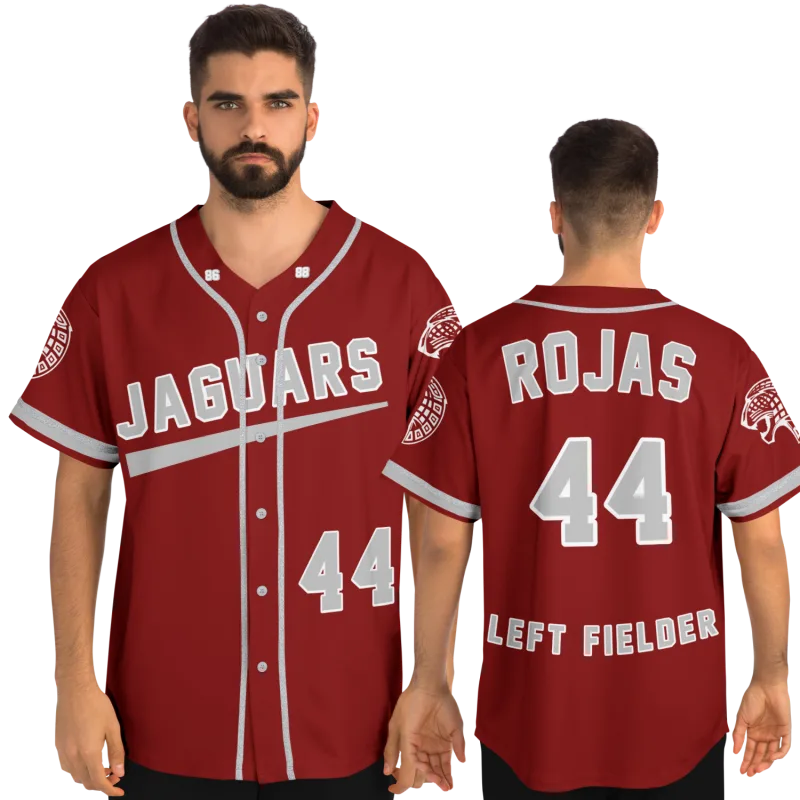
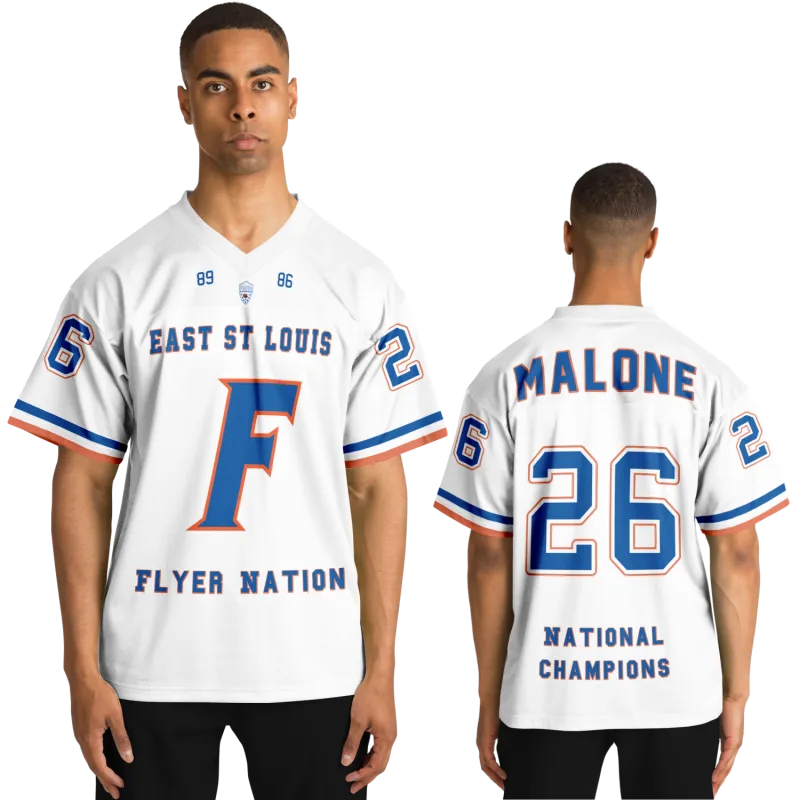
When you put on that jersey — with your school's name, your number, your name across the back — you were participating in something that psychologists who study adolescent development call role embodiment. The physical act of wearing a uniform that marks you as a member of a specific team, in a specific role, for a specific community, is one of the most concrete identity-assignment experiences available to an adolescent.
Erik Erikson, whose theory of psychosocial development remains the foundational framework for understanding adolescence, described the central task of that life stage as identity vs. role confusion. The adolescent brain is desperately trying to answer: who am I, and where do I belong? The jersey answered both questions at once. Every time you wore it.
Researchers studying adolescent identity formation at the intersection of sport and development have consistently found that sport participation during adolescence produces what they call identity foreclosure — not in the negative sense, but in the sense of early, stable identity anchoring. Athletes who competed seriously in high school often have a more consolidated sense of self earlier than their non-athlete peers, precisely because sport gave them a clear, socially validated, physically grounded answer to the question their brain was asking.
That anchor holds for decades. Not because athletes are stuck in the past. Because the past did its job.
Why Sports Memories Feel Different From Every Other Memory
Marcus T., 41, played soccer at a small high school in central Ohio. He barely thinks about his senior AP English class. But he can describe, in detail, the exact feeling of the grass under his cleats before the district championship — the angle of the late-afternoon sun, the way his legs felt, the sound of the crowd. He keeps the jersey in a plastic bin in his basement. He has pulled it out exactly twice to show his kids. Both times, he had to put it down quickly.
That's not a quirk of Marcus's personality. That's the neuroscience working exactly the way it was designed to.
Athletic memories — especially competition memories from adolescence — are encoded with something called somatic markers: physical, sensory, emotional tags that the brain uses to prioritize certain memories as high-importance. The adrenaline of competition, the proprioceptive experience of a trained body doing what it was trained to do, the social intensity of team performance — these create memory traces that are richer, more multi-sensory, and more emotionally weighted than almost anything else that happens during those years. It is why former athletes describe the locker room before the game as a feeling no adult life ever quite recreates — those pre-competition moments, thick with shared purpose and quiet intensity, get written into the brain with a vividness that ordinary moments never approach.
Neuroscientist Antonio Damasio's research on somatic markers showed that these emotionally tagged memories aren't just more vivid — they're more deeply integrated into decision-making, self-evaluation, and identity construction. When Marcus pulls out that jersey and has to put it down quickly, it's because the memory isn't stored as a fact. It's stored as a felt experience that is still, neurologically, part of who he believes himself to be.
Sports shaped who he is. The science says: that's not sentiment. That's biology.
The Social Architecture of a Team Does Something Friendship Alone Doesn't
One dimension of why sports matter decades later that rarely gets discussed: what teams actually do, sociologically, that most other adolescent social structures don't.
A team is not just a group of friends. It is a group organized around a shared, externally evaluated goal — which means it provides something friendship alone cannot: a clear, public answer to the question did we do it? The scoreboard exists. The season record exists. The championship banner, or the absence of one, exists.
This matters for identity formation in a specific way. Psychologist Roy Baumeister's research on the need for meaning identified four core components of a meaningful life: purpose, value, efficacy, and self-worth. A high school team, at its functional best, delivers all four simultaneously:
- Purpose: we are trying to win a championship / get better / represent this school
- Value: what we're doing matters to the community, the school, the people watching
- Efficacy: I am capable and my contribution affects outcomes
- Self-worth: I am part of something larger than myself that values my presence
The reason the team relationships from that era often feel more formative than later friendships isn't just that they happened first. It's that they happened inside a structure that was simultaneously providing all four components of meaning. That's a rare confluence. Most adult social structures provide one or two. The high school team, at its best, provided all four — and the brain encoded that accordingly.
Your jersey is still out there waiting.
That number. That name. That school. The specific colors that meant something specific to the specific person you were becoming.
Design yours in minutes and see your name and number the way you remember it.
Frequently Asked Questions
Why do some former athletes feel their identity was too tied to sports?
This is a real phenomenon, and the same research that explains why athletic identity is so durable also explains why it can become restrictive. When sport is the only significant identity role available during adolescence — and when the athlete receives no support transitioning out of competition — the identity foreclosure that made athletic identity stable can make post-sport identity construction harder. Psychologists call this athletic identity foreclosure in its negative form: a stable self-concept that hasn't diversified. The good news is that the same neurological durability that makes athletic identity persistent also makes it a stable foundation to build from, not a ceiling.
Does everyone who played high school sports carry this kind of lasting identity connection?
Not with equal intensity. The depth of athletic identity encoding correlates strongly with the intensity of participation (varsity vs. JV, central role vs. bench role), the quality of the team social environment, and whether the athlete experienced significant achievement or challenge during their competitive years. Athletes who were deeply embedded in their team's social structure and who experienced high-stakes competition tend to carry the strongest lasting identity markers. That said, even athletes who were peripheral participants often report stronger lasting identity connections to their sport than to comparable non-sport activities from the same period — which suggests the encoding mechanism operates even at lower intensity levels.
Is the nostalgia former athletes feel actually healthy, or is it a way of avoiding the present?
The research on autobiographical memory and nostalgia — particularly the work of psychologist Constantine Sedikides — consistently finds that nostalgia functions as a self-continuity mechanism: it connects the person you are now to the person you have been, which strengthens rather than weakens present-day functioning. Nostalgia for athletic identity specifically tends to reinforce self-efficacy, social connectedness, and a sense of meaning — all of which support present-day wellbeing. It becomes potentially problematic only when it substitutes for present engagement rather than supplementing it. The former athlete who says "I played" with pride while building a full present life is doing exactly what the neurological architecture was designed to support. The distinction between athletic nostalgia and living in the past is an important one — but when nostalgia functions as a bridge between who you were and who you are, rather than a retreat from who you could become, it is not just healthy. It is protective.
Why do athletic memories stay so vivid when other memories from the same period fade?
The short answer is multi-channel encoding. Most adolescent memories are encoded primarily through one or two sensory/emotional channels. Athletic memories are encoded through physical sensation, emotional intensity, social context, visual memory, procedural memory, and identity-relevant meaning simultaneously. The more channels a memory is encoded through, the more retrieval pathways exist — which means athletic memories are both easier to access and more resistant to the normal forgetting that affects single-channel memories. Add the somatic marker system (the physical-emotional tagging process discussed above) and you have memories that are neurologically privileged above most other content from the same years.
See also: why high school sports still matter to adults | the loss of athletic identity after high school | the grief that comes with the end of your athletic career | why your senior season memories are so unusually vivid