



There's a moment that happens to almost every basketball player. Not at the final buzzer of your last game, but sometime later. Could be weeks. Could be years. You're standing somewhere ordinary — a parking lot, a break room, a backyard cookout — and someone asks what you do, or what you're into, and you start to say basketball player before your brain catches up and reroutes the sentence into something that sounds more appropriate for where you are now.
You swallow the real answer. You say something else.
That swallowed answer? That's what this article is about. Because that former basketball player identity you've been quietly editing out of your public biography never actually left. And the idea that it should have is one of the stranger lies that gets handed to athletes on the way out the door.
The Label "Former" Was Never Yours to Accept
The word former implies something ended. A former president. A former address. A former version of something that has since been replaced by something else.
But athletes aren't replaced. They accumulate.
The person who spent years learning how to read a pick-and-roll, how to stay composed when the game was on the line, how to communicate under pressure in a language made mostly of eye contact and instinct, didn't stop existing when the schedule did. They became a version of you that went everywhere else with you. Into the job interview. Into the argument you didn't escalate. Into the project you refused to abandon when it made sense to quit.
The identity didn't expire. The context just changed.
In my experience as a former player, the ones who carry their athletic identity openly (not with nostalgia, but with ownership) tend to describe their playing days not as a chapter that closed but as a lens that stayed. They still see the world the way basketball taught them to see it. Angles. Spacing. Timing. Pressure.

That's not a former player. That's a basketball player in a different setting.
What Nobody Tells You About the Transition
If you played, you know this specific feeling: the structured world of the game (the practice schedule, the film sessions, the language of the locker room, the clarity of competition) doesn't have a clean equivalent on the other side.
Out here, the feedback loops are longer. The wins are murkier. Nobody blows a whistle to tell you it's over, and nobody posts a box score to tell you how you did. The metrics of a life lived well outside of sport are genuinely harder to read than the metrics of a basketball game, and that disorientation is real and it's not weakness. It's the natural result of spending years inside one of the most clearly defined performance environments ever designed, and then stepping outside it.
Every former athlete remembers some version of the first off-season that wasn't really an off-season: the one where there was no camp at the end of it, no tryouts, no roster. Just the calendar keeping moving, without the structure that used to give it shape.
What doesn't get said enough is that the disorientation of that transition is not a sign that the athletic identity was fragile. It's a sign that it was real. You're disoriented because something genuine ended — not because you were only ever defined by a sport, but because the sport was a genuine, formative part of who you became. Losing the structure of it while keeping everything it built in you is a specific kind of grief that doesn't have a great name.
You're not lost. You're recalibrating.
The Competitive Instinct Doesn't Retire
One of the things basketball does that other sports do differently (not better, just differently) is teach a particular kind of real-time intelligence. The game changes every three to five seconds. The read you made at halfcourt is obsolete by the time you reach the arc. You learn to hold a plan loosely and adjust in motion, to make good decisions under time pressure without the luxury of certainty.
That cognitive habit doesn't go away. It gets redirected.
There's a version of this that plays out in a marketing team. Picture someone who played point guard through two years of college before a knee injury changed her path. She spent years barely mentioning her playing days — it felt like bragging about something that was over. Then she started noticing that the way she ran her team was recognizably basketball. The way she distributed credit, managed team dynamics under deadline pressure, read who needed space and who needed direction in real time. That's basketball-brain, and there's nothing to apologize for.
The competitive instinct that basketball built doesn't go dormant when you stop playing. It doesn't become irrelevant. It finds new surfaces. And staying competitive after the final buzzer is less about finding a new scoreboard and more about trusting the drive that basketball hard-wired into you.
The research on athlete identity and post-sport adjustment consistently shows that former athletes who maintain a strong sense of athletic identity — rather than attempting to suppress or discard it — report better psychological outcomes and stronger self-concept during the transition out of sport. The identity isn't the problem. The misapplication of the word former is the problem.
Why You Still Introduce Yourself That Way — and Why It's Right
Here's something that happens in rooms full of people who played:
You can feel each other.
Not psychically. Not in some mystical sense. But there is a recognizable way that former athletes carry themselves in group dynamics — the comfort with direct communication, the tolerance for honest disagreement, the tendency to understate physical discomfort, the instinct to figure out what the team needs rather than just what the individual wants. These are not personality traits that randomly cluster. They are things basketball specifically teaches, over and over, until they become reflexive, and for many players, the coach who shaped your athletic identity was the first person to see those qualities taking root.
When you introduce yourself as someone who played, even casually, even as a throwaway line, you are not bragging. You are being accurate. You are giving the person across from you a real piece of information about how you were built.
There is a version of the former basketball player identity that lives in nostalgia: in replaying highlights, in what could have been, in orienting the whole present around a past that is being mythologized. That version is worth examining, not because the memory isn't real but because the past deserves to be remembered accurately, not idealized.
But there is another version: the one that carries the identity forward not as a monument to what was, but as a foundation for what is. The former player who doesn't need to talk about their playing days constantly because they don't need to. They already know who they are. The game told them.
That version doesn't need permission to keep calling itself a basketball player.
The Uniform Was Evidence, Not the Source
Here's the thing about the jersey.
A lot of former players hold onto theirs, or wish they had. Not primarily as memorabilia. Not because the fabric is particularly special. But because the uniform was the most visible, physical confirmation of something that was otherwise felt rather than seen. It said: this person belongs to this.
The belonging predates the uniform and outlasts it.
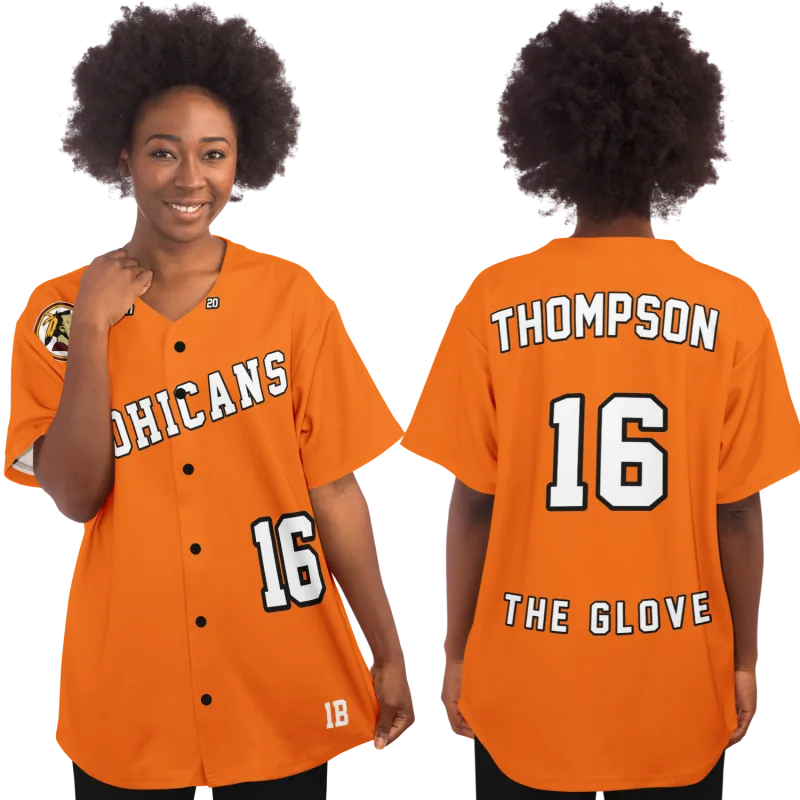
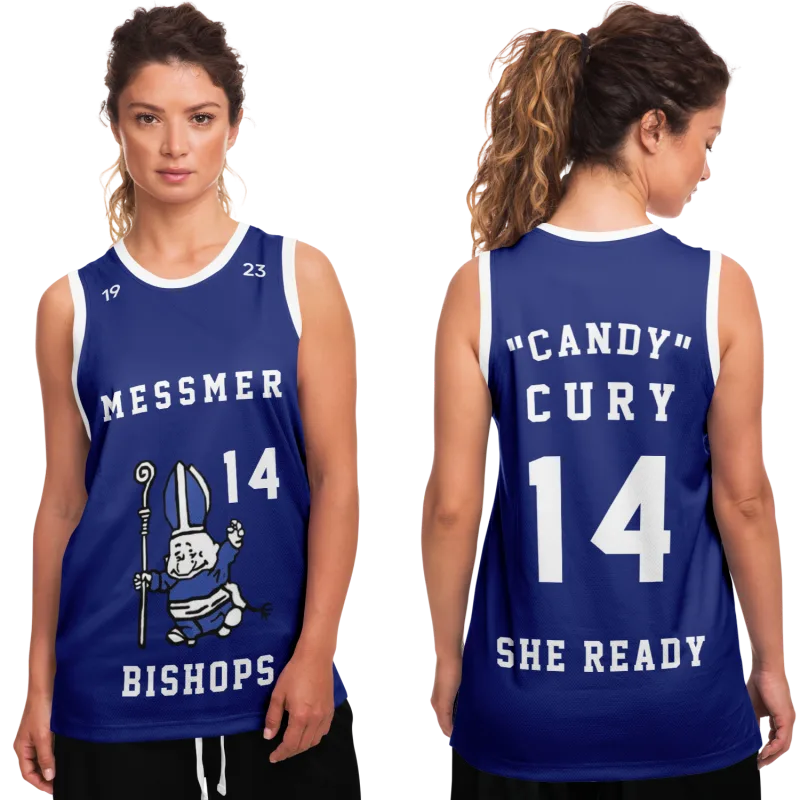
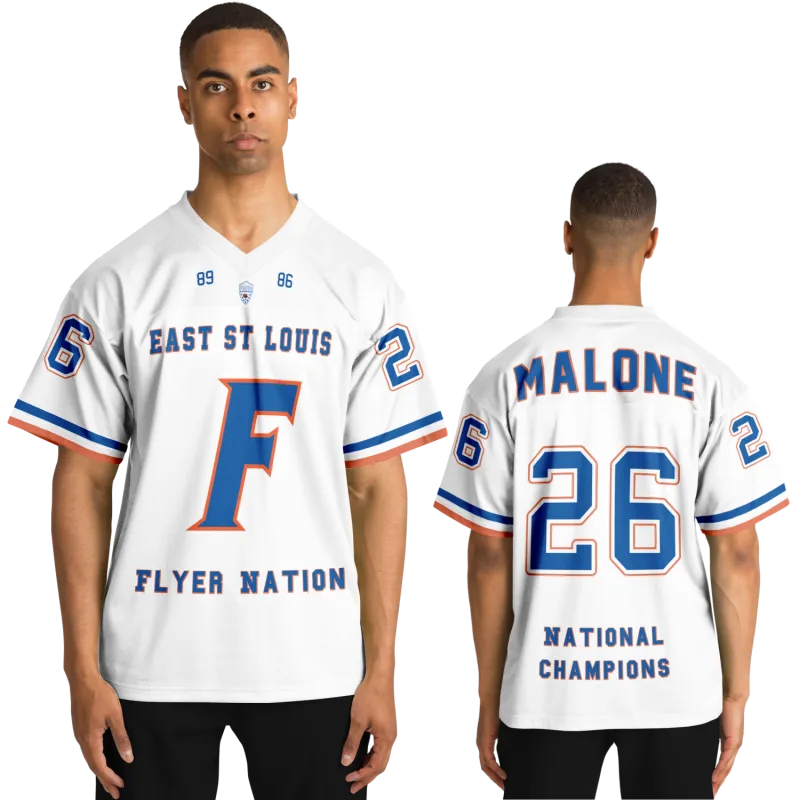
But there is something worth naming about the specific weight of seeing your name and number on a jersey — even now, even ordering one for a rec league, a reunion game, or simply because you wanted to. It is not a small thing to see your name across the back of a basketball jersey when you are thirty-seven years old and the person you were at nineteen is more memory than mirror. It is a specific, quiet kind of recognition.
Not nostalgia. Recognition.
Because the person who wore that number, who earned it, who showed up for it, who competed in it, is still the person whose name goes on the back. Time didn't change that. It just added more context.
You Don't Need to Justify the Identity
The strange social math that former athletes sometimes perform — downplaying the sport, leading with the career pivot, mentioning that it was just recreational, hedging with it was a long time ago — is not humility. Call it preemptive self-erasure.
Humility would be accurate accounting. Accurate accounting is: I played basketball. It shaped me significantly. I am still shaped by it. This is a real part of who I am.
There are things basketball specifically builds that are genuinely uncommon:
- The capacity to compete hard against someone and then shake their hand without resentment
- The ability to take coaching, real, direct feedback about your performance, without collapsing or deflecting
- The fluency with collective goals that overrides individual ego
- The tolerance for losing that doesn't require indifference to winning
These are not qualities that look good on a resume because they're impressive-sounding. They are qualities that actually function in the world, and they were built by years inside the game. You don't have to disclaim them.
What "Still a Basketball Player" Looks Like Now
It doesn't require a league. It doesn't require a gym membership. It doesn't even require touching a ball.
It looks like:
- The way you coach your kid's team with a vocabulary of actual basketball rather than cheerful generalities
- The way you watch a game and see what most people in the room aren't seeing — the spacing, the mismatch, the read the guard made two possessions before the play developed
- The way you default to direct communication in conflict because the locker room taught you that indirect communication costs possessions
- The way you don't quit the thing that's supposed to be hard, because you know from specific physical experience that the fourth quarter always feels like this
None of these require you to be playing. They require you to have played. Which you did.
The game didn't give you those things and then take them back when the season ended. It gave them to you. They're yours.
Your jersey is still out there waiting.
Design yours in minutes and see your name and number the way you remember it.
Frequently Asked Questions
Is it normal to still strongly identify as a basketball player years after you stopped playing?
Yes — and more than normal, it's well-supported by what we know about identity formation in athletes. Athletic identity, particularly for players who competed seriously through adolescence and early adulthood, is formed during the same developmental window when core self-concept is being established. It doesn't dissolve when the competitive structure ends. For many former players, the basketball identity is genuinely load-bearing. It's part of the architecture of who they are, not just a biographical detail. Identifying with it isn't a failure to move on. It's an accurate read of your own formation.
Does it matter what level you played at — varsity, college, semi-pro — when it comes to claiming the identity?
The level shapes the experience, but it doesn't determine the validity of the identity. The competitive instinct, the team dynamics, the physical and psychological demands of the game — these exist at every level of serious play. A player who competed hard through high school varsity ball and a player who played two years of Division II basketball both did something real. The identity isn't calibrated by prestige. It's earned by showing up, competing, and being shaped by the process. Whatever level that happened at, it happened.
Why do so many former athletes feel uncomfortable still calling themselves basketball players?
Part of it is social context: in settings dominated by non-athletes, leading with a sport identity can feel like a non-sequitur, or like claiming credit for something that happened in a different life. Part of it is the cultural script that treats athletic identity as inherently tied to active competition: if you're not playing, you're former, and former implies past-tense. But a lot of it is also the specific grief of the transition — the identity can feel tender, and protecting something tender sometimes means not displaying it. The discomfort is understandable. The solution isn't to disclaim the identity, but to carry it with the same matter-of-fact ownership that any formative experience deserves.
What's the difference between healthy athletic identity and being stuck in the past?
The distinction is in orientation. Healthy athletic identity draws on the past to function better in the present: the skills, the mindset, the values the game built are actively in use. Being stuck in the past means the past is the primary frame for evaluating the present, often with an undercurrent of loss or comparison that doesn't resolve. If your basketball identity is a resource you're drawing from, that's healthy. If it's a standard the present can't live up to, that's worth examining, not by abandoning the identity, but by reconnecting with what was genuinely good about the playing days beyond the scoreboard.
See also: how athletic identity shapeshifts after high school ends | the grief that comes with walking away from the sport at 18 | the difference between watching the game and having lived it