

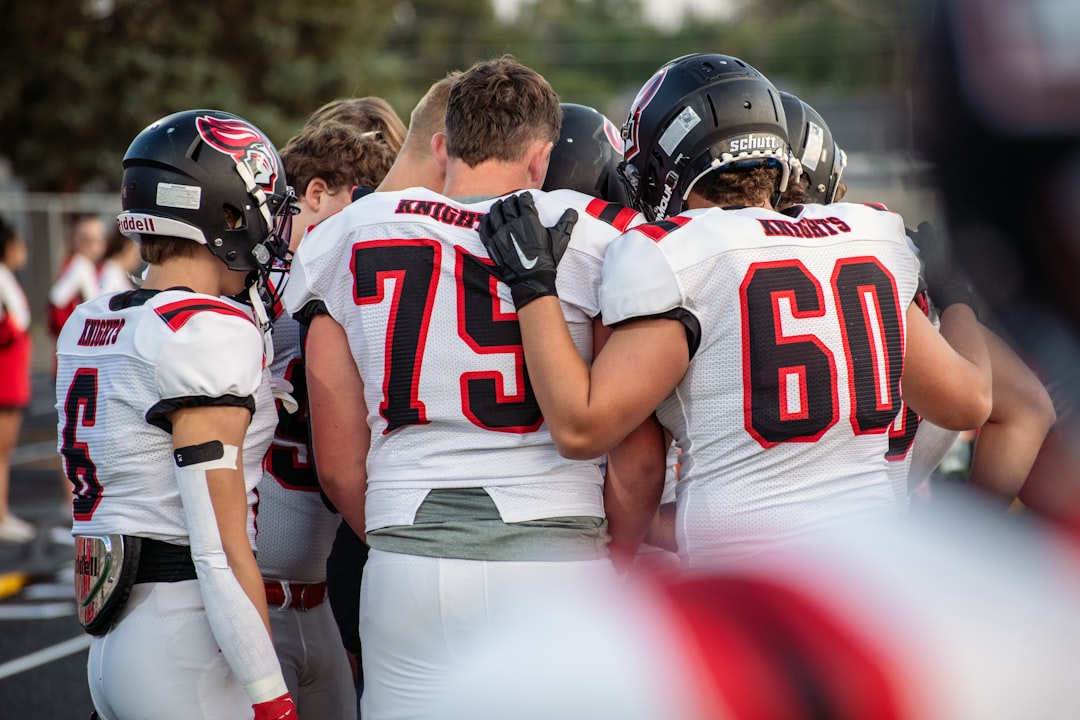




When an Illinois high school football team cancels its season two weeks before its scheduled season opener, it reads like a scheduling note. A line item. Something that happened and got reported and moved on.
It is not that.
According to Sports Illustrated's high school sports coverage, Eisenhower High School has shut down its 2026 varsity football season, citing low participation numbers and player safety concerns — making them the second Illinois program to do so this year. Not mid-season. Not after a loss. Before a single snap was ever played.
For anyone who ever put on pads, that detail — two weeks out — is the one that stops you cold. Because you know exactly what two weeks before opening day feels like. And you know what it means to have that taken away.
This is not a political story. It is not a policy debate. It is a human one. And it belongs to every player who has ever worn a number.
What Two Weeks Before Opening Day Actually Feels Like
Ask any former player to describe the two weeks before their first game of the season. Watch what happens to their face when they try.
Something shifts in that window that is categorically different from everything that came before it. The summer conditioning, the two-a-days, the August grind — all of that is construction. But those final two weeks? That is sharpening. The playbook stops living in your notes and starts living in your chest. Your pads stop feeling like equipment and start feeling like yours. The cleats have that first layer of field worked into the lace eyelets. Practice stops being about getting better and starts being about being ready.
It doesn't matter if you played in a 50,000-seat stadium or on a field with no bleachers and a chain-link fence for a sideline. It doesn't matter if your team went 10-0 or 2-8. That pre-season electricity is the same. It is the feeling of a door that is about to open.


For the Eisenhower players who had already put in that work — who had already run the routes, sat through the film, pushed through the conditioning — that door closed instead.
Every former player understands, instinctively, that you cannot manufacture that window twice. It belongs to a specific year, a specific school, a specific number on a specific back. It is perishable in the most complete sense of the word. When it is gone, that version of it is gone for good.
That is what makes this more than a sports headline.
The Roster That Never Got to Play
Every program has a player that the stats will never find.
Not the starter. Not the kid who already has coaches calling his house. The player who was there because this — this school, this team, this fall — was their thing. The scout team player. The one who took the hit in Wednesday practice and lined back up without complaint. The one who couldn't have told you exactly why the jersey mattered so much, only that it did.
That player exists on every roster. And when a season disappears, that player has nowhere to go. The recruited athlete finds a path. The starter transfers and keeps playing. But the player whose entire season was built around the specific experience of belonging to this team, in this town, in this year? There is no makeup game. There is no equivalent.
Marcus T., 34, grew up playing in Missouri and remembers the summer his junior season nearly collapsed due to a facility dispute at his school. The team practiced in a parking lot for three weeks while things got sorted out. "I didn't care where we practiced," he said later. "I just needed us to play. Everything that year — every hard thing — I was getting through it because of Friday nights." The season went forward. He still has his jersey hanging in his home office.
The Eisenhower players won't have their Friday nights to get through things for. And that is the part of this story that deserves to be named directly, not buried in a news brief.
What a Season Is — Beyond the Scoreboard
People who didn't play tend to think a canceled season means canceled games. Former players know it means something far larger than that.
A season is a contained world. It has a beginning, a middle, and an end. It has rituals that become inseparable from who you were during that time — the locker room routine, the walk from the bus, the pregame playlist, the specific combination of smells that will send you back thirty years the moment you encounter any one of them. Grass and turf rubber and athletic tape and the cold air of late October. These things do not fade.
The games are the most visible part. But ask any former player which memories stayed with them longest, and the games are often not what they name first.
They name the Tuesday practice where nothing worked and the Wednesday where everything did. They name the bus ride home after a loss where nobody spoke and nobody had to. They name the friendship that formed between the kid getting playing time and the kid who wasn't — a bond forged entirely by shared wanting, the kind that only forms when you stay anyway.
None of that exists without a season.
When Eisenhower's 2026 season was canceled, the games weren't the only thing that disappeared. The whole world of it went with them.
The Illinois Pattern — And What Former Players See in It
Two programs in the same state in the same year. One of them two weeks from opening day. And another Illinois program has since ended its season early — this one mid-season, after the games had already begun.
High school football participation has been shifting in pockets across the country for some time. Roster challenges, safety considerations, and changing community dynamics have forced difficult decisions at the program level in states well beyond Illinois — eight Iowa programs are now out for 2026, and an Oregon program pulled the plug on its varsity season after just one week of practice. This is not a new conversation. But when the numbers move from trend line to specific school — from data point to canceled season — former players don't process it the way analysts do.
They see a locker room. They see a schedule that got printed and posted and then taken down. They see a group of kids who did everything right — who showed up, who put in the work, who earned the right to play — and didn't get the game.
The instinct that surfaces in former players watching this kind of story is not abstract. It is protective. It comes directly from knowing what a program gave them and watching younger players lose access to it. The discipline. The identity. The specific kind of belonging that a number on a jersey and a name on a roster provides.
That is a generational impulse. Players who had it want players who come after them to have it too. Not because football is the only path to those things, but because they know from the inside what it gave them — and they know you cannot find it anywhere else in quite the same form.
Every Former Player Has This Memory
The details are always specific. Never vague.
It is never "football was meaningful to me." It is the exact weight of the helmet after a long third quarter. It is the way the away stadium looked when the bus pulled into the parking lot and you stared at a field you had never played on. It is the halftime speech you can still hear word for word from a coach who has been gone for twenty years, delivered in a locker room that has since been renovated twice.
The specificity is the signal. It tells you how deep the experience ran. It tells you why you still know the starting lineup from your senior season. Why you kept the jersey. Why a headline about a program you have never heard of in a town you have never visited can stop you mid-scroll on an ordinary Tuesday morning.
Because it is not about Eisenhower. It is about every version of yourself that belonged to a team. Every former player who reads this story feels, briefly, the weight of those two weeks — and understands exactly what the players who didn't get to finish them have lost.
That feeling doesn't go away. In our experience, it just finds a home somewhere — in a jersey on a wall, in a story told to a kid who asks about the old photos, in the specific ache of a headline that should have been a season recap and wasn't.
Your Jersey Is Still Out There Waiting
Design yours in minutes and see your name and number exactly the way you remember it — the colors, the font, the feel of belonging to something that was yours.
Frequently Asked Questions
Why did Eisenhower High School cancel its 2026 football season?
Eisenhower High School canceled its 2026 varsity football season citing low player participation numbers and player safety concerns. The announcement came approximately two weeks before the program's scheduled season opener, making it the second Illinois high school football program to cancel their season in 2026.
What happens to the players on a team when a high school football season is canceled?
Outcomes vary by player. Some transfer to nearby programs to continue playing, some shift to other fall sports, and some — particularly seniors — simply lose their final season with no alternative available. For players whose eligibility is exhausted or who are tied to a specific community, a canceled season can mean the end of their organized football experience entirely, with no opportunity to recover what was lost.
Is high school football participation declining across Illinois and other states?
Participation numbers in high school football have shifted in various regions over the past decade, with some programs facing roster challenges that make fielding a full, safe varsity squad difficult. Illinois has now seen two programs reach that threshold in a single year, and another Illinois program ended its season early mid-season. The pattern has widened well beyond Illinois too — eight Iowa programs are out for 2026, and an Oregon program canceled after just one week of practice. The reasons vary by community, but when rosters fall below the level needed to compete safely, cancellation becomes a responsible outcome rather than an avoidable one. Design your own — custom football jerseys.
Why does a canceled high school season resonate so strongly with former players?
Former players understand from direct experience that a season is more than its games. The relationships, the rituals, the identity formed by belonging to a team — none of that transfers or reschedules. When a season is canceled, especially in the final two weeks before it begins, players lose an experience that is tied permanently to that year, that school, and that roster. For former players, the loss registers as something personal regardless of whether they ever knew the program.
See also: the grief that comes with losing a season you can never get back | what high school sports actually teach you that nothing else can | why high school sports still matter so deeply to the adults who played them | the identity crisis that can follow when a season is suddenly taken away