


Eight Iowa high school football programs won't play varsity football in 2026. That's not a typo. Eight.
According to Sports Illustrated's High School coverage, Central Decatur and New London have become the latest additions to a growing list of Iowa schools suspending varsity football this fall, bringing the confirmed total to eight programs that will not compete at the varsity level. Central Decatur and New London are not small names in the conversation. They're programs with histories, with alumni, with players who still remember exactly how that helmet felt the first time they put it on in front of their hometown crowd.
Eight programs.
If you played high school football — at any level, in any state, in any decade — that number lands differently than it would for someone who didn't. And that's what this piece is really about.
The Scoreboard Nobody Wants to Read
There is a particular kind of loss in sports that doesn't show up on a scoreboard. It's not a 42–6 blowout. It's not a missed field goal in overtime. It's the loss of the season itself: the quiet administrative announcement that the team won't take the field at all.
Central Decatur and New London join six other Iowa programs in making that announcement for 2026. Eight schools. Eight communities where the stadium lights will stay dark on Friday nights this fall. Eight sets of bleachers where parents would have sat, where younger siblings would have watched and dreamed, where alumni would have driven back to catch a game and feel seventeen again for two hours.
The 2026 Iowa regular season kicked off on Thursday, August 27. And at those eight schools, the Friday night lights did indeed stay dark, exactly as the announcements promised. Since kickoff, the pressure has continued not as more season cancellations but as individual game forfeits: Meskwaki Settlement gave up its September 4 game against Gladbrook-Reinbeck over low numbers and injury concerns before returning to the field the following week, and West Central forfeited its Week 2 game against Don Bosco. Through it all, the count of full season cancellations has stayed put at eight.

The reasons programs reach this point vary: enrollment numbers, roster size, participation rates, the long math of small towns and shifting demographics. This piece isn't going to sort through the policy side of that equation. Other outlets do that work, and they should.
What this piece is about is the part nobody reports on.
The part that lives in the people who played.
For Anyone Who Ever Pulled on a Varsity Jersey
For anyone who ever put on pads and ran through a paper banner in front of a hometown crowd, the phrase "program suspended" translates into something physical.
You feel it somewhere specific. Maybe it's in your hands: the memory of tape on your wrists before the first game of the season. Maybe it's in your legs: the particular ache of two-a-days in August heat that you hated at the time and would give something to feel again. Maybe it's in your chest, in the specific breathless feeling of that tunnel before you ran out under the lights.
Every former player knows that high school football is not really about football.
It is about the first time you were part of something larger than yourself. It is about learning that your body could do things you didn't know it could do. It is about the specific, unrepeatable social architecture of a team: the inside jokes, the pre-game rituals, the defensive call that only your unit knew, the way your offensive line's footwork sounded in perfect sync on a clean running play.
Those things don't exist without the program. And when a program goes away, they go away too, not for the people who already have the memories, but for every kid who was supposed to make them next.
That's what eight programs means. Eight towns' worth of next.
Remember the Season That Made You
Every former player knows there's one season you come back to.
Not necessarily the championship year. Not necessarily the season with the best record. The season you come back to is the one where something clicked: where the game finally made sense, where you found your role, where you understood for the first time what it meant to fight for something alongside people you'd choose again every time.
For some players, that season was freshman year. For others, it came junior year when the pieces finally fit. For a few, it arrived in the final weeks of senior fall — late, unexpected, irreplaceable.
The players who would have taken the field for Central Decatur and New London this autumn were supposed to have that season. Some of them were going to have THE season, the one they'd replay in their minds for the next thirty years. The one that would make them drive back to watch a game long after graduation, just to stand near it again.
That season doesn't get played now.
And the thing about a cancelled season is that it doesn't come back. There's no make-up game for being seventeen.
What the Lights Going Dark Actually Costs
Marcus T., 34, played linebacker for a small Iowa program in the early 2010s. He still drives back every October to watch homecoming, even though his own kids don't play there — yet. "It's not nostalgia, exactly," he said once. "It's more like checking in. Making sure the thing that made me is still there." When he heard that programs in his region were going dark, his first call was to his old position coach, not to a sports journalist.
That call — the instinct to reach back, to check the chain — is something every former player understands.
High school programs aren't just sports infrastructure. They are community memory systems. They are the mechanism by which a town remembers itself as the kind of place where people show up, where kids fight for something, where Friday nights mean something. When that mechanism shuts down, even temporarily, something in the community's self-image shifts. It's subtle. It's real.
For the players who are too young to have gotten their season yet (the incoming freshmen who will now wait, the sophomores who may only get one more shot, the juniors who are doing the math and coming up short), the cost is not abstract. It is a specific, countable number of Fridays that will not happen the way they were supposed to — and coping with the end of a playing career is its own quiet work.
Iowa Is Not Alone — But Iowa Is Personal
The trend of small-school programs pausing or folding at the varsity level is documented across the Midwest. Iowa is not uniquely affected. Rural enrollment pressures, changing participation rates, and the sheer logistics of fielding eleven players on each side of the ball have created headwinds for small-program football across multiple states. This fall alone has seen an Illinois program announce an early end to its 2026 season and an Oregon program pull the plug on its varsity season after just one week of practice.
But national trends don't hurt at the local level. They hurt at the specific level.
They hurt in Central Decatur, where someone's grandfather maybe played on this same field. They hurt in New London, where the weight room smells the same as it did twenty years ago and the schedule on the wall lists games that won't now be played. They hurt in the other six Iowa communities that made the same announcement before these two.
Eight programs is a pattern. For the people inside each one, it's singular.
The stories that cut deepest are never the ones about statistics or structural trends. They are always the stories about specific places and the specific people who built their identities there. Eight is a number. Central Decatur and New London are places. That distinction matters.
What Former Players Know That No Headline Captures
Here is the thing that doesn't make it into the news report: the team that never plays still practices. In the memories of everyone who played before them, on every field that ever produced someone who cared, the ghost of that season runs its routes anyway.
The kids who would have been on those rosters in 2026? They didn't stop being football players because a program paused. They carry the identity whether or not the season happens. That's not nothing. That's actually the most important thing about sport at this level — it marks you permanently, regardless of record, regardless of final scores, regardless of whether the program was even still running by the time you graduated.
Every former player knows someone who played for a program that later folded. And almost universally, those players still say "I played for [school]" in the present tense, not "I used to play for." The program's administrative status doesn't reach back and change what happened. It just means the chain stops here, for now.
For the players who haven't gotten their season yet, the work is staying connected to the game in whatever form is available — co-ops, flag programs, the mental and physical discipline that football develops — until the program finds its footing again. Or until they find another field.
That's what former players tell younger players when programs go through this. Keep training. Keep showing up. The game doesn't need your program to need you.
The Jersey Is Still Yours
One thing that doesn't get cancelled when a program pauses: what you already earned.
For the players who came before — the Central Decatur alumni who played their last snap years ago, the New London graduates who still remember exactly what number they wore — none of that changes. The record is set. The season happened. The jersey was real.
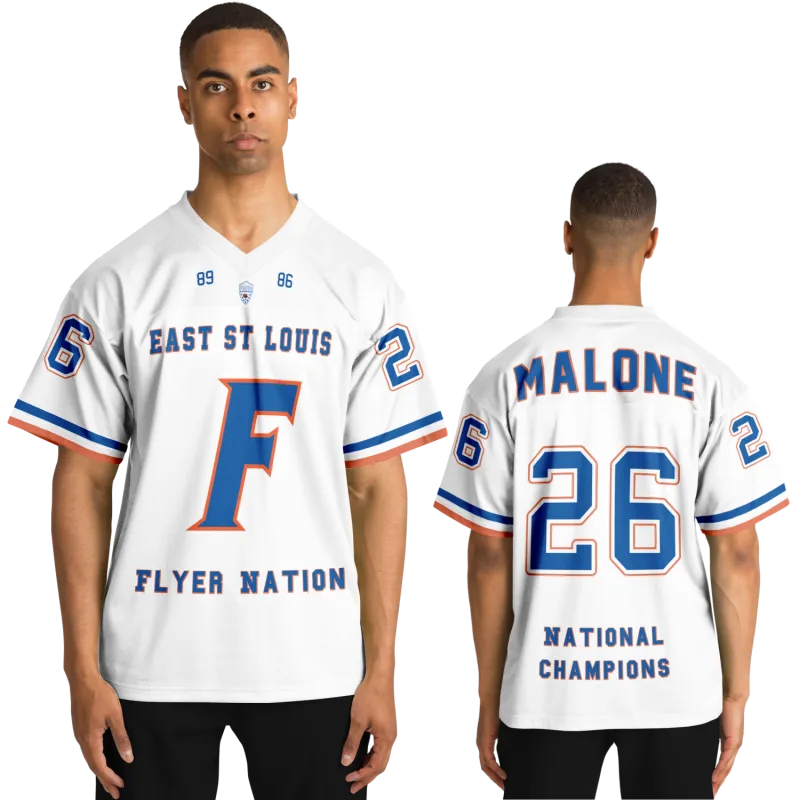
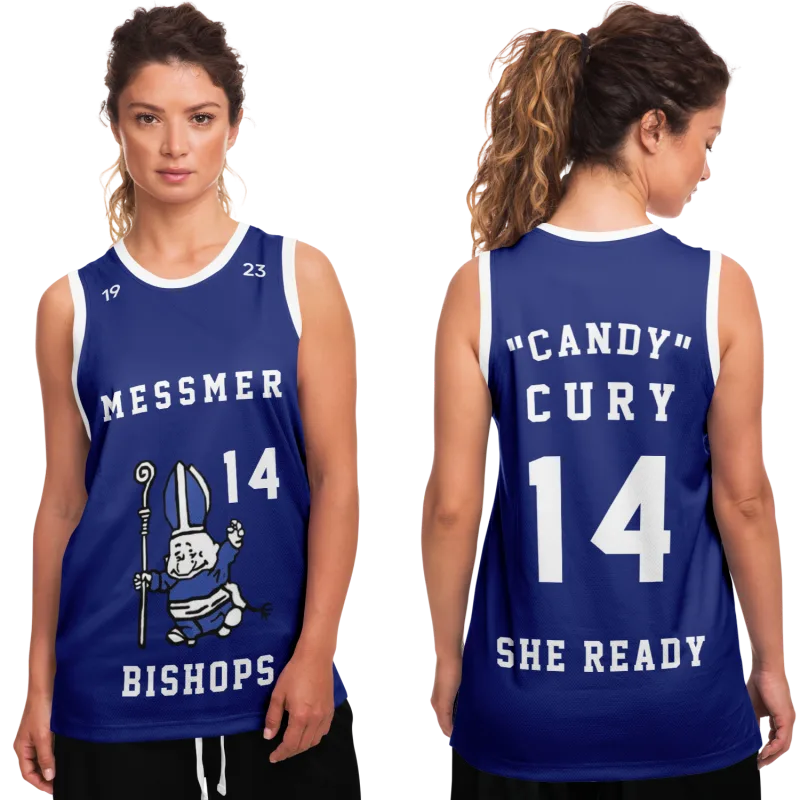
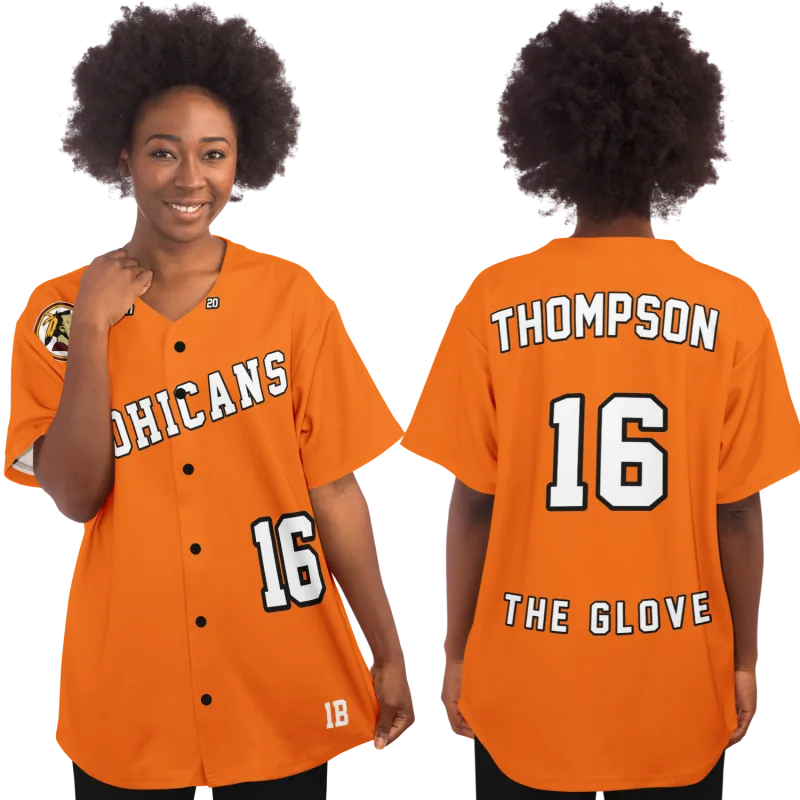
There's something about the physical artifact of a jersey — your name, your number, the school that put you on the field — that holds a season in a way that a highlight reel doesn't. It is the specific, tangible proof that you were there, that the season was real, that the Friday nights happened exactly the way you remember them.
Programs pause. Memories don't.
Your Jersey Is Still Out There Waiting
Design yours in minutes and see your name and number exactly the way you remember it — whether your program is still running or whether you're one of the players who carries it in memory now.
Frequently Asked Questions
How many Iowa high school football programs are now out for 2026?
As of the most recent reporting, eight Iowa high school football programs have confirmed they will not compete at the varsity level in the fall of 2026. Central Decatur and New London are the two most recently announced additions to that list.
Why are small high school football programs suspending operations?
The reasons vary by school and community, but the most common factors include declining enrollment at small rural schools, difficulty fielding a full eleven-man roster, and broader demographic shifts in rural Midwest communities. These are structural, long-term pressures that affect programs across multiple states — Iowa is among the most recently documented, but not uniquely affected.
Can a suspended high school football program come back?
Yes. A program suspension is not always permanent. Some schools transition to eight-man or six-man formats to maintain competition with smaller rosters. Others enter co-op agreements with neighboring schools. Full reinstatement to eleven-man varsity competition is possible if enrollment and participation numbers recover, though the timeline varies significantly by district.
What happens to players whose programs are suspended?
Players in suspended programs typically have several options: participate in a co-operative program with a neighboring school, compete in a modified format (eight-man, six-man) if available, or wait for the program to reinstate. State athletic associations generally have provisions to allow affected students to transfer for athletic purposes without sitting out, though specific eligibility rules vary by state and situation.
Where can former players from these programs honor what they built?
The memories and identity built during those playing years belong to the players permanently — no administrative decision changes what was earned on the field. Many former players find that custom jerseys with their name and number serve as a tangible connection to those seasons, especially when the original jersey is long gone or the program itself is in transition.
See also: what losing a team actually means to the athletes who played | how athletic identity gets shaped by the team you played for | why high school football still matters to the adults who played it | how football-obsessed communities feel the loss of a program far longer than people expect | what playing under the Friday night lights meant to the players who will never get that back