

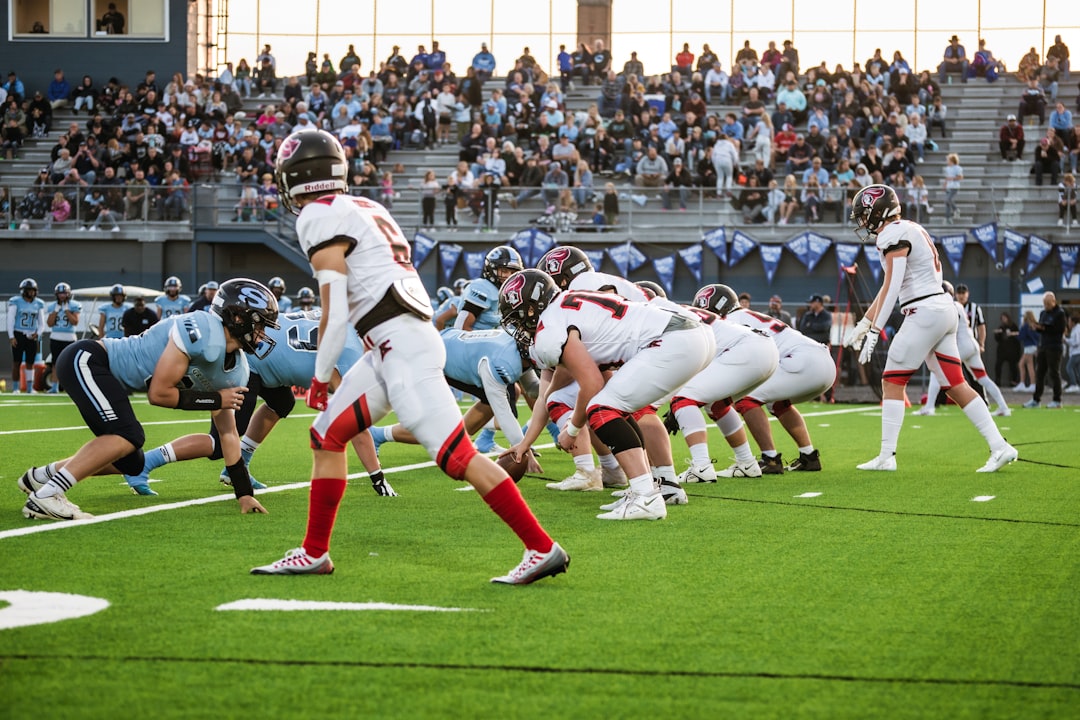




There is a specific kind of quiet that settles over a high school football program when the numbers aren't there anymore.
Not the quiet after a tough loss — that one has texture to it, the sound of cleats on concrete and pads being ripped off and nobody saying much. This quiet is different. It's the quiet of a schedule that just stops. Of a season that ends not in a championship game or even a final loss, but in a decision made in an athletic director's office, announced to a roster that already knew things weren't right.
That's the quiet descending on Sherrard High School right now.
According to a report from SI High School Sports, the Sherrard Tigers will play one more game this week before cancelling the remainder of their 2026 varsity football season. The reason is straightforward and heartbreaking in equal measure: not enough players to keep going safely.
One more game. Then the lights go dark on the 2026 season.
For anyone who ever put on a helmet and jogged out under those Friday night lights, in Illinois or anywhere else, that sentence lands differently than it does for a casual reader.
What Actually Happened at Sherrard
The Sherrard Tigers, a small-school program in western Illinois, are facing a reality that more rural and smaller-enrollment programs across the country are quietly confronting: the roster has thinned to the point where continuing a varsity schedule is no longer viable.
The program isn't folding permanently. There's no indication this is the end of Sherrard football as an institution. But the 2026 varsity season is being shut down early, with one final game serving as the close of a season that won't get its natural ending.
This isn't a scandal. There's no controversy to unpack, no villain in the story. It's just the math of a small program in a particular moment — a few too many graduating seniors, a few too many injuries, a few too few incoming freshmen — and the responsible decision by the coaching staff and administration to recognize when the numbers are telling them something they have to listen to.


The players who have been suiting up all season will play one more time. And then it's over.
That detail — one more game — is the one that stays with you if you've ever played.
For Every Former Player Who Has Ever Suited Up
Every former player knows the feeling of the last game, even when you don't know it's the last game.
That's usually how it works. You play a playoff game and you lose and you don't know until you're in the locker room afterward, sitting there with your pads half off, that this is it. This is the last time. The season ends and real life starts arriving at your door faster than you expected, and one day you realize that the last time you wore a helmet was the last time, period.
The Sherrard players this week have something most players don't: they know. They know that Saturday's game, or whenever this final contest is scheduled, is the last one. They've been told. They have the unusual and entirely unwanted gift of awareness that this is the closing chapter.
This kind of foreknowledge doesn't make things easier. It makes everything louder. Every snap. Every play call. Every moment in the huddle where somebody says something dumb and everybody laughs and then remembers why they're laughing.
Former players understand this without being told. You've been in that locker room. You know what it smells like. You know the specific weight of a helmet when you're buckling it for what you understand is one of the last times. The leather. The fog on a cold morning. The way the grass sounds different when the whole team is moving through it together. And you know the Saturday morning ritual that followed every Friday night, when the game was over but the weekend still carried its shape.
The Roster Problem Nobody Talks About Enough
Small-school football programs across the Midwest, and really across the entire country, are navigating a slow-moving enrollment and participation crisis that rarely gets the attention it deserves.
Illinois alone has seen multiple programs in recent years either cancel seasons, drop to 8-man football, or consolidate into co-op arrangements with neighboring schools. It's not a Sherrard problem. It's a structural reality for programs in communities where the high school graduating class might be 80 or 90 kids, and you need 35 of them to be healthy, eligible, and willing to take on the physical demands of varsity football.
The numbers that produce a sustainable roster are harder to hit than they used to be. Participation in youth football has been in a multi-year decline nationally. The pipeline that once fed small-school programs automatically — every kid in town playing youth tackle, then JV, then varsity — has narrowed. Some communities that once fielded strong programs are now working with whatever they can get.
None of this makes the Sherrard situation less real or less painful for the players living it. But it's worth understanding that when you hear "team cancels season due to low numbers," the story behind those words is usually the story of a community whose demographics have shifted faster than its sports infrastructure has adapted.
There's a version of this story that plays out at small schools every year. A former player hears that the program he grew up in is thinning out, that his nephew's last memory of playing there might be practicing without enough guys to run a real defense, and the thought lands like a blow. That's not how it should end. And in the days after, he reaches for something that keeps his own playing days feeling real and worth it, because holding onto a piece of it is the only way to keep it.
Remember When the Season Felt Like It Would Last Forever
There is a specific delusion that every high school athlete carries — and it's not a flaw. It's a feature. You genuinely believe, somewhere below conscious thought, that the season is permanent. That there will always be another Friday night. Another week of practice. Another game to prepare for.
The conditioning for this belief starts young. Youth sports operate on an endless loop: season ends, new season starts. By the time you reach high school varsity, you've been playing some version of this game for years. The rhythms are so embedded that the idea of a season just stopping — not in a final playoff game but in a staff meeting and an announcement — doesn't register as possible.
And then for some teams, it is possible. And it happens. And those players carry that specific ending with them for a long time.
Every former player knows a version of this: the year the program was thin. The year everyone knew the roster was held together by athletic tape and sheer will. The year the coaches kept practice competitive with 22 guys when you really needed 40. Those are the teams that bond in a way that fat rosters sometimes don't — because everyone on the field knows what it took to stay on the field.
The Sherrard players this week are playing one final game with that knowledge fully alive. They know what they have. They know what they're about to lose. And they're going to line up and play anyway.
That takes something.
What One More Game Really Means
Here is the thing about a final game that most people watching from the stands don't fully register:
It's not about the scoreboard.
It never really was, but it's especially not now. The players in Sherrard this week aren't playing for a playoff berth or a conference title. They're playing because the alternative — not playing — is the thing they can't accept. Because as long as there's a game to prepare for, the season is still alive. The locker room is still alive. The thing they built together over years of summer two-a-days and Friday nights and bus rides where someone always had bad music playing too loud — that's still alive.
The moment the final whistle blows, something changes permanently.
Former players carry their last game with them. Even players who had long careers beyond high school, whether college ball, community leagues, or rec leagues well into their thirties, often find that the high school ending is the one that occupies the most emotional space. Because that was the first time. The place where it meant the most and the stakes felt the highest and nobody had gotten cynical yet about what a game could be.
Those players at Sherrard this week will run onto that field one more time. They'll go through warmups. The pre-game routines that have become automatic. The specific spots on the field where certain guys always stretch. The particular handshakes and rituals that teams develop and that nobody outside the team ever fully understands.
And then they'll play. And at some point it will be over. And they'll know it in a way that most players only understand years later.
What Small Programs Like Sherrard Give Their Players
It would be easy, in a piece like this, to let the narrative stop at the sadness of a season ending early. But that's not the complete truth about what small programs produce.
Small-school football, the kind where 22 guys have to be able to play on both sides of the ball, where the coaching staff knows every player's family, where the stands hold 300 people and half of them are related to someone on the field, and where a homecoming game still brings the whole town to the fence line, creates something that large programs sometimes can't replicate.
It creates indispensability.
In a program where the roster is thin, there is no depth chart luxury. Every player matters in a way that is immediate and specific. You cannot afford to lose a starter without the whole structure shifting. The relationships that form under those conditions are different from the relationships in a 90-man program where some players barely know each other's names.
The players at Sherrard who suited up this season — knowing the numbers were what they were, choosing to be there anyway — are the exact players who tend to carry their high school football experience with them the longest. Because they fought for it. Because it asked something real of them.
That's worth honoring. Not with pity. With recognition.
Your Jersey Is Still Out There Waiting
If reading about Sherrard brought something back — a specific Friday night, a specific jersey number, a specific game you can still see clearly — that feeling is trying to tell you something.
Design yours in minutes and see your name and number exactly the way you remember it.
Frequently Asked Questions
Why did Sherrard High School cancel its 2026 football season?
Sherrard High School announced it would end its 2026 varsity football season early due to low roster numbers. The program did not have enough eligible, healthy players to safely continue the varsity schedule. The team played one final game before shutting down the remainder of the season.
Is Sherrard's situation unique, or are other small schools facing similar problems?
Sherrard's situation reflects a broader trend affecting small-enrollment high school football programs across Illinois and nationally. Declining youth football participation, shifting community demographics, and the physical demands of the sport have made it increasingly difficult for smaller programs to field full varsity rosters. Multiple Illinois programs have faced similar decisions in recent years, with some shifting to 8-man football or forming co-op agreements with neighboring schools.
What happens to the players when a high school season is cancelled early?
When a varsity season ends early, players typically have options depending on their grade and eligibility. Underclassmen retain their remaining years of athletic eligibility and can return the following season. The emotional impact, particularly for seniors, is significant, as it removes the expected natural ending of their high school playing career. Many former players who experienced shortened or cancelled seasons describe it as one of the formative experiences of their athletic lives.
How does small-school football differ from larger programs in terms of player experience?
Small-school programs typically require players to contribute on both offense and defense, creating a depth of experience and responsibility that larger programs, where specialization and depth charts allow players to focus on one side of the ball, don't always produce. The smaller roster size also creates closer relationships between players and coaching staff, and a stronger sense of individual accountability. Players from thin-roster programs often describe their experience as more demanding and more bonding than peers who played for large programs with extensive depth.
See also: the grief that comes with losing a season before it's over | what senior night means to players who never got to finish | how athletic identity can be shattered when a season ends unexpectedly | Illinois ranks among the most football-passionate states in the country