




There's a kind of quiet that falls over a small town on homecoming Saturday, right after the parade clears Main Street and the floats get parked behind the gym. The pageant crowns have been handed out. The convertibles have been hosed off and covered. And somewhere, in a locker room that smells like sweat and wintergreen and three decades of spilled Gatorade, a kid is lacing up his cleats and trying to remember how to breathe.
Ask any homecoming game former player what that night felt like, and they won't start with the score. They'll start with the noise. The band warming up across the parking lot. The crackle of the announcer's voice through the old speakers. The way the whole town, the man who sold you your first glove, the woman who taught you algebra, the barber who's cut your hair since you were six, filed into the bleachers like it was church.
That's the thing nobody tells you until it's behind you: the homecoming game was never really about football.
The Parade Ends, and the Real Night Begins
Homecoming parades are pure joy — candy thrown from floats, mums pinned to shirts, class royalty waving from the back of a borrowed truck. But ask anyone who played in the game after the parade, and they'll tell you the parade was just the opening act. The real event happened under the lights a few hours later.
For a former player, that transition from the bright, silly afternoon to the serious, darkening evening was the moment the night turned real. The sun dropped. The temperature followed. The stadium lights hummed to life one bank at a time, and suddenly the field looked different. Bigger. Quieter, somehow, even as the crowd got louder.
The tradition itself is a century-old one. Homecoming as we know it, the game, the court, the alumni who return, has been a fixture of American high schools and colleges for generations, with roots reaching back more than a hundred years. That longevity is part of why it matters: when you step onto the field for homecoming, you're stepping into something much older than you.
You Weren't Just Playing for a Win
Here's what a homecoming game former player knows that nobody watching fully understands: you weren't just trying to beat the other team. You were playing in front of your history.

The alumni sat in their old section, pointing at the field and saying, "That's where I made the tackle." Your grandparents drove in from out of town. Your little league coach was there, arms crossed, nodding at the way you set your feet. The girl who'd had a locker next to yours since middle school stood on the sideline in a mum bigger than her shoulders.
There's a pressure in that that's different from any playoff game. A playoff is about the future — what might happen next week. Homecoming is about the past — who's watching, and what they remember about the kid you used to be. You carry the town with you on every snap.
The Details You Still Remember
Funny how the big moments blur, but the small ones stay sharp. A former player doesn't always remember the final score of his homecoming game. He remembers the feel of the cold mouthpiece before the opening kickoff. The way the grass smelled different after the afternoon sun. The steady pulse of the band's drumline rattling the metal bleachers.
He remembers looking up into the crowd at halftime and finding his dad's face — not cheering, just watching, the way dads do. He remembers the fight song swelling in the third quarter when the whole town stood up at once. He remembers the postgame walk across the field, cleats clicking on concrete, someone's mom hugging him and crying for no reason he understood at the time.
Those details are the whole point. They're what you'd go back and live again if you could.
Why That Saturday Still Feels Close
The strangest part is how near it all stays. You can be thirty years into a career, a mortgage, kids of your own, and one cold Friday night in late September will hit you out of nowhere. A cold snap. The smell of a grill. The faint sound of a drumline from the stadium a few blocks over. And you're seventeen again, standing in the tunnel, waiting to run out.
That's nostalgia doing its quiet work, and it's one of the most reliable feelings we have. Psychologists who study memory talk about how our teenage years hold a special charge, the "reminiscence bump," because those are the years our identity was being built. You weren't just playing football back then. You were becoming the person you are now. The field was the room where that happened.
So it makes sense that the homecoming game still gets its hands on you. It wasn't a normal Saturday. It was the Saturday when the whole town gathered to see who you were becoming — and you got to show them.
Bring the Night Back Home
You can't go back and play the fourth quarter again. But you can bring the night back into your home in a way that matters.
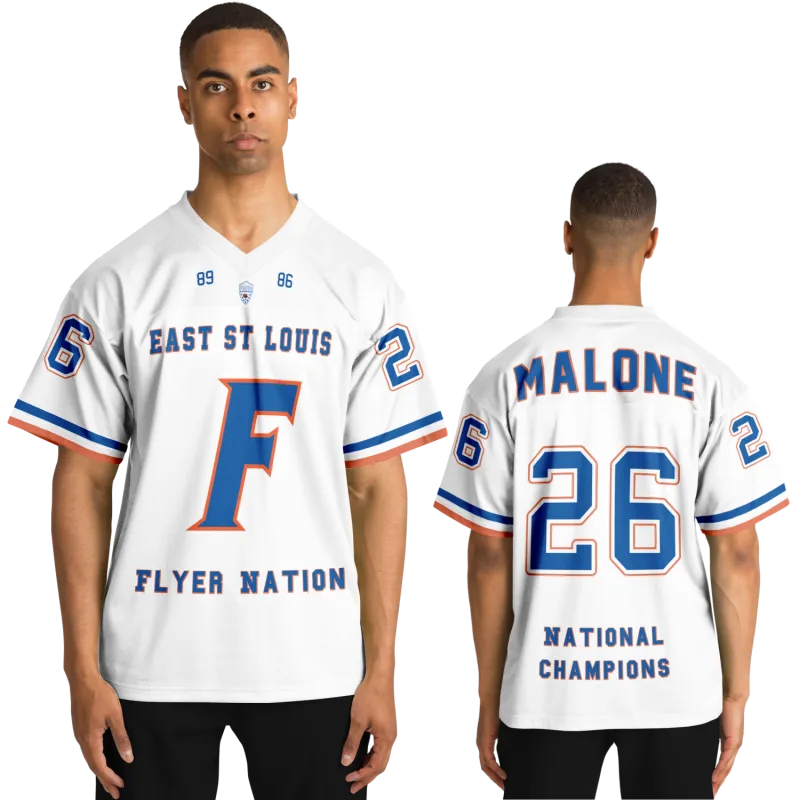
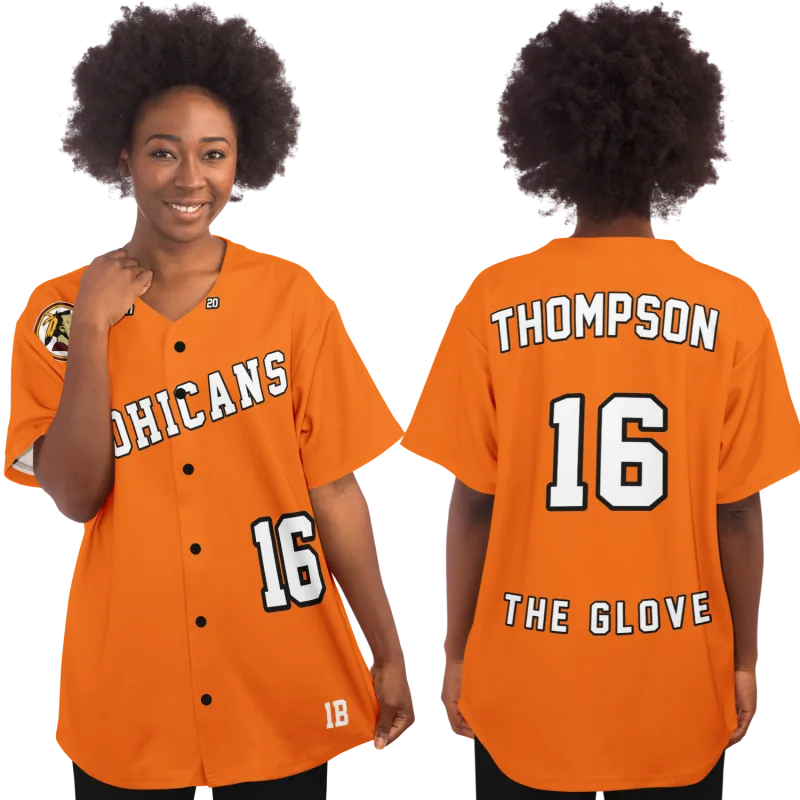
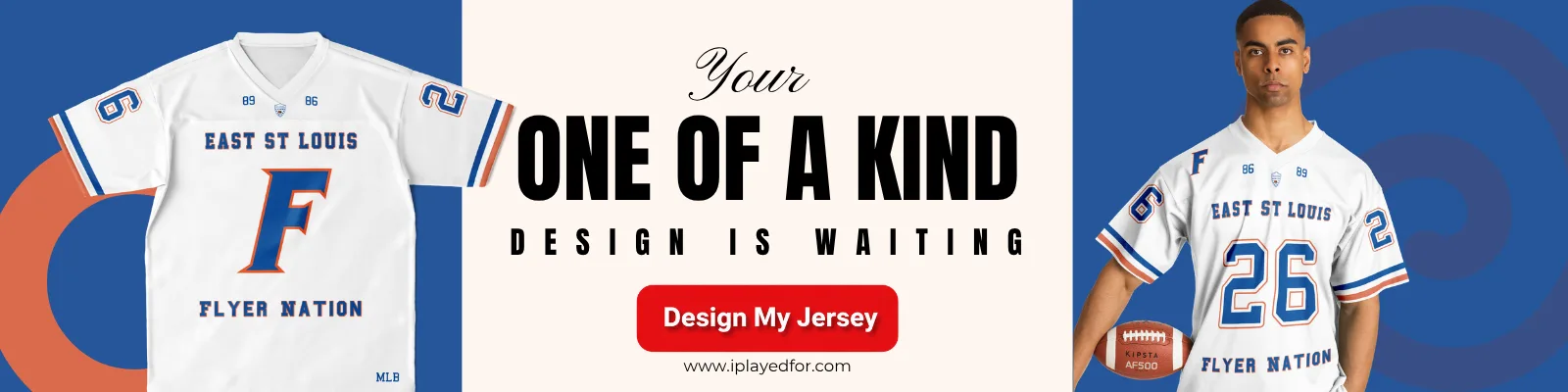
That's what we build at iPlayedFor. A custom jersey with your name, your number, your colors — inspired by the one you wore and designed by you, step by step. It's not gear for the current team. It's yours. A way to hang a piece of that Saturday on your wall, or wear it to the next homecoming and let the memories do the rest.
The fabric is soft and built to hold up, with colors that never crack, peel, or fade — the way the memory doesn't, either. Every jersey is $79.99 with free shipping anywhere in the USA, and it ships right to your door.
Design Your Jersey and put that number back where it belongs. Whether you played football, basketball, baseball, or any other sport, that Saturday is still yours. It deserves more than a drawer full of old photos. The town watched you grow up. This is how you keep that night close.
Homecoming comes around once a year, and every year the same thing happens: a town pauses, the band plays, and somewhere a former player feels it all over again. Some nights don't end when the clock runs out. They just wait to be remembered.