

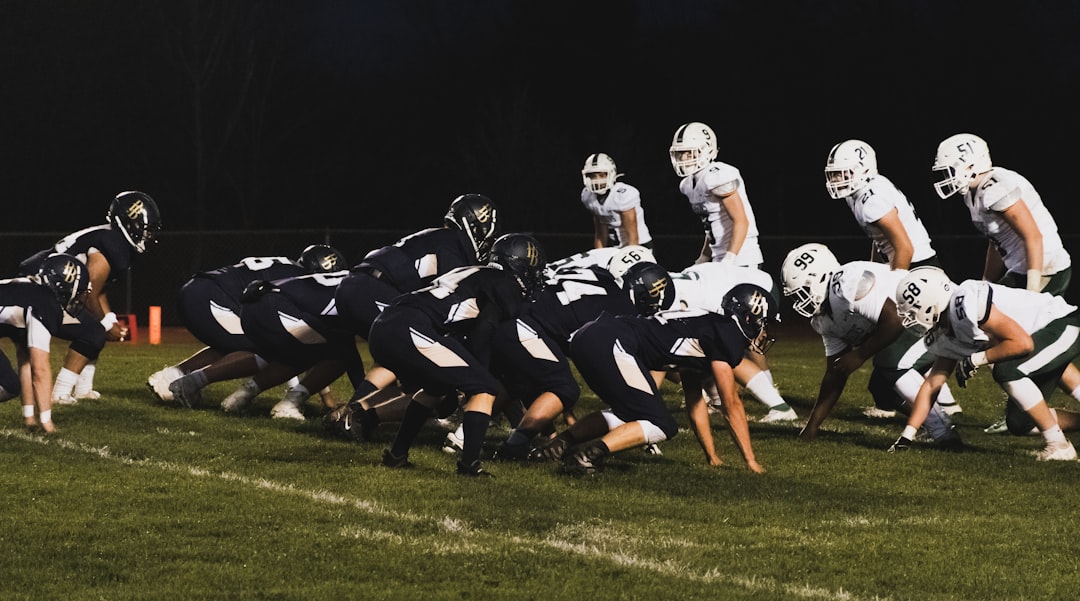

South Eugene High School's varsity football program in Oregon canceled its entire 2026 season, not in the offseason, not before a preseason game, but after just one week of practice. According to reporting from SI High School Sports, participation numbers fell low enough that keeping the program running raised legitimate safety concerns. Seven days of work. Then silence.
For anyone who ever laced up cleats and ran out of a locker room tunnel — or walked across a practice field in August heat that you'd somehow convinced yourself you missed — that sentence lands somewhere specific. Not just as news. As a feeling.
This one is for the former players.
One Week. Then Nothing.
There is a specific kind of grief that belongs only to athletes, and it is this: the season that doesn't happen.
Not a loss. Not a bad year. Not a rebuilding stretch where you go 2-8 and learn something about yourselves. Those are hard, but they are real. They have a box score. They have Friday nights under lights. They have the bus ride home where nobody talks but somehow everybody understands.
The South Eugene Axe finished its 2026 season before it started. The players who showed up for that first week of camp — who did the conditioning, who hit the summer weights, who maybe told themselves this is the year — those players got one week, and then the season was taken from them.
That's a different kind of hard.
If you've spent any time around former players, you notice that the stories that resonate most are never about wins and losses. They're about the seasons that shaped something in you that you didn't fully understand until years later. The practices. The rituals. The relationships that only form inside the specific pressure of a team trying to become something.

South Eugene's players won't get that this year. And that's worth pausing on.
Every Former Player Knows This Feeling: Even If It Happened Differently
You might not have had your season canceled. But there's a good chance you lost something equivalent, and you know exactly what we're talking about.
Remember the teammate who got hurt in the first week of camp and spent the season on the sideline in street clothes? Remember how he still showed up to every practice, still wore the hoodie, still sat on the bench, because where else was he going to go? The team was the team whether he was playing or not.
Or the senior who tore something in August and never got his last year. You watched him during the national anthem at home games, standing with the group, hand over heart, and you never asked him how he was doing because there weren't words for it and you both knew it.
Or — and this one is older, quieter — the program that got cut. The school that decided football wasn't sustainable. The kids who had to finish their high school careers somewhere else, or not at all, wearing a different number for a different team and never quite feeling like it fit.
Every former player carries one of these. A season interrupted. A year that didn't go the way the summer promised. The ones who came back from a season they never got to finish know that feeling best. You remember it not because it broke you, but because it taught you something about what the game actually was.
It wasn't the Friday nights. It was the Tuesday afternoons in September when you were tired and practice had fifteen minutes left and somehow, from somewhere, the group found another gear. That's what South Eugene's 2026 players are losing. Not a championship run. Those Tuesday afternoons.
What a Season Actually Is
There's a passage that circles former-player communities every August, and it goes something like this: you don't realize you're making memories, you just know you don't want the moment to end.
High school athletics runs on that principle. Nobody in a July two-a-day is thinking, I will remember this forever. They're thinking about water. About the drill they keep getting wrong. About whether the sophomore behind them is going to take their starting spot.
But twenty years later? That two-a-day is the movie. Every detail is sharp. The smell of cut grass and rubber cleats. The coach who ran the drill the same way every single time. The way the team started to move like one thing instead of a collection of individuals.
A canceled season is the loss of that future memory. The players at South Eugene won't have a Tuesday afternoon in September to look back on. They won't have the slow accumulation of shared experience that turns a group of teenagers into something that remembers itself as we for the rest of their lives.
That's not a small thing. That's the whole thing.
The Numbers Behind a Decision Like This
When a program shuts down over participation numbers, it almost always means the safety math stopped working. Football requires enough bodies to practice at full speed without the same players going both ways, full contact, every day. When rosters shrink below a workable threshold, the risk calculus changes, and the adults responsible for those kids make the call they have to make.
It's worth acknowledging that clearly: the people who made this decision were protecting the players who showed up. That's what responsible programs do.
But acknowledging the necessity doesn't make the loss smaller for the players who lost it.
Meanwhile, high school football across the rest of Oregon rolls on. You can see where every team stands in the Oregon high school football rankings.
A Former Player Who Gets It
There's a version of this story that plays out at small schools every year, and it doesn't always involve football. A volleyball player at a small rural high school finishes her senior season on the JV team after enrollment drops and the athletic department cuts two varsity programs. Same gym. Same girls she'd played with since eighth grade. But it wasn't the same. She never could fully explain what was missing, except that it felt like they weren't the real thing anymore. The number on her jersey was the same. Everything else was different.
That loss stays with her the way it stays with every former player. The season is gone. The jersey is still real.
What the Former Player in You Already Knows
Here's what no sports news article will tell you about a canceled high school season, because it's not really a sports story.
The players who showed up for that first week at South Eugene. They were already becoming something. One week of camp is enough. You don't need a full season to start the process of a team finding itself. The first day of camp has its own specific electricity. The second day has soreness and quiet determination. By day seven, a group of teenagers who weren't sure about each other a week ago has started to speak in shorthand. Has started to be a we.
That week happened. Whatever comes next, that week is real and it belongs to those players.
The former player reading this knows that's true, because you have weeks like that in your own archive. A camp. A preseason. A stretch of practices before your first game. You can probably close your eyes and walk through a specific afternoon from that time: who was standing where, what was said, what the light looked like on the practice field at 5pm.
That's what sports give you that nothing else gives you. A set of memories so specific, so physical, so deeply embedded in the body that they stay accessible long after everything around them has changed. It's part of why so many former players still dream about playing high school sports years after the last whistle.
South Eugene's 2026 players have one week of those memories right now. It's less than they deserved. It's more than nothing.
The Jersey They'll Never Get to Wear
There's one more piece of this story that doesn't get said out loud.
Every canceled season means jerseys that never get issued. Numbers that never get worn on a Friday night. Seniors who were going to put on that jersey for the last time in October and maybe didn't know it was the last time, but it's the last time. Except there is no last time now.
Former players understand the weight of a jersey in a way that's hard to explain to people who've never worn one. It's not just a uniform. It's the proof that you were there. That you were part of the thing. That the season — messy, cold, exhausting, life-defining — happened to you and for you and with you.
The players at South Eugene who were going to be seniors in 2026 don't get that proof this year.
What they get, someday, is the same thing you got: the slow understanding that the season that didn't happen still shaped you. The week of camp was real. The relationships were real. The decision to show up was real.
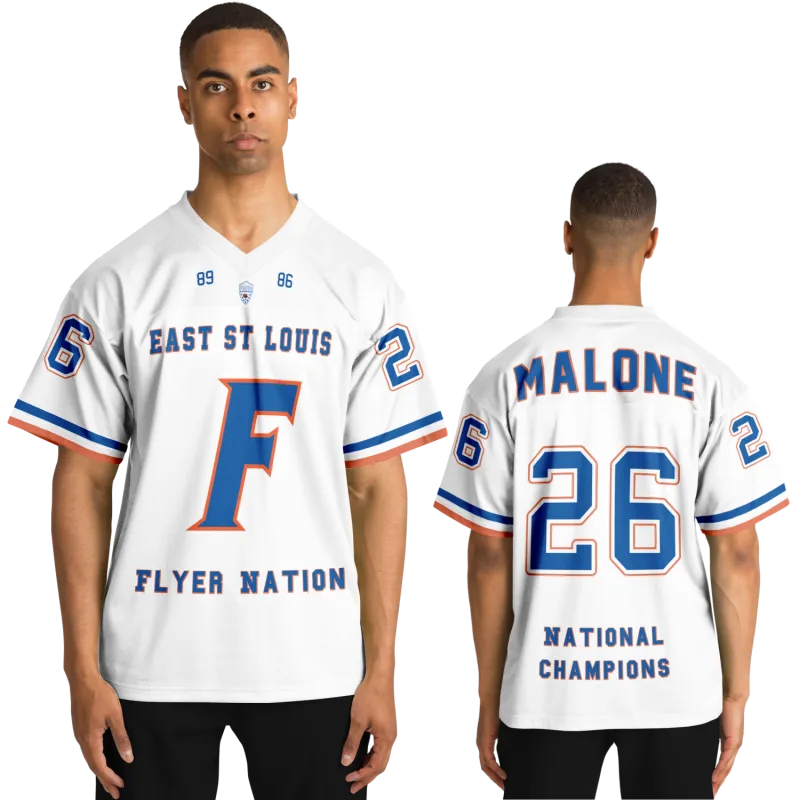
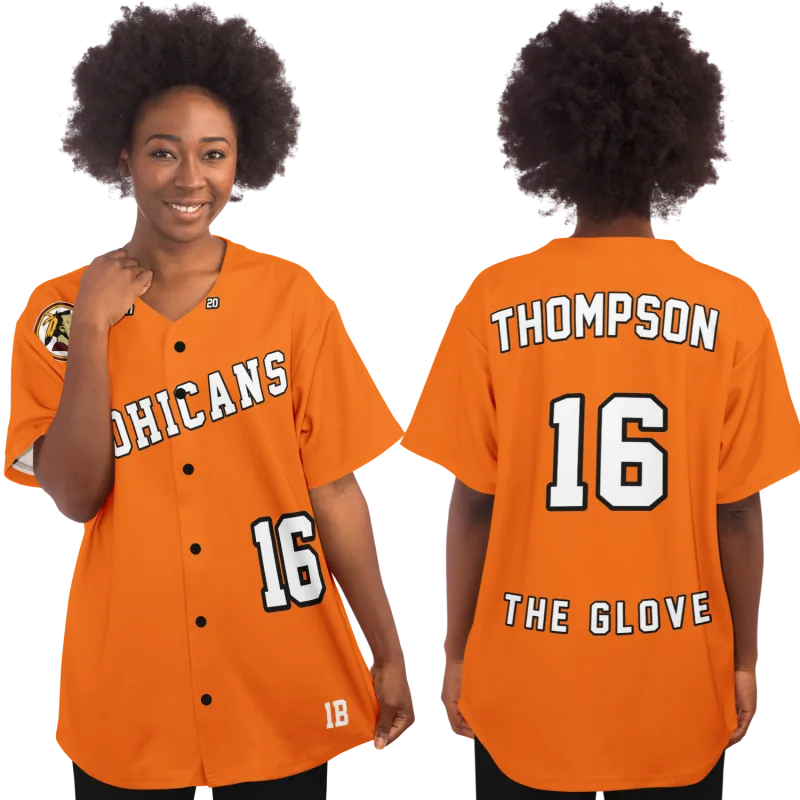
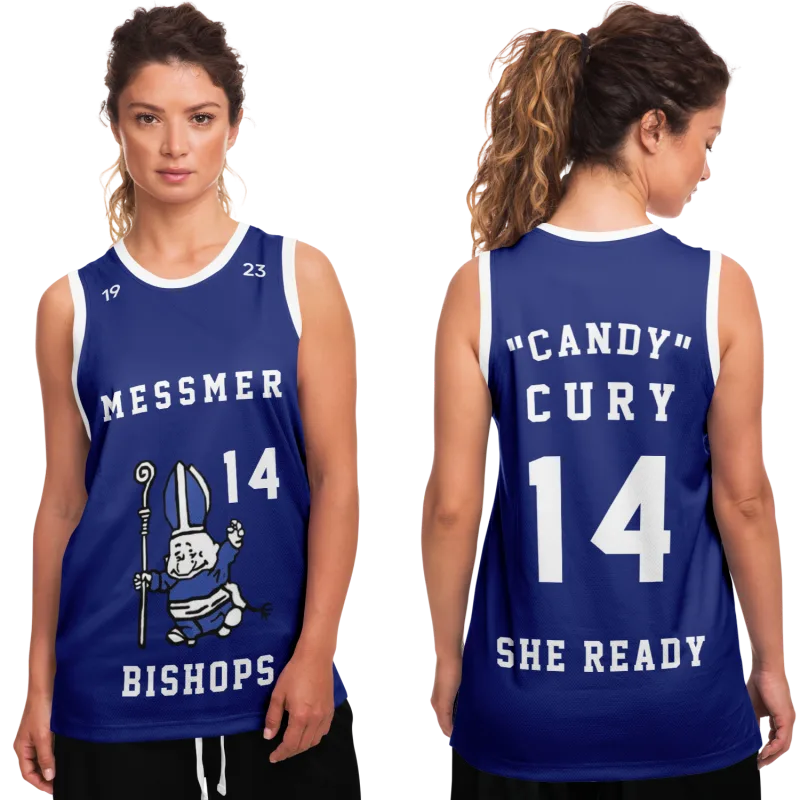
No canceled season takes any of that back. And when you're ready, the jersey can come back too: you can design a football jersey that carries your name and number the way you remember them.
Your Jersey Is Still Out There Waiting
The season ends. The jersey doesn't have to.
Design yours in minutes and see your name and number exactly the way you remember it.
Frequently Asked Questions
Why did South Eugene cancel its 2026 varsity football season?
South Eugene High School canceled its 2026 varsity season due to low player participation numbers that raised safety concerns for the program. The decision was made after just one week of practice, when it became clear the roster was not large enough to safely sustain a full varsity schedule.
Is it common for high school football programs to cancel seasons due to low numbers?
It happens more than the headlines suggest. Small and mid-sized high schools — particularly those dealing with enrollment shifts or competing interests for student athletes — occasionally face roster shortfalls that make full-contact football practices unsafe. Programs in rural areas and smaller enrollment schools are most frequently affected. Design your own — custom football jerseys.
What happens to players when their high school program gets canceled mid-preparation?
Options vary by state and school district. Some players transfer to neighboring schools to finish their eligibility. Others participate in modified programs, JV competition, or cooperative arrangements with other schools. In some cases, players simply lose the season. The experience is different for every player, but the emotional reality — a season taken rather than completed — is consistent.
How does a canceled high school season affect senior athletes specifically?
For seniors, a canceled varsity season means losing the final chapter of their high school athletic career. There is no makeup season and no second chance at a senior year. Many former players who experienced this describe it as a specific and lasting loss — not one that defines them, but one that stays with them in the way that all significant losses do.
Why do former players feel such a strong connection to stories like South Eugene's?
Because the specific loss — a season that doesn't happen — is universally legible to anyone who played. Former players understand what a season actually contains: not just games, but practices, relationships, routines, and a kind of shared experience that is nearly impossible to replicate outside of team sports. When that's taken away, the players who went through something similar recognize the loss immediately, even decades later.
See also: what it means to grieve the end of your athletic career | how athletic identity shapes who you are long after the final whistle | why high school sports matter so much more than people on the outside realize | the lessons high school sports teach that nothing else can replicate | how football culture runs deeper in some states than others