



You remember exactly where you were when it ended.
Maybe it was a phone call. Maybe it was a snap you heard before you felt it. Maybe it was a bulletin board list with your name absent from it, or a school-wide email with the words unprecedented circumstances in the subject line. However it arrived, there was a season — your last one — that simply stopped before it was supposed to. And if you've ever searched for something like lost senior season high school sports, there's a good chance part of you is still standing in that hallway, that locker room, that training room, holding a chapter that never got its final paragraph.
This article isn't about recovery protocols or comeback strategies. You're past that. This is for the adult version of that athlete — the one who played it down at the time, who said it is what it is, who watched their teammates move on, and who still, years later, gets a particular ache in October or March or whenever their sport's season rolls around. The one who never quite found the words for what was lost.
You don't have to perform okayness here.
What Nobody Tells You About the Season That Didn't Finish
The sporting world is remarkably good at celebrating the athlete who overcomes. There are documentaries, highlight reels, and medal ceremonies for people who fought back. What it doesn't do particularly well is honor the athlete whose story simply — stopped.
When an injury ended your high school career, or when COVID cancelled the spring of 2020, or when a coach's decision put you on the outside of a roster looking in, there was no ceremony for that. No acknowledgment that a real thing had ended. The cultural script for sports loss is: shake it off, there's always next year, you'll look back and it won't matter.

Except you did look back. And it still matters.
That's not weakness. That's not an inability to move on. That is a completely proportionate response to a real loss that was never given its proper weight.
Sports psychologists who work with high school and collegiate athletes increasingly recognize that the end of an athletic career — especially an abrupt, involuntary one — produces a grief pattern that mirrors other significant losses. Research published in the Journal of Sport Behavior has documented that athletes who experience sudden, unplanned career termination report higher rates of identity disruption and unresolved emotional processing than those who retire on their own terms. The reason is almost painfully simple: closure is not a luxury. It is how humans metabolize endings.
You didn't get yours.
The Four Ways a Senior Season Ends Too Soon
When people talk about not finishing their senior season, they tend to mean one of four distinct things — and each carries its own particular texture of grief.
The Injury
This is the most visible kind of loss, which paradoxically makes it the hardest to sit with. When an injury ended your high school career mid-season or mid-career, people saw it happen. They felt bad for a week. Then the season continued without you, and eventually even your teammates' sympathy became a reminder that the game didn't stop for you the way it stopped for you.
The specific grief of the injured athlete is this: you watched. You sat in the bleachers in your street clothes while your team played the games you had trained four years to play. You knew every rotation, every play call, every opponent's tendency — and none of it was yours to use. The body you had built for this specific purpose could not be used for this specific purpose. And then the season ended, and so did your eligibility, and the body healed eventually but the season didn't come back.
The Illness
Less visible, which means even less acknowledged. Whether it was a serious diagnosis, a surgery, or the particular cruelty of a long-COVID infection that took a 2020 senior's spring season, illness as a reason for missing your final season carries an additional burden: people didn't always know. You may have missed weeks and returned to find the team had recalibrated around your absence. The illness made you feel like a subtraction from something that kept adding up without you.
The Cut
This one is the quietest grief of all, because it comes bundled with shame. If you didn't finish your senior season because you were cut from the team, the cultural script says: well, you weren't good enough. And you internalized that, even if the reality was more complicated — a new coach, a different system, roster politics, a single tryout on a bad day.
Being cut from your high school team as a senior is a specific kind of loss that rarely gets discussed in adult company. It feels too embarrassing to name, so it goes unnamed, and the unnamed thing becomes the thing that sits heaviest.
The Season That Was Cancelled
The COVID class of 2020 deserves its own monument. Millions of high school athletes in the spring of 2020 had their final seasons cancelled entirely — not shortened, not rescheduled, gone. And unlike an injury or an illness, there was no individual story to tell. The grief got swallowed by collective trauma. People said: well, everyone lost something. Which is true. And also: your senior season was uniquely yours to lose, and the fact that others lost things too does not make your loss smaller.
An Interview Pattern: What Former Athletes Actually Say
In our experience talking to adults about their high school athletic careers, the athletes who didn't get to finish theirs tend to follow a recognizable emotional pattern when the subject comes up — even years or decades later.
It usually goes something like this.
First, the minimization. Oh, it was a long time ago. It's fine. It's not like I was going to go pro. This is the performance of okayness. It happens almost automatically, before the person has even decided whether they actually feel okay about it.
Then, a pause. Something shifts. The minimization costs something to maintain, and for a moment, the real thing shows through.
Then, the specific memory. Not a general statement about the season — a specific, sensory detail. The smell of the locker room on game day. A particular play that never got to be executed. The jersey they never wore for the last time in the way they'd imagined. The moment is always specific, never abstract.
Then, the question they've never been able to answer: Do you think it would have mattered?
They're not asking about career outcomes. They're asking whether the experience itself — the playing of those final games, the completion of that specific chapter — would have mattered to who they became. And almost universally, the honest answer is: yes. Not in a way that changes their life trajectory. But in the way that a proper ending to something meaningful changes how you carry it.
Mariana V., 34, played varsity volleyball her entire high school career in San Antonio and tore her ACL six weeks before the regional tournament her senior year. She describes watching her team win the regional championship from the stands in a walking boot as "one of those moments I've never been able to decide how to feel about." She was proud of her teammates. She was devastated for herself. Both things were completely true. "I cheered. Genuinely. And then I cried in the car for an hour." What she says she needed, and never got, was someone to acknowledge both halves of that at the same time — not just the gratitude for her team's success, but the specific grief of having built four years toward something she didn't get to finish. "Everyone kept saying, 'At least they won.' And yes. But also — I didn't get to help them win. That's a different thing."
A Framework for Reframing the Truncated Chapter
Reframing is not the same as minimizing. You're not being asked to decide it didn't matter or that you should be over it. You're being asked to build a different structure around what happened — one that holds the loss without requiring you to pretend it wasn't one.
Here is the framework, in plain terms.
1. Name it as a real ending, not a non-event.
The first move is linguistic. What happened to you was not not finishing in some passive, inconsequential sense. It was an ending — abrupt, involuntary, and real. Call it that. An ending happened. A chapter closed before its last page. That is a thing that occurred, and it is legitimate to feel the weight of it.
This sounds small. It isn't. The act of naming something correctly is how you earn the right to grieve it properly. Many athletes who didn't finish their senior season have spent years treating it as a non-event because naming it as an ending felt dramatic. It's not dramatic. It's accurate.
2. Separate the outcome from the experience.
The career outcome — what happened to your athletic life after high school — is a separate question from the experience of those lost games, those lost practices, those lost moments. Many athletes conflate the two and conclude that because the career ended there anyway (they didn't play college sports, or they did but differently), the lost senior season couldn't have mattered.
It could have. The experience of playing your final season, win or lose, has intrinsic value that is entirely separate from where your career went afterward. The lost season mattered as an experience. It doesn't need to have changed your career arc to be a real loss.
3. Allow both things to be true simultaneously.
You can be grateful for what you had and grieved about what you didn't get. You can be proud of your teammates and privately devastated about your own chapter. You can have had a good athletic career and still mourn the ending it didn't get.
The binary the culture offers — either you're grateful or you're complaining — is a false one. Adults who have processed grief over losing their senior year sports experience will tell you that the breakthrough often comes at the moment they stop choosing between the two and allow both to occupy the same space.
4. Find the specific thing you needed to do.
There is usually one specific thing. Not the whole season, not the championship, not the full experience — one specific thing that the loss took from you. For some athletes, it's a particular opponent they never got to face. For others, it's a specific role they were finally prepared to play — the senior who had waited for their starting spot and never got it. For others, it's something as particular as a pregame ritual, a locker room dynamic, a bus ride.
Find yours. Getting specific about what you actually needed doesn't make the loss bigger. It makes it manageable — a particular, finite thing rather than an amorphous weight.
Language for Finally Talking About It
One of the consistent things athletes who didn't finish their senior season report is the absence of language. There's no good social script for telling someone, years later, that a high school sports loss still sits with them. The cultural expectation is that adult athletes are past such things. And so the loss goes unnamed in conversation, which reinforces its unprocessed state.
Here is some language — direct, unsentimental, accurate — that many former athletes have found useful.
For saying it to someone else for the first time:
"There's something about my senior year that I never really got closure on. My [season/career] ended before it was supposed to, and I don't think I ever properly sat with that."
For explaining it to someone who asks why it still matters:
"It's not about wishing things had gone differently. It's about the fact that the ending didn't happen the way it needed to. It's like a story that stopped mid-sentence."
For explaining it to yourself, if that's where you are:
"I'm allowed to feel the weight of this. It was real. It mattered. The fact that I've been fine since then doesn't retroactively make the loss smaller."
The grief over losing senior year sports — whether it came from injury, illness, a cut, or a cancelled season — is legitimate at whatever age you're encountering it. The expiration date on grief is not determined by the outside world. It's determined by when the person carrying it gets what they needed.
The Jersey You Never Got to Wear Last
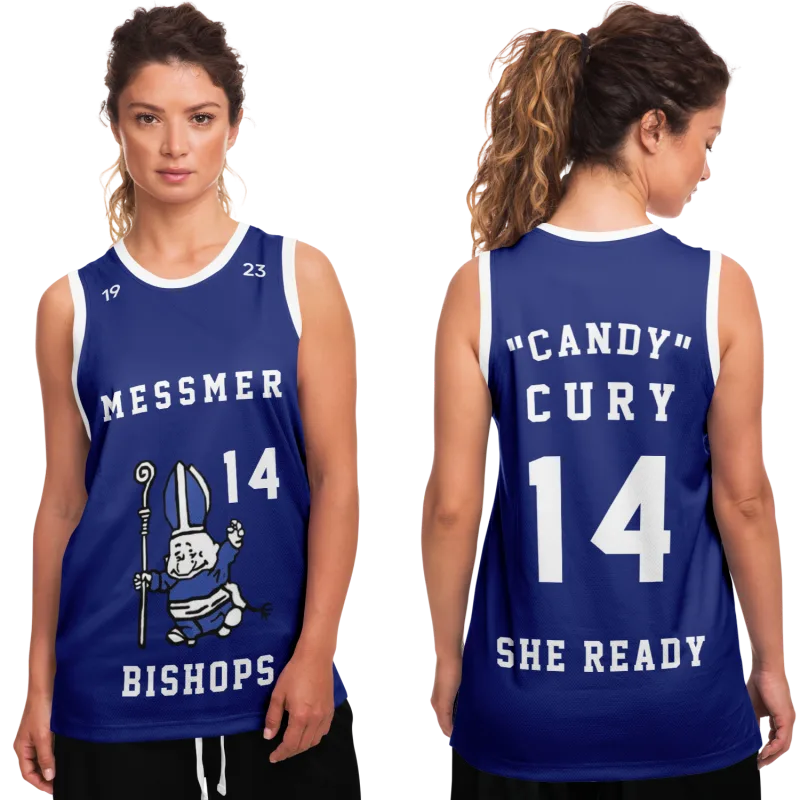
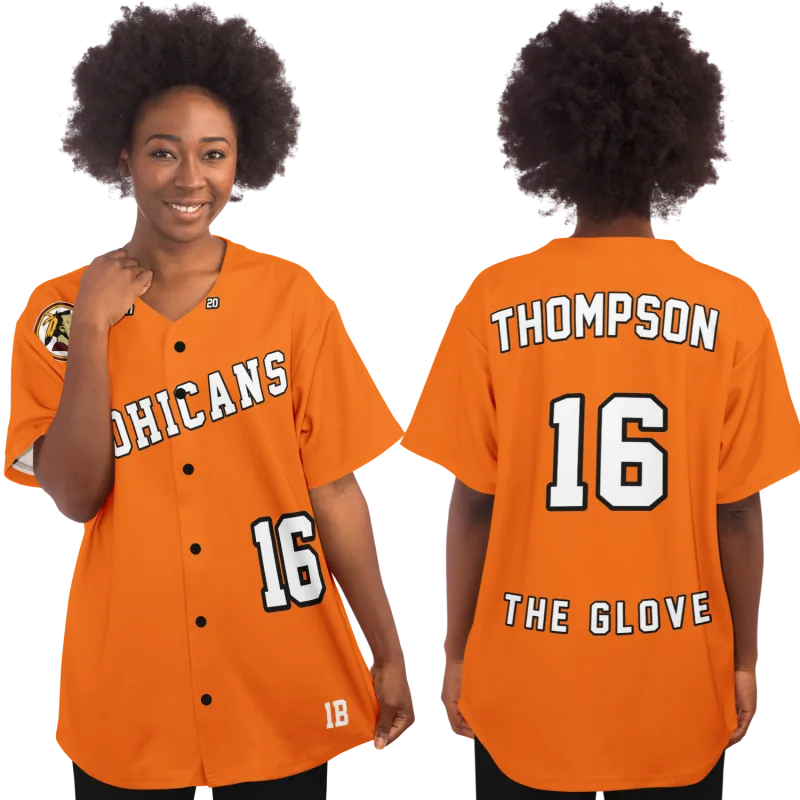
There's a specific ritual at the end of a final season that athletes who finish on their own terms often don't notice they're having: the last time they put on the jersey. The last time it goes over their head with the number they earned and the name on the back. It's not always ceremonial. Sometimes it's just a Tuesday practice jersey. But it's the last time, and something in the body knows it, even when the mind doesn't.
If your season ended before you expected it to, there's a reasonable chance you never had that moment. The jersey went into a bag and came back home, and you knew somewhere that you wouldn't need it again, but the chapter hadn't closed properly, so the jersey didn't feel like an ending. It felt like an interruption.
Some former athletes find that something as concrete as holding that specific chapter in physical form — recreating the jersey, with the name and number, exactly as it was — helps their mind finalize what their memory never got to close. Not as a performance for social media. Not as nostalgia. As a private act of acknowledgment: this was real, and it mattered, and it's allowed to have a proper ending.
Your jersey is still out there waiting.
Design yours in minutes and see your name and number exactly the way you remember it.
Frequently Asked Questions
Is it normal to still feel grief over a lost senior season years or even decades later?
Yes — and you're not alone in it. The grief of an abrupt, involuntary end to an athletic career doesn't operate on the same timeline as other kinds of loss. Because sports careers end when people are still young, and because the cultural expectation is to minimize rather than process athletic loss, many former athletes carry unresolved feelings about a lost senior season well into adulthood. The absence of a proper ending is a recognized contributor to what sports psychologists call athletic identity disruption — a sense of incompleteness that persists because the story never resolved. The fact that years have passed doesn't make what you feel invalid. It means you've been carrying something that needed more space than you were given.
Does it make a difference whether the season was lost to injury, illness, a cut, or COVID?
The mechanism is different; the core loss is often similar. Each carries its own specific texture — an injury ended your high school career in full view of people who witnessed it but moved on quickly; a cut from the team carries the additional burden of shame; a COVID cancellation was a collective loss that made individual grief feel illegitimate. What they share is this: an involuntary ending, without closure. The framework in this article applies to all four, though the specific language you find for your situation will be shaped by which kind of ending you experienced.
How do I start talking about this if I've never said it out loud?
Start with specificity, not with the full emotional weight of it. Naming one concrete thing is more manageable than trying to articulate the entire grief at once. You might start with: "There was one game I really needed to play, and I didn't get to." Or: "My senior season ended before it was supposed to, and I've never really talked about it." You don't have to explain the full weight of it on the first pass. You just have to say the true thing once, out loud, to one person who will receive it without immediately trying to fix it. From there, the language tends to come.
What if I feel like I should be over it by now?
The word should is doing a lot of work there, and it's worth examining who decided you should be over it and by when. There is no official timeline for processing the end of an experience that mattered to you. The expectation that adult athletes are past their high school sports losses is a cultural assumption, not a psychological fact. If you're not over it, the most useful question is not why aren't I over it? but what did I need that I never got? Answer that question, and you'll understand both why it persists and what might actually help.
See also: the grief that comes with losing your athletic career | how athletic identity fractures when the season ends without warning | why senior night carries so much emotional weight | why those high school sports memories hit differently than anything else