

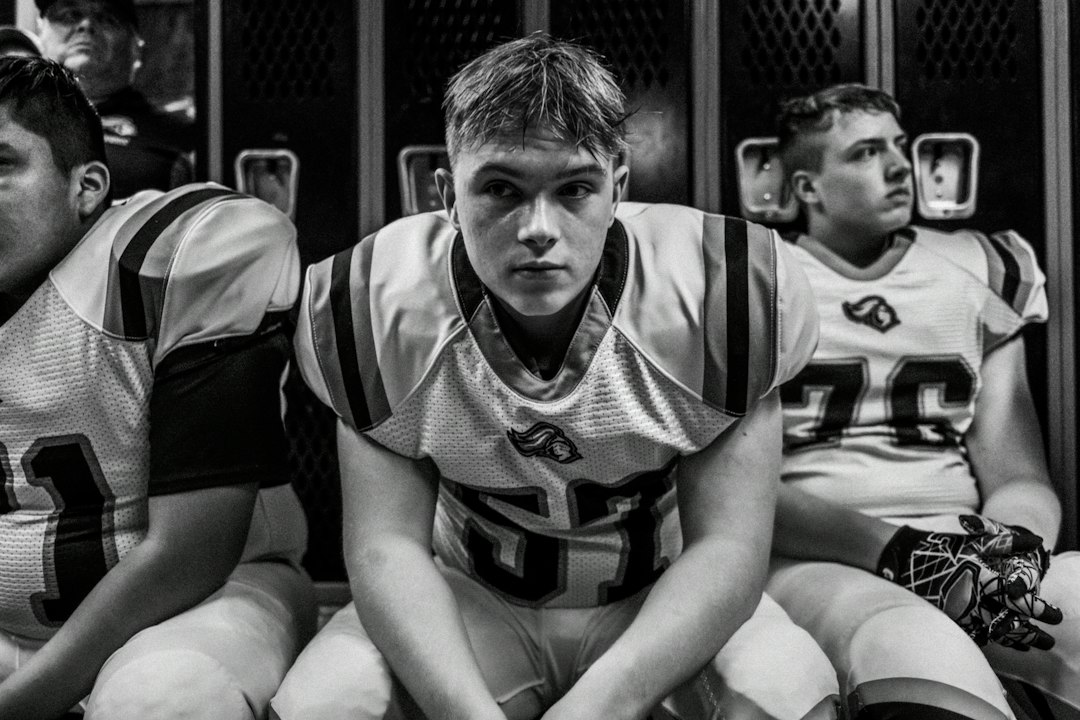




Sometimes the last game announces itself. A buzzer sounds with finality. A doctor delivers a diagnosis that closes the door. A coach has a conversation that ends with no ambiguity whatsoever. But more often, it doesn't arrive that cleanly. A season simply concludes. The callbacks stop coming. Somewhere between winter and spring you understand — quietly, with no ceremony — that it's over.
If you're here because you're trying to figure out how to cope when your sports career ends, you're probably already living inside that strange silence. And the silence is heavier than anyone who hasn't competed will ever quite grasp.
This guide is for you — the former athlete standing in the gap between who you were on the field, the court, the ice, or the track, and whoever you're still working out how to become. No motivational-poster advice. No recycled "follow your passion" frameworks. Just an honest, grounded look at what this transition actually involves and what has genuinely helped athletes who've come through it.
The Identity Loss at the Center of How to Cope When Your Sports Career Ends
Every former athlete remembers the specific texture of belonging to a team. The rhythm of a practice week. The weight of game day morning. The way your body understood its own purpose without being told.
Sport doesn't just hand you something to do — it hands you a who. A clear, socially recognized answer to the question the world keeps asking: "So, what do you do?" For years, sometimes for the better part of a lifetime, you had that answer without hesitation. You were an athlete. A distance runner. A center midfielder. A shortstop. A wrestler. That identity assembled itself in public, reinforced itself daily, and bound itself to a community that organized around it.
When it ends, the first thing most athletes notice is the disappearance of structure. The 5 AM sessions, the weight room, the film review, the travel schedule — the entire architecture of an athlete's week — gone. But beneath the schedule loss is a harder, slower-arriving grief: the loss of knowing precisely who you are and where you fit.


Research published in the Journal of Applied Sport Psychology has documented that athletes who derived a substantial share of their identity from sport — a pattern researchers call athletic identity foreclosure — face the most significant psychological disruption during career transition. The more completely you gave yourself to the role, the more disorienting its absence becomes.
That's not a character flaw. It's the direct consequence of having committed fully. The size of the loss reflects the size of the investment. You gave it everything. Of course the ending leaves a real wound.
What You're Actually Grieving — and Why It's More Than the Sport Itself
The grief that follows a career's end doesn't look the way grief is supposed to look. There's no recognized ritual for it. Nobody organizes a gathering. People who care about you say things like "at least you had such an incredible run" or "now you can finally focus on other things" — and they mean every word of it — but the words land sideways because they frame the ending as a passage toward something better, when what you're actually experiencing is a loss that hasn't been properly named yet.
Here is what's actually being grieved, separated out honestly:
The automatic sense of purpose. Sport delivered forward momentum continuously — always a next session, a next competition, a next season to prepare for. Purpose arrived built into the calendar. Without it, mornings feel unanchored in a way that's almost impossible to describe to someone who hasn't experienced structured athletic life.
The community. Teams generate one of the most intense forms of belonging available in contemporary life. Shared suffering. Shared triumph. An unspoken vocabulary of effort, sacrifice, and commitment. That community doesn't survive the transition intact. People relocate, start families, build separate lives. The group chat goes quiet by degrees. This is a real and specific social loss, and it deserves to be named as one.
The physical identity. Your body was your instrument — it had a role, a daily function, a clear relationship to your purpose. Many former athletes describe a quiet alienation from their own physicality after the career ends. The body that was once a source of identity and pride now simply exists, without its former meaning attached.
The scoreboard. Sport offers something genuinely rare: external, unambiguous feedback. You know if you won. You know if you hit your time. You know if you made the selection. Life after competition is filled with ambiguous metrics and slow, unclear feedback loops — and that ambiguity is genuinely disorienting to people trained to operate inside precisely defined performance systems.
Separating these losses matters practically. "I miss playing" is true, but it can compress and obscure the more specific losses that actually require individual attention. The more precisely you can name what you're grieving, the more precisely you can begin to address each piece.
The Phases of Athletic Career Transition — and Where You Might Be Right Now
The move out of competitive sport doesn't follow a clean, predictable sequence, but most former athletes recognize these phases when they encounter them described honestly.
The Plateau. In the period immediately following a career's end, many athletes report an unexpected flatness rather than acute grief. The adrenaline system that governed daily life for years suddenly has no activation stimulus. This phase can extend for weeks. It tends to present as low motivation, disrupted sleep, or a persistent sense of waiting for something that isn't arriving.
The Crash. This is where the reality fully settles. The loss becomes identifiable and specific. It typically arrives two to four months after the career ends, once the initial novelty of unstructured time has worn through and nothing structural has taken its place. Athletes in this phase frequently describe feeling purposeless, irritable, and ashamed of feeling that way — which compounds the difficulty considerably.
Exploration. The athlete begins attempting new things — different activities, new social environments, different goals. This phase is genuinely messy and nonlinear. Some experiments feel completely hollow. Some produce unexpected interest. Identity gets tried on, evaluated, and sometimes discarded. Progress in this phase rarely feels like progress while it's happening.
Reconstruction. A new sense of self and purpose begins forming — not overwriting the athletic identity but incorporating it into a larger, more complex picture. The former athlete gradually stops being "a former athlete trying to figure out what's next" and becomes a person who competed, who carries that experience forward, and who has built something meaningful alongside it.
Most people cycle through these phases more than once. Phase 4 rarely arrives cleanly or completely the first time. The goal isn't to reach a permanently fixed state — it's to keep moving through, rather than getting lodged in one place.
Six Approaches That Actually Help Former Athletes Move Forward
1. Let the grief be real before you rush past it.
The most consistent mistake former athletes make is treating the post-career transition as a problem to be solved on an athlete's timeline — the same way you'd approach an off-season conditioning block. Grief doesn't operate on a training schedule. Giving yourself genuine permission to feel the loss — without immediately reframing it as an "opportunity" or a "new chapter" — is not a failure of resilience. It's the necessary first move toward honest reconstruction.
2. Find movement without a scoreboard.
Your body still needs to move. That need doesn't disappear after competition ends. But the movement that tends to help most in early transition is often the opposite of a sport's training demands — activities without external performance metrics, without competition, without the stakes that once gave training its meaning. Many former athletes find unexpected relief in hiking, recreational climbing, yoga, or pickup games played with no records kept. The objective is to rebuild a relationship with your body that isn't filtered through performance outcomes.
3. Deliberately build identity outside sport — starting now.
If you're still in your competitive years while reading this, this is the most practically useful thing in this entire guide: start building identity pillars outside your sport before you need them. This isn't divided loyalty. It's structural preparation. Former athletes who enter career transition carrying robust identities beyond sport — a creative practice, a professional skill, a community role, a substantive friendship network — navigate the ending significantly better than those for whom sport was the single organizing center of their self-concept.
If you're already on the far side of your career, the work is identical — it just starts now rather than earlier.
4. Reconnect with the athletes who knew you when.
Marcus D., 34, played Division I volleyball for four years before a shoulder injury ended his competitive career at 23. He described the first two years after sport as "building a life in a language I didn't speak yet." What helped most, he said, wasn't therapy or new hobbies in isolation — it was a weekend with his old college teammates at a former-player gathering. "Being with people who knew me when — people who understood what that life actually was — reminded me that the person who played was still me. I hadn't lost him. I'd just moved him somewhere quieter."
The community you built through sport remains yours. Former teammates who've already worked through their own transitions are often the most useful people to talk to, because they don't need the experience translated.
5. Take the skill transfer seriously — not just inspirationally.
Everything competitive sport developed in you — the capacity to sustain effort through discomfort, the ability to perform in high-pressure environments, the discipline to process failure without quitting, the experience of functioning inside a high-stakes team structure — these are not motivational poster concepts. They are genuine, hard-developed competencies that most people in non-athletic careers work their entire professional lives trying to build.
The risk is dismissing them as "just sports stuff" that doesn't translate. In our experience engaging with former athletes across dozens of sports, the ones who find traction most quickly in post-sport life are consistently those who treat their athletic background as a legitimate asset and consciously deploy it in new domains — rather than leaving it filed away as a former chapter.
6. Honor the career without being held by it.
There's a version of post-sport life where the athletic career becomes a kind of museum — a static, preserved thing that gets circled without ever being moved past. Some former athletes build identities organized entirely around what they used to be: every conversation eventually returning to the playing days, every new achievement measured against what competition felt like, every present-tense accomplishment experienced as less than the past-tense ones.
Honoring the career means carrying it forward as a foundation — not retreating into it as a permanent residence. The goal is to let it be part of who you are rather than the whole definition of who you were.
What Former Athletes Who Navigate This Well Actually Have in Common
Across the range of former athletes who've worked through this transition successfully — not without difficulty, but successfully — a consistent pattern emerges.
They stopped waiting for something to feel as significant as sport before they committed to it. They recognized that post-athletic life rarely delivers the same concentrated intensity of meaning that competition provides, and they chose to build meaning differently rather than spending years in search of a feeling that only competitive sport generates.
They talked about it directly. Not obsessively, not performatively — but they named what they were experiencing with people capable of genuinely hearing it: a therapist, a former coach, a teammate who'd already been through it, a trusted friend outside the sport world. The athletes who remained stuck were, almost without exception, those who treated the transition as something to be moved through quietly and alone, on an accelerated timeline, with no acknowledgment of what it actually cost.
They kept something from the sport. Not the competition — that chapter closes — but the orientation: the commitment to growth, the discipline, the willingness to be a beginner again in a new domain. Former athletes who carry the athlete's work ethic and growth mindset into new areas tend to build competence in those areas faster than people who began there from scratch. The athlete in you doesn't disappear. It relocates.
Your Jersey Is Still Out There Waiting
Your name. Your number. The colors you wore when you were most yourself.
Design yours in minutes and see it exactly the way you remember it — a tribute to the player you were and the team that shaped you.
Frequently Asked Questions
How long does it take to cope with the end of a sports career?
There is no fixed timeline, and any source that offers one is speculating. Sports psychologists who study athletic transition typically describe a meaningful adjustment period ranging from one to three years for athletes whose identity was substantially organized around their sport. That doesn't mean three years of acute grief — it means three years of gradual, nonlinear reconstruction. Some athletes establish their footing in a matter of months. Others cycle through the phases for longer. What matters more than the timeline is whether you're moving through the process or staying fixed in one place within it.
Is it normal to feel depressed after your sports career ends?
Yes — and it is considerably more common than most former athletes realize, partly because competitive sport culture tends to discourage public acknowledgment of psychological difficulty. Depressive symptoms following career transition are well-documented across sports and competition levels, from recreational athletes to elite professionals. If symptoms persist, intensify, or meaningfully disrupt your daily functioning, connecting with a mental health professional who has sport psychology experience is a straightforward practical step — not a measure of last resort.
How do you rebuild your identity after sport without feeling like you're walking away from who you were?
The frame that tends to help most: you are not replacing the athlete. You are expanding past the athlete. The years you spent competing — the discipline, the sacrifice, the community, the self-knowledge that only comes from being genuinely tested — those don't dissolve when the career ends. They become the substrate of whoever you become next. Former athletes who navigate this transition well consistently describe their athletic identity not as a ceiling they've outgrown, but as the foundation they're building on top of.
What do you do when nothing after sport feels as meaningful?
This feeling is real, and it deserves a direct answer rather than reassurance. Competitive sport provides a form of meaning that is genuinely difficult to find elsewhere: clear objectives, immediate feedback, intense community, physical mastery, and real stakes. Most post-sport domains don't deliver all of those simultaneously. The athletes who find genuine meaning after their careers tend to build it deliberately across multiple areas rather than searching for a single pursuit that matches the full experience of competing. The expectation that one new endeavor will feel as complete as an entire athletic career is usually what delays the actual work of constructing something new.
See also: the grief of losing your athletic identity after high school | what happens to your sense of self when you stop being an athlete | rejoining a league or finding a team can be a powerful part of the healing process | bridging the gap between who you were as an athlete and who you are now