





There is a specific moment most former high school athletes can describe precisely.
You're somewhere ordinary — a backyard, a driveway, a gym — and the situation calls for you to move the way you used to move. You send the signal. The one your nervous system has sent ten thousand times. And what comes back is not what you expected. The gap between athletic memory vs current fitness opens in real time, and it is wider than you thought, and it feels like something more than being out of shape.
This article is about that gap. What it actually is, what's driving it neurologically, why it hits former athletes differently than it hits everyone else, and what you can realistically do about it — starting this week.
Your Brain Kept the Blueprint. Your Body Filed Different Paperwork.
There is a specific category of memory your nervous system uses exclusively for physical movement. Exercise scientists call it procedural motor memory, and it is encoded in the cerebellum and basal ganglia — brain structures that operate largely outside conscious thought and do not degrade the way episodic or declarative memory does.
The practical implication of this is significant: the neural pathways that learned how to execute a crossover dribble, fire out of a three-point stance, or time a volleyball approach are not gone. They are intact. The sequencing is preserved. The timing is preserved. The proprioceptive map — your body's internal sense of where it is in space and how it should move — is still drawing from the same blueprint it used when you were seventeen and in the best shape of your life.
Research on motor memory retention confirms that procedural skills acquired during athletic training can be retrieved with high accuracy even after years of inactivity — the motor cortex holds the pattern long after the competitive career ends.


But here is where the specific mismatch lives.
The cardiovascular system detrained. Muscle mass contracted without the stimulus of regular high-intensity work. Fast-twitch fiber recruitment patterns diminished. Your VO2 max — the measure of how efficiently your body delivers oxygen to working muscles during exertion — begins declining measurably within two to three weeks of significantly reduced activity, not months or years.
So when your brain dispatches the movement signal, it dispatches the right signal. The blueprint is accurate. The motor pattern is intact. What receives that signal is a body whose engine has been running at a fraction of its former capacity. The instruction says sprint. The cardiovascular and muscular infrastructure says it can manage a jog, maybe, if you give it a moment.
That is not weakness of will. That is a specific physiological mismatch with a mechanism — and naming it accurately changes what you do about it.
The Specific Experience Nobody Has Written About
Most content about former athletes addresses two things: general deconditioning, and the emotional difficulty of leaving competitive sport behind. Both are real. Neither one names the precise thing that happens when you actually try to move the way your motor memory still expects your body to move.
Here is how it tends to go.
Someone throws you a ball at a family gathering. Your first three steps feel — for approximately two seconds — completely right. The pattern fires. The proprioceptive memory activates. You feel it: that specific economy of motion, the sequencing that made you competent and fast and confident in your sport. Then the cardiovascular debt arrives. Or the knee that was scoped in 2011 sends a message. Or the hamstring that has not been asked to accelerate like this since your senior season announces that it is not participating today.
The gap opens instantly. Between what you knew how to do and what you just actually did in front of everyone.
This is the mind-body disconnect that former athletes describe when they search for "why my body can't do what it used to" — and it is categorically different from the physical decline a non-athlete experiences. A person who was never a serious athlete has no internal reference point for what elite sport-specific movement felt like. Their experience of physical aging is a gradual drift with no specific comparison point. The former athlete has an extraordinarily precise comparison point, encoded in motor memory, firing correctly every time — against a body that can no longer execute the pattern at the speed and force the memory expects.
Kayla M., 31, swam competitively from age nine through her senior year of high school and one year of club swimming in college. She describes getting in the pool for the first time in four years and feeling — during the first twenty meters of her first lap — exactly like herself. The underwater pull, the hip rotation, the breathing pattern. All of it was there. By the third lap, her lungs were done. Her technique was intact. Her engine was not. She got out of the pool feeling something she described as more disorienting than simply being tired: the experience of knowing exactly what she'd lost, with complete specificity, because her body still knew what right felt like.
That is the gap this article addresses.
Why Accepting Physical Decline Feels Different When You Were a Serious Athlete
The experience of a body that no longer matches its motor memory is not just physical. It is about identity — and the identity stakes are higher for former athletes than most writing on this subject acknowledges.
Your athletic competencies were not just fitness. They were social currency. They were the specific thing you were trusted to do in critical moments. Your position. Your event. Your role. The physical capacities you built through years of practice and conditioning were woven into how you understood yourself and how others understood you. When those capacities stop matching the motor memory that still carries them, the experience is genuinely disorienting in a way that transcends ordinary physical decline.
This is why accepting physical decline as a former athlete is harder than most motivational content acknowledges. The advice to "just get back out there" or "start where you are" lands differently when where you are is a body whose blueprint was written for a different level of performance — and whose motor memory reminds you of that discrepancy every time you try to move with intention.
What helps is not more encouragement. What helps is an accurate map of what you are actually dealing with, and a realistic framework for working with it.
Two Frameworks That Actually Work
Reframe the Motor Memory as an Asset, Not a Reminder of Loss
The default experience for most former athletes is to receive the motor memory as a taunt — evidence of what they can no longer do. This framing is understandable and almost entirely counterproductive, because it positions the most durable athletic resource you still have as proof of failure.
The motor memory is not taunting you. It is preserved expertise waiting for a context in which it can be applied.
In our experience working with this community, the former athletes who navigate the gap most effectively are the ones who redirect the motor memory rather than suppress or mourn it. Practically, that looks like:
- Teaching and coaching. Your procedural motor memory makes you an unusually qualified instructor for the movement patterns you've stored. You do not need to execute a perfect instep drive at competition speed to teach a fourteen-year-old how to plant their foot correctly. The blueprint is intact. It can be communicated verbally and demonstrated at reduced intensity more effectively than most untrained adults could manage at full effort.
- Technical analysis and pattern recognition. Your sport-specific pattern recognition — built from thousands of repetitions — does not have a detraining timeline. It does not diminish the way VO2 max does. Former athletes who redirect this expertise into analytical or strategic roles consistently report that the identity disruption eases significantly, because the expertise is being used even when the physical execution is limited.
- Sport-adjacent physical practice. Recreational leagues, skills clinics, low-stakes pickup games — contexts where the motor pattern can fire at reduced intensity without the physiological demand of competitive performance. These do not close the gap. They make it livable, which is the realistic near-term goal.
Work With the Physiology, Not Against the Memory of a Different Body
If you decide to rebuild physical capacity — not to return to your peak, but to reduce the distance between what your motor memory expects and what your body can currently execute — how you approach that work matters enormously.
The most common mistake former athletes make when returning to training: they train the way they trained when they were seventeen. The same intensity expectations. The same adaptation timeline assumptions. The same performance benchmarks.
The physiology does not support this, and the failure of this approach is often what produces the deepest version of the identity crisis — because you tried, you could not match the memory, and now you feel worse than before you started.
What the physiology actually supports, in sequence:
-
Lead with the pattern, not the intensity. Your motor memory is your advantage — use it by starting with skill-based movement at low cardiovascular demand. Correct mechanics, right sequencing, appropriate biomechanics — before any serious conditioning load is added. This lets the motor pattern fire accurately and reestablish its connection to physical movement before the engine is required to support it at speed.
-
Respect the detraining-to-retraining timeline. Cardiovascular capacity that was lost over years of reduced activity requires months of consistent work to rebuild in any meaningful way. The adaptation curve for a 32-year-old returning to serious conditioning is not slower because something is wrong — it is the expected physiology of a body returning to training after a sustained gap. Measure progress in seasons, not weeks.
-
Redefine the benchmark before you start. "Get back to where I was" is a goal that produces failure almost universally. The ceiling of a rested adult body returning to training is not the ceiling of a conditioned adolescent at the peak of a sport-specific training cycle — and holding those two standards against each other is how the former athlete out of shape experience becomes a source of shame rather than a manageable challenge. A better goal: build a body that can do specific things you want to do, at a level that registers as genuine competence. Competence is achievable. Recapturing the exact physiological state of your junior season is not a reasonable target.
What You Can Do Starting This Week
The frameworks above are useful for understanding the gap. This section is for closing it — or at least making it narrower.
Step 1: Name the specific gap, not the general one. Not "I'm out of shape." The precise one: "My volleyball motor memory is intact. My cardiovascular system cannot support it for more than three rallies." Naming the exact mismatch redirects the problem from a vague identity wound to a specific physiological challenge with a specific approach.
Step 2: Find one context where the motor memory can be expressed without requiring competition-level output. A recreational league. A coaching role. A driveway with a younger relative. Something that lets the pattern fire — even at reduced intensity — so the expertise has somewhere to go other than dormant. The identity disruption is significantly worse when the motor memory has no expression at all.
Step 3: Choose one sport-adjacent physical metric to improve over the next ninety days. Not weight loss. Not generic fitness. Something connected to the athletic identity — a specific distance, a particular skill benchmark, a movement quality you can observe and measure. Former athletes respond to sport-specific goals in ways they do not respond to generic fitness goals, because the motor memory has a reference point for sport-specific achievement that it does not have for step counts or body composition percentages.
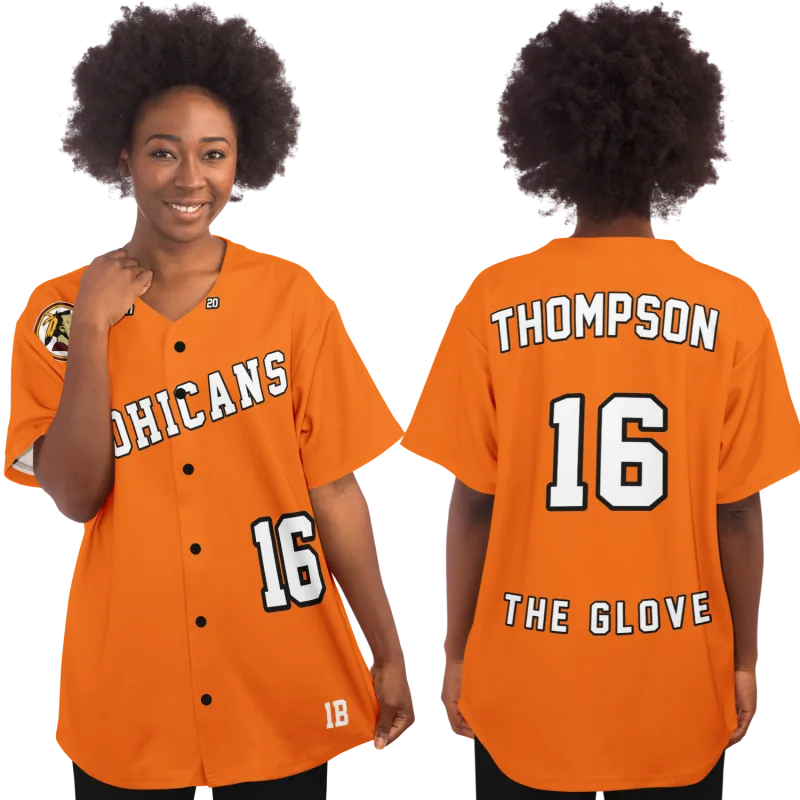
Your jersey is still out there waiting.
Design yours in minutes and see your name and number exactly the way you remember it.
Frequently Asked Questions
Is the mind-body disconnect a former athlete experiences actually neurological, or is it psychological?
It is both, and they are not separable. The motor memory component is genuinely neurological — procedural movement patterns stored in the cerebellum and basal ganglia are among the most durable memories the brain produces, and research consistently shows they do not degrade at the rate of episodic or declarative memory. The psychological dimension — the identity disruption, the specific grief of the gap — is real and significant, but it arises directly from the neurological reality. Your brain is accurately sending movement signals based on a blueprint it has genuinely retained. The psychological weight comes from the fact that the body receiving those signals has physiologically changed in ways the motor memory has not registered.
Can a former athlete realistically get back to something close to their high school performance level?
For skill-based motor patterns — technical execution, sport-specific movement mechanics, pattern recognition — yes, often significantly. The motor memory preserves those patterns with remarkable fidelity, and consistent skill-based practice can reactivate them at a high level. For the cardiovascular and muscular capacity that supported those patterns during peak competitive fitness — realistically, not to the level of a conditioned adolescent at the peak of a sport-specific training cycle. The honest framing: you can rebuild meaningful competence in the skills that defined you as an athlete. Rebuilding the exact physiological engine of your seventeen-year-old self is not a realistic or fair benchmark to hold yourself to.
How do you know when the gap has become a mental health concern rather than a normal adjustment?
The normal adjustment involves grief, frustration, and a gradual reorientation of athletic identity toward the forms it can take in the present. It is uncomfortable but does not persistently interfere with self-worth outside of athletic contexts. The concern threshold is when the gap produces ongoing distress that affects relationships, motivation, or self-perception in situations entirely unrelated to sport — when the inability to perform at the level your motor memory remembers becomes a source of shame that follows you into non-athletic areas of your life. At that point, the appropriate resource is not a training framework. It is a conversation with a sports psychologist or counselor who specializes in athletic identity transition, a growing and well-documented specialization within applied sport psychology.
Why do sport-specific goals work better for former athletes than general fitness goals?
Because the motor memory has a reference point for sport-specific achievement that it does not have for generic fitness metrics. When a former basketball player sets a goal around movement quality, first-step quickness, or a sport-specific skill benchmark, the motor memory has stored standards against which progress can be measured — the body knows what competent feels like in that movement context. When the same person sets a goal around weight or step counts, there is no stored motor reference for what success looks and feels like. The motor memory is an asset for sport-specific goal-setting in a way it simply cannot be for generic conditioning work.
See also: athletic identity after high school | grief that comes with the end of your athletic career | how to start training again after years away from your sport | why high school sports still matter so much to adults