




If you've had dreams about playing sports again — standing in a locker room that smells exactly right, lacing up cleats for a game that somehow never starts — you already know they don't feel like ordinary dreams. They feel like somewhere you used to live.
These aren't vague, symbolic dreams where a baseball bat represents ambition. They're specific. The weight of the ball is correct. The sound of the crowd is the right crowd. Your jersey has your number on it. And then something goes wrong — you can't find your equipment, you're late, the field stretches on without an end zone — and you wake up with that particular feeling that isn't quite sadness and isn't quite longing. It's something harder to name.
Here's what most articles about dreaming about high school sports miss: the dream isn't about the sport. It's about the person you were when you played it.
What's Actually Happening When Former Athletes Dream About Playing
Sleep researchers who study identity and memory consolidation have a specific term for what happens to high-achieving adolescents after their primary identity role disappears: role exit. The sociologist Helen Rose Ebaugh, who formally defined the concept, described it as the process of disengaging from a role that has been central to self-definition — and the lasting psychological work that follows.
For most people who played competitive sports in high school, that role wasn't incidental. It was load-bearing. It organized your schedule, your friendships, your self-worth, your body, your social position, and your sense of what a good day looked like. And then — whether through graduation, injury, the simple arithmetic of not making the next roster — it ended.
The brain doesn't process that kind of identity shift the way it processes losing a job or moving to a new city. It processes it the way it processes grief. And one of the things the sleeping brain does with grief that waking life doesn't have time for is rehearsal — returning to the unresolved scene, running different versions of it, trying to find the ending that makes sense.

That's what's generating your recurring dream about being late to the game. Or the one where you're suited up but can't find the field. Or the one where you play perfectly and nobody sees it.
Your brain is still working on it.
The Three Dreams Former Athletes Keep Having (and What They Signal)
In our experience covering athlete identity and the lasting imprint of competitive sport, a few dream archetypes surface again and again when former players describe their recurring experiences. They aren't universal — but they're common enough that naming them tends to produce an immediate recognition response.
The Gear Dream: You Can't Find Your Equipment
You're in the locker room before the game. Your uniform is missing, your cleats don't fit, your helmet belongs to someone else, or you simply can't get dressed in time. The game is starting. You can hear it.
What sleep psychologists note about this dream pattern is that it typically emerges during periods when the dreamer is navigating a competence transition in waking life — a new job, a new relationship, a new phase of parenthood. The equipment in the dream represents the specific preparation and belonging-markers that told you, as an athlete, that you were ready and that you belonged in the space you were about to enter.
The dream doesn't mean you feel unprepared for a meeting. It means your brain's template for "prepared and belonging" was formed on that field, and it still runs that template when it needs to process readiness.
The Late Arrival Dream: The Game Has Already Started Without You
You knew about the game. You meant to be there. Somehow — traffic, wrong building, lost sense of time — you arrive to find the game already underway. Your team is playing. Without you.
This is one of the most commonly reported dreams among former athletes, and among the most emotionally painful to wake from. Former soccer player Dana Kellner, whose work on athlete identity transition has been cited in sports psychology literature, describes this dream as the brain's representation of temporal displacement — the felt experience of being permanently behind the moment that mattered.
Athletes who defined themselves through their sport during formative years often carry a quiet, persistent sense that the most important part of the story already happened. The late-arrival dream externalizes that feeling.
The Infinite Field Dream: The Game Has No End
You're playing. The game is real, the effort is real, the stakes feel genuine — but there is no final whistle. The field extends beyond what should be possible. There's no scoreboard. No outcome. Just the perpetual middle of a game that never resolves.
This dream tends to surface in former athletes who loved the sport itself — not the trophies, not the status, but the specific sensation of being in it. The infinite field is the brain's attempt to sustain that sensation indefinitely. It's not a nightmare. It's a wish that keeps running past the point where waking life would have stopped it.
Why High School Sports Specifically — Not College, Not Adult Leagues
This is the question that doesn't get asked often enough: why is it almost always high school that shows up in these dreams, even for people who played competitively through college?
The answer is developmental, and it's specific.
High school is the period when the adolescent brain is most actively constructing its primary identity narrative. The neuroscience of adolescent development — particularly the work on the prefrontal cortex's role in self-concept formation between ages 14 and 18 — indicates that experiences during this window carry disproportionate weight in long-term identity encoding. What you were during those years isn't just a memory. It's a structural template.
For an athlete who played varsity sports during that window, the template includes:
- A specific body and what it could do
- A specific community and your role in it
- A specific set of stakes that felt genuinely world-defining
- A specific daily rhythm organized around the sport
- A specific version of yourself that was publicly recognized and affirmed
College athletics, even at a high level, adds layers over that template. Adult recreational leagues are experienced as something different — enjoyable, but without the load-bearing identity function. High school sports, for the years they lasted, were the self.
That's why the dream goes back there. That's the original save file.
What Former Athletes Actually Say About These Dreams
Marcus T., 34, played linebacker for three years at a small high school in rural Ohio before a knee injury ended his senior season early. He describes a dream he's had, in various forms, at least a dozen times since college: he's in the locker room before the state semifinal — the game that was cancelled by his injury — and this time, in the dream, he's healthy. He suits up. He runs out. The field is the right field. And the dream always ends before the first snap.
"I wake up feeling like I lost something that day all over again," he said. "But also kind of grateful? Like I got to be in that room again."
That combination — grief and gratitude, loss and relief — is characteristic of how former athletes describe the emotional residue of these dreams. They are not purely painful. They are not purely pleasant. They are real in a way that most waking experience isn't, because they access a version of the self that felt completely coherent and completely inhabited.
The Identity Signal Your Dream Is Sending
Here's the interpretive frame that most generic "sports dreams meaning" articles miss entirely: recurring dreams about a specific role you once inhabited are not your brain being sentimental. They are your brain signaling that the transition out of that role was never fully processed.
This doesn't mean something is wrong with you. It means the role mattered enough to leave a structural impression that waking life's busyness hasn't had space to fully integrate.
The signal, decoded, is this: there is a version of yourself from that time that you haven't fully honored or released.
What former athletes who report that their recurring sports dreams eventually diminish or change in character have in common is usually not distance from the sport — it's some form of acknowledgment. A reunion. A conversation. A physical object that reconnects them to that identity in a conscious, waking way rather than only in the dream state.
What to Do With the Dream Instead of Just Having It
The dream is telling you something. The question is whether you're going to keep receiving it passively or do something deliberate with it.
A few approaches that former athletes have described as genuinely shifting their relationship to these recurring dreams:
Talk to someone who was there. The shared memory, made explicit and verbal, does something that private dreaming cannot. It confirms the reality of what happened, honors it, and gives it a social existence outside your own nervous system. Call the teammate. Send the message.
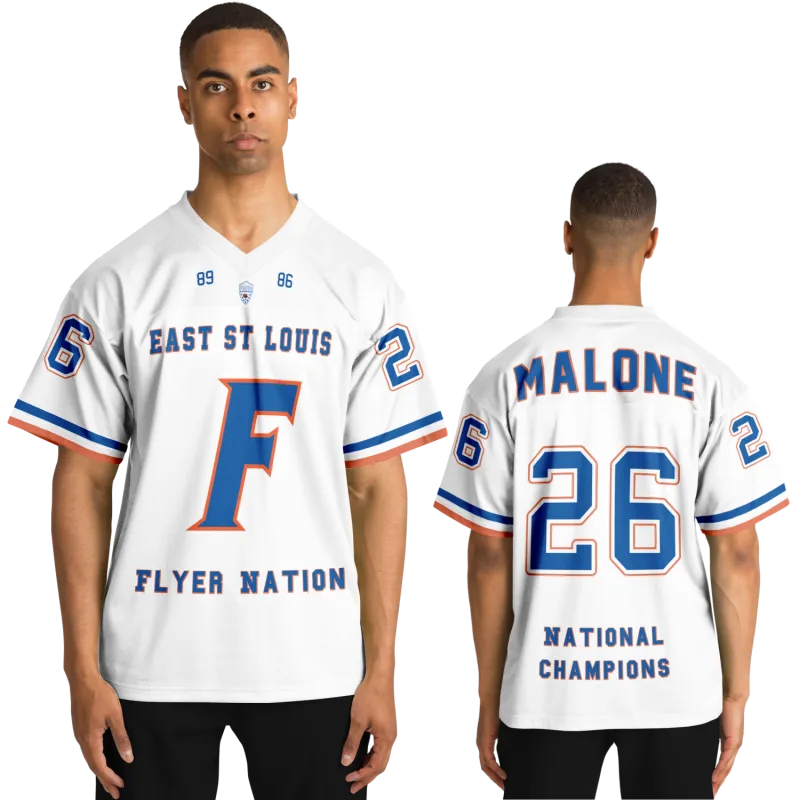
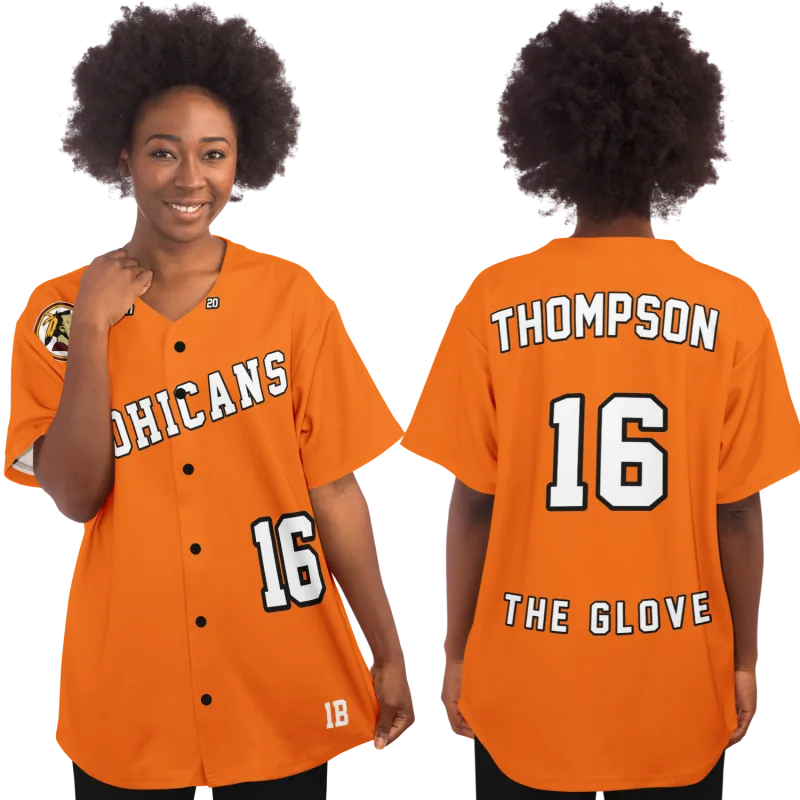
Find a way to physically reconnect with who you were. Not by trying to play the sport again at the same level — that path usually leads to different kinds of grief. But by reconnecting with the markers of that identity. The number you wore. The colors. The name on the back. Former athletes who describe creating some tangible artifact of that version of themselves often report a specific kind of psychological closure — not an ending, but an integration. The dream self and the waking self shake hands.
Give yourself permission to grieve the role, not just the sport. The sport is still out there. You can watch it, coach it, cheer for it. What ended was your specific role in it, your specific body in it, your specific identity organized around it. That's what deserves acknowledgment. Not the game — the player.
Your jersey is still out there waiting.
Design yours in minutes and see your name and number exactly the way you remember it.
Frequently Asked Questions
Why do I keep dreaming about high school sports even though I graduated decades ago?
The frequency and persistence of these dreams correlates less with time elapsed and more with the intensity of the identity role the sport occupied during adolescence. High school athletes whose sport was central to their daily life, social identity, and self-concept during the critical developmental window of ages 14–18 are more likely to experience recurring sports dreams well into adulthood. The brain doesn't file those years under "old memories" — it files them under "foundational self-template." Distance from the experience doesn't automatically dissolve the template.
What does it mean when you dream that you can't play anymore — you're injured, or you just physically can't perform?
Can't-play-anymore dreams are among the most emotionally direct in this category. Sleep researchers who study performance identity suggest these dreams often surface during waking-life moments of perceived diminished capability — not necessarily physical, but any domain where the dreamer feels they are no longer performing at the level their identity expects of them. The sport is the brain's metaphor for competence and capacity. The inability to play is the brain processing a felt gap between who you believe yourself to be and what you currently feel able to do.
Is there a difference between dreaming about winning and dreaming about losing — do they mean different things?
In our experience covering this topic, the win/loss outcome in sports dreams is less psychologically significant than the process of the dream. Former athletes who dream about playing beautifully but without recognition, or who win but find the victory hollow, are often processing questions about external validation versus internal fulfillment. Athletes who dream about losing despite maximum effort are often in waking-life situations where effort and outcome feel disconnected. The more useful question isn't "did I win in the dream?" but "what was missing that would have made the dream feel complete?"
Do these dreams ever stop?
For some former athletes, the recurring sports dreams diminish naturally as waking-life identity becomes more fully differentiated and consolidated — when other roles (parent, professional, partner, community member) take on the load-bearing function the sport once held. For others, the dreams become less frequent but never fully disappear, and over time transform from distressing to something closer to a recurring visit with an old friend. The athletes who seem to reach that second state most readily are the ones who found some conscious way to honor the identity rather than simply growing past it.
See also: why high school sports still matter to adults | the psychology behind why you still dream about high school games | losing your athletic identity after high school | why your senior season memories feel so vivid and real | grieving the end of your athletic career