





You already knew every crack in the gymnasium floor, every dead spot in the court. You'd practiced on it a hundred times. But the night of your first varsity start, the floor looked different. Wider, somehow. The lights a little brighter. The bleachers louder than any Tuesday evening had any right to be.
That specific feeling — part terror, part electricity, part something you'd never been able to name — is what the first varsity start athlete memory is made of. It's not just a game you remember. It's the moment you found out something permanent about yourself. And once you know something like that, you carry it the rest of your life.
The Weight of the Lineup Card
There's a specific moment that every former varsity athlete remembers with startling clarity: the moment your name appeared somewhere official. A lineup card taped to the locker room wall. A roster sheet passed down the bench. A coach who said, without ceremony, "You're starting tonight."
That sentence lands differently than anything else in a young athlete's life.
Not because it meant you were good enough — although it did mean that. But because it meant the evaluation was over. All the early mornings, the extra reps, the quiet anxiety of wondering whether any of it was registering with the people who were watching — that chapter closed. Your name was on the list. You were in.
If you played, you know the exact weight of that moment. How it sat in your chest for the rest of the school day. How you couldn't eat lunch properly. How you told yourself to calm down and couldn't quite get there. How you kept running the scenario in your mind — the tip-off, the first pitch, the opening whistle — and kept trying to imagine yourself ready.
The preparation was done. What came next was you.


The Locker Room Before Everything Changed
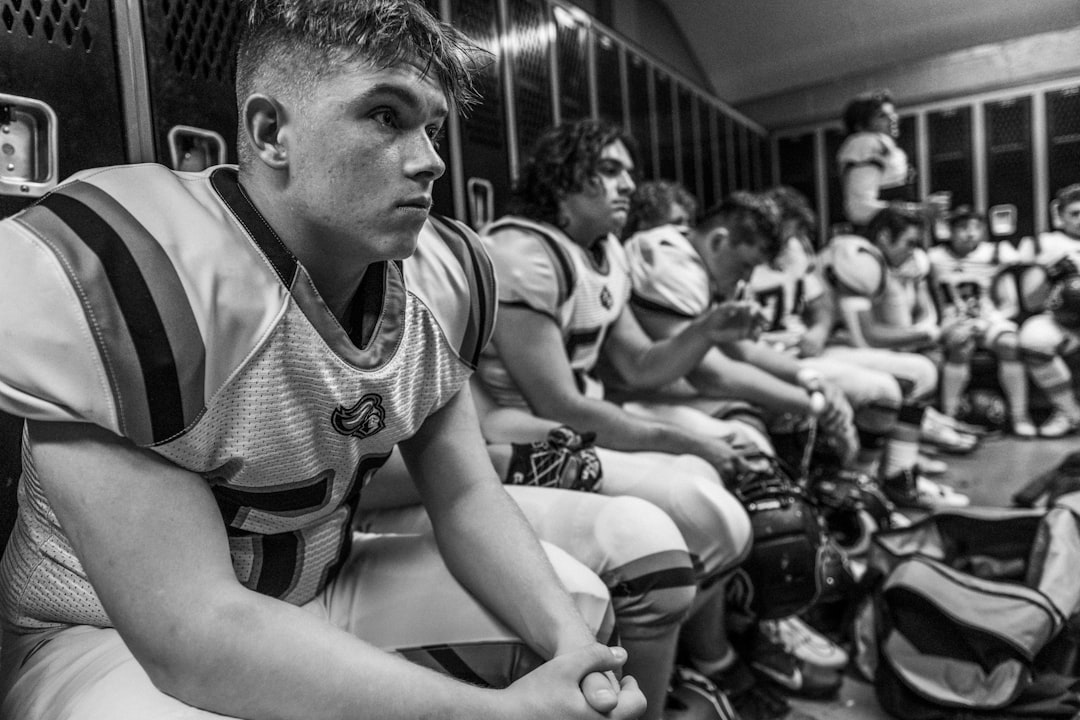
In our experience talking to former athletes across every sport and level, the locker room in the hour before a first varsity start is one of the most universally described scenes in all of sports memory. Not the game itself — the before. The locker room before the big game carried a specific gravity, an energy that former athletes can still describe with startling precision decades later.
The particular smell of athletic tape and floor wax. The specific rhythm of pregame music someone else had chosen. The teammates who'd been here before, moving through their routines with a calm that seemed almost unfair. The pregame rituals — the specific movements, the quiet repetitions, the superstitions — weren't just habits. They were anchors. And you, somewhere in the middle of it, trying to look like you belonged while every nerve ending in your body was reporting urgent business.
There's a kind of performance that happens in that locker room — not the one on the court or the field, but the one among your peers. You pull your jersey on and feel the number against your back and tell yourself: act like you've done this before.
That performance — the act of becoming the athlete you were trying to be — is its own form of transformation. Campbell would recognize it immediately: the hero at the threshold, not yet tested, not yet certain, but choosing to step forward anyway.
Some athletes play that role better than others in the pregame quiet. But what our team has noticed, across every version of this story, is that the internal experience is nearly identical no matter how composed the exterior. The heart rate. The hands. The strange, echoey focus that comes when everything else gets very quiet and there's only the next moment.
That's not weakness. That's exactly what belonging feels like before you've proved it to yourself.
But here's the part of the story that rarely makes it into the retelling: you almost never carried that hour alone. Somewhere in that locker room, there was a teammate who noticed. The upperclassman who'd started a dozen times and caught your eyes drifting to the clock, so he cracked a joke at your expense — just sharp enough to make you laugh, just gentle enough to say it was okay to be scared. The captain who slowed for half a beat at your stall and said one sentence that landed because it wasn't a speech: "Just play your game. We've got you." The teammate who'd stood on that same floor a year earlier and still remembered the feeling, so he sat down beside you and told you, in plain words, that the nerves meant you cared, and the caring meant you were ready.
None of it was ceremonial. None of it would make a highlight reel or get quoted back at a reunion. It was the opposite of everything loud about the hour — a joke, a sentence, a hand on a shoulder pad — and it worked because it was small. A nervous first-timer doesn't need a pep talk. A nervous first-timer needs evidence that somebody else walked through this and came out the other side. An older teammate who'd been there before was that evidence, living and breathing, sitting three stalls down.
That's what those teammates gave you without ever calling it a gift. They converted the anxiety into something you could carry — not gone, but manageable. Not conquered, but shared. And that quiet transfer, more than any pregame ritual, was the thing that carried you from the locker room to the opening whistle with your legs under you.
When the Game Began: The Five Seconds That Changed Everything
Here's what's interesting about the first varsity start, and what separates it from almost every other athletic memory: the nerves don't survive the opening play.
Not fully. Not cleanly. But the moment you make your first contact with the game — the first dribble, the first stride, the first swing, the first hit or miss or touch — something in the body shifts. The preparation takes over. The thing you've actually been training for all this time, the muscle memory and the reads and the instincts, they assert themselves. Your body, it turns out, knew what to do all along.
For some athletes, that moment of clarity comes immediately. The game opens and they're in it, present, operating. For others, there's a shaky first possession, a rushed decision, an early mistake that feels enormous in the moment and evaporates by halftime. But either way, the before and after are distinct. The anxiety was anticipatory. The game, when it actually arrived, was just the game.
This is one of the things that former athletes understand that's difficult to explain to people who haven't played at any level of real competition: the fear before something hard is almost always worse than the hard thing itself. The body knows how to play. The mind is the one that needs convincing.
What It Actually Proved
Danielle W., 34, played varsity soccer as a sophomore and still talks about her first start like it happened last month. "I had two touches in the first half that I wanted back immediately," she says. "But I also made a run in the second half that led to a goal, and afterward my coach said my name like I'd always been there. That was it. That was the whole thing." She had her jersey number from that season framed. It hangs in her home office now.
What Danielle describes — and what nearly every former athlete arrives at eventually — is the recognition of what a first varsity start actually proved. Not that you were the best. Not that you'd never make a mistake. Not that the path ahead was guaranteed.
It proved that you were the kind of person who could handle the threshold.
That distinction matters more than it might seem in the moment. There are athletes with enormous technical ability who never quite make it across that particular threshold — who freeze under the weight of the real thing, who practice brilliantly and perform tentatively. And there are athletes with less raw talent who discover, in moments exactly like a first varsity start, that they operate differently when it counts. That the lights don't shrink them. That the crowd noise sharpens rather than scatters their focus.
Finding out which kind of person you are — that's the real gift of the first varsity start. Not the statistics from that game. Not even the outcome. The discovery of your own competitive character under conditions designed to test it.
Every former athlete who has lived any significant portion of their post-playing life knows that this discovery followed them. Into job interviews and salary negotiations. Into moments that required presence under pressure. Into situations where the only preparation available was the confidence earned a long time ago, in a different uniform, on a different floor or field. Into the way you still identify with your position — point guard, striker, quarterback, setter — decades after the last game ended.
The first varsity start didn't just happen to you. It became part of how you understand yourself.
The Jersey and What It Represented
There's a reason former athletes hold on to jerseys. Not as collector's items. Not out of sentimentality in the superficial sense. But because the jersey was the physical evidence of the thing.
When your name and number went on a roster, you were wearing something that said: this person, right here, plays at this level. For a lot of athletes, that jersey — and specifically the first time they wore it in a starting lineup — is the most tangible artifact of a period in their life that shaped everything that came after.
The number matters, too. Numbers acquire meaning through association. Your number was your number — not just a digit on a fabric, but the specific label under which you played your first varsity game, took your first varsity start, and proved the thing you needed to prove.
Former athletes who stumble across their old number in any context — a jersey someone else is wearing, a number on a building, a random appearance on a screen — feel the association. It doesn't fully fade. The number carries the memory the way the memory carries the meaning.
This is why the instinct to hold onto a jersey isn't nostalgia for the past. It's the recognition that certain objects carry real information about who you are. They aren't decorations. They're evidence.
Why You Never Forget the Specific Details
There's a documented phenomenon in sports psychology sometimes called "flashbulb memory" — the way high-stakes emotional moments encode with unusual sensory specificity. Most of what happens in a given week of a given year of your life doesn't survive with much detail. But the moments where the emotional stakes are real, where something genuinely matters, those tend to encode with a completeness that ordinary days don't.
Your first varsity start qualifies. Emphatically.
This is why former athletes, decades later, can describe their first varsity start in startling detail. Not just the outcome or the highlights. The specific:
- The sound the building made when the starting lineups were announced
- The feel of the surface under your feet during warmups
- A teammate's specific words in the minute before tip-off, or the opening whistle, or the first pitch
- The moment you knew you were actually going to be okay
These aren't invented details. They're real because the brain decided, at the time, that this was worth keeping. The emotional weight of the moment is exactly what makes the memory so durable and so specific. You were living one of those experiences where everything counts, and the brain knew it even if you were too focused to notice.
If you played, you know. Thirty years from now, you'll still know.
What Every Former Athlete Carries Forward
The playing days end for everyone. The level changes. The seasons stop. The uniform gets put away. But the athlete who lived those years — who took that first varsity start, who found out what they were made of in that specific crucible — doesn't go anywhere.
They show up in the person you are at forty, at fifty, at sixty. In the way you approach the things that genuinely scare you. In the way you prepare. In the specific quality of your presence in the moments that require it.
Former athletes know something that's genuinely hard to acquire any other way: they know they've been tested and didn't break. They know the worst of the anticipatory fear and the moment it converts into action. They know the feeling of belonging somewhere difficult, of earning a place among people who can do something hard.
That knowledge isn't nostalgic. It's operational. It functions in the present tense, even when the playing days are long gone.
The first varsity start was the beginning of that knowledge. It was the first time the game was real, the stakes were real, your name was on the official list, and you had to perform. And you did. Maybe not perfectly. Maybe not brilliantly. But you were there, in uniform, and when the opening moment came, you met it.
That happened. Nothing changes it. It belongs to you permanently — a proof of self that predates most of the things you now consider essential to your identity.
Every former athlete who has lived long enough to reflect on it understands: the playing days were not a detour from real life. They were the training ground for it.
Your jersey is still out there waiting.
Design yours in minutes and see your name and number just the way you remember them.
Frequently Asked Questions
Why do former athletes remember their first varsity start so vividly decades later?
High-stakes emotional moments encode with unusual sensory specificity — a function of how the brain prioritizes memories associated with genuine consequence and emotional intensity. A first varsity start combines anticipatory fear, identity significance, and real performance pressure in a way that most ordinary experiences simply don't. The result is a memory that retains specific detail — sounds, sensations, exact words from coaches or teammates — far longer than the surrounding weeks and months of that same period. Former athletes consistently report being able to describe their first varsity start with more clarity than events from much later in life precisely because the emotional weight at the time was so significant.
Is it normal to feel more nervous before the first varsity start than during the actual game?
Almost universally, yes. Anticipatory anxiety peaks in the period before the performance begins — during warmups, in the locker room, in the hours leading up to tip-off or the opening whistle. Once the game is underway and the athlete's preparation takes over, the anxiety typically converts into focus. This is one of the consistent patterns former athletes describe when reflecting on that first start: the before was worse than the during. The body and the muscle memory engaged, and the mental noise quieted. Knowing this doesn't eliminate the pregame nerves for athletes still playing, but it does explain why the memory of that first start tends to be as much about what happened before the game as what happened during it.
Does the first varsity start experience differ significantly across sports?
The sport-specific details vary — a first varsity start in swimming looks nothing like one in basketball or baseball — but the core emotional architecture is remarkably consistent. Former athletes across wildly different sports describe the same essential sequence: the moment of official recognition, the pregame internal experience, the threshold of the opening moment, and the post-game realization of what it proved. The specific sensory details are different. The uniform, the surface, the sound of the crowd, the pregame ritual — all of those differ by sport and setting. But the transformation from "I'm about to find out if I belong here" to "I know now that I do" is the consistent through-line that unites the first varsity start experience across every sport and every level of play.
Why do so many former athletes want to hold on to their game jerseys?
A jersey isn't simply a piece of clothing — it's the physical artifact of a specific identity at a specific time. The number on the back was the label under which a person performed some of the most formative experiences of their athletic life, including their first varsity start. Former athletes who hold onto jerseys are preserving evidence of who they were during a period that shaped who they became. The impulse isn't sentimental in a superficial sense; it's an accurate recognition that the jersey carries real information about the person wearing it. The weight, the number, the team name — together they represent a chapter of identity that doesn't fully close just because the playing days end.
See also: why high school sports still matter to adults | the science behind why these moments stay so vivid | athletic identity you were building without even knowing it | playing under the lights for the first time