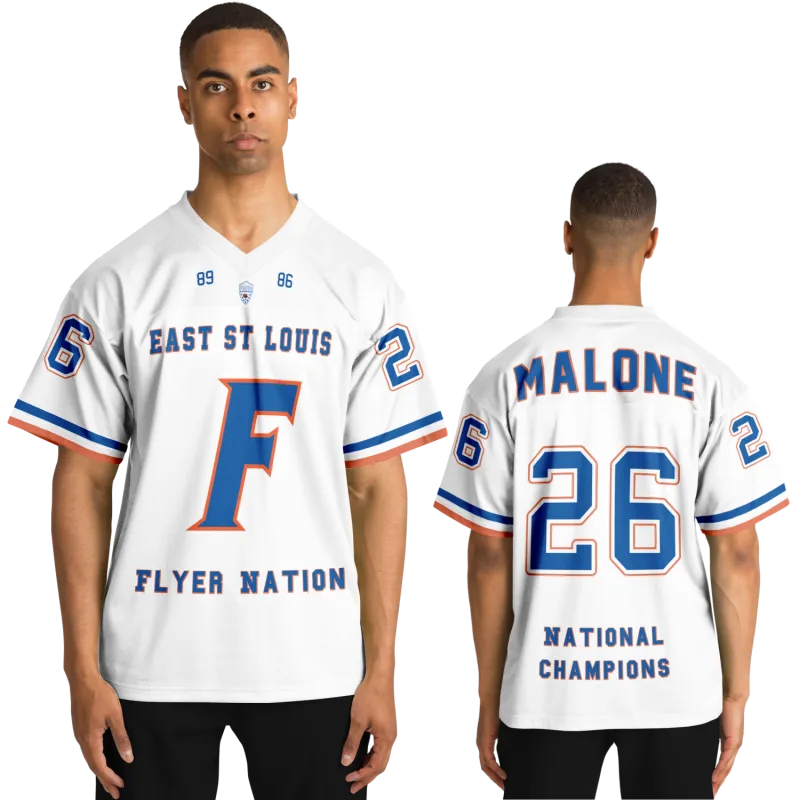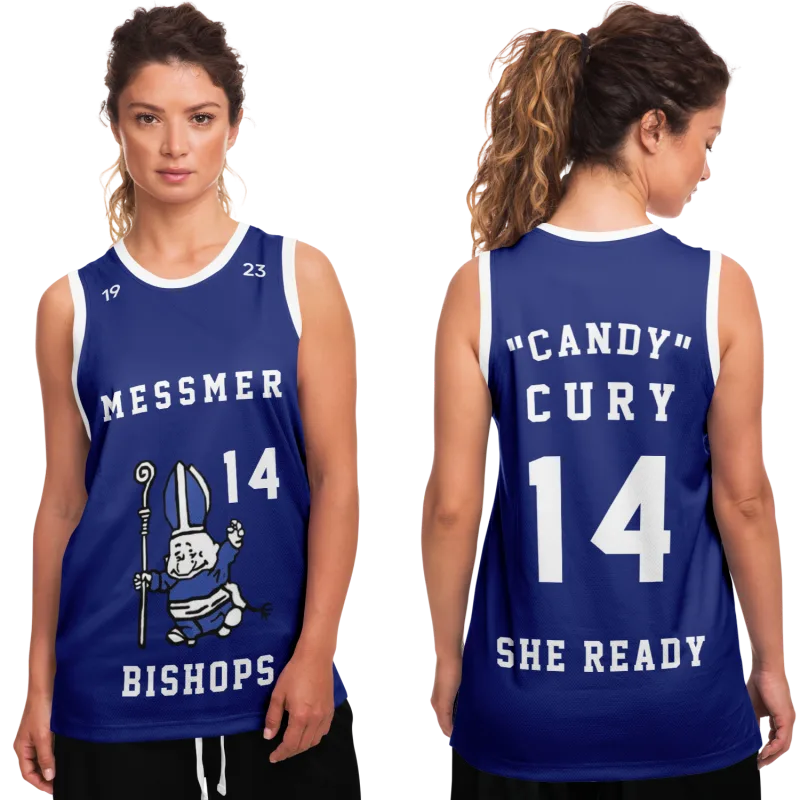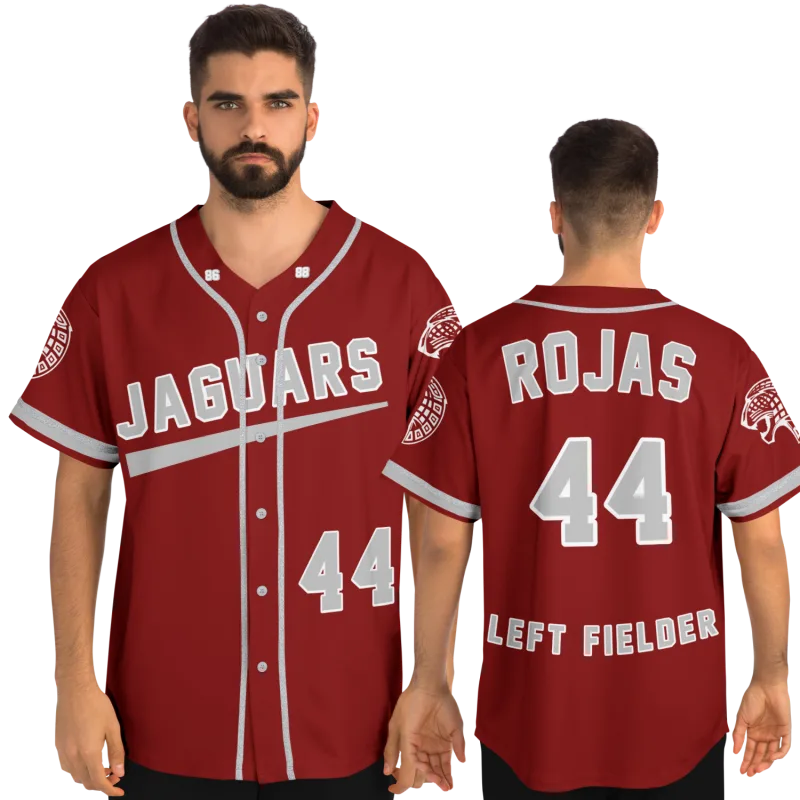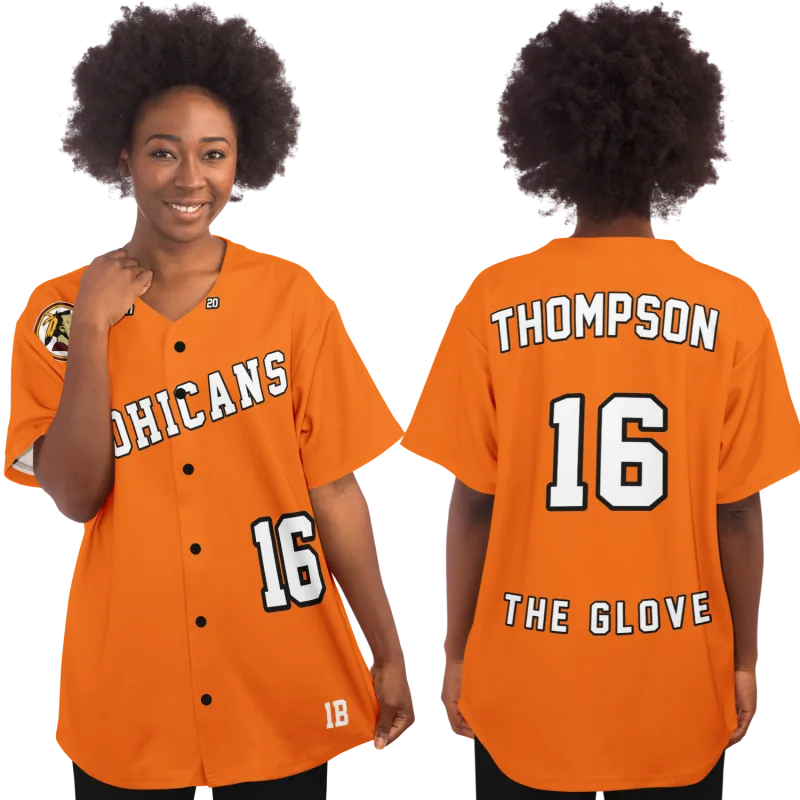

You were the point guard. Or the shortstop. Or the sweeper who read the whole field from the back line while everyone else watched the ball.
And decades later — at a work meeting, at a backyard cookout, at your kid's Little League game — you still catch yourself doing it. Reading the room. Seeing the angles. Positioning yourself instinctively. Identifying with your position in sports isn't nostalgia. It isn't wishful thinking about your playing days. It's something that runs considerably deeper than that, and there's a reason it hasn't faded.
Your position didn't just define what you did between the lines. It defined who you were. And who you became.
Your Position Was a Personality Blueprint
There's a concept in social psychology called role identity theory, developed by sociologist Sheldon Stryker in the late 1960s and refined through decades of research since. The core idea is deceptively simple: the roles we occupy don't just assign us tasks — they become integrated into the self-concept. We don't just do the role. We become it.
For most people, the roles that form the deepest self-concept are the ones occupied during adolescence. The brain is still developing its identity architecture during the high school years. The prefrontal cortex — the seat of self-concept, decision-making, and social cognition — is in full formation. What you repeatedly did, practiced, and were recognized for during those years left structural imprints on how you understand yourself.
Playing point guard for four years meant your brain spent thousands of hours in a specific mode: surveying, directing, initiating. Playing center meant your brain spent thousands of hours reading physical space, absorbing contact, holding position. Playing goalkeeper meant developing a psychological comfort with total isolation and the specific responsibility that no one else on the pitch shared.
Those aren't just muscle memories. They're cognitive templates.
In our experience looking at what resonates most with former athletes, it's almost never the wins or the trophies they return to first. It's the role. The feeling of being the person who did that specific thing, in that specific place, for that specific team.
How Position Identity Gets Built
The process of absorbing a position identity isn't conscious. Nobody sits in a locker room at 16 and thinks, "I'm going to internalize this role so deeply that it shapes my self-concept for the next four decades." It happens through three distinct mechanisms — and all three are operating simultaneously.
Repetition and neural encoding. The 10,000-hour principle popularized by Malcolm Gladwell — however debated in its specifics — points at something real: doing the same cognitively demanding task repeatedly doesn't just build skill. It builds a way of thinking. A shortstop who fields 500 ground balls per week isn't just developing quick hands. She's training her visual cortex to parse trajectory, her motor cortex to respond in milliseconds, and her prefrontal cortex to make real-time decisions under pressure. That processing pattern doesn't get uninstalled when the season ends. Those two-a-days and summer training sessions — the ones that felt punishing at the time — were the mechanism quietly laying those patterns down for good.
Social recognition and identity confirmation. Your teammates, coaches, and opponents consistently treated you as the person who held that position. You were called by it. Depended upon in the specific ways that position demanded. Praised or criticized for position-specific behaviors. Social recognition is one of the most powerful identity-formation mechanisms humans possess. When the people around you consistently reflect a specific version of you back at yourself, that version becomes the self-concept.
High-stakes emotional encoding. Positions are where the most emotionally charged moments of an athlete's life happen. The comeback win. The championship loss. The moment the coach trusted you with the ball. The moment you came through — or didn't. And senior night — that final walk across the field or court with your parents, your name echoing through the PA, your position announced one last time — fused your role identity with one of the most emotionally charged rituals in high school sports. Emotionally intense experiences encode more deeply in long-term memory and self-concept than ordinary ones. Your position was the location of your most vivid memories, which means it's threaded through the most emotionally significant chapters of your self-understanding.
The Sport-Specific Breakdown: How Different Positions Leave Different Imprints
Position identity isn't uniform. Different positions within different sports create genuinely different psychological templates. This is where the "once a point guard always a point guard" observation becomes something more specific and more interesting.
Court Sports: Basketball and Volleyball
Point guards and setters share a psychological profile that's hard to miss. They are the architects — the players whose entire function is to see the whole system, hold information about every other player simultaneously, and make the decision that sets everyone else in motion. Former point guards and setters tend to occupy the same role in every group they enter. They read social dynamics quickly. They notice who needs the ball and who's forcing it. They are uncomfortable being passengers in a plan someone else is running.
Centers and middles develop a different imprint: presence. Their position required occupying contested space — holding ground that other large, competitive people were actively trying to take. In professional and personal contexts, former centers and middles often carry that groundedness. They don't rattle easily. They've spent years getting elbowed in the back and calling for the ball anyway.
Shooting guards and outside hitters — the scorers, the terminal points of the play — often carry a comfort with individual pressure that other positions don't develop in the same way. The play was designed to end with them. That's a specific kind of psychological conditioning.
Field Sports: Baseball, Soccer, Lacrosse
Shortstops and central midfielders are the most interesting cross-sport comparison in all of sports psychology. Both positions require the player to function as the team's nervous system: high touch count, constant movement, decision-making in every direction, leadership that operates through action rather than words. Former shortstops and central midfielders tend to be impossible to keep peripheral. In any group dynamic, they migrate to the center. Not aggressively — instinctively.
Goalkeepers and catchers occupy a position unlike any other in their respective sports: they are the only player facing the opposite direction from everyone else. They see what their teammates cannot. They carry information nobody else on the field has. Former goalkeepers and catchers often have an unusual quality in adult life — a capacity to see the full picture of a situation, including the risks that everyone facing forward is missing.
Outfielders and fullbacks develop something that's easy to undervalue: patience and reading. The outfielder spends most of the game not touching the ball, but constantly processing trajectory, wind, score, situation. That vigilance without action — the capacity to stay focused and ready during long stretches of apparent inactivity — is a genuine cognitive trait that former outfielders recognize in themselves immediately when it's named.
Contact Sports: Football and Rugby
Quarterbacks and fly-halves carry the most explicitly leadership-shaped position identity in sport. The position required them to be studied, vocal, accountable, and decisive — all simultaneously, under physical pressure, in front of a crowd. It's not a coincidence that quarterback and fly-half are the positions most frequently used as shorthand for natural leadership in cultural conversation. Former QBs don't stop processing every room like it's a defense to read.
Offensive and defensive linemen develop something that almost no other position in any sport produces: a profound appreciation for the work that never gets noticed. Their function was entirely enabling — making space for someone else to be the hero, absorbing resistance so that the visible play could happen. Former linemen often make the most quietly effective managers, collaborators, and leaders in adult contexts, precisely because they learned to find meaning in unseen contribution.
What the Research Actually Shows About Athlete Identity
Sports psychologists have studied what's called athletic identity — the degree to which a person identifies with the athlete role — for decades. A well-validated instrument called the Athletic Identity Measurement Scale (AIMS) consistently shows that strong athletic identity in adolescence doesn't simply disappear after competitive sport ends. It transforms.
For most former athletes, the transformation goes one of two directions. Some experience role exit difficulty: when the competitive career ends, a significant part of their self-concept has no current home. This is most acute for athletes whose entire identity was organized around sport, with little development of non-athlete identity during the playing years.
But for the majority — and this is the part that doesn't get written about enough — the position identity doesn't exit. It transfers. The point guard doesn't stop being a director of flow; they become a director of meetings, families, friendships. The goalkeeper doesn't stop being the last line of defense; they become the person in every group who sees the risk no one else is tracking.
Marcus T., 44, played center midfield for three varsity seasons at a mid-sized high school in Ohio. He spent twenty years as a logistics coordinator before anyone pointed out to him that he'd essentially been playing his position his entire career — moving things and people to where they needed to be, a step ahead of where the pressure was coming from. He'd never framed it that way. Once he did, he said it felt less like a job description and more like a biography.
Why "Your Role on the Team Defines You" Is More Literal Than Metaphor
The common way this idea gets expressed — your role on the team defines you — tends to get treated as inspirational shorthand. A way of saying that sports build character. And that's true, but it undersells the mechanism considerably.
The more precise claim is this: the specific responsibilities, social dynamics, and cognitive demands of your position were experienced during a developmental window when identity formation was at peak sensitivity. You weren't just building skills during those years. You were building the self.
There's a specific set of things your position asked of you that no other position on that team experienced in the same way:
- The specific kind of pressure you were under (individual accountability vs. shared responsibility)
- The specific kind of information you were required to process (peripheral vision vs. tunnel focus)
- The specific way your teammates needed you (initiator vs. executor vs. anchor)
- The specific relationship you had with failure (one bad play visible to everyone vs. errors absorbed into the flow of the game)
Those aren't just athletic experiences. They're lessons in how to operate under your specific version of pressure — lessons that your nervous system encoded as default settings.
Sports Position Personality Traits: The Patterns That Hold Across Decades
In our experience with the former athlete community, the personality trait patterns that map to positions are consistent enough to be startling when you point them out to someone who's never had them named.
Former quarterbacks, point guards, and setters tend to score high on initiative, systems thinking, and discomfort with ambiguity. They want to know the play.
Former goalkeepers, catchers, and safeties tend to exhibit heightened risk perception, a preference for the full picture before committing, and an unusual comfort with being the singular accountable party when things go wrong.
Former forwards, wide receivers, and strikers — the position group most associated with individual expression within a team context — often carry the highest tolerance for individual visibility and the strongest relationship with personal performance metrics. They know their stats. They always have.
Former linemen, defenders, and midfielders in the more enabling roles tend to exhibit what organizational psychologists call prosocial motivation at unusually high levels — a genuine orientation toward making others successful rather than seeking personal recognition.
None of these are absolute. Humans are complicated and positions are formative, not deterministic. But the patterns hold with enough consistency that most former athletes, when they encounter this framework, immediately recognize themselves in it — and immediately recognize their old teammates in it too.
Your jersey is still out there waiting.
Design yours in minutes and see your name and number the way you remember it.
Frequently Asked Questions
Does position identity fade over time if you stop playing sports?
The short answer is: not as much as you'd expect. Research on athletic identity consistently shows that the self-concept elements formed during high school athletic participation are among the most durable identity structures people carry. What changes is how they express — from on-field behaviors to workplace, social, and family dynamics. The template doesn't disappear; it finds new territory.
What if I played multiple positions — does that create a blended identity?
Yes, and this is more common than single-position identity. Athletes who genuinely played multiple positions across their careers often describe a more fluid self-concept — adaptable, less locked into one operational mode. The dominant position (the one you played most, or the one you played at your highest competitive level) tends to form the core identity, with secondary positions contributing flexibility. Former two-way players in baseball, or athletes who moved from defender to midfielder as they developed, often describe this kind of layered self-understanding.
Is position identity stronger for some sports than others?
In our experience, position identity tends to be strongest in sports with highly specialized, non-interchangeable roles — baseball, American football, volleyball. Sports with more fluid positional responsibility — soccer, basketball at the recreational level, lacrosse — still produce strong position identities, but they're sometimes described as more about style of play than assigned function. The goalkeeper is always the goalkeeper. But a soccer midfielder might identify more with "I was the one who worked hardest defensively" than with a specific position title.
Why do former athletes so often default to their position's role in non-sport contexts?
Because the position didn't just teach them a skill — it taught them a decision-making style. The point guard learned to look for the open player before the open shot. The linebacker learned to read offensive line pre-snap movement before reacting. Those aren't basketball or football skills. They're cognitive habits applied to basketball and football. When those cognitive habits are strong enough, they become the person's general approach to novel situations — which is why they show up in boardrooms, parent-teacher conferences, and backyard barbecues.
At what age does position identity typically form most strongly?
The window most consistently identified in the research is roughly ages 13 to 18 — the period of peak identity formation, peak social sensitivity to peer recognition, and peak emotional intensity of athletic competition for most participants. Athletes who started specializing in a position before 13 and continued through 18 show the strongest long-term position identity. But even athletes who only played for two or three varsity seasons report position identity that persists well into adulthood, suggesting the mechanism is robust across varying durations of experience.
See also: athletic identity after high school | why saying 'I played' still carries so much weight | the psychology of athletic nostalgia | the difference between a sports fan and someone who actually played