



You can still smell it.
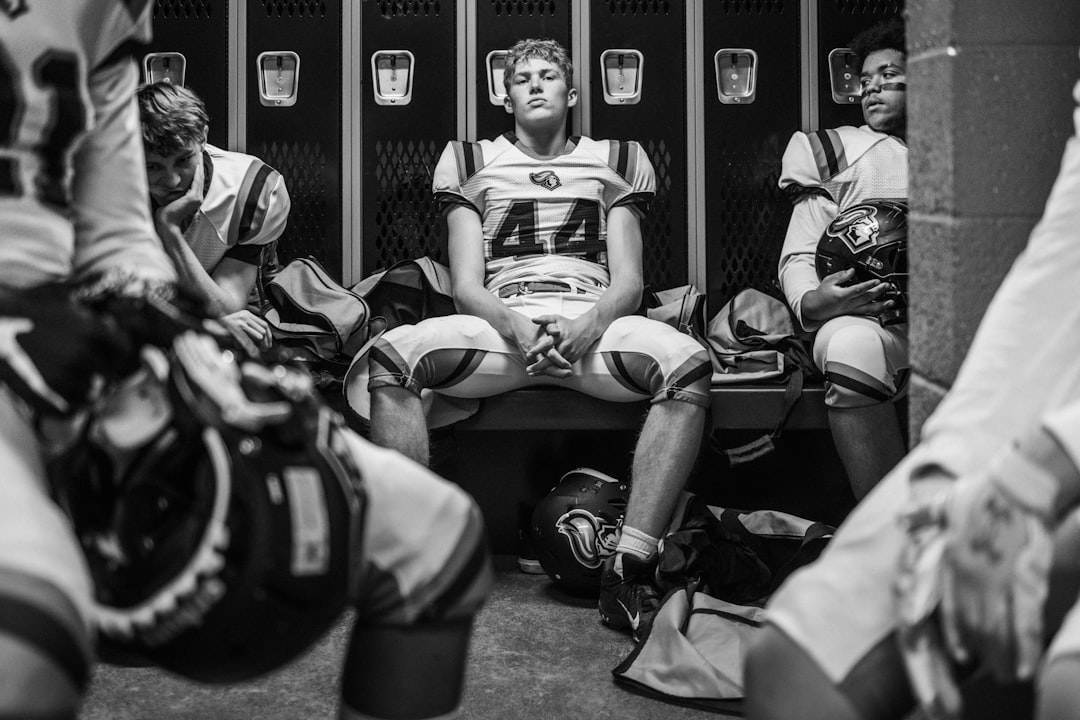
Concrete and sweat and the ghost of a hundred previous games baked into the paint on the cinder block walls. Someone's music — always a little too loud, always the wrong song until it became the right song — bouncing off metal lockers. The high school locker room before a big game had a specific atmospheric pressure to it, something between a church and a storm shelter, and every former athlete who ever sat in one knows what that pressure felt like against their chest.
This article isn't about what happened on the field or the court or the mat. It's about what happened in that room first. The forty-five minutes that nobody in the stands ever saw. The space that turned a group of teenagers in numbered jerseys into something that actually believed it could win.
The Room Itself Was Doing Something to You
There is a reason military units have pre-mission rituals. There is a reason surgeons have scrub-in routines. There is a reason actors stand in the wings and breathe before the curtain goes up. Humans are wired for threshold spaces — rooms that signal transition, that tell the nervous system: what comes next is different from what just was.
The high school locker room was that threshold.
The psychology isn't complicated, but it is real. Research in sport psychology has documented the role of pre-performance environments in regulating arousal and establishing competitive focus — what practitioners call the "pre-competitive routine." But you didn't need a journal to know it was working. You knew it was working because by the time you reached the door to the field, you were not the same person who had walked in off the bus twenty minutes earlier.
The word that matters in that sentence is "regulating." Not amplifying — regulating. The locker room wasn't a volume knob that you turned up until everyone was at maximum intensity. It functioned more like a thermostat. Different athletes arrived at different internal temperatures, and the room helped each of them calibrate to the same optimal zone.


Sport psychologists call this relationship between arousal and performance the inverted-U theory, and anyone who ever sat in a pregame locker room has lived it whether or not they know the name. The idea is straightforward: performance improves as arousal increases — up to a point. Beyond that point, too much adrenaline stops helping and starts hurting. Hands shake. Decisions rush. The edge you wanted becomes the edge that cuts you. Get too amped up too early, and the energy doesn't just level off — it crashes, typically right when you need it most, somewhere around the second quarter when the initial surge has burned through and what's left is flat.
The locker room served as the mechanism that prevented that crash. It gave each athlete what they needed, and what they needed varied. The quiet player in the corner with headphones wasn't disengaged — they were managing over-arousal by withdrawing inward before the external noise could push them past their optimal zone. The teammate who taped for fifteen minutes when three would have sufficed wasn't wasting time — they were using the repetitive rhythm of wrapping as a pacing device, keeping their activation steady rather than letting it spike and burn. Even the chaos itself — the music, the movement, the scattered energy — had a regulatory function. For athletes who arrived flat, the room's noise pulled them up toward readiness. For those who arrived already wired, the familiarity of the ritual — same room, same sounds, same sequence — pulled them back down. Same space. Different calibration. One optimal zone.
The room was doing that. The physical environment itself — familiar, bounded, shared only with your people — was part of the preparation. The smell. The specific acoustics of metal doors and tile floors. The bench where you always sat, that you would have fought someone over without quite knowing why.
You were ritualing yourself into readiness, and the room was the container for it. Of course, the grind of preparation that started long before the locker room door opened was what made the ritual feel earned rather than performative. The room didn't create readiness out of nothing — it organized readiness that had already been built, rep by rep, in the heat and the exhaustion of the weeks before.
The Pregame Locker Room Had Its Own Social Order
Walk into any pregame locker room during the high school years and you'd find the same cast of characters, give or take a few variables by sport and school.
There was the one who couldn't sit still. Pacing the length of the room, touching their gear repeatedly, bouncing on the balls of their feet like the floor was hot. They weren't anxious — or maybe they were, and that was the point. Motion was how they managed it.
There was the one who went completely still. Headphones in, eyes down, existing in some interior country that the noise of the room couldn't reach. You'd try to get their attention and they'd look through you. They were already somewhere else.
There was the one who cracked jokes — inappropriate, badly timed, slightly too loud. Nervous energy converted into performance. The locker room comedian existed on every team in every sport across every decade, and they served a real function: they broke the tension before the tension cracked something that needed to stay whole.
And then there was the one who taped. Always taping. Wrists, ankles, fingers — a ritual that took twice as long as it needed to because the physical act of wrapping was itself the meditation. The prep staff could tape a player in three minutes. This person needed fifteen, and they needed all fifteen.
What the pregame locker room atmosphere created, underneath all of this, was permission. Permission to exist at the edge of your own control. Permission to be nervous, to be weird, to be quiet or loud or somewhere between. Everyone in that room understood what was about to happen. Nobody had to explain themselves.
That kind of permission is rarer than it sounds.
The Chalk Talk and the Moment Everything Went Quiet
At some point in every pregame locker room, the music stopped.
Coach walked in — or the captain called it, or someone just knew — and the room went from contained chaos to complete silence in about four seconds. Not the silence of emptiness. The silence of focus. Forty people, or twenty, or twelve, pointed at the same thing.
The chalk talk happened here. Or the final reminder. Or nothing at all — just the look, the presence, the sense of weight that a coach or a leader can carry into a room when the room is ready to receive it. In our experience writing about former athletes, this moment — not the first whistle, not the coin toss, not the final buzzer — is the one that stays. Decades later, people can describe the specific way their coach's voice sounded in the pregame quiet. They remember what was said, or that nothing needed to be said.
This is what the locker room meant to athletes at its most compressed: it was the last place where the outcome was still open. Once you walked out, things happened. In there, everything was still possible. Coach's voice in that silence was the last word spoken in a world where you could still be the team that won.
Sports psychologists call this the activation of collective efficacy — the shared belief in a group's capacity to execute. The chalk talk, however informal, was the mechanism for that activation. When it landed, you could feel it in the room. The noise had been one kind of energy. This silence was a different kind. Focused. Aimed.
What Team Bonding in the Locker Room Actually Looked Like
Nobody called it team bonding at the time. That phrase belongs to athletic directors and parent boosters and corporate retreat facilitators. In the actual locker room, it looked like this:
Someone's playlist becoming the team's playlist. One person brought the speaker. Over three weeks of pregame routines, their songs became ritual. The team started requesting them. By the end of the season, hearing that specific song anywhere — a grocery store, a car radio, a wedding in your thirties — puts you right back in that room.
The inside language. Every team develops a vocabulary that doesn't travel. Phrases from a botched practice drill, a nickname earned in the second week of summer workouts, the specific word your center used when something went wrong that became the team's shorthand for everything going wrong. You couldn't explain it to your parents. You didn't have to. It belonged in the room.
The small acts of maintenance. Checking a teammate's equipment. Retying someone's laces when their hands were shaking. Saying the same thing you always said — not because it needed saying but because the rhythm of it was part of what held everything together. This is what locker room culture in high school sports actually built: not motivation speeches but the accumulated weight of small consistencies.
Marcus T., 34, played varsity soccer at a mid-sized school in Ohio. He still talks about the way his goalkeeper — six-foot-two, intimidating on the field — would do the same handshake with every single player in the room before every game. Twenty-three handshakes, different for each person, never missed once in two full seasons. "I didn't realize until I was in my late twenties that he was doing it for us," Marcus says. "He needed the routine. But we needed it too. By the time he got to you, you felt like you'd already been told you mattered."
That's team bonding in the locker room. Not the trust falls. The handshakes. And those handshakes planted something that outlasted every game, every season, every trophy. For a lot of former athletes, how team bonds in the locker room became friendships that outlasted graduation is the real legacy — relationships that survived college moves, career changes, and decades of distance, held together by a language that was first spoken in that room.
The Door, and What Was on the Other Side of It
At some point, you had to leave the room.
This is the moment that former athletes describe with the most precision and the most difficulty. The walk from the last bench to the door. The way sound changed — from the controlled acoustics of the locker room to the open air, the crowd noise, the wind, the sudden size of the world outside.
For many athletes, this was the most frightening moment of the entire experience. Not the game itself, which at least had the mercy of action. But the walk to the door, when you were still yourself, still uncertain, still holding everything together by the force of routine and ritual and the presence of your team.
And then you walked through.
What the locker room gave you in those last few minutes before the door was the specific sensation of being both fully supported and entirely on your own. Your teammates were right there. But what happened next was going to happen to you, in your body, with your choices, in real time. The room had done everything it could. Now you had to do it.
That threshold — the seam between preparation and performance — is what athletes mean when they talk about the locker room. They're not talking about the room. They're talking about what the room made possible. The confidence borrowed from routine. The identity reinforced by belonging. The brief, complete certainty that you were ready, or as ready as you were going to be, and that was going to have to be enough.
It usually was.
Why You Still Think About It
Forty-year-olds who played high school basketball describe their pregame locker room in present tense. It's not a memory they visit — it's a room they never quite left.
This isn't nostalgia, not really. Nostalgia is soft and general. What former athletes carry from that space is specific and structural. They remember the smell of a particular athletic tape brand. They remember the specific angle of light from a single fluorescent fixture that flickered. They remember the seat they always took and the order in which they put on their equipment.
The reason those details survive while whole years of other experience fade is that the locker room was a high-arousal environment with high emotional stakes, repeated over and over in the same physical space until the space itself became coded with meaning. Neuroscience has a term for this — state-dependent memory — but former athletes have a simpler name for it: they call it where we came from. The bus ride home after a loss was another one of those spaces — quieter, heavier, but just as formative as the locker room itself. And the weight of knowing it was the last time you'd sit in that room — that awareness, even when it was only semi-conscious at seventeen — gave every detail in that space a significance that a regular Tuesday practice could never carry.
What the locker room meant to athletes was not something any of them could have articulated at sixteen. It was just where you went before it started. It was just the room. It was just your team.
It was, it turns out, one of the most formative spaces most of them would ever inhabit. The place where they learned to manage fear by converting it into focus. Where they learned that belonging isn't declared — it's accumulated, handshake by handshake, playlist by playlist, season by season. Where they learned that walking through a door toward something that genuinely scared them was possible, because they'd done it before, and they were doing it again now, and they were not doing it alone.
The game was what everyone watched — and playing under the lights was its own kind of altered state. The locker room was where you actually became who you were going to be.
Your jersey is still out there waiting.
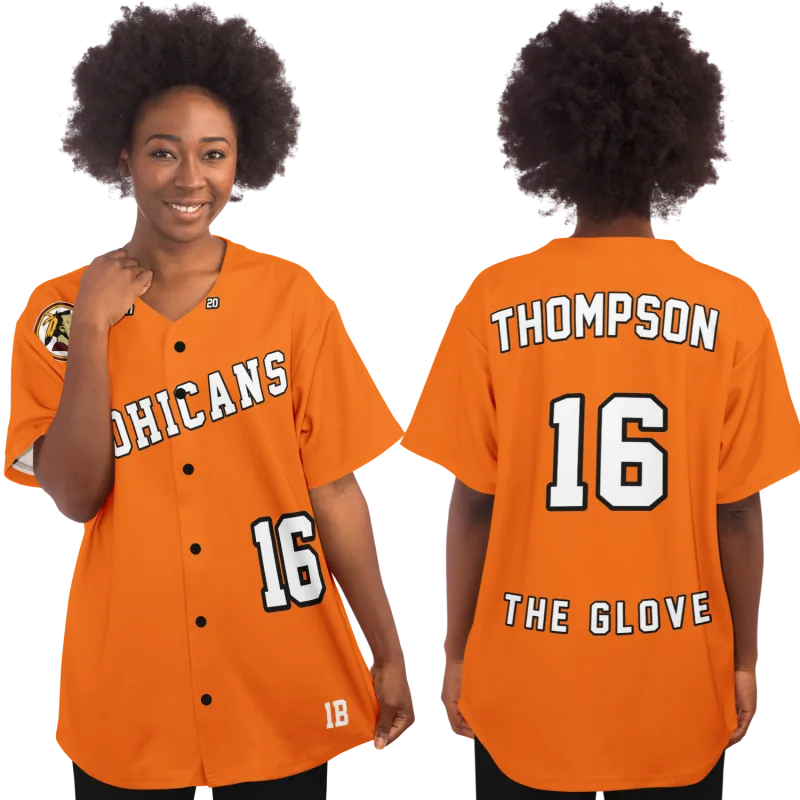
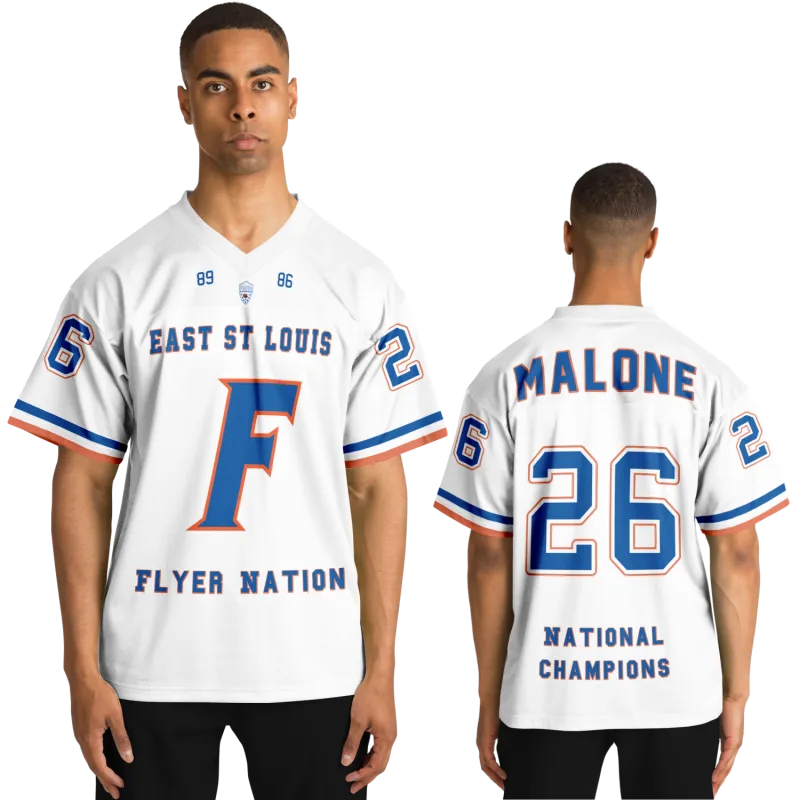
Design yours in minutes and see your name and number the way you remember it.
Frequently Asked Questions
What made the high school locker room before a big game feel different from regular practice days?
The difference was stakes and ritual combined. On a regular practice day, the locker room was functional — a place to change. Before a big game, the same physical space carried a different atmospheric weight because everyone in it understood what was about to happen. The music choices shifted. The conversations went quieter or louder in specific ways. Routines that players barely noticed on regular days became deliberate and precise. The room hadn't changed. The meaning attached to it had, and that meaning was shared by everyone in it simultaneously.
Why do former athletes remember the locker room so vividly decades later?
High-arousal experiences with significant emotional stakes form stronger, more durable memories than low-stakes events — this is well-documented in memory research. The pregame locker room combined physical arousal (adrenaline, nervous system activation), emotional stakes (fear, excitement, team belonging), and consistent repetition in the same physical environment. That combination essentially burned the sensory details of the space — the smell, the sound, the specific feel of the bench — into long-term memory with unusual durability. Former athletes aren't remembering the locker room harder than other memories. The locker room made itself harder to forget.
Was the locker room experience different for athletes in different sports?
Yes, in texture, not in structure. A wrestling locker room before a dual meet had a different specific silence than a basketball locker room before a rivalry game. A softball team's pregame atmosphere — often outside, often more dispersed — carried different physical cues than a football team's. But the underlying dynamic was consistent across sports: a bounded, team-only space, shared ritual, a threshold between preparation and performance, and the specific social permission to exist at the edge of your nerves without having to explain it. The details varied. The function was the same.
What happened in the locker room when the team was struggling mid-season?
This is where locker room culture either held or fractured. A team that had built genuine locker room bonds — the accumulated weight of small consistencies, the inside language, the handshakes — could absorb a losing streak because the room remained a place of belonging regardless of results. A team whose locker room was only held together by winning would feel the room change when the wins stopped. Former athletes often identify the locker room dynamic, not the on-field performance, as the leading indicator of whether a team was actually a team — and most can describe what that difference felt like from inside the room.
See also: why high school sports still matter so deeply to adults | the grief of watching your athletic career end at 18 | why your senior season memories feel permanently burned into your brain | what it actually felt like to play under the lights