

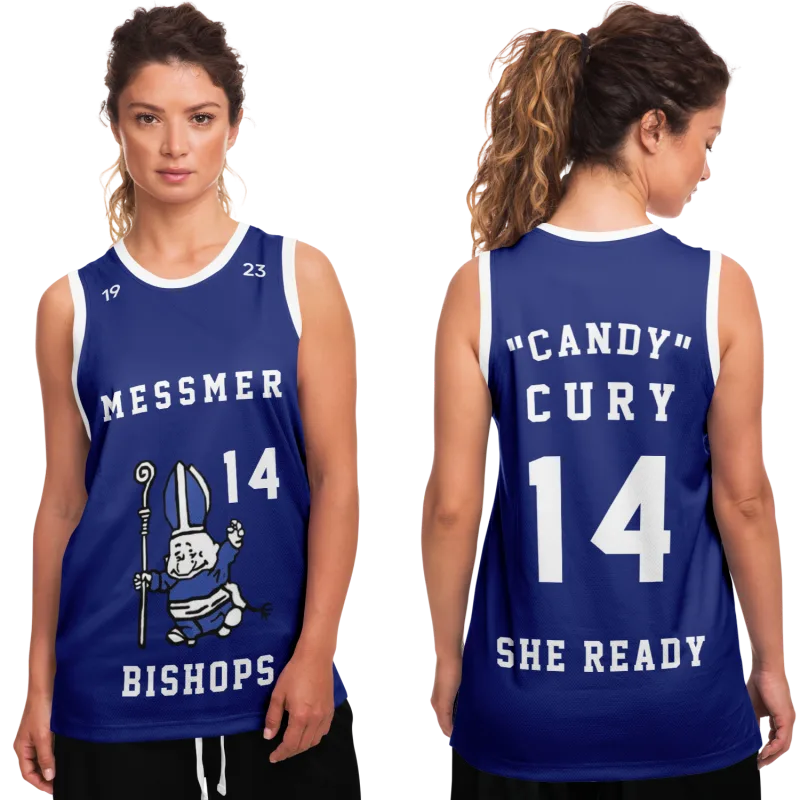
If you played organized sports at any level, you already know this feeling: you pull out your old jersey — the one with your number, your name across the back — and for a moment you are completely back in it. The weight of that fabric. The smell of whatever detergent your mom used. The specific way the collar sat.
Then you check the tag and realize you have absolutely no idea what that size means anymore.
That is the moment most former athletes arrive at this men's custom jersey fit guide. Not because they don't understand clothing sizes in general, but because athletic jersey sizing operates on a completely different logic than the sizing system they learned as adults — and the sizing system they wore as teenagers is a different universe entirely. The result is a lot of guys ordering the wrong size on their first custom jersey, either drowning in fabric or unable to fully extend their arms.
This guide fixes that. By the time you finish reading, you'll know exactly what size to order, what measurements actually matter, and how to account for the body you have today versus the body you had when jersey sizing first made sense to you.
The Athletic Sizing System You Learned in High School No Longer Applies to You
Every former athlete remembers the jersey distribution ritual. The coach or equipment manager had a box. You got handed what you got handed — sometimes you asked for a size up so it hung right, sometimes you had no choice. The sizing was built around one thing: performance fit for active athletic movement in your late teens.
Youth and high school athletic jerseys are cut for bodies that are still developing — narrower shoulders, shorter torsos, less variation in the chest-to-waist ratio. The fabric had stretch engineered for lateral movement and sweat management during competition. You were not supposed to wear it to dinner. You were not supposed to sit in it for three hours. You were supposed to run in it.
Adult custom jerseys — the kind you're ordering now to hang on your wall, wear to a game, or frame with your career stats — are sized on a completely different grid. The adult athletic sizing scale typically runs from Small through 5XL and is calibrated for a much wider range of body types, proportions, and intended use cases. The proportions between sizes are larger. The chest increments between a Medium and a Large in an adult athletic jersey can be 4 to 6 inches — versus the 2 to 3 inch increments in youth sizing.
This is why the guy who wore a Large in high school sometimes needs a 2XL in an adult custom jersey, and it is not because he gained weight. It is because the sizing systems are measuring different things in different proportions.
The second factor: how you plan to wear it. A jersey you're framing never needs to fit. A jersey you're wearing over a t-shirt needs more room in the chest and shoulders than one worn as a top layer alone. A jersey you're actually putting on over gear needs different allowances than one you're wearing to a watch party. Your intended use case is the first variable to settle before you look at a single measurement.
What Your Body Actually Measures Right Now — And Why It's the Only Number That Matters
This is where most guides lose people, so pay attention here.
The size on the tag of your favorite shirt is not your jersey size. The size you wore in high school is not your jersey size. The number you remember from playing days is not your jersey size.
Your jersey size is derived from two measurements: your chest circumference and your body length. Everything else is secondary.
Taking your chest measurement correctly:
Wrap a soft measuring tape around the fullest part of your chest — across your shoulder blades in the back, across your nipple line in the front. Keep the tape level and snug but not compressed. Do not suck in. Do not flex. Just stand naturally and breathe normally. Take the measurement in inches.
That number is your chest circumference. It is the single most important measurement in custom jersey sizing.
Taking your body length measurement:
Measure from the top of your shoulder (the point where your shoulder meets your neck) straight down to wherever you want the jersey to fall. For most styles, this is somewhere between mid-hip and the bottom of the hip. If you have a reference jersey that fits the way you like, measure its body length instead — lay it flat and measure from the top of the shoulder seam to the bottom hem.
What to do with those numbers:
Every legitimate custom jersey provider publishes a size chart that translates chest circumference to their sizing scale. Find the column that matches your chest measurement. If you land between sizes, order up — especially if you plan to wear the jersey over anything, or if you have broader shoulders relative to your chest.
In our experience, the single most common sizing mistake in custom jersey orders is ordering based on shirt size rather than measured chest circumference. A man who wears a Large in most shirts frequently measures at 44–46 inches in the chest — which puts him squarely in XL or 2XL territory on most adult athletic jersey size charts. Shirt manufacturers use negative ease (the garment is cut smaller than your body to create a fitted appearance). Athletic jersey charts are built on positive ease (the garment is cut to your measurement or slightly over it, so it doesn't restrict movement).
The Three Variables That Change Everything About How a Jersey Fits
Once you have your chest measurement, three variables determine whether the jersey fits the way you want it to:
1. Shoulder width relative to chest
Athletic jerseys are cut on the assumption that shoulder width scales proportionally with chest circumference. For many adult male bodies, especially former athletes who trained extensively in their upper body, this assumption is wrong. If your shoulders are wide relative to your chest — common in former linemen, swimmers, and baseball pitchers — you may need to size up from your chest measurement to get enough room in the shoulder seam. A jersey whose shoulder seam sits an inch past your actual shoulder will always look wrong, regardless of how the chest fits.
2. Torso length
Adult custom jerseys come in standard and long/tall variants from most providers. If you're above 6'1" or have a long torso relative to your height, a standard-length jersey will look proportionally short — it will sit at your hip instead of below it. Check whether the provider offers a tall option, and if not, account for this before ordering. A jersey that rides up whenever you raise your arms is not going to look the way you want it to look.
3. Intended layering
This is the variable nobody talks about and almost everyone gets wrong. If you plan to wear your custom jersey over a t-shirt — the most common wear pattern for former athletes ordering a tribute jersey — add a minimum of 2 inches to whatever the size chart recommends for your bare chest measurement. If you're wearing it over a hoodie or sweatshirt, add 4 inches. Athletic jersey fabric does not stretch the way an everyday t-shirt does. The room you need for comfortable layering has to already be built into the size you order.
Reading a Size Chart Without Getting Lost
Marcus T., 44, played offensive line at a Division III program and ordered his first custom jersey to wear at his son's high school games. He measured correctly — 50-inch chest — found that on the size chart, and ordered a 2XL. The jersey arrived and fit his chest fine, but the shoulder seams sat an inch past his actual shoulder line and the jersey looked like he'd borrowed it from someone larger.
What Marcus didn't account for: he has a 50-inch chest but 22-inch shoulders. On a leaner-framed man, a 50-inch chest typically comes with 20–21-inch shoulders. Former linemen often have a shoulder-to-chest ratio that runs wider than the size chart assumes. His correction was to call the provider, explain his shoulder measurement, and get routed to a custom-cut option that allowed him to specify shoulder width separately. He reordered. The second jersey fit exactly the way he wanted.
The lesson from Marcus's experience: the size chart is your starting point, not your final answer. It works correctly for bodies that match the average proportions of that size. If you know your body runs outside average proportions in any dimension — wide shoulders, long torso, narrow hips relative to chest — flag that before you order.
How to actually read the chart:
Most adult athletic jersey size charts list chest circumference in 2-inch increments across sizes. Find the row for your sport style (some providers have different cuts for basketball jerseys versus football jerseys versus hockey jerseys — these are not interchangeable). Locate your measured chest circumference. If you're between two sizes, go up. Note whether the chart is using body measurements (your chest circumference) or garment measurements (the jersey's chest measurement when laid flat) — garment measurements will be 2 to 6 inches larger than the corresponding body measurement, and confusing the two is a classic source of ordering the wrong size.
If the size chart does not clearly distinguish body from garment measurements, email the provider before ordering. This is a 2-minute question that prevents a return.
Mesh, Sublimated, and Tackle Twill — How Fabric Type Affects the Fit You Feel
The fabric of your custom jersey is not just an aesthetic choice. It affects how the jersey drapes, stretches, and sits on your body — which means two jerseys with identical sizing can fit meaningfully differently depending on what they're made of. And the materials themselves have changed a lot since you played — understanding how fabric technology has evolved helps you pick a fabric that fits the way you remember.
Mesh fabric (the traditional knit athletic jersey material) has natural stretch in the horizontal direction. This means it accommodates chest and shoulder variation more forgivingly than rigid woven fabrics. If you're between sizes and the jersey is mesh construction, the lower size is usually workable. If it's not mesh, size up.
Fully sublimated jerseys (all-over dye-printed on polyester) are cut from woven fabric with very little horizontal stretch. These jerseys run closer to their stated measurements and have less forgiveness. Order exactly to the size chart, or size up if you're between sizes.
Tackle twill construction (raised lettering and numbers sewn onto the body fabric) sits in between. The body fabric often has some stretch; the sewn elements do not add or subtract from fit significantly. Standard size chart guidance applies.
One thing that doesn't change across fabric types: the shoulder seam placement matters more than almost any other fit indicator. If the shoulder seam sits at or within a half-inch of your actual shoulder line, the jersey will look right from across a room, even if the chest is slightly loose. A shoulder seam that falls past your shoulder is visible at 20 feet and no amount of correct chest sizing compensates for it.
Your jersey is still out there waiting.
Design yours in minutes and see your name and number exactly the way you remember it.
Frequently Asked Questions
I ordered a jersey and it fits fine in the chest but the shoulders are too wide — what did I do wrong?
You didn't do anything wrong exactly — you followed the size chart and got the right chest fit, but your shoulder width runs narrower than the average proportions for that size. This is common for former athletes who carried most of their mass in the core or legs rather than the upper body. The fix going forward: measure your shoulder width (from the outer edge of one shoulder to the other, across the back) and compare it to the garment's listed shoulder measurement before ordering. If the jersey's shoulder measurement exceeds yours by more than an inch, size down or request a slim-cut option if the provider offers one.
Does jersey sizing differ by sport?
Yes, meaningfully. Football jerseys are cut with extra room in the shoulders and torso to accommodate pads or the assumption of bulk — if you're ordering one, it helps to understand custom football jersey sizing before you land on a size. Basketball jerseys run longer in the torso and looser in the arm openings. Baseball jerseys have a more tailored cut with a defined button placket that affects how the chest measurement translates to wearable fit. Hockey jerseys are the most generously cut of any common sport style and tend to run large even relative to their own size charts. Always filter your size chart search to the specific sport style you're ordering — applying a football jersey size chart to a basketball jersey order will produce the wrong result.
I'm ordering a custom jersey as a gift and I don't know the person's measurements — what's the safest size to order?
If you know the person's standard shirt size and their approximate height and build, add one size to their shirt size and you'll be right the majority of the time. A man who wears a Large in shirts is usually safe in an XL jersey — it will fit comfortably whether worn over a shirt or as a standalone layer. If he's above 6'2" or has a broad athletic build, go 2XL. The risk of ordering too large is a jersey that looks slightly casual and relaxed. The risk of ordering too small is a jersey that can't be worn at all. When in genuine doubt, size up.
What if I've gained or lost significant weight since my playing days — does my old jersey number/size tell me anything?
Almost nothing useful, unfortunately. The size you wore at 17 on your high school team was determined by what was in the equipment box, cut for a developing teen body, and sized on a youth athletic scale. Your adult measurements need to come from a tape measure, not from memory. Take the chest measurement, find the size chart, and order from the data — not from nostalgia. The jersey you're ordering is meant to honor who you were as an athlete. It deserves to fit the person you are now.
See also: jersey size chart for numeric sizing | how to manage the gap between your athletic memory and your current body | athletic identity after high school