

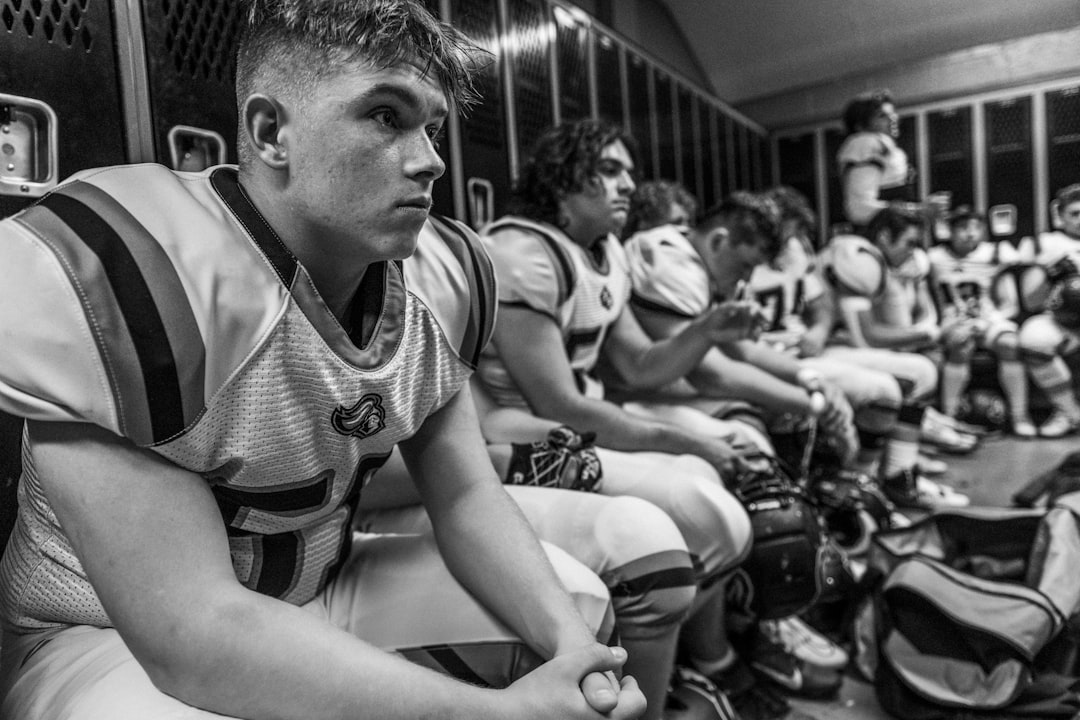




There's a jersey folded in a drawer somewhere in your house. Maybe a closet shelf. Maybe a box in the garage that hasn't been opened since the last move. You know which one. You also know you haven't worn it, not because you forgot about it, but because you've thought about it and talked yourself out of it every time.
That's the thing nobody talks about when it comes to wearing old jersey as adult former athlete territory: the hesitation isn't about the jersey. It's about what other people will think when they see you in it. It's about whether the number still belongs to you once the final whistle blew on your last season.
It does. Here's when to wear it, when to leave it in the drawer, and how a custom jersey solves the problem permanently.
The Identity You Didn't Stop Having When You Stopped Playing
Sport doesn't end cleanly. There's no ceremony where someone hands you a certificate that says "your athletic identity has officially transferred into a memory." You walk off the field, the court, the ice, and then life keeps moving. The jersey goes in the drawer. But the number? The number stays with you.
In my experience talking with former athletes across dozens of sports, the question of is it okay to wear your old jersey surfaces again and again, usually triggered by one of three moments: an alumni event, a reunion, or a random Saturday when the old team is playing and you want to feel connected to something real.
The answer (consistently, stubbornly) is yes. With nuance.
Your athletic past is not a phase you grew out of. It's part of the architecture of who you are. The number you wore represents years of practice, competition, sacrifice, and community that most people around you never experienced. Wearing that number is identity in the literal sense, not nostalgia in the pejorative sense.


The psychology behind this runs deep: athletic identity expression isn't something you age out of; it's something you carry forward into every room you walk into.
The social hesitation comes from a misread of the room. Most people aren't judging former athletes who wear their jerseys. They're curious. They want to know the story. The jersey is a conversation starter, not a red flag, provided you're wearing it in the right context, and provided it still fits the moment even if it doesn't quite fit you the same way it used to.
When Wearing Your Old Jersey Actually Works
Context is everything. The same jersey that feels right in one setting lands differently in another, not because the jersey changed, but because what it communicates changes.
Here are the situations where athlete wearing old jersey is not just acceptable but genuinely powerful:
Alumni Games and Organized Return Events
This one is the easiest call. If your school, club, or league organizes alumni games, return weekends, or homecoming events, your old jersey is the correct attire. Full stop. These events exist specifically to honor the fact that you played, and the jersey is the uniform of that honor.
If the jersey still fits and is in reasonable condition, wear it. If it's been through one too many wash cycles or the sizing has drifted (in either direction, bodies change, and that's not a character flaw), this is when a custom jersey earns its place. More on that shortly.
Gameday at Your Old School or Home Arena
Wearing high school jersey as adult at your old school's games is one of the most natural things a former athlete can do. You're there to support the current players, connect with the community, and show up as someone who has history with this program.
The jersey signals all of that without a word. Current players notice. Coaches notice. Other alumni notice. You're not trying to reclaim your starting spot: you're demonstrating that you care enough about this program to still show up for it.
One practical note: check the game's vibe before committing. Varsity playoff game with a packed student section? Wear the jersey. Small midweek JV game with a handful of parents in the bleachers? The jersey might be more statement than the moment calls for. Read the room.
Reunions — Class, Team, and Otherwise
Team reunions are straightforward: if someone is organizing a reunion for your squad, wearing your jersey is participation in the shared memory. It's the visual language of the event.
Class reunions are slightly more nuanced. If the reunion has a sports-themed element or you're known by that cohort primarily as an athlete, the jersey works. If the reunion is a formal dinner at a hotel ballroom, maybe not the jersey. But that's a dress code issue, not an identity issue.
Fundraisers and Charity Events Tied to Your Sport
If you're running a 5K to raise money for youth athletics, coaching a clinic for kids, or attending a sports charity auction, your jersey says something specific and credible: I'm not just a donor or a spectator. I know this from the inside.
When It Gets Awkward — And What That's Actually Telling You
There are moments where wearing high school jersey as adult produces a different result, not because you shouldn't, but because the mismatch between the jersey and the context creates friction.
The unrelated social setting: Wearing your 1998 varsity basketball jersey to a work happy hour, a dinner party, or a first date is a statement, but probably not the one you intend. The jersey isn't wrong. The setting just doesn't give it room to mean what it means.
When the fit has changed significantly: A jersey that's now two sizes too small communicates something different than a jersey that fits. This isn't about aesthetics; it's about whether the garment is doing what it's supposed to do. A jersey should feel like pride. If it feels like effort, it's not serving you.
When the number has been retired or reassigned to someone else: This one is subtle. If your old number is now worn by a current player who is building their own legacy with it, showing up in your version of the same number can accidentally create a weird dynamic. It's not a rule, just something worth being aware of.
The "living in the past" read: This is the hesitation most former athletes actually feel, and it's worth naming directly. The worry is that the jersey signals you're stuck: that you peaked in 2006 and haven't emotionally moved on. This read is almost always wrong, but it exists, and ignoring it doesn't make it disappear.
The "own name is lame" read: You'll hear this one most often as a throwaway comment from someone who never played — or in a forum thread, where it's always phrased the same blunt way: "wearing a jersey with your own name on it is kind of childish." It's worth answering, because it aims straight at the heart of what a custom jersey is.
That verdict belongs to a different garment entirely: the fan who buys a pro player's jersey and swaps in his own name, wearing a stranger's number like a costume. That is cosplay of a career that isn't yours. It has nothing in common with the former athlete whose number was assigned to them, earned over years, and worn on a real field with real teammates. Those aren't the same jersey, and they aren't the same claim.
The number is history, not a costume. You're not pretending to be someone else. You're refusing to forget who you already were. Nobody who knows what that number cost will call it lame. And the people who would? They were never the audience anyway.
How you talk about your playing days in conversation shapes how people interpret the jersey too. The right framing turns "stuck in the past" into "proud of where I came from."
The solution to every one of these friction points is the same thing.
Why a Custom Jersey Solves the Problem Most Former Athletes Don't Know They Have
Marcus T., 38, played college lacrosse and has kept his old number (14) through four jobs, two cities, and a kid who just started playing youth soccer. He pulls the old jersey out once a year for alumni weekend and has talked himself out of wearing it to every other event in between. "It fits weird now," he said. "And it feels like I'm trying to prove something I already proved."
What Marcus wanted wasn't permission to wear his old jersey. He wanted something that said I played without requiring an explanation — something that was his, current, and didn't make him feel like he was reaching back in time.
That's what a custom jersey does.
A custom jersey with your name, your number, and your sport is not a copy of something you used to be. It's a declaration of something you still are. Former athletes don't stop being athletes. They become the people who carry that experience into the rest of their lives — into how they compete at work, how they coach their kids, how they show up for their community. The jersey is just the outward version of something that never went away.
The custom jersey solves the fit problem: it's made for you as you are now. It solves the context problem: it reads as intentional, not nostalgic. It solves the "trying to prove something" problem: it's not a relic from the past — it's a statement about the present.
When to wear your jersey number on a custom jersey is a much shorter list of restrictions. Alumni game? Yes. Gameday support? Yes. Reunion? Yes. Fundraiser, clinic, youth coaching, a Saturday when your old team is on TV and you want to feel it? All yes.
Reading the Room: A Practical Framework for When to Wear It
When to wear your jersey number comes down to three questions. Answer them before you pull the jersey on:
-
Does this setting have a sports or community connection? If yes, the jersey almost always fits. The connection gives it context and meaning.
-
Would anyone else in this setting be wearing something sport-adjacent? If others are in team gear, fan apparel, or casual athletic wear, you're not out of place. If the event has a dress code that excludes athletic wear in general, that applies to your jersey too — but that's a dress code call, not an identity call.
-
Does the jersey still represent you accurately? A jersey that fits right, is in good condition, and still carries your actual number and name is doing its job. A jersey that has become uncomfortable to wear — for any reason — has outgrown its usefulness as a statement piece.
If you answered yes to the first two and are hesitating on the third, that's the signal to look at a custom version. Your number still belongs to you. The question is just whether the old jersey is still the right vessel for it.
And if the jersey has become something you'd rather preserve than wear, there are thoughtful ways to display your jersey at home that honor what it represents — without your living space feeling like a dorm room.
Your number never stopped belonging to you.
The only question is whether the jersey you have fits the person you are now. Design a custom jersey that carries your name and number into every room you walk into — starting today.
Frequently Asked Questions
Is it okay to wear your old jersey to a current game at your old school?
Yes — with context awareness. Wearing your old jersey to support your former program is one of the clearest signals of alumni loyalty and community investment. Current players, coaches, and fellow alumni generally respond positively. If the jersey is no longer fitting well or you want something that represents your connection without the wear-and-tear of an aging uniform, a custom jersey with your number is the upgrade that handles both problems at once.
What do you do if your old jersey doesn't fit anymore?
This is one of the most common situations former athletes face, and the honest answer is: don't force it. A jersey that doesn't fit stops communicating pride and starts communicating discomfort — which isn't the message you want. A custom jersey solves this directly: it's made to your current measurements, carries your name and number, and does everything your old jersey was supposed to do — without the fit issue.
Is wearing a jersey with your own number different from wearing a fan jersey?
Meaningfully, yes. A fan jersey says "I support this team." A jersey with your own name and number says "I played." Those are different stories, and the people around you — especially other athletes — will read that difference immediately. That's why former athletes who wear their own number, whether on an old jersey or a custom one, tend to get questions and conversation rather than blank looks. The "I played" signal is specific and legible in a way that generic fan gear isn't.
When is it too late to get a custom jersey made?
There's no too late. Former athletes in their 40s, 50s, and beyond commission custom jerseys for alumni events, reunions, and personal milestones — coaching their kid's first season, being inducted into a hall of fame, marking an anniversary of a championship. The number doesn't have an expiration date. Neither does the jersey.
See also: athletic identity after high school | what to do with your old varsity letter jacket | the psychology of athletic nostalgia | managing the gap between your athletic memory and your current body