




Talking about high school sports without sounding stuck is something most former athletes never get explicit guidance on — and it shows, every homecoming weekend, in conversations that go slightly sideways before anyone knows why.
You're back on familiar ground. Someone mentions the old field house, a photo surfaces from the year your team went to the championship, or a teammate you haven't seen in a decade asks what position you played. The pull to say something real and proud is immediate. So is the quiet alarm: don't be that person. The one still wearing the letter jacket in spirit. Still relitigating the 2008 regional final. Still leading with their sport before their name.
You're not that person. But the line between "proudly owning your story" and "living in a closed chapter" is thinner than it looks, especially when homecoming puts the whole era under a concentrated spotlight. This article is about walking that line with ease — and leaving every conversation feeling like the grounded, forward-moving version of yourself you've actually become.
The Core Distinction: Identity vs. Nostalgia
Here's what separates the conversations that land well from the ones that quietly make people uncomfortable: nostalgia presents the past as a sealed capsule; identity draws a line from then to now.
When your athletic story sounds stuck, it almost always follows a specific grammatical pattern. "I was a three-sport athlete." "We had the best team in the county." "I could have played at the next level." Past tense. Locked vault. No line connecting that person to the one standing in the room today.
When the same story sounds grounded and confident, something different is happening. You're not just reporting what you did — you're showing that the person who ran those January practices, absorbed those losses, and trusted that coach is still present, just evolved. Same source material. Different frame.


The psychological mechanism behind this is well-documented. Narrative identity research from the American Psychological Association shows that people who integrate significant past experiences into a coherent ongoing self-story — rather than isolating those experiences as a separate, finished chapter — report higher life satisfaction and stronger sense of purpose. You're not just making better small talk at homecoming. You're doing something genuinely healthy with your story.
That framing shift changes your posture, your word choice, and the way people lean in or drift away when you speak.
The Conversational Tell Everyone Recognizes
There is a specific pattern that signals stuck to anyone listening, and it almost always involves implicit comparison — the past as a measuring stick against the present. It sounds like this:
- "Back when I was actually in shape..."
- "I used to be able to run that without thinking about it..."
- "These athletes today don't understand what real conditioning looks like..."
Look at what those phrases have in common. None of them are really about the past. They're criticisms of the present — the speaker's current body, the current generation, the current standards — with the athletic years used as the benchmark that everything else fails to reach.
That's the tell. Once you hear it in others, you'll never want to do it in yourself.
Four Moves That Keep Your Story Moving Forward
Getting this right isn't about rehearsing lines or performing false modesty about what you accomplished. It's about having a small set of natural conversational moves ready before the weekend arrives.
Move 1: Connect the Past to a Current Value
The most natural version of this sounds like: "Playing [sport] gave me _____, and I still rely on that."
It requires actual reflection — not in the moment someone asks you about it, but before the weekend. Ask yourself: what did your sport actually give you? Not the trophies. The operating system. The way you process failure. The comfort with repetitive hard work. The ability to read a team dynamic quickly. Those things are alive right now. They belong in the conversation because they make your past directly relevant to who you are today.
- "Six years of competitive swimming taught me that panic is just information — you can work with it. That's still how I function under pressure."
- "I played goalkeeper for four years. The habit of staying calm while everything in front of you is in chaos — that's just wired in now."
Past and present in the same sentence. Not stuck.
Move 2: Use Your Story as a Bridge, Not a Broadcast
Athletic nostalgia lands badly when it's one-directional — the speaker performing, the listener waiting for a break in the monologue. The simplest fix is to make your story an entry point into theirs.
"I ran cross country through senior year — did you play anything?" or "Basketball was basically my whole world back then. What was your thing?" shifts the energy from performance to exchange. You're not monologuing; you're using your past as a door into a genuine conversation.
This move has a secondary effect worth noting: it signals confidence. People who are genuinely settled in their story use it as a question, not a statement that demands recognition.
Move 3: Be Specific, Then Stop
There's nothing wrong with naming your accomplishments specifically and clearly. Vagueness often reads as compensatory — like you're implying something you can't quite back up. Be specific. Then let it land.
"We won the state 4A title in volleyball my junior year. We'd been chasing it for three seasons and it was the last game I played with my best friend before she transferred." Say the real thing, with full ownership, and then stop. Don't explain why it was hard. Don't qualify the achievement. Don't circle back to make sure it registered.
The person who sounds stuck is the one who can't let the statement breathe — who over-explains, justifies, or returns to it repeatedly. Specificity plus brevity is the combination that signals pride without neediness.
Move 4: Name the Transition Honestly
This is the most disarming move, and the one that generates the most genuine response.
It sounds like: "That identity was everything to me for a long time. Figuring out who I was when that chapter ended took longer than I expected."
That kind of honesty signals that you've actually processed the transition — not bypassed it or suppressed it, but moved through it. And paradoxically, the clearest signal that you've completed a transition is being able to name how hard it was. You can only say "that was difficult to leave behind" from the other side of having left it. People recognize that immediately.
The Homecoming Context Is Its Own Pressure System
Homecoming is specifically engineered to activate nostalgia. The physical setting is the school. The faces are the teammates. Every conversation pulls naturally toward "remember when." And unlike a random moment when your athletic years come up and pass in five minutes, homecoming gives the topic sustained, concentrated oxygen over an entire weekend.
That's not a problem — it's actually an opportunity. Everyone in that room is navigating some version of the same thing. Nobody walks back onto that field after a decade feeling entirely neutral about it. The question is simply who handles it with the most ease, and ease comes from preparation, not improvisation.
Danielle R., 31, played setter for her high school volleyball team in Ohio and attended her ten-year reunion the same fall as homecoming weekend. "I used to lead with stats whenever the topic came up — I thought that was the way to prove it was real. Then I started talking about what the gym felt like at 6 AM before anyone else arrived, and what my coach said to me after we lost the regional final. That's when people actually stopped and listened. The numbers never did that."
The people who move through homecoming conversations with the most grace have usually separated two things that tend to get tangled: pride in what they did and need for others to recognize what they did. The first is permanent and healthy. The second is what makes athletic talk feel like unfinished business.
The Patterns That Age You in Any Conversation
In our experience tracking how these conversations play out — at reunions, on social media threads, in the comment sections that light up every homecoming season — four specific patterns consistently signal stuck. Recognizing them ahead of time is most of the work.
The Phantom What-If. "I had a look from [school] but _____ happened." Maybe it's completely true. But leading with the alternate timeline signals to the room that the actual timeline still feels like a disappointment. If you need to reference it, reframe it as something that taught you something specific — not as the diverging road you're still standing at.
The Physical Comparison. Any sentence measuring your current body against your 17-year-old athletic body is going to miss. It's not humility — it frames your current self as a reduced version of a past self, and nobody in the room knows what to do with that except feel slightly uncomfortable on your behalf.
The Generational Dismissal. "Athletes today don't train like we did." Even if you have a reasonable argument, it ages you immediately and closes off any real exchange. It positions your era as the gold standard and frames every subsequent era as inferior.
The Unresolved Sentence. "We almost ." "One more year and we would have __." "If we'd had ___." The unfinished athletic sentence is the clearest signal that the story hasn't been allowed to end. Let it end. The ending doesn't erase what happened — it completes it.
A Brief Preparation Practice Before the Weekend
This doesn't require much time. Twenty minutes of honest reflection before homecoming will do more for your conversational confidence than any amount of self-monitoring in the moment.
-
Name three specific things your sport gave you that are still active in your life. Not general values like "discipline." Specific cognitive or behavioral patterns — the way you handle conflict, the relationship you have with preparation, the threshold you have for physical discomfort. Write them down. Know them cold.
-
Identify one moment from your playing years you can describe in under ninety seconds. Not your greatest achievement — the moment that best captures what the experience actually felt like. The bus ride home after the loss. The locker room in the final minutes before a big game. The specific thing your coach said that you still haven't forgotten. Sensory and honest beats statistical every time.
-
Decide in advance not to lead with records or stats. They're real. They matter to you. But they're the most transactional, least human version of your story. Lead with experience. Let the records surface if someone asks directly.
-
Remind yourself that curiosity is more magnetic than certainty. The most compelling people at any reunion are the ones who seem genuinely interested in everyone else's version of those years — not the ones who've already decided theirs was the definitive experience.
According to the National Federation of State High School Associations, roughly 8 million students participate in high school sports each year in the United States. Every one of them will eventually be in this same position — at some reunion, some homecoming, some casual conversation where the topic comes up. The ones who handle it well are the ones who did this kind of quiet preparation.
The Jersey Still Means Something
Here's the thing worth sitting with: the reason talking about your athletic past feels complicated is precisely because it mattered. Nobody struggles to tell the story of a chapter that didn't mean anything.
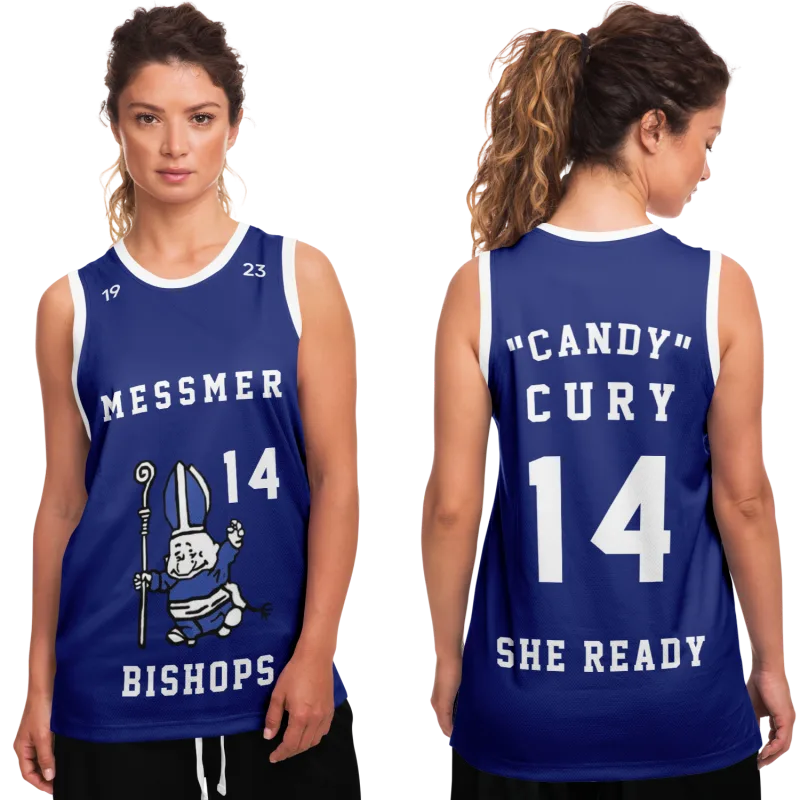
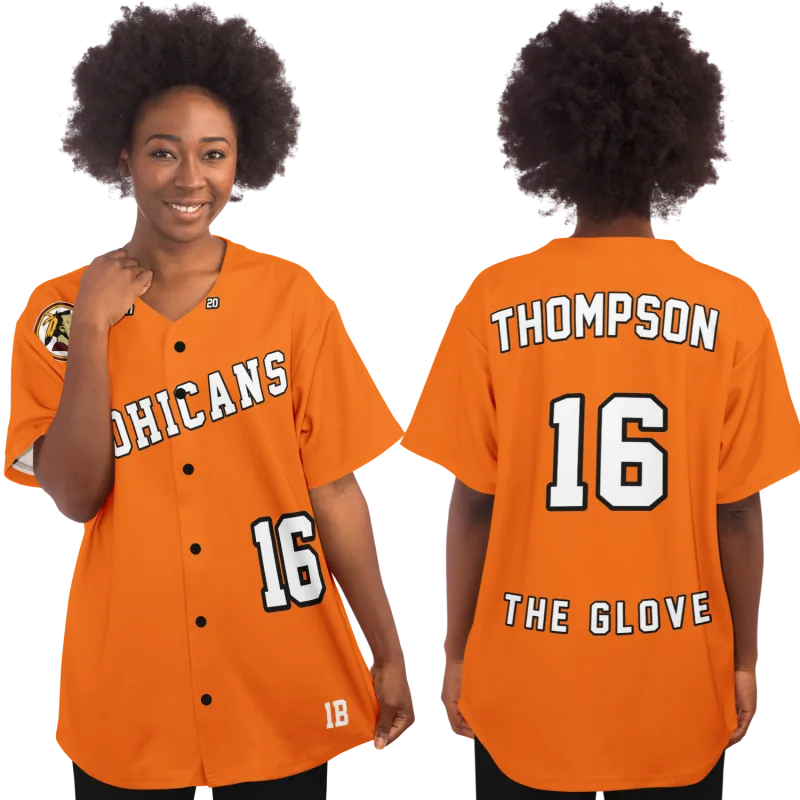
The uniform, the number, the name on the back — those weren't costumes. They were the outer layer of a version of yourself that competed, hurt, improved, and belonged. The Sport and Identity research framework from the National Institutes of Health confirms what most former athletes already feel intuitively: athletic participation during adolescence creates identity structures that persist into adulthood. You're not imagining how much it shaped you. It did.
The goal isn't to minimize that or perform false modesty about it. The goal is to carry it well — which means carrying it in a way that enriches your present rather than commenting on it from a distance.
When you do that, the person listening doesn't think: they're still living in the past. They think: that experience clearly made something real in them. And they lean in.
Your jersey is still out there waiting.
Design yours in minutes and see your name and number exactly the way you remember it.
Frequently Asked Questions
Is it strange to talk about high school sports when you're in your 30s or 40s?
Not at all — provided the conversation has forward motion. The awkwardness people sense around this topic almost always comes from delivery, not subject matter. If you're connecting your athletic years to who you are now, what those years taught you, or what the experience actually felt like, you're telling a human story that lands at any age. The version that reads as odd is the one that treats the athletic chapter as the peak of the story with everything since as a footnote.
What if my athletic years genuinely were the most significant years of my life so far?
Then you're in a real tension that many former athletes feel and very few say directly. The honest move is something like: "That was the arena where I gave everything I had. I'm still figuring out where that level of investment belongs now." That's not a sad statement — it's an honest one, and honest tends to be more interesting than either false modesty or overclaiming. You're not required to pretend those years weren't significant. You just can't let them remain the last significant thing.
How do I respond when someone else is clearly stuck in their own athletic past?
Almost never correct it directly. The impulse to adjust someone else's relationship with their history is almost never as useful as it feels in the moment. The more effective move is to model the alternative — tell your own story with integration and forward motion, ask genuine questions about their current life, and let the contrast do the quiet work. People recalibrate in response to good conversational modeling far more readily than they do to feedback about their conversational habits.
What if I genuinely regret not taking my sport more seriously when I had the chance?
That's a real feeling and it deserves real processing — but homecoming weekend with a crowd around you is not the setting for it. What you can say honestly is: "I wish I'd understood at the time what I was actually getting out of it." That acknowledges the feeling without turning a casual conversation into a public accounting of your regrets. The fuller reckoning, if you need it, belongs in a private conversation or with someone who actually knew you during those years.
See also: athletic identity after high school | why high school sports still matter to adults | the difference between someone who played and someone who just watched