




There's a specific moment most former athletes can pinpoint. Not graduation. Not the last game. It's the first weekend morning — maybe four months later — when you wake up and there is nothing you are supposed to do. No practice. No film session. No conditioning. No teammates expecting you in twenty minutes. Just a Saturday that belongs entirely to you, and somehow that feels like the worst thing that has ever happened.
That moment is the stopping high school sports identity shift in its purest, most disorienting form. It doesn't announce itself with drama. It arrives as a strange, hollow kind of quiet — and if nobody has told you what it actually is, it can feel like something is broken in you specifically, rather than something that happens to nearly every person who ever gave years of their life to a sport.
This is not a guide about "finding new hobbies" or "channeling your competitive energy into the gym." Those articles already exist. This is about what is actually happening inside the psychological architecture of a former high school athlete — and why the transition out of sport hits in a place that most advice completely misses.
When the Sport Was the Self
For most high school athletes, the sport didn't just occupy time. It organized identity.
Think about how you introduced yourself — or how others introduced you — for the past four years. "This is Marcus, he plays linebacker." "That's Priya, she's on varsity swim." The sport wasn't a thing you did after school. It was the first sentence of who you were.
Psychologists call this athletic identity — the degree to which a person defines themselves through their role as an athlete. Research on identity foreclosure in young athletes, including work published by the Journal of Applied Sport Psychology, has documented consistently that athletes who invest heavily in a singular athletic identity face a measurably sharper psychological disruption when that role ends. This isn't a personal weakness. It's a structural reality of how identity gets built inside a sport.

The sport gave you several things simultaneously, and it's worth naming each one, because you don't lose them all at once — you lose them on a delay, which is part of why the shift is so disorienting.
Structure. Your life had a rhythm imposed from outside yourself. Preseason in August. Two-a-days. The season. Playoffs. Off-season training. That rhythm was demanding and sometimes brutal, but it was there, solid and externally maintained. You didn't have to decide what to do with your afternoons. The schedule decided.
Belonging. The locker room created a specific kind of social bond that has almost no equivalent in adult civilian life. You suffered with those people. You ran stairs with them. You sat in the same ice bath. The intimacy of a team is not like the intimacy of a friend group or a class — it's built through shared physical difficulty, and it creates belonging at a depth that most people don't find again until much later in life, if ever.
Purpose. Every practice had a goal. Every game had stakes. Every week had something to prepare for. The sport gave your effort somewhere to go. When that ends, effort without a destination feels meaningless — and that feeling gets misread as laziness or depression when it's actually something more specific: it's the experience of being a person whose purpose infrastructure has been removed.
A clear answer to "who are you." This is the one that lingers longest. When your entire social world — school, hometown, family conversations at Thanksgiving — has organized itself around your role as an athlete, you don't just lose a sport when you stop playing. You lose the most legible version of yourself.
The Grief That Has No Name
Here is what nobody says directly: what you're experiencing after high school sports ends is grief.
Not grief-lite. Not "I miss it." Actual grief, with the same stages, the same non-linear progression, the same tendency to ambush you on an otherwise normal Tuesday.
The reason it goes unnamed is that our cultural script for grief requires a loss that other people can recognize. A person, a relationship, a death. When a coach passes away, for instance, that grief is understood — grieving a mentor who shaped your athletic life is a loss people know how to hold. But "I stopped playing high school soccer" doesn't register socially as something you grieve. Friends don't send condolence cards. Parents don't always understand why you're still talking about it six months later. And so athletes learn to minimize it — to perform having moved on before they've actually moved on.
In our experience covering the former athlete community, the athletes who struggle longest are not the ones who experienced the hardest transition. They're the ones who were never given permission to call the transition what it was.
The grief of leaving high school sports is real because what ended was real. Four years, or eight, or twelve if you count travel ball. Thousands of hours. An entire social world. A self-concept that worked, that had external confirmation, that gave you feedback through wins and losses and stats and coaches who knew your name. That is not a small thing that ends quietly. That is a significant structure of a person's life, and when it stops, the structure doesn't immediately fill back in.
What "Feeling Lost" Is Actually Telling You
Maya T., 19, walked onto her college campus after a promising junior year on her high school volleyball team had ended with a knee injury that ruled out D3 recruitment. She described it this way: she wasn't sad about the sport itself so much as she was confused about who she was without it. "Everyone at orientation was introducing themselves by their major or their hometown," she said. "I kept wanting to say I played volleyball, and then catching myself — because I didn't anymore. And I didn't know what the sentence was supposed to be instead."
That confusion — that arrested sentence — is the former athlete identity crisis in its most honest form. Feeling lost after high school sports is not a symptom of weakness or ingratitude. It is the accurate perception of a person who has lost the primary organizing principle of their self-concept and hasn't yet built a replacement.
The lost feeling is directional information. It's telling you:
- The identity structure you had was real and worth grieving
- The self-concept you built around sport was working — it just isn't portable into the next chapter
- Something new needs to be constructed, not found — and construction takes longer than discovery
The mistake most former athletes make is treating "feeling lost" as a problem to be immediately solved rather than a transition to be moved through. They grab the first available identity anchor — a major, a social group, a new extracurricular — and wonder why it doesn't produce the same sense of self. It doesn't, because identity at the depth the sport created isn't replaced. It's rebuilt from different materials over time.
The Specific Moments That Hit Hardest
The identity shift doesn't arrive once. It arrives in waves, triggered by specific circumstances that most former athletes recognize instantly.
Homecoming season. This is one of the sharpest. You see the current players on the field or in the gym, and the combination of nostalgia and exclusion — that used to be mine — is a specific kind of ache. The homecoming game isn't just a football game for the former athlete watching from the stands. It's the annual reminder that the version of yourself most alive inside that context no longer has a context.
When someone asks what you do now. The question is innocent. The internal experience is not. "What do you do?" used to have an instant, satisfying answer. Now it requires a longer sentence — and the longer sentence doesn't feel as definitive.
The first time you watch your sport without caring about the outcome. Some former athletes describe this as the moment they knew something had genuinely shifted. Not that they didn't love the sport anymore — but that the urgency was gone. They were watching it instead of being in it, and the distance between those two things felt enormous.
When your body stops feeling like an athlete's body. This one is physical and psychological at once. The conditioning that was maintained by the sport's demands doesn't maintain itself. Former athletes often describe the first significant change in their physical capacity — reduced endurance, the weight gain that often follows, less explosive movement — as a moment that makes the identity shift concrete in a way that feelings alone hadn't managed.
None of these moments mean something is wrong with you. They are the accurate emotional reporting of a person moving through a genuine transition.
What the Other Side Actually Looks Like
The identity shift is not permanent. That's the part that's worth saying clearly, because in the middle of it, it can feel irreversible.
What former athletes describe, when they're far enough out to look back clearly, is not the discovery of a replacement identity — it's the construction of a more complex one. The athlete identity doesn't disappear. It gets integrated.
The discipline you built inside the sport doesn't evaporate when the sport ends. The capacity for sustained effort under discomfort, the ability to function as part of a team, the understanding of what it means to prepare for something — these are transferable, even when they don't feel like it during the transition.
What the other side looks like is this: you stop being an athlete as the primary sentence and start being a person who was shaped by athletics in ways that show up in everything else. The identity becomes background rather than foreground — and that shift, uncomfortable as it is to undergo, actually makes the self more resilient, not less. You are no longer dependent on a single external structure to know who you are.
In our experience talking to former high school athletes across a range of sports and timelines, the ones who navigate this transition most successfully do a few specific things differently:
- They name the grief instead of minimizing it. "I lost something significant and I'm allowed to acknowledge that" is a different internal posture than "it's just sports, I need to get over it."
- They resist the urgency to immediately replace the identity with something else. The transition period is uncomfortable but necessary — it's when the more durable version of self gets built.
- They find ways to stay in contact with the athletic community without requiring it to be their primary identity. This might look like coaching youth leagues, staying involved with their former program, attending games, or keeping the relationships alive without needing to be a player to deserve them.
- They let the sport live in the past with honor rather than either clinging to it or trying to pretend it wasn't as central as it was.
The Jersey on the Wall
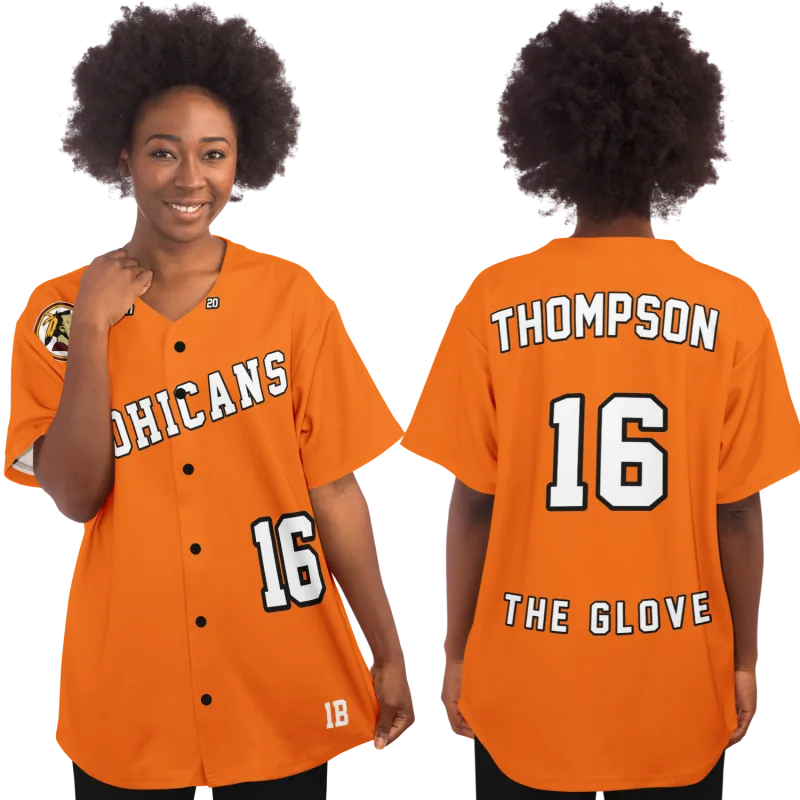
There's something former athletes do — quietly, often without discussing it — that speaks directly to what this transition is actually about. They hold onto the jersey.
Not always on display. Sometimes folded in a drawer. Sometimes framed. Sometimes packed in the back of a closet where it's never looked at but never thrown away. The jersey is a physical artifact of the version of self that existed inside the sport, and the instinct to keep it is not sentimental weakness. It's the accurate recognition that what happened in that jersey mattered — that the person who wore it was real, that those years deserve to be honored somewhere.
The jersey doesn't mean you're stuck. It means you know what was real.
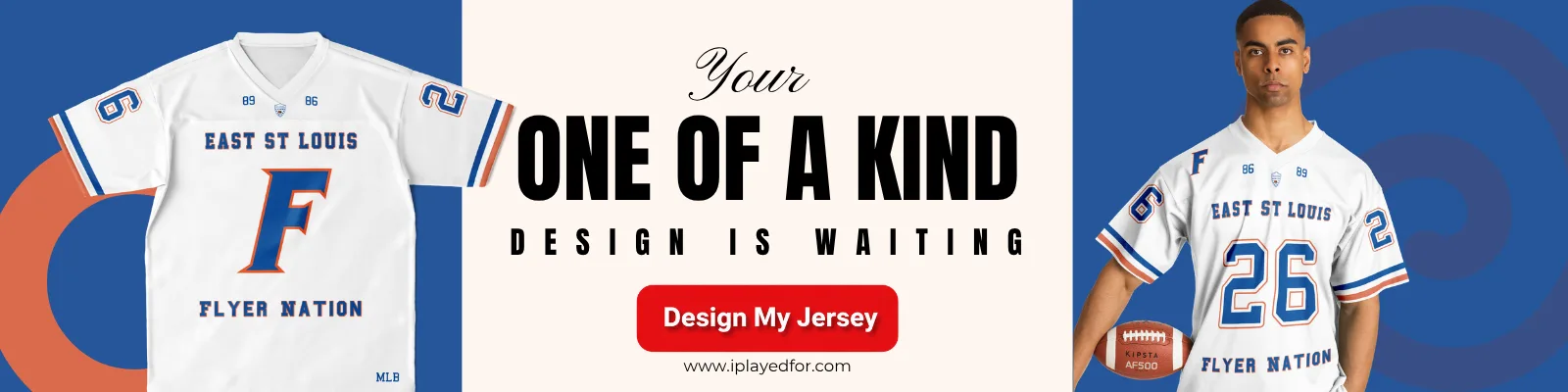
Your jersey is still out there waiting.
Design my jersey in minutes and see my name and number the way I remember them.
Frequently Asked Questions
How long does the identity shift after stopping high school sports typically last?
There's no fixed timeline, and the range is genuinely wide. Some former athletes describe the acute phase — the disorientation, the grief waves, the loss of daily structure — lasting six months to a year. For athletes who had a particularly long tenure in their sport, or who were recruited and then didn't continue at the college level, the transition can take longer. The more useful frame than "how long" is: are you moving through it or waiting for it to end on its own? Active acknowledgment of the transition tends to shorten it. Minimizing it or trying to skip past it tends to extend it.
Is it normal to feel more lost after high school sports than after other high school experiences ending?
Yes, and the reason is structural rather than personal. Most high school experiences — classes, clubs, friend groups — don't organize identity at the depth that a multi-year athletic commitment does. Sport provides identity, structure, belonging, and purpose simultaneously, which means when it ends, multiple systems of self-concept are disrupted at once. That's a more significant disruption than losing a single social context. If the loss of your sport hits harder than other endings, it's because what the sport provided was structurally more significant, not because you're more fragile.
What actually helps former athletes rebuild their sense of self?
The most consistent pattern is connection without dependency — staying in contact with the athletic world in some form without requiring that world to define you. This looks different for different people: coaching, officiating, attending games, staying in touch with teammates, writing about the sport, or simply finding physical activity that keeps the body doing something hard. Alongside that, the deliberate construction of new identity pillars — things you're building competence in outside of sport — gradually creates the more complex self-concept that replaces the singular one. It's slower than it looks from the outside, and it requires resisting the cultural pressure to perform having moved on before you actually have.
What if the loss feels like it's still affecting me years later?
That's more common than most former athletes admit publicly. The intensity tends to diminish, but the sense of that chapter being significant — and the ongoing comparison of other experiences to what sport felt like — can persist for a long time. If it's actively interfering with your current life rather than simply living in your memory, it's worth talking to a therapist who has experience with athletic identity and transition. Sport psychology as a field has developed specific frameworks for precisely this experience, and there's no reason to navigate it entirely alone.
See also: why quitting felt like losing yourself | the grief nobody talks about when your athletic career ends | why high school sports still matter to adults long after the final whistle