

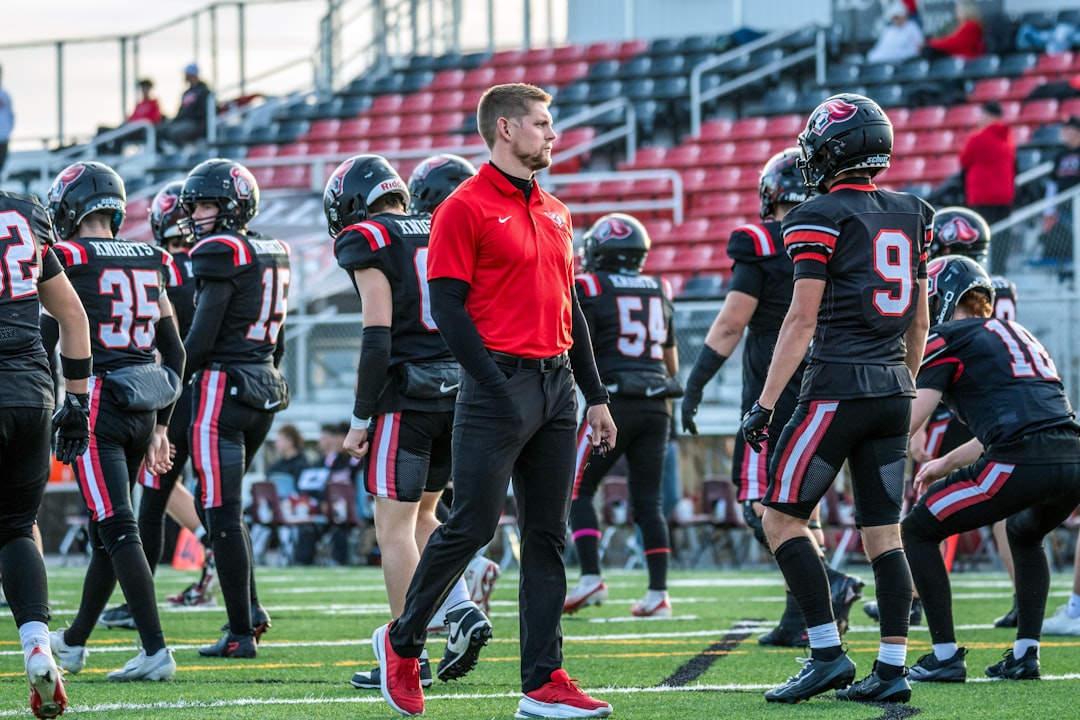




You found out the way most people find out. A text from someone you haven't heard from in years. A Facebook post appearing in the corner of your morning scroll. Someone tagged in a photo of a gym, a field, a locker room — and the comment below it starting with the words we lost.
And then a feeling you weren't expecting.
If you're searching for anything related to high school coach passed away grief, you already know that feeling. It doesn't behave the way grief is supposed to behave. It doesn't fit the clean categories. You might not have spoken to them in five years. In fifteen. You might not even be sure you have the right to feel this wrecked. But you are. And the reason it won't resolve neatly is because what you lost wasn't a person who fits neatly into any single role in your life.
This article is for that specific grief — the kind that comes when you lose someone who shaped you at the cellular level before you were finished becoming yourself.
The Relationship That Has No Name
There's a reason grieving a former coach feels disorienting. We have clear language for the other losses. Parent. Friend. Grandparent. Spouse. The relationship names tell us how to grieve and how to explain it to others. "I lost my grandmother" — people know what to do with that. They bring food. They give you space.
But "I lost my high school coach" lands differently. People respond with something kind but slightly distanced. Oh, I'm so sorry — were you close? And you find yourself stumbling. Were you close? You saw them every day for three years. They watched you fail in front of crowds. They pulled you aside when your head wasn't right. They told you things about yourself that your own parents hadn't thought to say. And then high school ended, and so did the daily contact, and so the answer to "were you close?" becomes complicated in a way you don't have time to explain standing in a break room or at the edge of a parking lot.


What coaches occupy is a specific category that our culture doesn't have a clean word for — the mentors who shape us more than any title suggests resist every label we try to give them. They are not family — but they are present during formative crises in a way that rivals any family member. They are not friends — but the relationship involves a depth of observation and investment that outlasts most friendships. They are not therapists — but the conversations on the bus home from an away loss, or in the weight room at 6 AM, sometimes went to places that no other adult in your life reached.
The grief researcher Kenneth Doka has written extensively about what he calls disenfranchised grief — grief for a loss that others don't fully recognize or validate. The loss of a coach sits precisely in this territory. The relationship was real. The shaping was permanent. The loss is legitimate. But it exists outside the official categories of mourning, which means many people process it alone, without language, without permission.
You have permission.
Why It Hits Harder Than the Distance Should Suggest
Here's what's true about this kind of loss: the intensity of your grief is not proportional to how recently you were in contact. It's proportional to how much of who you became was shaped inside that relationship.
Your coach saw you during a specific window of your life — the window when you were deciding, often without knowing you were deciding, who you were going to be. Whether you were someone who quit when it got hard. Whether you could be trusted when no one was watching. Whether failure was the end of the story or just part of it. The answers to those questions, the ones that still govern how you move through your adult life, were often worked out in a practice facility with someone blowing a whistle and refusing to accept the version of you that wanted to stop.
That doesn't expire. The person who helped form your competitive character, your discipline, your relationship to pressure and failure — that person's influence doesn't end when the season does or when you graduate or when you lose touch. That influence is what coaches leave behind after they step away, and it lives in how you handle your own children when they want to give up. In how you run a meeting. In how you get up the morning after something goes badly wrong.
When your coach dies, what you are mourning is not just the person. You are mourning the specific era of your becoming. And you are confronting, sometimes for the first time consciously, how much of the person you are today was assembled in their presence.
That is not a small loss. It is one of the largest kinds.
The Specific Grief of "I Hadn't Talked to Them in Years"
This is the part that trips people up the most.
There can be a quiet shame layered under the grief — I should have reached out. I meant to. I kept thinking there was time. The regret for unmade phone calls. The reunion you imagined and never organized. The letter you drafted in your head during a long drive and never sent.
In our experience talking with athletes about this — and across the stories that surface whenever someone shares a coach's obituary on social media — this regret is nearly universal. Almost no one maintains the relationship the way they wished they had. Life accelerates. The old coach doesn't fit cleanly into the new life's social architecture. You're not in the same place. There's no natural occasion. And so you carry the intention without the action, and then the occasion closes.
What needs to be said clearly: the relationship does not require recent contact to be real. The grief does not require recent contact to be legitimate. A coach who shaped you twenty years ago and with whom you exchanged exactly three emails in the last decade shaped you just as permanently as someone you spoke to every week. Relationships are not measured in frequency. They are measured in formation. And some formations are permanent.
The regret, if it's there, deserves to be felt and then put down. Not because it doesn't mean anything, but because holding it as guilt prevents you from feeling the actual grief underneath it — the grief for the person themselves, for what they gave you, for the fact that they are gone.
Coping With Loss of a Mentor Coach: What Actually Helps
Coping with loss of a mentor coach is different from coping with the loss of someone inside your current daily life. The loss doesn't disrupt your schedule in a visible way. There is no logistical gap — no empty chair at dinner, no one whose calls you used to take. The disruption is internal and retrospective. It lives in your history, not your calendar.
That makes it harder to treat with the standard protocols for grief. You may not have a community around you that's grieving simultaneously. You may not have rituals — a funeral you're invited to, a reception where shared stories create collective processing. The loss can sit in you, unwitnessed.
Here is what tends to actually help:
Find the other people who were in that program. Former teammates. Other athletes from other years. The coaches who worked alongside yours. The group that forms around a coach's obituary or memorial page is not just gathering to mourn — it's gathering to remember the specific world the coach created, and you belong to that world. Reach out. The people who understood that locker room are the people who understand this loss.
Let yourself tell a specific story about them. Not a summary of who they were or a list of what they accomplished. A specific moment. The time they said a specific thing. The way they ran a specific practice. The day you were ready to walk and they didn't let you. The specific human moment that stays with you decades later. Telling that story — to another former player, to a partner, to yourself in writing — is one of the most effective ways to externalize what grief has made interior.
Acknowledge the loss to yourself formally. This sounds simple and isn't. Many people carrying the loss of a coach move through the initial days performing okay-ness for others, then find it surfaces weeks or months later in unexpected places. Give it its moment. Name it. Say: I lost someone who mattered. This is real grief. I'm allowed to feel it.
Marcus T., 41, spent three years on his high school cross-country team under a coach who told him — during the worst race of his sophomore season — that finishing when you want to quit teaches you something that winning never does. Marcus went on to run two marathons in his thirties, carrying that line like equipment. When his coach died last spring, Marcus ordered a custom jersey in his high school colors and wore it on a solo run the morning of the memorial. "It was the only thing that felt right," he said. "I needed to run in it."
Honoring a Deceased High School Coach: Keeping Them in the Story
When your coach dies, one of the questions that surfaces — sometimes immediately, sometimes weeks later when the initial wave passes — is what do I do with this? How does someone you never fully thanked, someone you may not have told what they gave you, how does someone like that get honored in a way that feels proportionate to what they actually did?
There are formal options. Contributions to athletic department memorial funds. Attendance at a service. A note to the family that names something specific the coach did or said — families of coaches often say these specific remembrances from former athletes are among the most meaningful things they receive, and they almost never hear enough of them.
But some of the most lasting forms of honoring a deceased high school coach are private and ongoing.
They are the decision, made consciously and repeatedly, to carry forward the values they installed. The discipline they modeled. The specific formulation of character they believed you capable of. When you run an extra mile on a day you'd rather stop, when you tell a younger person something true about failure, when you choose not to quit — you are running a version of their practice. That practice doesn't end because they died.
There is something particular, too, about physical objects. Athletes in the community of former players often return to gear — team colors, numbers, the specific aesthetic that belongs to a shared era. It isn't nostalgia in the passive sense. It's an active connection to the time and place where the formation happened. Wearing those colors again is a way of saying: that time was real, and so was what I learned in it.
When the Grief Doesn't Follow a Predictable Timeline
One more thing worth naming: this grief is likely to resurface.
The first wave hits when you hear the news. But the subsequent ones are quieter and often more surprising. A game on television played on a field that looks like the one you practiced on. A smell — a specific combination of rubber and cold air and effort. Your own child starting in athletics and you watching a coach talk to them the way yours talked to you.
These are not signs that you're stuck or haven't processed the loss. They are the normal behavior of grief that's woven into identity rather than scheduled into daily life. The coach is gone, but the person the coach helped make is still here, still living, still encountering the world through a character partly assembled in their presence. Sometimes the other grief that lives alongside this one surfaces too — the quieter mourning for the last game you ever played. Of course the loss comes back.
It's supposed to.
Your jersey is still out there waiting.
Honoring a coach can be a private thing — a run in their colors, the number on your back, the memory carried out into the world. Design yours in minutes and see your name and number the way you remember it, then wear it the way Marcus did.
Frequently Asked Questions
Is it normal to grieve a coach as deeply as a family member?
Yes — and the intensity is not a function of the relationship's formality but of its formative depth. Coaches often work with athletes during the specific developmental window when identity and character are being consolidated. That kind of influence is permanent, and grief for the person who provided it can be profound even when the ongoing contact was limited. The absence of an official "close" relationship does not make the loss less real.
What should I say to the coach's family if I want to reach out?
Be specific. The most meaningful messages families receive from former athletes are the ones that name a particular moment, a specific conversation, or a precise thing the coach said or did. "Your father changed how I think about failure" means far more than "he was an amazing coach." If you have a specific memory, share it. Families are often surprised by how much of the coach's actual impact they didn't know about, and those stories are a genuine gift.
How do I handle the regret of not staying in touch?
The regret is real and worth acknowledging — but it does not deserve to become the center of the grief. Coaches understand, in most cases, that the architecture of adult life creates distance that has nothing to do with the relationship's value. The connection you had was real during the time it was active, and what was formed in it endured. Letting the regret coexist with the grief without letting it eclipse the grief is the work. The loss is about them — who they were, what they gave you, the fact that they're gone. Let yourself feel that, underneath the regret.
What if I wasn't one of the "featured" athletes — should I still grieve?
Absolutely. Coaches shape athletes regardless of playing time or status. The player who sat the bench for two years and watched how a coach handled adversity, honesty, and character under pressure received something real. The athlete who was cut and came back and was told something true about persistence received something real. This grief does not require being a starter. It requires only that you were inside the program and something in that program shaped you.
See also: grief nobody talks about when your athletic career ends | how high school sports shape who you become long after you stop playing | what athletic identity means once the sport is over | why the lessons from high school sports stay with you forever