




The locker room was louder than usual. Or maybe it just felt that way because you were trying to memorize it.
Mourning the end of your football career isn't something anyone warns you about. Nobody pulls you aside before the last snap and says: pay attention, because this is the last time. The final whistle sounds exactly like every other whistle you've heard since seventh grade. And then the season ends, the pads come off, and you're supposed to go back to regular life, as if regular life still means the same thing it did before football defined the shape of your week, your body, your sense of who you are when you wake up on a Monday morning.
You're not broken for struggling with this. You're grieving. And grief after your last football game is one of the most legitimate, least-acknowledged losses a young athlete can experience.
This article won't tell you to "stay positive" or "find your next passion." That's not what you need right now. What you need is someone to say: what you lost was real, and it deserves to be treated that way.
What You Actually Lost — And Why It's More Than a Sport
People who haven't played will tell you it's just a game. Let them. They're describing something they've never experienced from the inside.
What you lost wasn't just football. You lost a structure that organized your entire identity: the morning lifts, the film sessions, the Friday night bus rides with your shoulder pads jammed against the window. You lost a role. You were a linebacker, a center, a cornerback. That role came with a community, a purpose, a physical expression of your own capability, and a recurring weekly proof that you could handle something hard.
You lost belonging in a very specific sense. The locker room is one of the few places where a teenager can experience unconditional tribal membership: you are in or you are out, and if you are in, you are in. Nobody outside that room fully understands what happens inside it. That privacy is part of what makes it sacred. And now the door is closed.

You also lost the future version of this. The version of Friday nights that exists in your mind as the ongoing story of your life. Even if you knew intellectually that senior season was the last one, some part of you was still writing the next chapter. That chapter doesn't happen now. And mourning a future that won't exist is one of the strangest and most disorienting forms of grief there is — which is why, for parents and families watching that final season play out, the right gift for a senior athlete about to play their last game carries more weight than a typical graduation present.
In my experience as a former player, the ones who struggle most aren't the ones who had the worst final seasons. They're the ones who loved it the most.
The Grief Nobody Gives You a Script For
When someone dies, there are rituals. There's a funeral. People bring food. They say things like I'm so sorry for your loss and they mean it. Society has built scaffolding around death because death is universally recognized as a loss that deserves acknowledgment.
There's no scaffolding for this.
Nobody organizes a ceremony for the end of your athletic identity. Your coaches shake your hand. Your parents take you to dinner. Your teammates scatter into their own lives. And then it's Monday and the team is doing conditioning without you on the field, and you're sitting in third period trying to pay attention to something that feels completely irrelevant to anything that has ever mattered.
Research on athletic identity (specifically the work done on what psychologists call "athletic identity foreclosure") shows that athletes who have built their entire sense of self around sport experience measurably higher rates of depression, anxiety, and identity disruption when that sport ends. This isn't weakness. It's what happens when the structure that organized everything (your time, your body, your social world, your self-concept) is suddenly removed without replacement.
The problem isn't that you loved football too much. The problem is that nobody taught you that loving it this much would leave a mark when it ended.
Marcus T., 18, played four years of varsity wide receiver in central Texas. He described the week after his last playoff game like this: "I kept waking up at 5:45 because that's when practice started. I'd be completely awake, ready to go, and then I'd remember. And I didn't know what to do with myself for the next six hours." That's not a failure to move on. That's a body and a mind that were trained for something, still reporting for duty.
Processing the Loss Without Erasing It
Here's what the listicles get wrong: grief is not a problem to solve. It's an experience to move through. And moving through it is not the same as moving away from it.
When your high school football career ends, the goal isn't to feel nothing about it as quickly as possible. The goal is to integrate what it meant — to carry it forward in a way that serves you rather than haunts you.
There's a difference between those two outcomes, and it mostly comes down to whether you give yourself permission to actually grieve first.
Give the loss its proper weight.
Don't minimize it to make other people comfortable. You don't owe anyone a "I'm fine, it was a great run" if that's not what you're feeling. You're allowed to say: this is hard. You're allowed to sit with the hard for a while. The athletes who rush past the grief (who paper over it with immediate busyness, immediate next-thing energy, immediate redirection) are often the ones who find it showing up sideways two years later, as disconnection or low-grade anger or the inability to care about anything as much as they cared about this.
Name specifically what you're mourning.
This sounds simple and it isn't. "I miss football" is too broad to grieve. Get specific. Do you miss the physical exhaustion that made everything else feel manageable? Do you miss the clarity of game day, where everything irrelevant falls away and there's only the next play? Do you miss your offensive linemen — the specific idiotic jokes, the specific trust built over four years of them protecting you?
Name the pieces. Mourn them separately. This is the difference between trying to move through a fog and being able to say this is what I'm specifically walking through.
Let the physical reality of it be real.
Your body knew something your mind hadn't fully processed yet. The body carries athletic identity in a very literal way — in the muscle memory, the reflex to cut and plant and accelerate, the physical confidence of knowing what your body can do under pressure. That doesn't disappear when the season ends. And it's worth acknowledging that the physical loss is real: the hitting, the effort, the specific feeling of performing at the edge of your capability in front of people who are counting on you. That experience is not easily replicated. It's okay to miss it acutely.
Resist the pressure to perform "moving on."
The people who love you most will want you to feel better. They'll suggest things — clubs, jobs, new sports, college to look forward to. This comes from love. It also sometimes lands as pressure to arrive at the emotion they want you to have before you've actually processed the one you're in. You don't have to perform recovery for an audience. The timeline for how to process losing football is yours.
What Football Gave You That Doesn't Have to End
There is a version of this conversation that is entirely about loss. And there is a version that, without minimizing the loss, starts to locate what isn't gone.
The things football built in you are not confined to football.
The capacity to function under pressure — to execute when it's fourth and two and the stadium is loud and your hands are cold and everything depends on this snap — that capacity doesn't expire when the season does. It transfers. It's in you. You earned it through years of repetition in high-stakes contexts, and no final whistle removes what you trained into yourself.
The ability to operate as part of a unit. To subordinate individual ego to collective execution. To trust people you've earned trust with over time. These are not football skills. They're human skills that football happened to develop in you, faster and more deeply than most people your age will experience.
The knowledge that you can do something hard and painful and exhausting and keep showing up. That the voice in your head that wants to quit is not authoritative, because the coach who saw more in you than you did said it out loud until you believed it. That you have evidence (real, physical, game-tested evidence) that you can push through when it matters.
Moving on from football doesn't mean leaving those things behind. It means figuring out where they go next. That's a genuinely hard question. It's worth treating it seriously rather than rushing to a tidy answer.
The Identity Question Nobody Warns You About
Here's the thing about how to process losing football that most guides skim past because it's uncomfortable:
For four years, maybe more, the answer to who are you? has included football as a primary term. You're a player. You're part of this team. You're the guy who does this specific thing at this specific position for this specific community that shows up on Friday nights to watch.
When that ends, the question doesn't disappear. It just loses its easiest answer.
This deserves to be treated as the reckoning it is. The athletes who come through this transition most intact are usually the ones who were willing to ask the question honestly rather than fill the space reflexively — with the next thing, the immediate distraction, the performance of having figured it out.
Who are you when you're not a football player?
You don't have to answer that immediately. But you have to be willing to sit with it long enough to get an honest answer, rather than a convenient one.
Some of what you'll find is that football was the vehicle, not the destination. The leadership, the discipline, the intensity, the brotherhood — these were always yours. Football was just where they happened to live for a while. They'll live somewhere else next. The work is figuring out where — and keeping your athletic identity alive after high school is its own project.
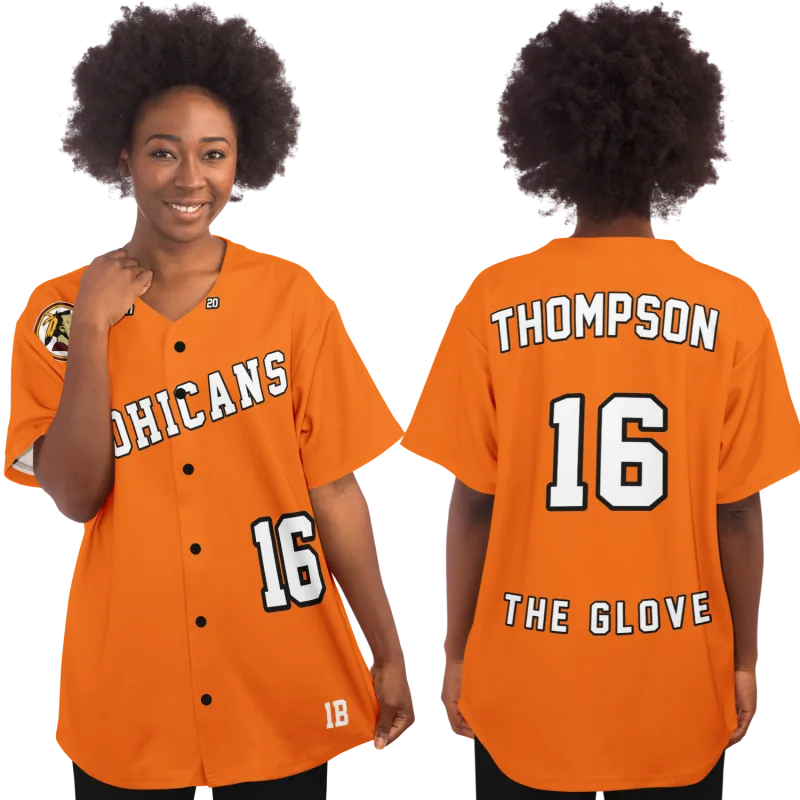
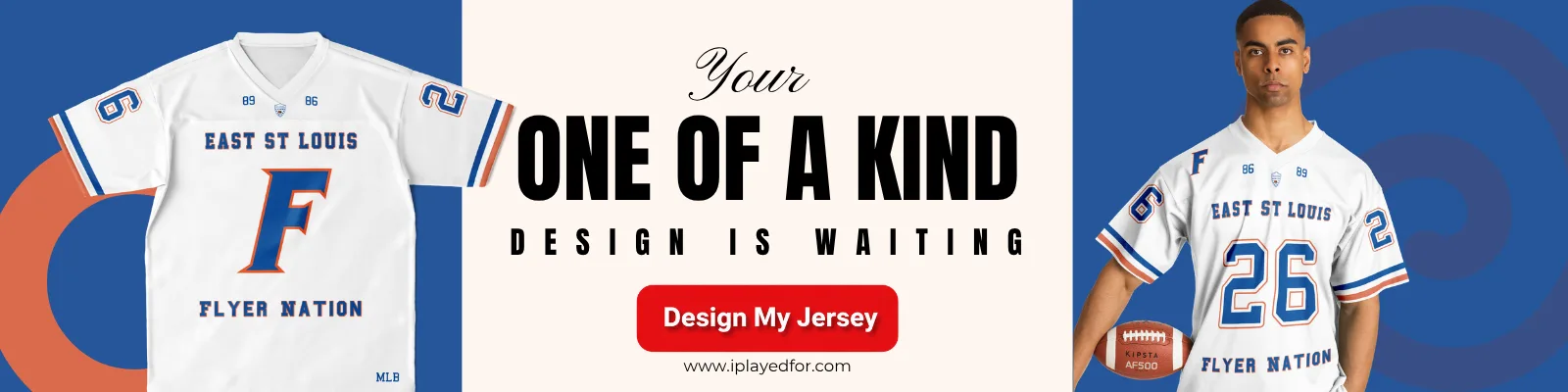
Your jersey is still out there waiting.
Design yours in minutes and see your name and number exactly the way you remember it.
Or take a look at what other former players have made.
Frequently Asked Questions
Is it normal to feel depressed after your last football game?
Yes — and it's more common than most people talk about openly. What you're experiencing has a name in sports psychology: identity disruption. When an activity has organized your self-concept, your social world, your physical routine, and your sense of purpose, its loss triggers genuine grief responses that can include depression, anxiety, irritability, and difficulty finding motivation. These symptoms are not a sign that something is wrong with you. They're a sign that what you lost was significant. If symptoms persist beyond several weeks or begin to interfere significantly with daily functioning, talking to a counselor — ideally one with experience in athletic transitions — is worth considering.
How long does grief after your last football game last?
There's no standardized timeline. For some players, the acute grief — the daily awareness of absence — fades over several weeks. For others, particularly those whose entire social identity was built around the team, the transition can take a full year or more, with the first time through every season marker (first Friday without a game, first time the team plays without you, signing day for teammates heading to play college ball) carrying its own specific weight. The goal isn't to grieve on a schedule. The goal is to grieve honestly rather than around it.
Should I try to stay connected to the team, or does that make it harder?
This is genuinely individual. For some former players, staying close to the program — attending games, staying in contact with coaches, being present in the community that formed around the sport — provides continuity and helps the transition feel less like amputation and more like graduation. For others, proximity to what they can no longer participate in extends the acute grief phase rather than helping them move through it. Pay attention to how you feel after contact with the program. If it leaves you feeling grounded and grateful, stay close. If it leaves you feeling raw and stuck, it's okay to create some distance while you find your footing. Neither response is wrong.
What do I do when people tell me to just move on?
Understand that the people saying this usually love you and are uncomfortable watching you hurt. The advice is more about their discomfort than your timeline. You don't have to argue with them, and you don't have to comply. "I'm working through it" is a complete sentence. You're allowed to grieve a significant loss without needing to produce visible recovery on a schedule that makes other people feel better. Moving on from football is real work. Real work takes real time. Design your own — custom football jerseys.
See also: the grief that comes with losing your athletic identity | who you were as an athlete doesn't disappear when the final whistle blows | why Senior Night hits differently than any other game | why those final-season memories stay with you so clearly