

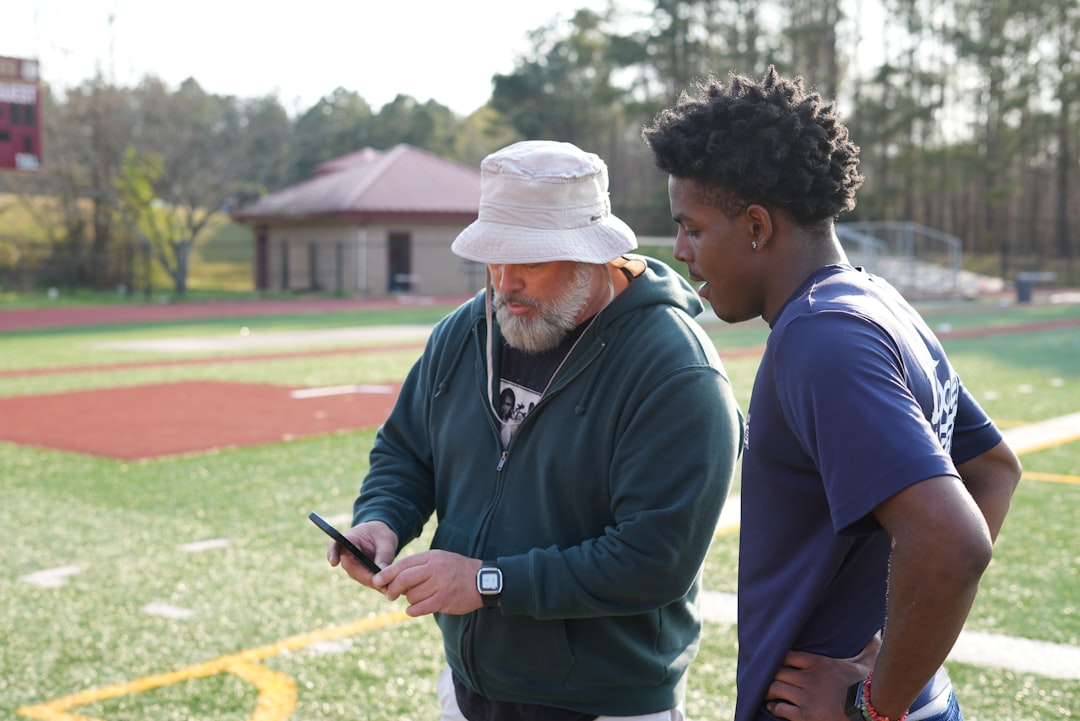




There's a voice you still hear sometimes. Not during a game — those ended years ago. You hear it in a job interview when you're about to undersell yourself. You hear it before a difficult conversation you've been avoiding. You hear it when you're standing at the edge of something hard and wondering whether you have what it takes.
It's your coach's voice.
And if you're honest with yourself, that voice has shaped how coaches build self-confidence in you more permanently than almost anything else in your life, including years of adult experience, therapy, or self-help. You didn't choose it. You didn't even fully notice it happening. But somewhere between a drill that went badly and a moment when someone who didn't have to believe in you chose to anyway, something got installed.
This piece is for former athletes (the ones who played at any level, in any era) who want to understand what actually happened in those moments, and why the impact of a supportive coach doesn't expire when the final whistle blows.
What Coaches Are Actually Doing When They Believe in You
Most of what gets written about coaches and confidence is aimed at current athletes: how to find a coach who motivates you, how to respond to tough feedback, how to build mental toughness in season. That framing assumes coaching is an active, present-tense experience.
But the research tells a different story about what persists. A 2021 study in the Journal of Sport and Exercise Psychology found that the confidence-building effects of coach-athlete relationships, particularly those characterized by what researchers call "autonomy support," continue to influence self-efficacy beliefs well into adulthood, long after the athlete has left competitive sport.
In plain terms: the coach who saw something in you didn't just help you perform better that season. They wrote something into the operating system.
The Difference Between Praise and Belief
There's a distinction worth making here, and it's one that most athletes can feel intuitively even if they've never put words to it.


Praise sounds like: "Nice work today."
Belief sounds like: "I'm starting you in the championship game. I know what you can handle."
Praise is reactive. It responds to what you did. Belief is prospective — it's invested in what you haven't done yet. And for a developing athlete, that prospective investment is categorically different in its effect.
When a coach praises you, you feel good. When a coach genuinely believes in you (assigns you a role beyond your current capability, defends your potential to others, holds you to a standard that reveals they've already imagined your next version), you don't just feel good. You feel seen. And that feeling doesn't dissolve. It becomes part of how you see yourself.
Talk to former athletes across dozens of sports and this is the distinction that comes up again and again when they describe a coach who changed them. It's never just "she said I did a good job." It's always something closer to: "She gave me the responsibility before I thought I'd earned it. And I became someone who could carry it."
The Mechanism: How Confidence from a Coach Gets Wired In
Understanding why coach-given confidence is so durable requires a brief visit to what's actually happening developmentally during the years most of us played organized sports.
For the majority of athletes, peak competitive years land somewhere between ages 9 and 18 — a window that developmental psychologists identify as a critical period for identity formation. During this window, external mirroring has outsized power. The people who reflect us back to ourselves during these years (parents, peers, teachers, and coaches) don't just describe who we are. They participate in constructing who we become.
A coach operates with particular authority in this mirror because of context. In the gym, on the field, or in the pool, the coach holds complete interpretive power over your performance. They decide what the standards are. They decide whether you're meeting them. They decide what you're capable of. Their assessment feels objective in a way that parental assessment rarely does — because unlike a parent, a coach has no obligation to love you. So when a coach chooses to believe in you, it lands differently. It feels earned.
The Three Moments That Leave the Deepest Marks
Not every coaching interaction reshapes identity. But across the accounts of former athletes, three specific types of moments appear repeatedly as the ones that crystallized into lasting confidence:
-
The assignment of meaningful responsibility: being given a starting position you weren't sure you'd make, a captaincy, a leadership role, or a difficult task that communicates: I've assessed you and decided you're ready for this, even if you don't know it yet. This works because it forces the athlete to perform at a level they hadn't yet claimed as their own.
-
The public defense: a coach who advocates for an athlete in front of others (teammates, parents, opposing staff, officials) creates a mirror moment with unusual power. The athlete witnesses someone with authority and reputation putting that reputation behind their belief in you. The implicit message is: You are worth defending.
-
The correction that contains confidence: this is the subtlest and perhaps most durable one. A coach who holds an athlete to a high standard, who delivers demanding feedback without abandoning the athlete, communicates something specific: I'm only pushing you this hard because I know you can get there. Many former athletes identify this dynamic, not the praise, as the intervention that shaped them most.
Recognition: Identifying the Moments That Shaped You
Here's where this piece asks something of you that a sports-psychology article aimed at current athletes typically won't.
Think back.
Not to a championship. Not to your best performance. Think back to a specific moment when something a coach said or did landed differently than you expected, when you felt, even briefly, like the version of yourself they were describing was someone you might actually be able to become.
That moment is worth examining. Here's a framework for doing it.
The Recognition Framework
Work through these four questions, ideally with a specific coach and a specific moment in mind:
-
What did they do or say? Be precise. Not "she believed in me." That's an interpretation. What was the actual action or statement? What were the specific words, if you remember them?
-
What did it replace? Every act of genuine belief from a coach lands in the space where self-doubt was sitting. What belief about yourself (about your limits, your value, your capability) did that moment quietly contradict?
-
Where have you heard that coach's voice since? This is the diagnostic question. If a coach's investment in you was real, you'll find it surfacing in adult contexts far removed from sports. Job interviews. Confrontational conversations. New responsibilities you weren't sure you could handle. What does your coach's voice tell you in those moments?
-
What did they see before you saw it? This is the most revealing question. A coach who genuinely changed you was operating on a timeline you couldn't see yet. They were responding not to who you were in that moment but to who you were on your way to becoming. Can you identify, in retrospect, what they saw?
Danielle R., 34, played club volleyball through high school in a suburb of Columbus, Ohio. She remembers her varsity coach telling her, during her sophomore year, that she was going to run the offense as a setter — a position she'd never played. "I kept telling her I wasn't ready. She kept saying, 'I know what you can run.' I didn't believe her for about three months." Danielle now leads a cross-functional team of eleven people at a logistics firm. She says she still thinks about that conversation whenever she walks into a room where she feels underqualified. "Somehow that's the thing that comes back. Not any of my actual work experience. Her voice."
The Long-Term Impact of a Supportive Coach on Adult Identity
The reason this matters beyond nostalgia is that the confidence architecture a coach helped build doesn't just live in sports contexts. It transfers — sometimes in ways that are invisible until you look for them.
Former athletes consistently report four domains where coach-given confidence shows up in adult life:
- Risk tolerance: the willingness to take on assignments or opportunities before feeling fully ready, which closely mirrors the "before-you're-ready" dynamic that defining coaching moments often create
- Response to authority: a more calibrated ability to distinguish between criticism that's developmental and criticism that's just noise, because they've lived the difference
- Recovery from failure: a faster return to self-trust after setbacks, rooted in an internalized experience of being seen as capable by someone who didn't have to see it
- Comfort with high standards: a tolerance for demanding environments that traces directly to having been held to meaningful standards by someone they respected
These aren't soft outcomes. They're competitive advantages in adult life. And for many former athletes, the origin of those advantages isn't a business book or a leadership program. It's a person who showed up at practice and chose to invest in what they could become.
What Happens When the Belief Was Absent
It's worth naming the other side of this, briefly and honestly.
Not every former athlete had a coach who saw more in them. Some had coaches who saw less, who communicated limits rather than potential, who favored certain athletes in ways that communicated to others that they weren't worth the investment. The research on this is consistent: the absence of coach belief, particularly during critical developmental windows, creates a mirror image of the positive effect. The self-doubt that doesn't get contradicted calcifies.
If you're a former athlete who is reading this and feeling the absence rather than the presence, that's worth sitting with. The recognition framework above works in both directions. Understanding what was withheld is as clarifying as understanding what was given.
Carrying It Forward: What Former Athletes Do With This
There's a practical question underneath all of this. Once you recognize the mechanism (once you can name the moments and hear the voice), what do you do with it?
A few things emerge consistently from athletes who have done this kind of reflection:
-
Name it explicitly. The confidence that came from a coach functions at a subconscious level until you articulate it. Once you can say "that voice belongs to Coach Alvarez and it installed a belief that I can handle more than I think I can," it becomes something you can actively draw on rather than something that happens to you.
-
Pass it on deliberately. The former athletes who report the greatest sense of resolution around their sports experience are overwhelmingly the ones who find ways to believe in someone else with the same specificity and investment they once received. This doesn't require becoming a coach. It requires the willingness to be more than a coach to someone else: to tell them, specifically and without obligation, what you see in them before they see it themselves.
-
Revisit the jersey. This sounds simpler than it is. There is something about the physical object (the name on the back, the number that was yours) that reconnects former athletes to the identity those years built. Not as nostalgia. As a reminder that the person who wore that jersey is still the foundation of the person standing here now.
Your jersey is still out there waiting.
Design yours in minutes and see your name and number exactly the way you remember it.
Frequently Asked Questions
How do coaches build self-confidence in athletes that lasts beyond their playing years?
The most durable confidence-building doesn't come from praise — it comes from assignment. When a coach gives an athlete meaningful responsibility before they feel ready, advocates for them publicly, or holds them to a high standard while staying invested in their success, they create experiences that athletes internalize as evidence of their own capability. That evidence doesn't expire. It gets recalled in adult situations (job interviews, leadership moments, difficult conversations) as a baseline for self-assessment.
What does "a coach believing in you" actually look like in practice?
It looks like being given a role you didn't ask for and weren't sure you could handle. It looks like a coach defending your potential to someone else. It looks like correction delivered without abandonment, demanding feedback from someone who clearly expects you to rise to meet it. Former athletes consistently describe these specific moments, not general encouragement, as the ones that changed how they saw themselves.
Is it possible to recover from the long-term impact of a coach who didn't believe in you?
Yes, and the recovery process often starts with naming the dynamic explicitly. Understanding that a coach's failure to invest in you reflected their limitations as a coach, not a fixed truth about your ceiling, is the first step. Many former athletes find that deliberate acts of receiving mentorship as adults (or extending belief to others) can begin to rewrite the internalized mirror those experiences created. It's slower than the original imprinting, but the mechanism is the same: experiencing someone see your potential before you do.
Do these effects apply equally across different sports and levels of competition?
The research suggests that the relationship quality matters more than the competitive level. A coach at a recreational youth program who genuinely invests in an athlete's growth creates more durable confidence than a high-level coach who is technically skilled but relationally withholding. The level of competition shapes the intensity and stakes — but it doesn't determine whether the belief lands.
See also: how athletic identity shapes who we become after the final whistle | what high school sports actually teach you about yourself | why those years still carry so much emotional weight for former athletes | the grief that follows when that chapter of your life ends