

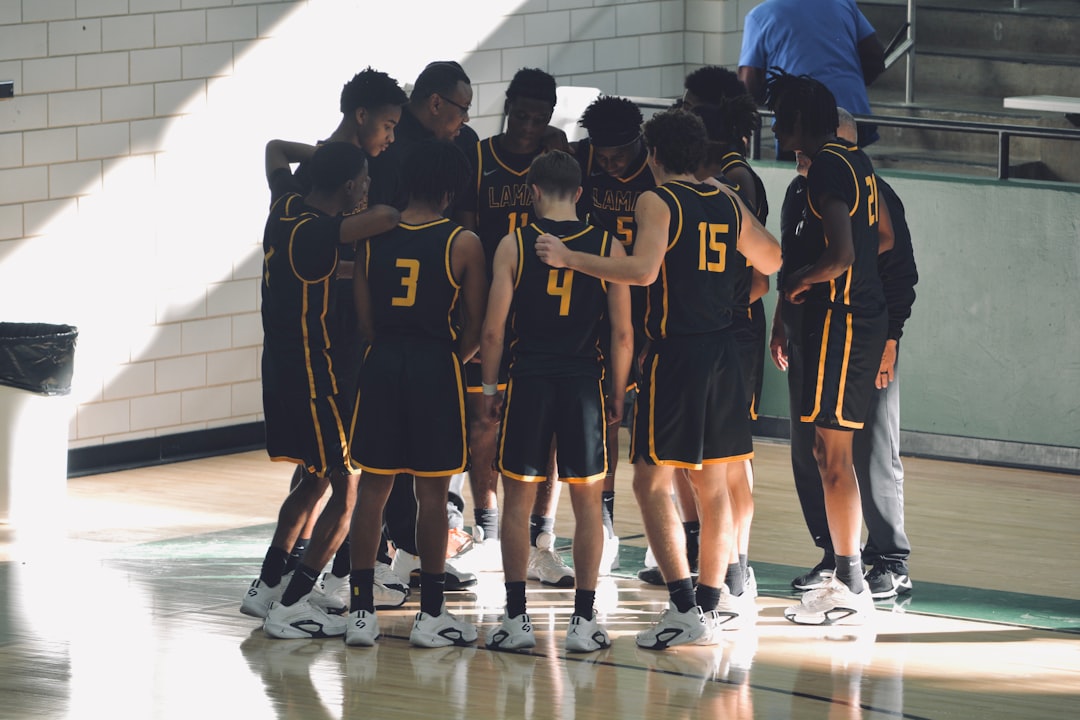




You don't remember every play. You barely remember the final score of games that felt, at the time, like the most important moments of your life.
But you remember what Coach said.
Not the famous coaches. Not the Lombardi quotes printed on gym posters or the Wooden maxims laminated above the weight room door. The one you remember is more specific than that — a real human voice, mid-practice or post-loss or right before everything changed, saying something that had no business staying with you this long. And yet here you are, decades later, and those memorable high school coach quotes are still running in the background like a program that never quits.
This is an article about those quotes. The unfamous ones. The lines that nobody else collected, that never made a motivational calendar, that exist only in the heads of the players who heard them.
We're going to explore where those lines come from, why they lodge so permanently in the athlete's memory, and what makes the best coaching advice land differently than anything taught in a classroom. Along the way, we'll offer some templates (the patterns that produced those lines) so you can recognize the ones still living in your head, and maybe share them.
Why High School Coach Quotes Hit Different Than Any Other Advice You've Received
There's a straightforward explanation for why your high school coach's words outlasted four years of English class and every corporate training session you've ever attended: timing and stakes.
When a coach speaks to a seventeen-year-old in the middle of something that genuinely matters to them (a sport they've devoted years to, a team they'd run through a wall for), the emotional receptivity is unlike anything replicated in ordinary life. The neurological window is open. The combination of physical exertion, tribal belonging, and real competitive stakes creates a state of heightened attention that makes words stick.


Researchers studying memory formation have consistently found that emotionally arousing experiences significantly strengthen memory encoding, the amygdala essentially flags certain moments as keep this. A coach speaking in the locker room after a heartbreaking loss, or on the track at 6 AM before anyone else in school is awake, or calmly on the sideline when you were about to fall apart — those are emotionally arousing experiences. The words land in a different register entirely.
But there's more to it than neuroscience. High school coaches occupy a peculiar cultural position: they're authority figures who are also accessible. They know your name. They've watched you fail at something small and grow past it. They have no financial stake in flattering you. When they say something hard, you believe them. When they say something kind, it's not performance — it's evidence.
That combination (emotional stakes, real relationship, no incentive to lie) is exactly why lessons from a coach often outperform lessons from every other source in a person's developmental years.
The Patterns Behind the Lines That Stay
Here's what's interesting about the coach quotes people remember most. They're rarely the inspirational ones. The "believe in yourself" speeches and the "leave it all on the field" season-openers fade. What stays tends to fall into a few very specific categories.
The Comparative Truths
These are observations about effort or character framed against something the athlete can actually measure.
Templates: - "The scoreboard doesn't lie, but it only tells half the story. Your effort is the other half." - "Talent rents the starting spot. Work buys it." - "Right now, your competition is practicing. What are you doing?"
The reason these stick: they take an abstract concept (effort, character, will) and make it measurable. You can look at a scoreboard. You can count practice reps. Coaches who translate the unmeasurable into the measurable give athletes something to hold onto.
The Permission Statements
These are the ones that surprised you at seventeen because they said the opposite of what you expected from authority.
Templates: - "It's okay to be nervous. Nervous means you care." - "You're allowed to be tired. You're not allowed to quit." - "Nobody's watching your mistakes as closely as you are."
The reason these stick: permission from a coach, someone whose job description includes demanding more, lands with extraordinary force. When the person who is supposed to push you says "it's okay," you believe them in a way you never believe yourself.
The Reframe
These are the quotes that took something the athlete hated (conditioning, pressure, repetition, failure) and handed it back as something entirely different.
Templates: - "You don't hate this. You hate not being good at this yet." - "That hill doesn't care how you feel about it. Do it anyway and see what happens." - "We're not losing. We're learning how much we're capable of."
The reason these stick: reframes require a specific kind of trust to work. You have to believe the person offering the new frame before you accept it. Coaches earn that trust over a season. The reframe lands because the relationship made it possible.
The Quietly Personal Ones
These are the hardest to template, because they were addressed to a specific athlete in a specific moment. They might not even make grammatical sense out of context.
"You've got more in you than you're showing right now." "I see what you're doing. Keep doing it." "That's the one I've been waiting for."
The reason these stick: they're not generic motivation. They're observation. They tell the athlete that someone specific, someone whose judgment they respect, has seen them clearly. That specific act of being seen, genuinely and accurately seen, is rare enough at seventeen that it becomes permanent.
What the Best Coaching Advice Actually Teaches (It's Never About the Sport)
In my experience as a former player, the pattern is remarkably consistent: ask an adult athlete what their coach taught them, and the answers almost never involve technique.
They involve:
- How to tolerate discomfort without collapse. The athlete who learned to run the last rep harder than the first ones. The swimmer who learned to trust the process when the times weren't improving. These are lessons in persistence that transfer to every corner of an adult life.
- How to belong to something bigger than yourself. Team sports at the high school level are often the first experience of genuine interdependence. A coach who teaches this (not just says it, but builds a culture that demonstrates it) gives athletes a template for relationships and organizations they'll carry forward for decades.
- How to receive difficult feedback without shutting down. This is one of the rarest and most valuable skills in any professional environment, and most people either have it or don't by the time they're adults. The ones who have it often trace it back to a coach who told them hard truths with enough care that the feedback opened them rather than closed them.
Motivational sports quotes from coaches are really just the surface of a much deeper curriculum. The quote is memorable because it's the compressed version of a lesson the athlete was already living. The best coaches teach through experience and use language to crystallize what the experience has already begun to impart.
Real Players, Real Lines: The Format That Collects Them
Marcus D., 34, played varsity baseball in rural Ohio and still coaches youth leagues on weekends. The line he carries: "The only bad at-bat is the one you don't learn from." He told us he has said this exact line to his own players more times than he can count — never attributing it, because he's pretty sure his coach didn't originate it either. It just became part of him.
That's what the best coaching lines do. They don't stay credited. They migrate. They become the borrower's own.
Here are some formats for capturing and sharing the ones that belong to you:
The Exact Quote Format: Write it as close to verbatim as memory allows. Don't paraphrase into something cleaner. The imperfect version (the one with the coach's actual phrasing, maybe a little clunky) is the one that's true.
"He always said 'you can be great at this or you can be comfortable. Pick one.' That's it. That was his whole philosophy."
The Contextual Format: Include the moment. The quote alone is less powerful than the quote inside the specific scene.
"We'd just lost a game we should have won. He didn't yell. He waited until we were all seated and then said, quietly: 'The other team wanted it more tonight. That's the truth. Now. Do something about it.' Then he walked out."
The Late-Reveal Format: This is for lines you didn't understand at the time.
"She used to say 'run your race, not theirs.' I thought it was just something coaches say. I didn't get it until I was thirty-two and watching myself compete professionally against someone on a completely different track than me. Then I heard her voice."
The Quotes You Remember Say Something About You
Here's the part most people don't think about: the quote that stayed with you isn't random.
Memory is selective. Out of a thousand things a coach said over four years of practices and games and long bus rides, the ones that lodged are the ones that matched something you needed. They arrived at the right frequency because you were already tuned to receive them.
The athlete who remembers "you're tougher than you think" was probably fighting self-doubt. The one who remembers "your teammates are counting on you" was probably individualistic and needed the lesson in interdependence. The one who remembers "this is supposed to be hard" was probably the kid who expected talent to be enough.
What you retained is a portrait of who you were at seventeen, and what you needed to become who you are now.
That's worth sitting with for a minute.
How to Find and Share Your Own
If you want to actually surface the line that's living in your head, here's a way in:
-
Think about the worst moment of your playing career: a loss, a failure, a moment where you didn't show up the way you wanted to. What did your coach say?
-
Think about the moment you surprised yourself: when you did something you didn't know you were capable of. Did your coach say anything? What was it?
-
Think about the first day and the last day: something coaches say at the beginning of a season, and something they say at the end. Which one do you still hear?
-
Think about what you've repeated. Have you ever caught yourself saying something to a teammate, a child, a coworker, and realized it wasn't originally yours? Where did it come from?
The quote is there. It usually surfaces in the specific question, not the general one.
And once you find it: share it. Post it in an alumni group. Say it out loud to someone who was there. Write it down exactly as he or she said it, with the name attached. And if your coach is still around, actually reach out and thank them rather than leaving it as a passing thought.
Those coaches (the unfamous ones running programs at schools nobody's ever heard of, driving their own equipment to away games, staying late to work with the kid who needed extra reps) deserve the attribution. Their words are still doing work. More than a few of us can name the coach we didn't appreciate at the time, the one whose value only became clear years later.
Your jersey is still out there waiting.
Design yours in minutes and see your name and number exactly the way you remember it.
Frequently Asked Questions
Why do I remember my high school coach's words so clearly but forget so many other things from that time?
Memory is strongly tied to emotional state during the experience. High school sports create a combination of physical intensity, social belonging, and genuine competitive stakes that puts the brain in a high-retention state. Words spoken by a trusted authority figure during those moments get encoded with unusual clarity and durability — often more so than formal academic instruction from the same period.
Is there a way to find out what my former coach actually said, if my memory might be off?
The best approach is to contact former teammates — they often carry the same quote in a slightly different form, and comparing versions can help you reconstruct the original. Many coaches also maintain contact through school alumni networks or local sports associations. Some have become coaches at the same schools for decades and are reachable directly. Even if the exact wording has shifted, the intent and the moment are usually preserved accurately.
How do I share these quotes without making it feel like I'm just doing a nostalgia post?
Anchor the quote in the specific moment and what it taught you that carried forward. The quote alone is interesting; the quote plus the context plus the adult application of the lesson is meaningful. Something like: "Coach [name] said [quote] after [specific moment]. I didn't understand it until [specific later situation]. Here's what I think he actually meant." That structure transforms a quote into a story, and stories are what get shared.
What if my coach's quotes were more negative or critical — are those worth remembering too?
Yes, and often more honestly than the purely motivational ones. Many athletes carry lines from coaches that were hard-edged or even harsh, and have spent years working out what was useful in them versus what was simply someone's bad day. If a critical line shaped how you respond to pressure or feedback, it's worth acknowledging — including the complexity of how you received it then versus how you understand it now. The full range of coaching voices is part of the real story of what high school sports actually taught, and some of those voices hurt more than they helped.
See also: why high school sports still matter so deeply to adults | what high school sports taught you that nothing else could | why those senior season memories feel so permanently burned in | how athletic identity shapes who you become long after the final whistle