


There is a version of you that never fully left the field.
You can feel it at work when a deadline compresses and everyone else goes quiet — you go calm. You can feel it in a difficult conversation when someone raises their voice and you find yourself reading the situation instead of reacting to it. You can feel it on a Sunday morning when some part of your brain still registers the distance between now and the next competition, even though the next competition isn't coming. That's the thing about an athlete's past — it changes how you watch sports forever, even from the couch.
What sport says about your personality isn't just a fun personality quiz question. It's a map of the person you actually became — the specific cognitive patterns, emotional reflexes, and social instincts that a sport drilled into you over thousands of hours of practice, failure, correction, and performance under pressure. Those patterns didn't disappear when you hung up your cleats, your cap, or your number. They became you.
This is about understanding that transfer. Not as nostalgia — as recognition.
How Sport Builds Character at the Neurological Level
Before we get to what your specific sport reveals about you, it's worth understanding the mechanism. Because this isn't abstract — it's documented.
Repetitive athletic training under conditions of pressure, consequence, and social evaluation literally rewires how the brain processes threat, reward, and decision-making. A 2020 study published in Frontiers in Psychology found that athletes demonstrate significantly different stress-response profiles compared to non-athletes — not just during sport, but across general life situations. The amygdala, which processes threat, learns through your sport to calibrate more precisely. What non-athletes register as a crisis, a former competitive athlete often processes as a problem set — one of the things people who never played sports don't understand.

In practical terms: the person you are in a difficult meeting, a tense negotiation, or an unexpected personal setback was built on a practice field. The position you played, the sport you competed in, and the specific demands of that discipline are written into the way your nervous system responds to the world.
That's not metaphor. That's the residue of thousands of repetitions performed in conditions your brain registered as high-stakes.
Every former athlete remembers the first time they realized their sport had changed them — not just physically, but in the way they saw problems. The way a long-distance runner frames suffering as temporary. The way a goalkeeper frames reaction speed as a trained skill, not a gift. The way a wrestler frames a losing position as data, not defeat.
Your sport left fingerprints all over you. Here's where to look.
Individual Sport Athletes: The Inner Architecture of Self-Reliance
If you competed primarily as an individual — swimming, wrestling, track and field, tennis, golf, gymnastics — you carry a specific psychological architecture that team sport athletes rarely develop to the same degree.
The capacity for productive solitude. Individual sport athletes train in the presence of others but compete fundamentally alone. The lane beside you doesn't matter at the wall. The person in the next lane on the track isn't your variable — your split is. This builds an unusual adult comfort with being the sole owner of an outcome. Individual sport athletes tend to be less rattled by solo responsibility in career situations. When a project lands on their desk without a team, they don't feel abandoned — they feel focused.
A precise relationship with self-criticism. In team sports, a bad play can be diffused across the group. In individual sports, there is no diffusion. The tape doesn't lie and there's no one else on the tape. Individual sport athletes develop what sports psychologists call internal locus of evaluation earlier and more intensely than most people — the skill of accurately assessing your own performance without external validation. In adult life, this shows up as a lower need for praise and a higher tolerance for receiving direct feedback without defensive collapse.
The long relationship with plateaus. Progress in individual sports is rarely linear. A swimmer can hold the same 100-meter split for six months and then drop two seconds seemingly overnight. Individual sport athletes have lived through enough of these plateaus to understand, at a cellular level, that not seeing progress is not the same as not making progress. This is a genuinely rare adult capability — the ability to keep working through periods of invisible improvement.
What this often looks like in adult life: the former individual sport athlete who will outwork everyone in the room without needing anyone to notice. Who sets their own performance standards and holds them without institutional enforcement. Who is comfortable leading without cheerleading.
Team Sport Athletes: The Social Intelligence Edge
If you played a team sport — football, basketball, soccer, volleyball, baseball, hockey — you built a completely different set of adult tools. Not better or worse. Differently structured.
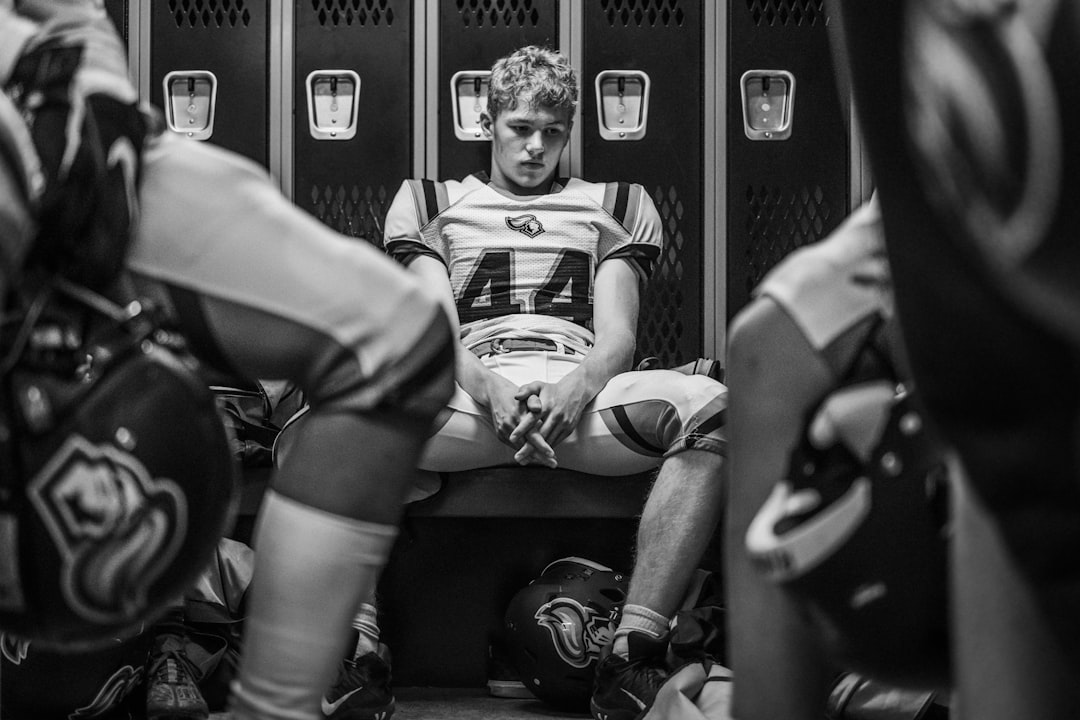
The hallmark of the team sport athlete in adult life is a finely calibrated social processing system. You spent years reading the emotional state of a locker room in real time, detecting who was carrying tension before a game, who needed direct communication and who needed space, who would compete harder when challenged and who would shut down. This is not soft skill — it is precision perception developed under competitive pressure.
Reading groups under pressure. Team sport athletes tend to be unusually accurate readers of group dynamics in professional settings. They've sat in enough pre-game environments, huddles, and film sessions to understand that a team's performance is a function of its psychological state as much as its technical preparation. In a meeting that's starting to fracture, a former team sport athlete often detects it first — and knows what kind of intervention changes the room.
Role clarity without status anxiety. Every team sport requires its athletes to understand the difference between their role and their worth. The starting center doesn't score the most points. The utility player makes the starter's performance possible. Doing your specific job excellently — regardless of whether it's the visible job — is a lesson that team sport athletes absorb over years of practice, and it produces adults who are unusually effective in supporting roles without feeling diminished by them.
The specific trust that comes from shared suffering. There is a bond formed between people who have lost together, prepared together under physical hardship, and performed under conditions where failure had real social consequence. Former team sport athletes carry this understanding of how trust is actually built — not through declarations but through accumulated shared difficulty. This shapes how they form professional relationships, how they lead teams, and what they require from people before they extend real trust.
Position and Role: The Detail Inside the Sport
Your sport gives the broad architecture. Your position gives the specifics.
Take a moment with this — because the way you played your sport narrows the personality fingerprint considerably.
Marcus T., 34, played shortstop in college baseball before going into project management. He describes his ability to anticipate what's about to happen in a project as "reading the infield" — sensing from subtle cues where the ball is likely to come before it's hit. Shortstops, in his words, "live in the 0.3 seconds before the play happens." He's right. The position selects for anticipatory processing — making predictions from incomplete information — at a level that quarterbacks, point guards, and liberos share and most other roles don't.
The quarterback / point guard / setter arc: If you ran an offense, you spent years developing the specific cognitive skill of holding the entire field in peripheral awareness while executing a task in the foreground. In adult professional life, this looks like the person who can manage multiple competing priorities simultaneously without losing thread on any of them — because they've done the equivalent of reading a defense while running a route tree since they were sixteen.
The goalkeeper / goalie arc: Goalkeepers play a position defined almost entirely by waiting for the crisis and then having one chance to solve it correctly. This builds a very particular adult nervous system — one that is not triggered by long periods of low stimulation followed by sudden high-stakes moments. Former goalkeepers and goalies often thrive in roles that most people find exhausting precisely because the rhythm of calm-then-crisis is neurologically familiar.
The long-distance runner / endurance athlete arc: If your sport was primarily a negotiation between you and physical suffering over extended time, you built the adult capacity for delayed gratification at a depth that most people never access. Endurance athletes learn that the feeling of wanting to stop is not a signal that they should stop — it is a signal that they are in the middle of what the sport actually is. That lesson, applied to long career cycles, relationships, and personal growth, is among the most durable advantages a sporting background can produce.
The Traits That Cross Every Sport
For all the sport-specific differentiation above, there are character traits that show up across virtually every former competitive athlete regardless of sport, position, or level.
Coachability as an adult skill. Every competitive athlete spent years in a structured relationship with authority — coaches, trainers, officials — where the ability to receive criticism and immediately apply it was a performance requirement, not a social preference. Former athletes in professional settings tend to take feedback better than average, not because they lack ego, but because they have experience processing corrective input as information rather than as personal attack. A hard-driving coach — the kind who demanded more than you thought you had — is often where that reflex was built.
A calibrated understanding of effort. Most people have a theoretical relationship with their own maximum effort. Athletes have an empirical one. They know what it actually feels like to operate at or near their performance ceiling — and they know the difference between that and what most people call "working hard." This produces adults who are genuinely harder to discourage by difficulty, because their reference point for "hard" is calibrated to competitive sport, not to ordinary professional demand.
The psychology of preparation. There's a particular mental orientation built by years of structured practice: the understanding that performance is downstream of preparation, and that preparation happens in conditions where no one is watching and there is no immediate reward. Former athletes often work better without supervision, meet deadlines with internal rather than external pressure, and tend toward thorough preparation before execution — because that's what the sport required.
If you played, you know: the game is almost never where you find out what you're made of. That happens in the practice sessions when you're tired and nobody's keeping score.
Your Jersey Is Still Out There Waiting
The sport you played built the person reading this. That version of you — the athlete, the competitor, the teammate — is worth remembering.
Design yours in minutes and see your name and number exactly the way you remember it.
Frequently Asked Questions
Does the sport you played really shape your personality long-term, or does the effect fade?
The research on this is consistent: the personality adaptations built through years of competitive athletics do not simply fade after sport ends. Traits like stress tolerance, coachability, and sustained effort under difficulty become stable adult characteristics because they were reinforced through thousands of repetitions in high-stakes conditions. What fades is the physical conditioning. What remains is the psychological architecture the sport built.
Are some sports more likely to produce specific personality types than others?
Individual sports tend to develop high internal locus of control and comfort with solitude. Team sports tend to develop social intelligence and role clarity. Contact sports tend to produce higher baseline stress tolerance. Precision sports — golf, archery, gymnastics — tend to develop exceptional attention to detail and pre-performance routine. These are tendencies, not guarantees — individual variation within any sport is significant.
What if I played multiple sports — which one shapes me most?
In our experience, the sport you played longest and at the highest level of competition you reached tends to leave the deepest imprint — because that's where the most repetitions under the most consequence occurred. That said, each sport you played contributed something specific. A former multi-sport athlete often carries a hybrid of traits — the individual accountability of one sport and the social attunement of another — and this combination is genuinely unusual in adult life.
Does level of competition matter — does a recreational player develop the same traits as a varsity athlete?
Level matters, but not in the way most people assume. It's not the prestige of the level — it's the degree of consequence felt during competition. A high-stakes recreational league where the athlete genuinely cared about the outcome produces more psychological adaptation than a varsity situation approached without real investment. What shapes you is the combination of preparation, pressure, and genuine emotional stakes — not the jersey's official status.
See also: why high school sports still matter to adults | athletic identity after high school | what high school sports teach you that nothing else could | the difference between watching a sport and having actually played it