

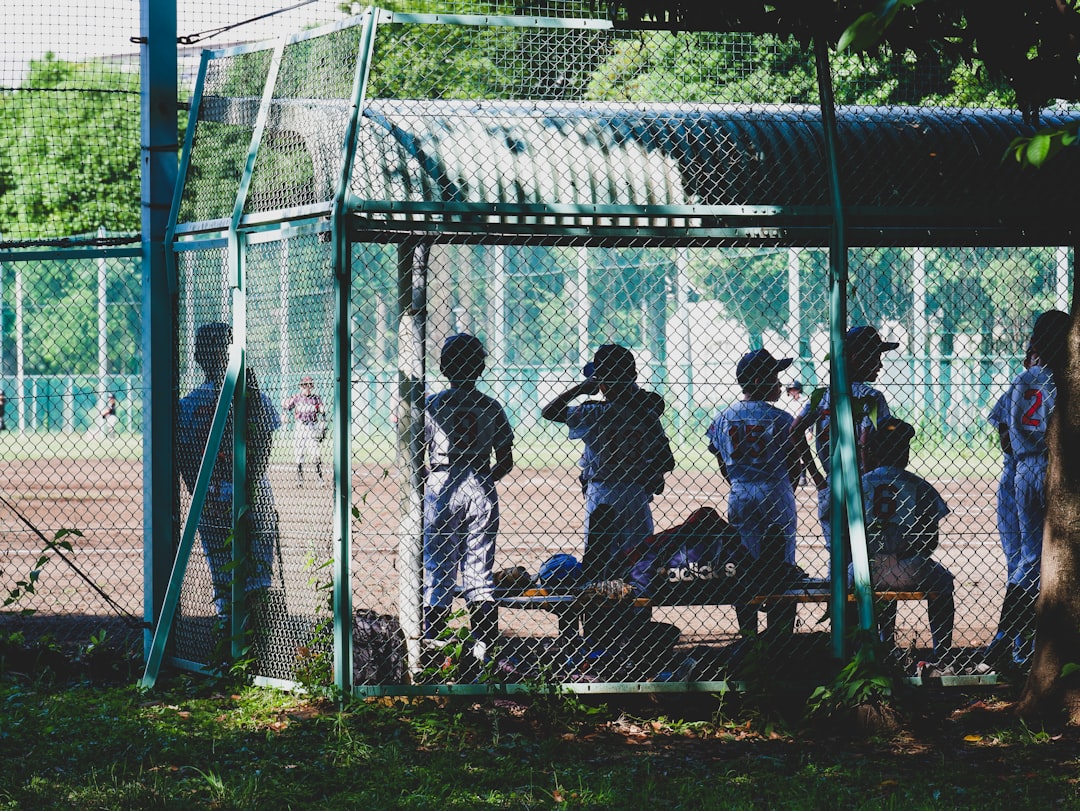




There's a moment almost every ballplayer carries with them for decades.
You've just made an error: maybe a fielding mistake in the third inning, maybe a swing at a ball in the dirt with a runner on second. You jog back to the dugout, and before you've even sat down, he's there. Not yelling. Not screaming. Just standing over you with that look, asking one quiet question you'll never forget: "What were you thinking?"
If you've spent any time dealing with a tough high school baseball coach, you know that moment. The tight jaw. The unwavering eye contact. The complete absence of the soft reassurance you desperately wanted. At sixteen, it felt like the worst thing in the world. At thirty-five, it's the scene you return to when you're under pressure at work, when the deal isn't closing, when the team around you is rattled, and you find yourself thinking, okay, what am I actually going to do here? That's not nostalgia talking; it's the voice that outlasts the season still doing its work.
This article isn't advice for parents on how to file a complaint. It's a retrospective for the players who made it through (and for the ones still grinding through it right now) about what a genuinely hard-driving coach was actually building inside you, one brutal practice at a time.
The Coach Most People Misread
Nobody tells you this when you're in the middle of it: the tough love coaching style is one of the most misunderstood dynamics in all of youth sports.
From the outside (from the stands, from a parent's perspective, sometimes even from the player's own perspective mid-season), a demanding coach can look indistinguishable from a cruel one. The line drills that never seem to end. The public correction in front of the whole team. The standard that moves every time you think you've reached it. The feeling that nothing is ever quite enough.


What gets lost in that framing is the signal embedded in the demand itself.
A coach who has genuinely checked out doesn't run you through extra reps at 6 AM. A coach who doesn't care doesn't stop practice to correct the same throwing mechanic for the fourth time that week. The coach who is hard on you but cares (and there is a real distinction between that coach and one who is simply running a joyless program) invests more time in the players he believes in, not less. The correction is the investment. The standard is the compliment.
Most players don't recognize this in real time. That's not a failure of perception; it's just the nature of being sixteen. The recognition comes later, often years later, sometimes only when you find yourself in a position of leadership and you hear your own voice setting a standard you didn't realize you'd internalized.
The players who struggled most with a demanding coach in the moment are frequently the ones who speak about that coach with the most pointed gratitude twenty years down the road. Not generic gratitude — particular gratitude. They can name the drill. They can recall the words. The experience was too sharp, too personal, to fade into general memory.
What the Demanding Seasons Actually Built
The benefits of a demanding coach don't announce themselves during the season. They accumulate quietly, the way compound interest works (invisible in the short term, undeniable over time).
Here's what that accumulation actually produces in the player:
Mental Toughness That Comes From Real Pressure
Mental toughness is one of the most overused phrases in sports culture and one of the least examined. What does it actually mean?
It means the ability to maintain focus and execute when the external environment is hostile: when the score is bad, when you're tired, when someone in authority is watching you fail in real time. It means developing what sport psychologists call a "performance state", the capacity to narrow attention under stress rather than scatter it.
A soft practice environment cannot build this. Mental toughness, like physical conditioning, responds to progressive overload. You develop it by being placed in conditions that are harder than comfortable and discovering you can survive them. The coach who manufactures that pressure in practice, who designs situations where you have to execute despite being uncomfortable, is essentially running pre-season conditioning for your psychology.
The player who spent two years surviving a strict coach shows up to the regional championship in the seventh inning with a different internal experience than the player who was never pushed past easy. Not because the first player is tougher by nature, but because they've already been in uncomfortable territory. They've already proved to themselves they can function there.
A Calibrated Sense of Earned Confidence
There's a particular kind of confidence that only comes from being held to a high standard and meeting it. Not the participation-trophy version: the version that arrives when someone who is genuinely hard to please tells you, with no inflation and no softening, that you did the work right.
When that coach, the one who never handed out praise lightly, gave you a nod after a clean double play, or stopped a drill to say, flatly, "that's the right footwork, remember that" — you felt it differently than you felt generic encouragement. Because it had been earned through specificity. The standard was visible. You had reached it. The reward was real information, not comfort.
Players who came up under demanding coaches often describe their self-assessment as unusually calibrated. They know what they can actually do, not what they've been told they can do. That calibration follows them everywhere: into evaluating their own work honestly, into knowing when they've earned something and when they're running on borrowed credit.
Resilience in the Face of Failure
Marcus T., 28, played shortstop at a competitive 5A program in Texas and spent three seasons under a coach he describes as "the most relentless person I've ever been around." His junior year, he committed four errors in a single district game. The coach pulled him aside afterward: not to offer comfort, but to break down each error mechanically, specifically, and then had him take grounders for an additional forty minutes until each scenario was executed correctly. "He didn't let me feel sorry for myself," Marcus says. "He just made me fix it. I didn't know it then, but that's the only healthy way to process a failure. You feel it for as long as it takes to understand it, then you go fix what you can fix."
That is what surviving a strict coach actually trains: your relationship with failure. In a protected environment, failure feels catastrophic because it's rare and unexpected. In a demanding environment, failure is a daily data point: something to be assessed and corrected, not avoided and mourned.
Respecting a Difficult Coach: What That Actually Requires
Respecting a difficult coach while you're in the middle of a hard season is one of the more genuinely mature things a young athlete can be asked to do. It requires holding two true things at the same time:
- This is hard, and the frustration is legitimate.
- The standard being set here is in my interest, not against it.
Most teenagers, reasonably, can only hold one of those thoughts at a time. The psychological work of holding both is part of what the experience is building.
What helps is learning to read the type of hard. There is a meaningful difference between a coach who is demanding because they hold a high standard for their players, and a coach who is dismissive, demeaning, or personally cruel. The first deserves respect even when it's uncomfortable. The second deserves to be named and addressed: by the player, by a parent, by administration if necessary.
The distinguishing markers of the hard-but-caring coach are usually visible if you look for them:
- They are as hard on themselves when the team underperforms as they are on the players. Blame doesn't flow in only one direction.
- The standard applies to everyone. The star hitter gets corrected just as publicly as the utility player. If the best bat in the lineup is exempt from accountability, that's a signal worth noting.
- Outside the competitive context, they are different. The coach who runs you ragged at practice can ask how your family is doing in the parking lot after. Both of those things are real.
- They remember the work you've put in. Even if they never say it in the moment, the demanding coach tends to carry a precise memory for what each player has done. They're watching more carefully than they let on.
Respecting a difficult coach doesn't mean agreeing with every decision. It means extending enough trust to understand what the standard is actually asking of you.
What the Hard Seasons Look Like in Retrospect
The timeline of appreciation for a demanding coach follows a remarkably consistent pattern among the former athletes our team has spoken with over the years.
During the season: Frustration, exhaustion, occasional resentment. The feeling that the standard is unfair, or that the coach sees only what's wrong and never what's right.
One to three years out: The first moment of recognition. Something happens — a job interview that goes sideways, a moment of pressure in a new context — and the player realizes they handled it differently than the people around them. They find themselves thinking of the coach.
Five or more years out: Pointed gratitude. Not general appreciation for "what sports taught me," but the ability to name the thing the coach was actually building. The capacity to work without external validation. The tolerance for discomfort. The habit of self-assessment without self-pity.
For a lot of former players, that gratitude eventually turns into a note, a message, or a drive back to the old field. The urge to thank a coach you once resented arrives on its own timeline, usually later than you'd expect.
This arc doesn't apply universally; it depends on the quality of the coach's character and the nature of the relationship. But for the coach who was genuinely demanding in the service of the player's development, this arc is recognizable across nearly every sport, every level, every background.
The benefit of a demanding coach is not the suffering itself. It's what the player discovers they're capable of on the other side of it.
If You're Still in It Right Now
If you're in the middle of a hard season right now — grinding through conditioning drills that feel punitive, trying to meet a standard that keeps moving, wondering whether this is supposed to feel this difficult — here is a reframe that might actually help.
The coach's standard is information about what you're capable of, not a verdict on what you currently are.
Every correction is a data point. Every extra rep is evidence that someone believes the extra rep will change something. The demand itself is a form of investment — one you might not have asked for, but one that's working on you regardless.
Three things that help while you're inside it:
- Find one thing you're measurably getting better at. Don't evaluate the whole experience — it's too large. Find the one drill, one situation, one physical or mental skill that is different than it was six weeks ago. Focus there.
- Separate the standard from the delivery. A high standard delivered imperfectly is still a high standard. You can disagree with how something was said and still extract the information it contained.
- Tell someone outside the program what's happening. Not to complain — to process. The isolation of a hard season is part of what makes it feel unbearable. Name it to someone who isn't in the middle of it with you.
Your jersey is still out there waiting.
The season you survived under that coach — the practices that felt impossible, the games where you played past the point of tired — that's a story worth wearing. Design yours in minutes and see your name and number the way you remember it.
Frequently Asked Questions
How do I know if my coach is tough-but-caring versus genuinely harmful?
The line is behavior, not intensity. A demanding coach pushes players past comfort in the service of performance — the correction is specific, the standard is consistent, and it applies to everyone equally. A harmful coach uses their position to demean, embarrass, or isolate players personally. Specific markers of harmful coaching include: targeting one player disproportionately, using personal insults rather than performance corrections, creating fear rather than accountability, and treating favored players visibly differently from everyone else. If what you're experiencing falls into the second category, document it and speak to a trusted adult or administrator. A high standard is not the same as abuse.
Is it normal to resent your coach during a hard season and appreciate them later?
Yes, and the research on coach-athlete relationships supports this. Athletes who describe their most impactful coaches frequently describe a relationship that was difficult to navigate in real time and valuable in retrospect. The emotional complexity — frustration during, gratitude after — is not a sign that something went wrong. It's a sign that the relationship was genuinely formative rather than simply comfortable. The coaches players remember as "the one who changed things" are rarely the easiest ones.
What should I say to a former tough coach if I want to reconnect?
Be specific. The generic "thanks for everything" lands flat for a coach who lived the same hard season you did. Tell them the thing — the drill, the conversation, the standard — that you still carry. Coaches who demanded a great deal from their players often wonder, years later, whether it was worth it to their athletes. The particular recall proves it was. A brief, focused message — even a handwritten note — tends to matter far more to them than you'd expect.
Can a demanding coaching style backfire?
Yes. A tough love coaching style works when it is calibrated to the player and the developmental stage. Applied without discernment — at the same intensity to a fourteen-year-old in their first competitive season as to a junior competing for a college scholarship — it can produce the opposite of resilience: burnout, avoidance, and early dropout from the sport. The best demanding coaches read their players carefully and apply pressure proportional to capacity and readiness. The intensity of the demand matters less than the coach's accuracy in knowing when and how hard to press.
See also: what high school sports actually teach you that classrooms never could | why high school sports still matter so deeply to adults | the athletic identity you carried long after your last season ended | why the grief of leaving your sport hits harder than anyone expects