

There's a specific smell that comes back if you think hard enough. Rubber gym floors. Cheap polyester. The inside of a helmet that had been worn by three athletes before you. If you played high school sports in the 1990s, you already know exactly what that smell means — and why it still hits differently than anything in your adult life.
This isn't nostalgia for nostalgia's sake. High school sports in the 1990s were a genuinely distinct cultural moment, and if you were inside it, you understood something about competition, identity, and belonging that younger athletes — with their highlight reels, their social media followings, their perfectly tracked biometrics — simply didn't get to experience the same way. That's not a complaint about what came after. It's a recognition of what was particular about before.
The 90s high school sports culture had its own rules, its own aesthetics, its own psychology. And almost none of it has been properly archived.
This is the archive.
You Competed in the Dark
Before analytics. Before recruiting databases. Before anyone outside your county knew your name.
The defining condition of being a 90s high school athlete was invisibility — and the freedom that invisibility created. Nobody was watching your film in real time. No algorithm was distributing your highlights. Your performance existed in the gym, on the field, on the track, and then it dissolved into memory. The only people who saw what you did were the people in the stands and the opponents trying to stop you.
That condition produced something specific in the athletes who lived through it: an internal standard. You ran the extra sprint not because a coach was monitoring your GPS output but because you had decided who you were going to be. You lifted on Saturday morning not because it was programmed into an app but because the locker room at school had an informal hierarchy that everyone understood without anyone explaining it. The kids who put in the extra work in the off-season looked different. Everyone noticed. No one said it out loud.

In our experience talking to 90s athletes — former players, coaches who came up through that era, people who keep their old jersey numbers like talismans — this invisible accountability was the thing they most consistently identify as what made them. Not the trophies. Not the records. The specific feeling of competing at your ceiling with no audience, no documentation, and no safety net except your own sense of what you were willing to do.
The 1990s athletic training environment was underfunded, often poorly equipped, and occasionally run by coaches who mixed genius with methods that would never survive modern scrutiny. And it worked for a generation of athletes who learned to compete in conditions they couldn't control.
The Mixtape Was Your Entire Identity
If you were a skilled 90s athlete with college aspirations, you understand the weight of the word "mixtape" in a way that has nothing to do with music.
The athletic highlight tape — recorded on VHS, often by a parent with a camcorder purchased specifically for this purpose — was the entire infrastructure of the recruiting process for most 90s athletes. There was no Hudl. There was no YouTube. There was no direct message to a coaching staff. You had a cassette. You had a list of addresses. You had a deadline.
The process of putting together a highlight tape was its own education in self-advocacy and editorial judgment. Which plays do you lead with? How long before a coach stops watching? Do you include the game where you had 4 errors but still made the game-winning play, or only the clean performances? Every decision revealed something about how you saw yourself as a competitor.
Marcus D., 48, still has his original VHS tape from his senior year at a mid-size high school in the Midwest, where he played two-way football. The tape spent two months getting dubbed at a copy shop — he sent out 23 copies on his own dime — and he received two legitimate recruiting letters in response. "I thought those letters were the most important documents I'd ever hold," he said. "I still think I was right."
College coaches received hundreds of these tapes. Most were never fully watched. The 90s athlete understood this and sent them anyway, because the alternative — not trying — was simply not available as a psychological option for the kind of person who had spent four years training in a weight room with no air conditioning.
The Uniform Was a Statement You Didn't Have to Make Twice
The aesthetic of 90s high school sports uniforms is one of the most instantly recognizable visual codes in American athletic history, and it was not accidental.
Baggy shorts in basketball weren't just a fashion choice — they were a declaration of affiliation. When Michael Jordan convinced Nike to let him wear longer shorts, and then the Fab Five at Michigan made length and looseness into a whole philosophy, it cascaded down to every high school gym in America within two seasons. By the mid-90s, the kid in tight shorts was the anomaly. The visual language of the game had shifted, and high school athletes adopted it with the seriousness of people who understood that how you looked on the court communicated something real about which era you belonged to.
Football uniforms carried their own codes. The specific cut of a practice jersey. Whether your school's helmets had the stickers that accumulated over the season, or whether your program stripped them as a discipline measure. The way certain teams tucked their jerseys and certain teams didn't. None of this was written down anywhere. All of it was understood.
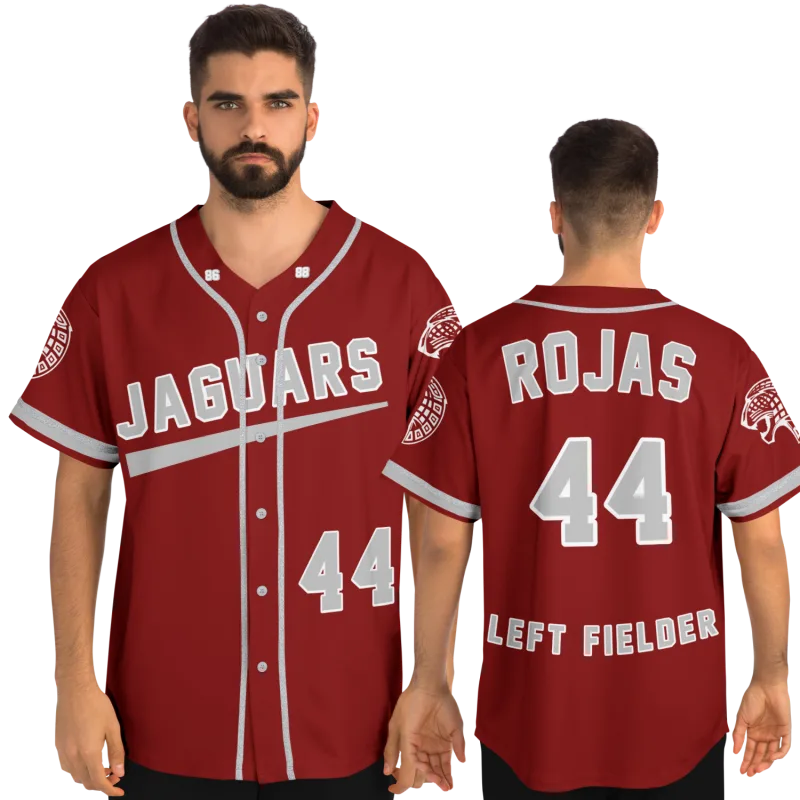
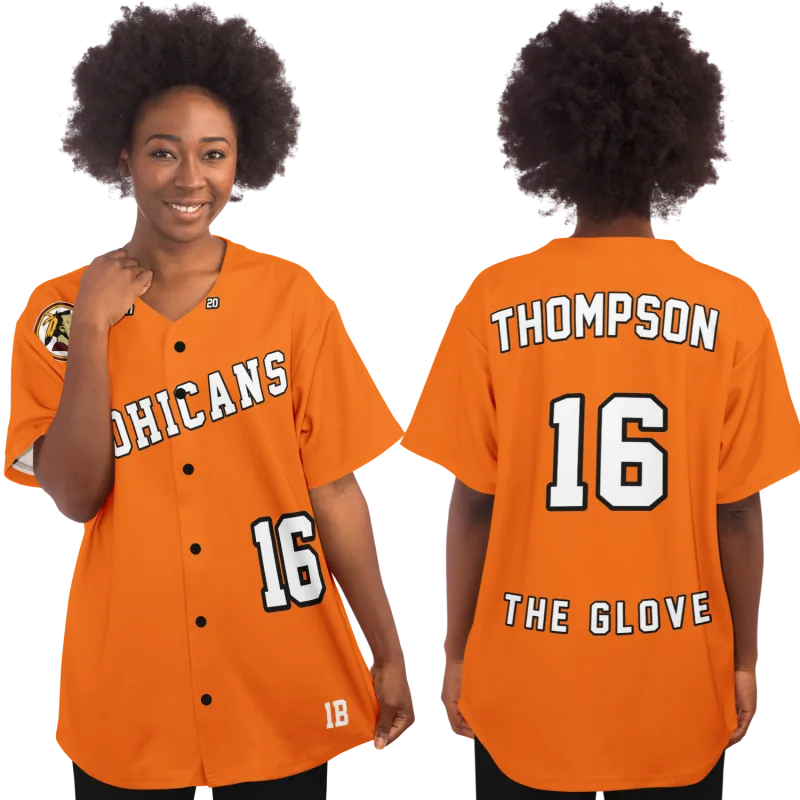
Track spikes that were two seasons old because the program budget didn't cover new equipment. Baseball jerseys with the player's number ironed on because the school couldn't afford screen printing for everyone. Volleyball knee pads that had been washed so many times the padding had migrated to the corners. The uniform of the 90s high school athlete was often imperfect by design, and the athletes inside those uniforms understood something that perfectly outfitted athletes sometimes miss: the jersey is a symbol, not a guarantee. What you do in it is the only thing that matters.
Your number mattered more than the fabric it was printed on.
Training Like Nobody Was Watching (Because Nobody Was)
A legitimate artifact of 90s high school sports culture is the weight room — specifically, the particular type of weight room that existed in most public high schools in that decade.
Mismatched equipment. Plates from three different manufacturers. A squat rack that had been purchased in 1974 and repaired with materials that were never intended to be used for that purpose. A single water fountain. Windows that did not open. A motivational poster featuring a professional athlete who had retired before most of the athletes in the room were born.
And yet.
The 1990s athletic training culture that developed in these spaces was remarkably effective, partly because it had no choice. When you cannot track your one-rep max in an app, you remember it. When there is no digital record of your performance, you keep your own record, in your own head, with the specificity that comes from having nothing else to rely on. The accountability was internal because it had to be.
Strength training in the 90s high school context was largely self-taught or coach-taught, which meant the variation in quality was enormous. Some programs had coaches who understood periodization and progressive overload intuitively, even if they didn't use those terms. Others ran their athletes on pure volume and willpower with no structured recovery. Both produced athletes who could compete — because the attitude of 90s athletes was not particularly calibrated to the concept of optimal conditions.
You trained in what you had. You competed with what you built. The outcome told you where you actually stood.
Alyssa M., 46, Ran the 400 Twice a Week After Practice. Nobody Scheduled It.
Alyssa M., 46, was a middle-distance track athlete at a suburban high school outside Columbus, Ohio in the mid-90s. She wasn't the fastest on the team. She knew it going in. Her strategy — which she developed entirely on her own, without a personal coach, without a training app — was to do extra 400-meter repeats on Tuesday and Thursday after official practice ended.
"The other girls went home," she said. "I stayed. My coach knew I was there because the lights in the facility were on a timer and he had to come reset them for me twice. He never said anything about it. He just reset the lights."
She made varsity her junior year and qualified for regionals her senior year. She did not run in college. The training she built in that facility, under those lights, in those conditions, is still the thing she describes as the formative experience of her adult capacity for sustained effort.
Her jersey number was 7. She wore it on a singlet that had been used by four athletes before her. She wore it like it was the only one in the world.
The Coach Who Didn't Explain Themselves
The 90s high school coach is a specific archetype that has not been fully honored in the historical record, and it deserves a careful accounting.
Many were products of the same no-documentation, high-accountability culture they were running their athletes through. They had played in eras where coaching meant demonstrating something once and expecting it to be learned. They inherited programs with minimal budgets, booster clubs of variable commitment, and facilities that required ongoing improvisation.
The best of them had two qualities that the current coaching environment sometimes optimizes away from:
- They had a standard that didn't move. Not a documented, distributed, benchmarked standard. A standard in their head, applied consistently, that every athlete on the team could describe even if they'd never been handed a document.
- They personalized without explaining that they were personalizing. The 90s coach who pushed one athlete harder than another was not applying a documented differentiated instruction model. They were reading a person and responding to what they saw. Sometimes they were wrong. Often they were the first adult who had ever seen a particular athlete clearly.
The coaches who got it wrong did real damage, in the way that ungoverned authority sometimes does. The ones who got it right produced athletes who are now 45 and 50 and still measuring their work ethic against a standard set in a high school gym thirty years ago.
That's a significant influence. It deserves to be named.
What the 90s Athlete Carried Forward
The specific combination of conditions that defined high school sports in the 1990s — no documentation, no audience beyond the immediate community, equipment that required workarounds, coaches who operated on instinct and accumulated knowledge — produced a particular psychological profile.
The 90s athlete learned four things that weren't on any curriculum:
- Effort without external validation is still effort. Nobody was filming the extra sprint. You ran it anyway.
- Identity is something you build under observation by people who matter to you, not by algorithms. Your teammates knew who you were. Your opponents learned. That was enough.
- Failure has a short half-life when there's no permanent record. You had a bad game. Nobody posted it. The next game came. You competed again.
- The number on your jersey meant something specific to a specific community, and that meaning was real. Not metrics. Not reach. Community.
These aren't just nostalgic observations. They're the specific psychological raw material of an athletic generation that went into adult professional and personal life with a particular set of tools. The 90s athlete often describes work environments the same way they described practice: show up, do the work, let the outcome tell you where you stand.
The attitude of 90s athletes — that internal compass, that tolerance for unobserved effort — was the product of the specific conditions they trained and competed in. It didn't happen by accident. It happened because the era demanded it.
Your jersey is still out there waiting.
The number you wore. The team colors you bled for. The cut of the uniform that said exactly which era you came from.
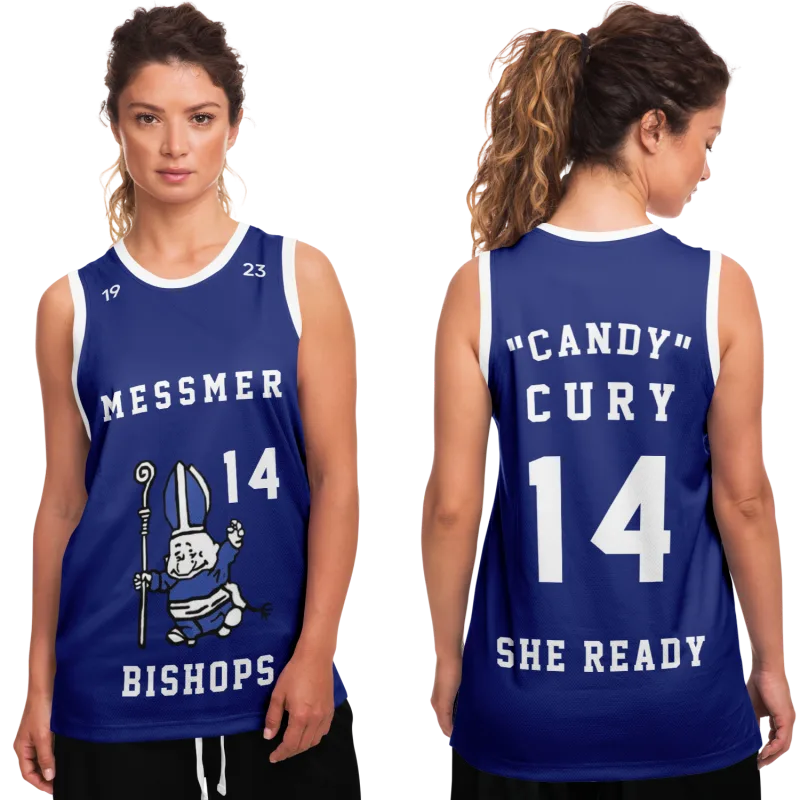
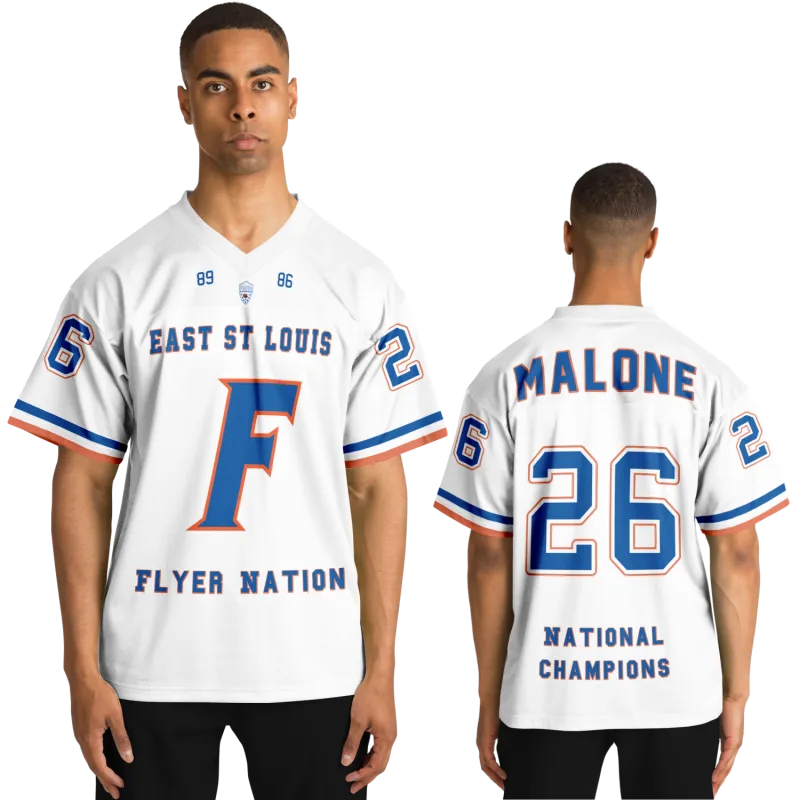
Design yours in minutes and see your name and number exactly the way you remember it.
Frequently Asked Questions
What made high school sports in the 1990s culturally different from earlier or later eras?
High school sports in the 1990s occupied a specific window: after the professionalization of youth sports culture from the 1970s and 80s had taken hold, but before digital documentation and social media fundamentally changed the experience of athletic identity. The 90s athlete competed in a world where local reputation was everything and external visibility was nearly impossible to manufacture. That constraint shaped how athletes developed their internal standards, their relationships with coaches and teammates, and their sense of what performance meant. The NCAA's own historical records on recruiting evolution document how differently the pipeline worked before digital platforms existed.
How did the VHS highlight tape change the recruiting process for 90s athletes?
The VHS highlight tape was the primary self-advocacy tool for college-bound 90s athletes. Because there were no digital platforms to host or distribute footage, athletes or their families were responsible for recording, editing (often by physically dubbing footage between two VCR units), duplicating, and mailing physical cassettes to coaching staffs. This process was expensive, labor-intensive, and largely ineffective by volume — but it created a level of intentionality and self-direction in the recruiting process that later systems made unnecessary. Athletes who went through it often describe it as their first real experience of running a campaign on their own behalf.
Is the "no-pain, no-gain" training mentality of the 90s still considered effective?
The specific training culture of 90s high school sports — high volume, low recovery emphasis, limited individualization — has been substantially refined by sports science in the decades since. Current understanding of recovery, periodization, and injury prevention would modify many of the standard practices of the era. That said, the psychological underpinning — the expectation of sustained effort in the absence of external reward — remains a recognized component of high-performance athletic development. The era's methods were often blunt instruments. The mental habits those methods built were often remarkably durable.
Why did uniform aesthetics matter so much in 90s high school sports?
In the absence of digital platforms for athletic identity, the uniform and jersey were among the primary visible markers of athletic belonging. The specific aesthetic choices of the 90s — longer shorts, certain jersey cuts, specific number assignments — carried social meaning within athletic communities that was understood intuitively by participants. The number a player wore, the way they wore their jersey, the condition of their equipment: these communicated things about effort, seniority, and identity that current athletes communicate through digital platforms. The jersey was the profile.
What happened to the "attitude of 90s athletes" as they moved into adult life?
The internal accountability culture that 90s athletes developed — the habit of measuring effort against a self-defined standard rather than an externally tracked metric — has been widely observed in the professional and personal trajectories of this cohort. Many 90s athletes describe work environments using the same language they used to describe practice: show up, do the actual work, let outcomes tell you where you stand. Whether this represents an advantage or a limitation in environments that emphasize collaboration and documented performance is a context-dependent question. As a foundational attitude, it has proven durable.
See also: why high school sports still matter to adults decades later | the athletic identity you carried long after the final buzzer | what it actually felt like to play under the Friday night lights | why your senior season memories are so sharp even thirty years later