

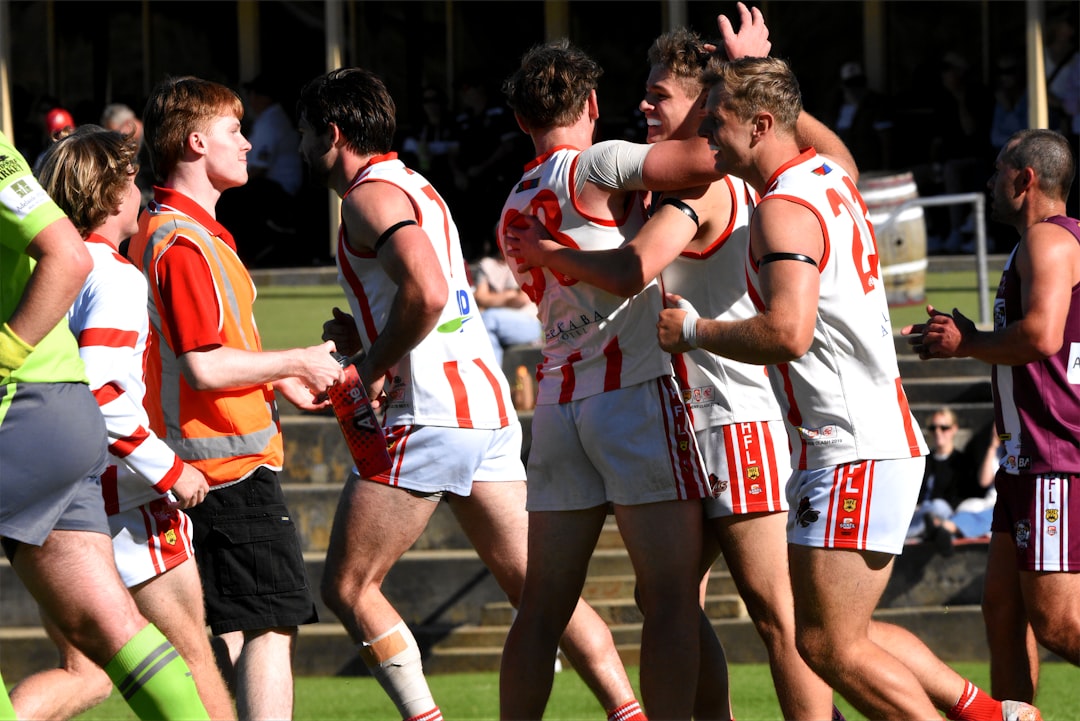



You remember the smell. Not a good smell, necessarily. The specific combination of grass and synthetic rubber and whatever industrial cleaner they used on the locker room floors. But the moment you catch something even close to it today, you're sixteen again and your heart is doing the thing it did before every game.
That's what the universal high school athlete experiences do to you. They don't just live in memory — they live in the body. In muscle. In the particular way your stomach still tightens when someone shouts a count cadence in a parking lot. In the way you automatically scan for the scoreboard when you walk into any gym, anywhere, for the rest of your life.
It doesn't matter whether you played football under Friday night lights or swam in a pool that smelled like chlorine from October through March. Whether you ran cross country through empty parks at 6 AM or set a volleyball on a court that echoed every single sound. The sport was different. The jersey was different. But the experience (the particular texture of being a high school athlete) was almost exactly the same for all of us.
Here's what we all went through.
The Pre-Game Ritual You Invented and Never Questioned
Every high school athlete had one. Not a team ritual — a personal ritual. The specific thing you did in the hours before competition that was entirely yours, half-invented and fully necessary.
Maybe it was listening to the same three songs in the same order on the bus, starting from the moment you crossed a certain street. Maybe it was the exact order you put on your uniform: left sock before right, always, without exception, because the one time you did it the other way you played terribly and you never risked it again. Maybe it was the specific pre-game meal that your parents eventually stopped questioning, even though it made no nutritional sense.


These rituals were not about superstition, exactly. They were about control. High school athletics is a place where a sixteen-year-old is asked to perform under pressure in front of people they care about, in a body that's still figuring itself out, for stakes that feel enormous even when they objectively aren't. The ritual was the one thing you could control completely. It was the bridge between the world where you were just a kid doing homework and the world where you were an athlete who was ready.
What's remarkable, looking back, is how seriously we took them without any adult having to tell us to. Nobody taught us to build mental routines. We invented them out of pure competitive instinct.
The Warmup That Felt Like a Ceremony
And then there was the team warmup. Whatever your sport called it — the layup lines, the stretching circle, the dynamic warmup jog around the field — it had a quality that was almost ceremonial. The moment it started, you stopped being a collection of individuals who had chemistry class together and became something else.
The warmup told you: this is real now. We're here.
In my experience as a former player, this transition moment is the one athletes most consistently identify as the thing they miss. Not the winning. Not even the competing. The specific thirty seconds when the warmup began and everything else in the world got quiet.
The Bus Ride, Both Directions
There is no experience more specifically, universally shared among high school athletes than the bus ride — and there are two completely different bus rides, heading in opposite directions, that every athlete remembers with equal clarity.
The ride there was noise. Music from someone's phone speaker. Teammates doing the bit they always did. Coaches at the front pretending not to hear what was happening in the back. A specific energy that was part excitement and part nerves and lived in the chest like something about to become a story.
The ride back after a loss was a completely different vehicle. The same seats, the same people, the same bus. And yet somehow the most particular silence most of us ever experienced as teenagers. The kind of silence where everyone is processing something and nobody wants to be the first one to break it because breaking it feels like saying it's over and it doesn't feel over yet.
Some coaches understood that silence and left it alone. Some coaches gave speeches into it, which almost never helped. The ones who got it right usually pulled the bus into a fast food drive-through about twenty minutes in and let everyone eat in the dark, which managed to be both a completely mundane act and an act of profound understanding.
The ride home after a win had its own texture too — louder, obviously, but also looser in a way that was specific to athletic victory. The permission to be exactly as happy as you actually were. High school doesn't give teenagers many contexts where full emotional expression is acceptable. The bus after a win was one of them.
The Coach Voice That Lives in Your Head Forever
You can probably still hear it right now.
Not necessarily the words. The specific quality of the voice. The particular combination of volume and cadence and certainty that your coach used when they were about to say something that mattered. Athletes in their thirties and forties will tell you they occasionally still hear it — in the moment before a hard conversation at work, or when they're pushing through something physically uncomfortable.
That voice is still coaching you. That's what it was designed to do.
High school coaches occupy a genuinely unusual place in a young person's development. They are not parents, not teachers exactly, not friends. But they have access to a part of you that most adults in your life don't reach. They see you fail in public. They see you succeed in public. They are present for the physical, emotional, and psychological experience of being tested, which is something most classroom teachers and many parents simply don't witness in the same way.
The coaches who understood that responsibility — who knew what they were being trusted with — tend to be the ones whose voices stayed. The ones who treated the access they had as something serious, something worth being careful with.
Maria T., 34, played four years of varsity softball and still keeps a photo of her team in her home office. She told us her coach used to end every practice with the same four words before anyone was allowed to leave — words she's never shared publicly because they feel like they belong to that team. "I say them to myself before anything hard," she said. "It's been twelve years. I don't think that's ever going away."
That's the particular power of the coach-athlete relationship at the high school level. It happens during the years when people are most open to being shaped, and it leaves marks that last. The character it built in you tends to outlast almost everything else from those years.
Making the Starting Lineup (And What You Did With That Feeling)
Here is the thing about making the starting lineup for the first time: nobody tells you how big it's going to feel.
You find out through a posted list, or a coach who nods at you in a specific way during practice, or a text from a teammate. The information arrives in a completely ordinary moment and then stays ordinary on the outside — because you're sixteen and you don't have the tools yet to process something that significant in front of other people — while the inside becomes something else entirely.
Most athletes will tell you they said very little when it happened. Some will tell you they went home and didn't tell their parents for a few hours because they needed to sit with it first. Some will tell you they cried in their car, or in their room, with the door closed.
The experience of athletic achievement at the high school level has this particular quality of being intensely private even when it's publicly visible. Your teammates know your name was on that list. But only you know what it cost to get there. The practices you stayed late for. The repetitions when nobody was watching — the practice nobody remembers but every serious athlete never forgets. The specific doubt you had at 7 PM on a Tuesday in early October when you thought it might not happen.
That gap — between what's publicly visible and what was privately lived — is one of the defining features of high school athletics, one of the moments that made you an athlete. It's why the jersey means something. It's not just a uniform. It's the public evidence of something that was private and hard and specific to you.
Being Watched by Your School
There is something about high school sports that doesn't exist at any other level: the people watching you were the same people you sat next to in chemistry. The student section wasn't a crowd of strangers — it was your classmates showing up, and by Monday morning the whole school knew how you'd done.
This is uniquely a high school thing. College and pro athletes perform in front of anonymous thousands. They never have to walk into second period the day after a bad game and feel every person in the room already knows.
And that was the flip side, too. There was no hiding. A bad game followed you into the hallway. A great one did, too. You were never just an athlete in a vacuum. You were an athlete inside a school that was watching, and that public-ness is part of why any of it mattered in the first place. You weren't playing for a faceless audience. You were playing for the town, the school, and the people who actually knew your name.
Game Day at School
The night before a game had its own ritual, and it usually involved an unreasonable amount of food. Somewhere in almost every sport there was the team dinner or the pasta party — a host house with too many chairs pulled up, plates of spaghetti, and the specific, slightly chaotic sound of a whole roster eating together. The carb-loading logic was dubious, but that was never the point. The point was being together the night before, when the nerves were rising and the next day loomed larger than it should have.
Then came the school day itself, which no amount of homework ever prepared you for. You wore your jersey or your warmup shirt to class on game day, and it changed how the whole day felt. Teachers talked, and you heard almost none of it. Classmates asked about the game all day — "You ready?" — and every answer felt like a performance of confidence you weren't sure you actually had. The clock moved differently. By the final bell, or maybe a little before it, you were leaving class early with a nod from the teacher, heading for the locker room and then the bus.
That part of game day never made the highlight reel: not the game itself, but the hours before it, when you were a student who happened to be an athlete, sitting through algebra with your whole body already somewhere else.
The Team That Existed Only That Year
Every team is a specific constellation of people that assembles once and never exactly reassembles.
The team that existed your sophomore year was different from the team that existed your senior year, even if the roster had significant overlap. Different seniors meant different leadership. Different freshmen meant different energy. A different record meant a different story. The team you were on during your best season is a specific thing that existed in a specific window of time and then closed.
This is something that's hard to fully appreciate while you're inside it.
The people you saw every single day — at practice, on the bus, in the locker room — were not exactly your friends the way your regular school friends were. They were something else. Something that doesn't have a clean word in English — what being part of a team really means is a thing you feel before you can name it. You chose each other in the particular way that the team roster chose itself, and you shared something that wasn't friendship but was, in some ways, more bonding than friendship. You were under genuine pressure together. You failed together in public. You won together in public. You endured coaches together, and bus rides, and early morning practices in weather that was never quite appropriate for it.
And then the season ended, or graduation arrived, and the specific configuration dispersed. Some of those people you still know. Many of them you lost track of. But the team — the particular team of that particular year — is frozen exactly where you left it.
That's why athletes go back. To reunions, to homecoming games, to their kids' games at the same school. They're not just visiting a place. They're visiting a version of themselves that existed in a specific context with specific people who understood, without explanation, what it meant to be on that team.
The Machine Your Day Became
Every high school athlete knows the schedule, because it was the same every weekday for months: school, then practice, then homework at a desk late at night while your legs ached and your eyes kept drifting. The season turned your day into a machine with no spare parts. A bell rang, practice started, dinner happened somewhere in the gaps, and around ten o'clock you were still finishing a worksheet you'd meant to start on the bus.
The strange part is what that structure did to you. Plenty of athletes will tell you they actually did better in school during the season: not despite the hours it took, but because of them. There was no room to drift. Every hour was spoken for, so you used the ones you had.
The trade-off was real. You missed things. Sleepovers, parties, a normal amount of sleep, the aimless downtime other teenagers seemed to float through. You had no free time, and eventually you stopped noticing you had none. Time management like that stays with you long after the last game ends.
The Physical Things You Still Remember
The weight of the equipment. The specific soreness that arrived two days after the hardest game of the season. The way your hands felt after a long practice — whether that was chalk on them, or turf burn on them, or just the particular numbness of having done the same motion hundreds of times.
High school athletics is one of the few experiences that is fully embodied in a way most of adult life is not. You were not a passenger in that experience. Your body was the instrument and the subject and the record-keeper simultaneously.
Athletes who played a decade or more ago will still have specific physical memories that no amount of time has erased — the physical sensations only a high school athlete remembers stay sharp for decades:
- The exact weight distribution of your position's equipment, and the specific way you adjusted it
- The sensation right before an event or game when everything sharpened
- The specific pain of a loss in the chest — not metaphorical, actual
- The physical feeling of a good performance, which was nothing like anything else
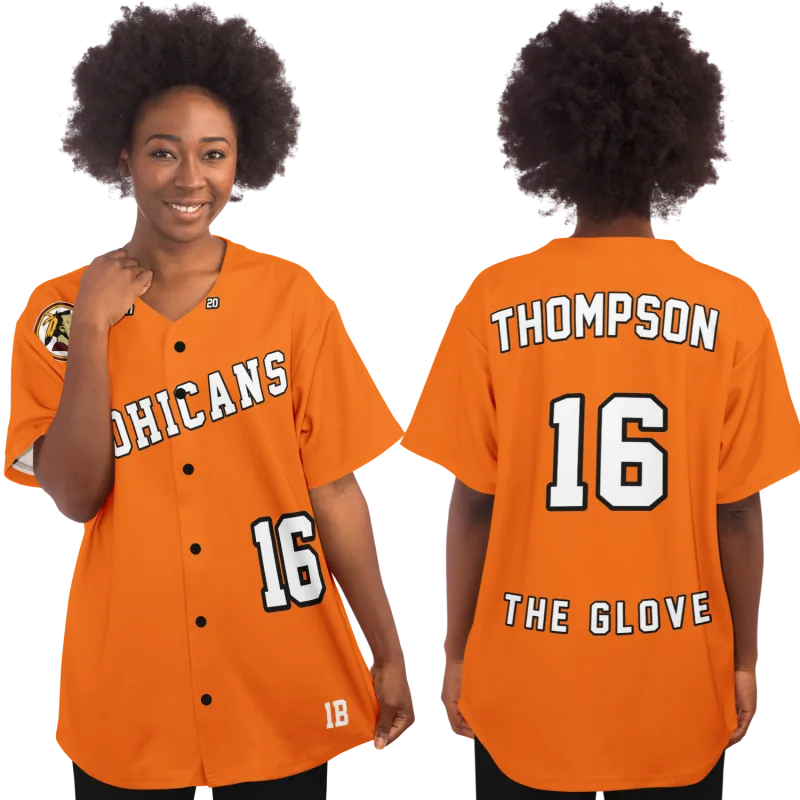
This is why the jersey carries meaning that goes beyond sentiment. It's a physical object connected to physical memories. When you see your name and number on that fabric, your body remembers something your conscious mind can only approximate.
The Last Time You Took the Uniform Off
Nobody tells you which game is going to be the last one. That's the part that catches former athletes off guard when they talk about it years later. Not the final score. Not the season record. The fact that the ending arrived without a warning label. You suited up for the last time the way you had suited up a hundred times before, with no idea you were doing it for the last time.
Senior night tries to make it official. There's a ceremony, a walk with your parents, maybe a framed photo or a bouquet that feels too formal for what's actually happening. The underclassmen stand in a line and clap. Coaches say a few words into a microphone, and somebody hands you something you'll keep in a drawer for the next twenty years. The strange part is that the ceremony says this is the end while you are still dressed, still warming up, still about to play. The ending gets announced before it actually happens, and the gap between those two moments is disorienting.
Then there's the last time you take the uniform off. Not the last game. The last time you peel it off in the locker room and it stops being yours, when you fold it or hang it or just drop it on a bench knowing you won't put it back on. Or the last time you walk out of a gym after everyone has gone: lights half-off, bleachers empty, the floor still squeaking faintly under your shoes. The smell of it, the quiet, the sense that something enormous just happened in a room that now looks completely ordinary.
Because that's what it was. A room full of ordinary objects that held something extraordinary for four years and now holds nothing.
And this is the part that reorganizes everything you remember. The bus rides, the rituals, the coach's voice, the early morning practices. None of it was ever really about the games. It was about belonging to something with a clock on it. You only get the ending once. Most former players don't know they're asking what happens to the athlete you were until the uniform comes off for the last time and the answer stops being obvious.
Your jersey is still out there waiting.
Design yours in minutes and see your name and number exactly the way you remember it.
Frequently Asked Questions
What makes high school sports experiences so universally relatable across different sports?
High school athletes share far more in common than the sport they play. The structure of team life — the daily practice, the coach relationship, the bus rides, the roster dynamics — creates nearly identical psychological and social experiences across sports. The specific skills differ completely; the emotional architecture is remarkably consistent. Research from the National Federation of State High School Associations consistently shows that former athletes cite these shared social and emotional experiences — not athletic achievement — as the most lasting impact of high school sports participation.
Why do high school sports memories feel so vivid even decades later?
Emotional intensity and physical experience together create exceptionally durable memories. High school athletics delivers both simultaneously — the pressure of performance, the physical demands of the sport, the social stakes of team dynamics — all during a developmental period when the brain is highly sensitive to experience-based learning. The memories aren't just stored as information; they're stored with the full physical and emotional context attached. That's why a specific smell, sound, or sensation can return a former athlete to a specific moment with unusual clarity.
Is it normal to feel strong emotion about high school sports memories as an adult?
Completely. The high school athletic experience involves genuine stakes — social belonging, identity formation, physical achievement under pressure — during a period of life when those stakes are felt more acutely than almost any other time. The emotion attached to those memories is proportional to what those experiences actually meant. Former athletes who feel strong nostalgia for their playing days are not being sentimental about something small. They're accurately remembering something that was, by any honest measure, significant.
Why does wearing or seeing a high school jersey still feel meaningful years later?
The jersey is the physical artifact of an experience that was otherwise entirely internal and time-limited. It represents a version of you that existed in a specific context — a team, a season, a set of people — that no longer exists in the same form. Seeing your name and number is an encounter with that version of yourself: not who you are now, but who you were then, in that specific constellation of circumstances. That's not nostalgia in a trivial sense. That's identity. The jersey holds the record of something real.
See also: why high school sports still matter so deeply to adults | the grief that comes with the end of your athletic career | the bus ride home after a loss | what high school sports teach you that nothing else can | why your senior season memories feel so much sharper than everything else