


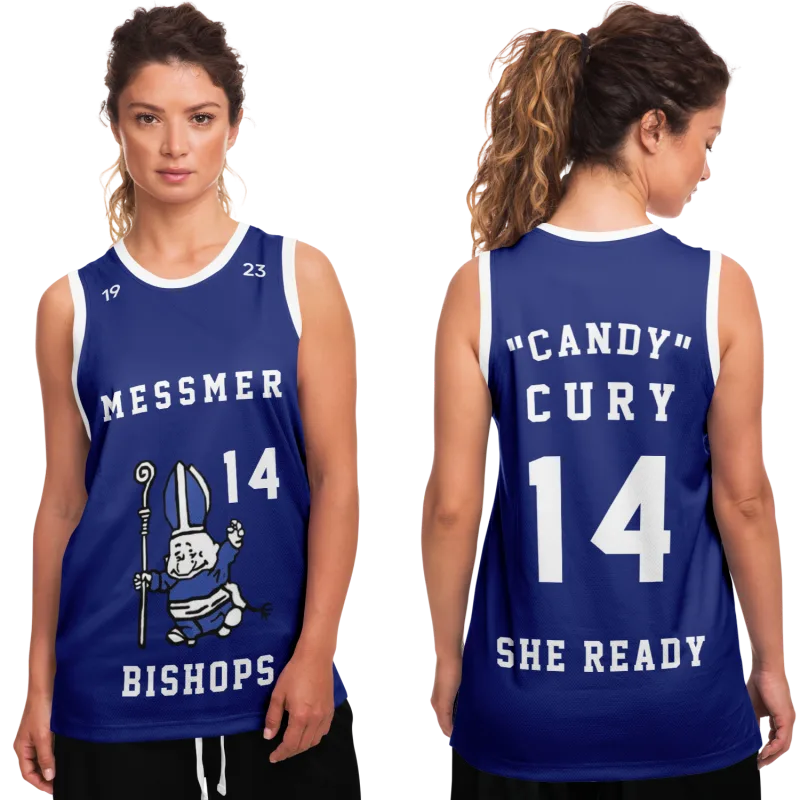
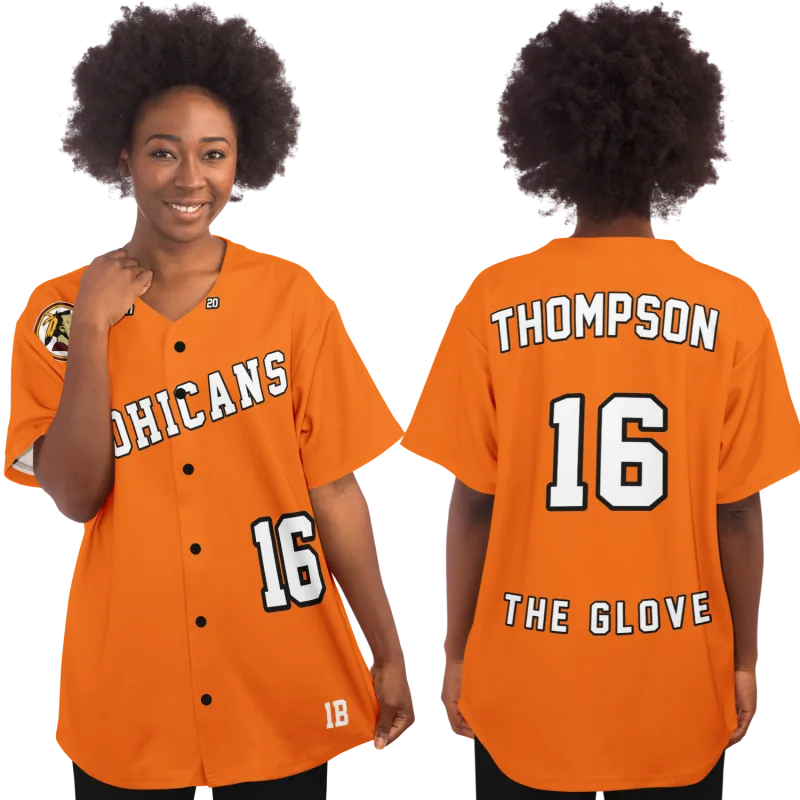


There is a moment every former high school athlete carries around without quite knowing it.
You are at a work event, a reunion, a backyard cookout — and somebody asks what you were into growing up. And before you can think twice, it comes out: "I played [sport]." Past tense. Followed by a half-smile that apologizes for the answer before anyone can react.
If you have ever typed feeling like a has-been after high school sports into a search bar, you already know that half-smile. You have worn it. And somewhere behind the small talk, there is a question that hasn't left: If that version of me was the best version — what does that say about right now?
This article is not going to tell you to move on. It is not going to gently suggest that caring about your high school glory days is something you should have outgrown by now. Most writing on this topic treats the feeling as an embarrassing habit to break — a nostalgia problem dressed up as an identity problem.
That diagnosis is wrong. And the reframe that actually helps is nothing like what most people expect.
The 'Has-Been' Label Rests on a Premise Worth Examining
The phrase has-been carries a specific implication: something that once existed and no longer does. A has-been athlete, under that logic, is someone whose best self was the one in the uniform — and everything since has been a slow departure from that peak.
But that is not what happened to you.
What happened is that the setting changed. The pre-game tunnel, the coach's film sessions, the locker room after a win — those are gone. The person those settings shaped, though? That person drove to work on Monday. That person stayed calm when a project collapsed, led a team through a rough quarter, or showed up to a hard conversation the same way they showed up to a hard practice — because that is what they were trained to do.


The experiences did not end. They transferred.
Research published in the journal Psychology of Sport and Exercise consistently documents that former athletes carry measurable psychological advantages well into adulthood — stronger resilience baselines, more developed responses to adversity, sharper goal orientation. These are not inspirational metaphors. They are trackable outcomes of years spent training, competing, and being held to a standard by people who expected something from you.
The has-been framing makes your athletic identity about the performance — the stats, the scoreboard, the jersey. But the performance was never where the value lived. It was the laboratory. The real output was the person standing here reading this.
What 'High School Glory Days' Actually Means — and What It Doesn't
The phrase has taken on a slightly mocking quality in American culture. It conjures a specific caricature: someone at the end of the bar, fifteen years past graduation, still narrating the regional semifinal like the broadcast just cut to commercial.
That caricature has done genuine damage to how former athletes relate to their own history.
Here is the distinction that actually matters:
The caricature is someone who treats a past performance as a permanent identity — someone whose internal story stopped updating the day the season ended, and who has spent every year since trying to inhabit a context that can no longer exist.
The reality — which describes the overwhelming majority of people searching this topic — is someone who had a genuinely formative experience, who misses something specific and real about it, and who has not yet found the language to honor that experience without feeling like they should apologize for caring.
Those are not the same situation, and they do not call for the same response.
You do not have to choose between pretending high school sports didn't matter and becoming the person everyone avoids at the reunion. There is a third option: understanding precisely what that experience gave you, and carrying it forward with intention rather than embarrassment.
Letters From the Field: What Older Athletes Would Tell You Now
In our experience gathering perspectives from former athletes across multiple generations of sport — from people who played varsity in the late 1970s to those whose senior seasons were cut short by the pandemic — one theme surfaces almost without exception when they reflect on their playing years.
They did not know what they had while they had it.
Not the wins. Not the recognition. The specific, unrepeatable experience of working toward something alongside other people who cared exactly as much as they did.
Here is what some of them would write to a younger version of themselves:
From a former distance runner, now 52:
"You are going to spend years believing that running defined you and then abandoned you. It did not. It taught you how to be alone with discomfort and keep moving through it anyway. You do that in every difficult meeting, every long project, every moment where you have to outwork your own doubt. You just stopped calling it training."
From a former point guard, now 38:
"What you miss most about basketball is not the game itself. It is the locker room — the particular feeling of being completely known by people who were in it with you, who saw you on the worst days and came back the next day anyway. You are going to spend your whole life looking for that. The instinct to look for it is one of the best things the game ever gave you."
From a former high school volleyball captain, now 44:
"You keep apologizing for bringing up volleyball like it is something you were supposed to outgrow. Stop doing that. The person who came out of that gym — the one who learned how to lead people who were scared, how to lose and walk back in the next morning, how to hold a standard for herself under pressure — that person built every good thing that followed. Do not shrink her to make other people comfortable."
From a former offensive lineman, now 61:
"Nobody talks about what it means to do hard, invisible work so that someone else can be the one who succeeds visibly. I spent four years making blocks that never showed up in a box score. My quarterback knew my name. That is still the most satisfying professional work I have ever done, and the ethic it built still operates in every room I walk into. The context changed. The work ethic did not."
From a former competitive swimmer, now 29:
"At 23 you are going to feel like a has-been. You are going to be embarrassed by how much you miss the water. Here is what I need you to hear: missing it is not a weakness. It means it was real. Let it be real. And then find the things in your current life that can matter with that same intensity — because the capacity to care that deeply is yours. You built it. No one can take it back."
Maria C., 34, played competitive softball through her junior year of college before a shoulder injury ended her career. For two years after graduation she was convinced the sport had left her with nothing but a reconstructed rotator cuff and an identity that no longer fit. Then she stepped into a management role and realized something: she was the only person on her team who already knew how to run a film-session-style debrief, because she had been breaking down pitching footage since she was sixteen. "My entire coaching philosophy," she says, "came straight from my high school pitching coach. I just had to stop filing it under 'sports stuff' and start seeing it as leadership. The material was always there."
Moving On From High School Sports Is Not the Same as Moving Away From Yourself
This is the reframe that most writing on this topic never quite reaches — and it is the one that actually holds up under pressure.
Moving on does not mean moving away from.
Every meaningful life transition involves integrating a previous identity, not discarding it. The college graduate does not stop being a learner — they become someone who learned how to learn. The new parent does not stop being an individual — they become someone whose sense of self expands around a new center. The former athlete who stops competing does not stop being an athlete. They become someone whose athletic identity needs a new form of expression.
The discomfort is not a signal that the identity is over. It is a signal that the identity has not yet found its next container.
That container looks different depending on the person:
- Recreational leagues, endurance events, or competitive fitness — a new arena for the same drive
- Coaching or mentoring — giving back the thing that was given to you, in the same spirit it was offered
- The workplace, the gym, the standard of preparation brought to every high-stakes moment — athletic discipline operating in a completely different field
The former athlete value was never stored in the sport itself. It was built through the sport and it lives in you. You carried it off the field the last time you walked off — even when no one handed you anything to mark the moment.
A Reframe That Does Not Require You to Pretend
Sports psychology uses the term athletic identity to describe the degree to which a person organizes their sense of self around the athlete role. For high school athletes — especially those who played at a competitive level, or for whom sport was the central organizing feature of their social world — that identity is often deep and genuinely structural.
When competitive sport ends — and for most people it ends without ceremony, without transition, without anyone acknowledging that something significant just closed — that identity does not dissolve. It becomes unmoored. Fully present, looking for somewhere to land.
The has-been feeling is almost always unmoored athletic identity. Not a smaller self. Not a past-peak self. An identity that has not yet been reattached to something that can hold it.
The athletes who move through this most effectively tend to do two things:
-
Name the loss with precision. Not "I miss sports" — that is too broad to work with. "I miss the specific experience of being accountable to eleven other people who wanted this as much as I did." The more exactly you can name what you miss, the more directly you can go looking for it.
-
Trace the transfer on purpose. Sit down and actually map where athletic training shows up in your current life — not as a metaphor but as a literal behavioral inventory. The way you prepare before something high-stakes. The way you respond when something fails. The standard you hold for your own effort when no one is watching. These are athletic behaviors in different clothes. Naming them is not nostalgia. It is accurate accounting.
The discipline you built between fourteen and eighteen is not archived. It is running right now. You just have not been giving it credit.
Your Jersey Is Still Out There Waiting.
Design yours in minutes and see your name and number exactly the way you remember them — a tribute to the athlete you were and the person that athlete built.
Frequently Asked Questions
Is it normal to still feel a strong connection to your high school athletic identity years later?
Completely normal — and far more common than most people acknowledge out loud. Sports psychologists recognize that for athletes whose sense of self was deeply organized around their sport, the end of a playing career creates a genuine identity transition, not just a schedule change. The feeling is not a failure to mature. It is evidence that the experience was formative in a meaningful way. The goal is not to stop feeling like an athlete. It is to understand what that identity actually contains and find current expressions of it that fit your life now.
How do you stop measuring yourself against who you were as a high school athlete?
The comparison trap usually comes from applying the wrong metric — measuring your current life by visibility, performance stats, or the particular social standing that came with being a varsity athlete. The more useful move is to stop comparing contexts and start tracing competencies. Your high school self had a specific setting — organized competitive sport — that your current life does not. But the competencies that setting built are still operational: discipline, resilience, team orientation, the ability to perform under pressure. Measure those. They are not in the past.
What do you do when your entire social world was built around high school sports and that community is gone?
This is one of the most specific and least-discussed losses that follows the end of a playing career. The team community — the particular closeness of people who have been through hard things together — is genuinely difficult to find outside of sport. The athletes who navigate this most effectively are the ones who actively build contexts capable of producing similar bonds: competitive recreational leagues, coaching roles, group training environments, or any setting with shared stakes and shared accountability. The community does not have to be a sport. It has to have the underlying structure that made the sport feel like belonging.
Is it immature to still care about your high school sports career in your thirties or forties?
No. And the fact that the question feels necessary suggests you have absorbed a cultural message that is not serving you. Caring about a genuinely formative experience is not arrested development. It is honest acknowledgment of something that shaped you. The people who seem to have moved furthest past their playing days are not always the most mature — they have often just found more socially acceptable ways to suppress an identity that does not have a clear civilian outlet. You do not have to lead every conversation with it. But you also do not owe anyone an apology for the fact that it mattered.
See also: the grief of losing your athletic identity after high school | mourning the end of your athletic career at 18 | why high school sports still matter to adults