

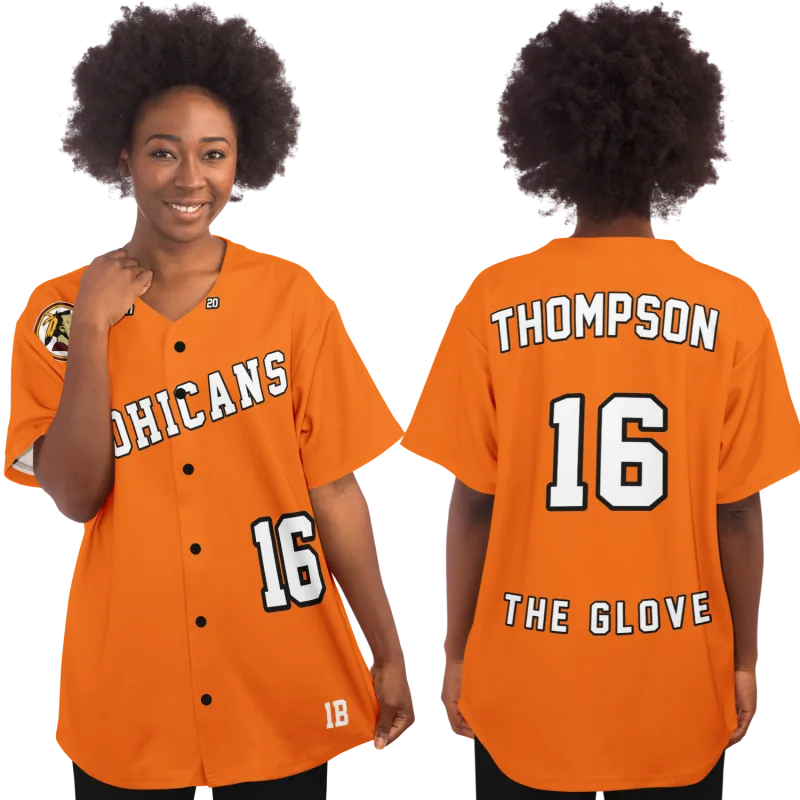
There is a moment every hockey player remembers with unreasonable precision.
The coach reads the roster. Your name is on it. Someone tosses you a jersey (your custom hockey jersey, with your number on the back, your name arching over it in stitched letters) and for a second you just hold it. You don't immediately put it on. You look at it. Because this thing in your hands is not a piece of fabric. It is evidence. Proof that you made the team, that you survived the tryout, that you belong here in this locker room that smells like sweat and rubber and cold metal.
Nobody tells you that moment is going to stay with you for the rest of your life. Nobody needs to.
If you played, you already know.
The Jersey Was Never Just Clothing
Walk into any rink on any given weekend and you will see players warming up in gear that looks nearly identical from a distance. Same skates, same helmets, same gloves. What separates one group from another (what tells you immediately, at fifty yards, who belongs to which team) is the jersey.
But that visual function is the least interesting thing a hockey jersey does.
The jersey is the physical object that marks the transition from hopeful to chosen. In youth hockey, in rec leagues, in junior programs, in college rosters, across every level where someone had to earn their way in, the jersey is the artifact of that earning. You didn't buy it. You didn't get it because you showed up. You got it because a coach, a program, a team decided you were good enough to wear it.
That distinction matters more than most sports outside hockey tend to understand.
Hockey culture has always taken the jersey seriously in a way that other sports sometimes don't. Part of this is practical: the gear is expensive, the ice time is scarce, and roster spots are legitimately limited. A hockey team cannot simply add a player the way a pickup basketball game can. Someone has to be cut. Which means everyone who makes it knows, viscerally, that someone else didn't.
The jersey commemorates that. Wears it quietly in every thread.
In my experience as a former player, and from talking with former players across youth hockey, high school, and competitive junior programs, the moment of receiving the first team jersey comes up more consistently than almost any other shared memory. Not the first goal. Not the first win. The jersey.
Why Hockey Players Say Sweater Instead of Jersey
Hockey players say "sweater" instead of jersey because the first hockey sweaters actually were sweaters — knit from wool, long-sleeved, and worn to keep a player warm on a cold sheet of ice. The name outlived the fabric. Long after teams moved on to synthetic materials, the word stayed, and it carried the whole culture with it.
Montreal was the last NHL team to wear a genuine wool sweater, finally leaving the fabric behind after the 1970-71 season. By then the term was already fixed in the language of the game: you don't pull on your jersey, you pull on your sweater — the way you pull on your number, your name, and everything that came with earning both.
For someone who grew up in the game, "sweater" is more than vocabulary. It is one of the words that separates the people who watched hockey from the people who played it.
What the Back of the Jersey Said About You
Before your name went on the back, it was a number.
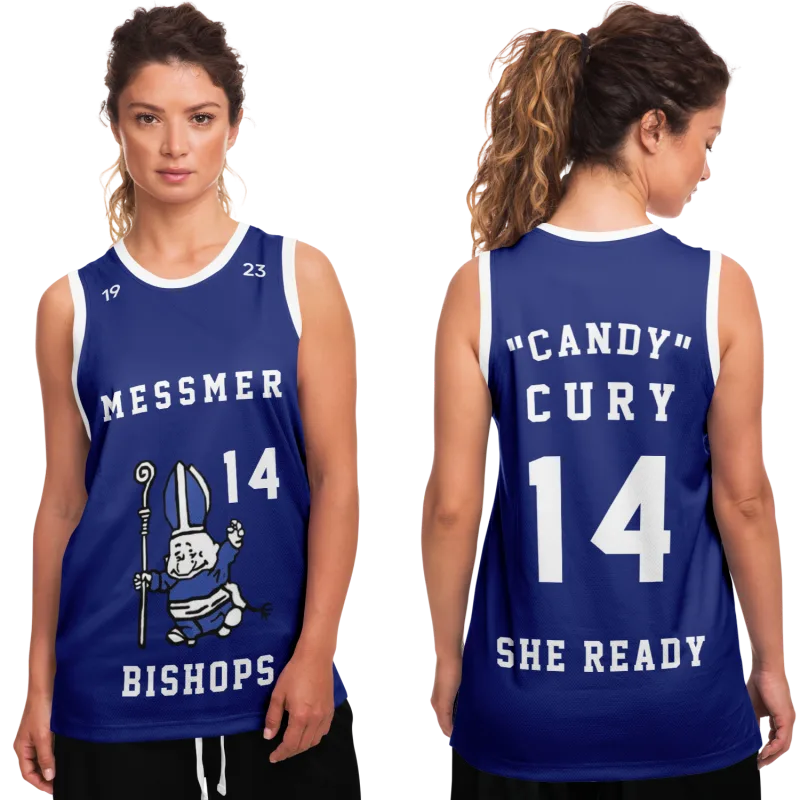
And hockey players have a relationship with their number that borders on superstitious. There is real psychology behind what your jersey number says about you. Certain numbers carry weight: not just the famous ones inherited from legend, but personal ones accumulated from years of identifying yourself that way. The kid who wore 14 every season from mites through bantam will tell you, without hesitation, that 14 was theirs. That it meant something specific and irreplaceable.
When a custom jersey carried both, your number and your name, it collapsed two kinds of identity into one object. The number was who you had been through every level up to this point. The name was who you were proving yourself to be right now, on this team, in this season.
Every former athlete remembers the first time they saw their own name across someone's shoulders in a sport they cared about. Even if it was your own jersey. Maybe especially if it was your own jersey.
There is something almost surreal about seeing your name formatted in athletic block letters, flanked by a number you've claimed as yours. It looks like you belong in a story worth telling. It looks official in a way that nothing else you own quite looks.
That is by design. It is what the jersey is for.
The Locker Room Before the Game
If you played organized hockey at any level, you know the locker room in a way that people who didn't play cannot fully access through description.
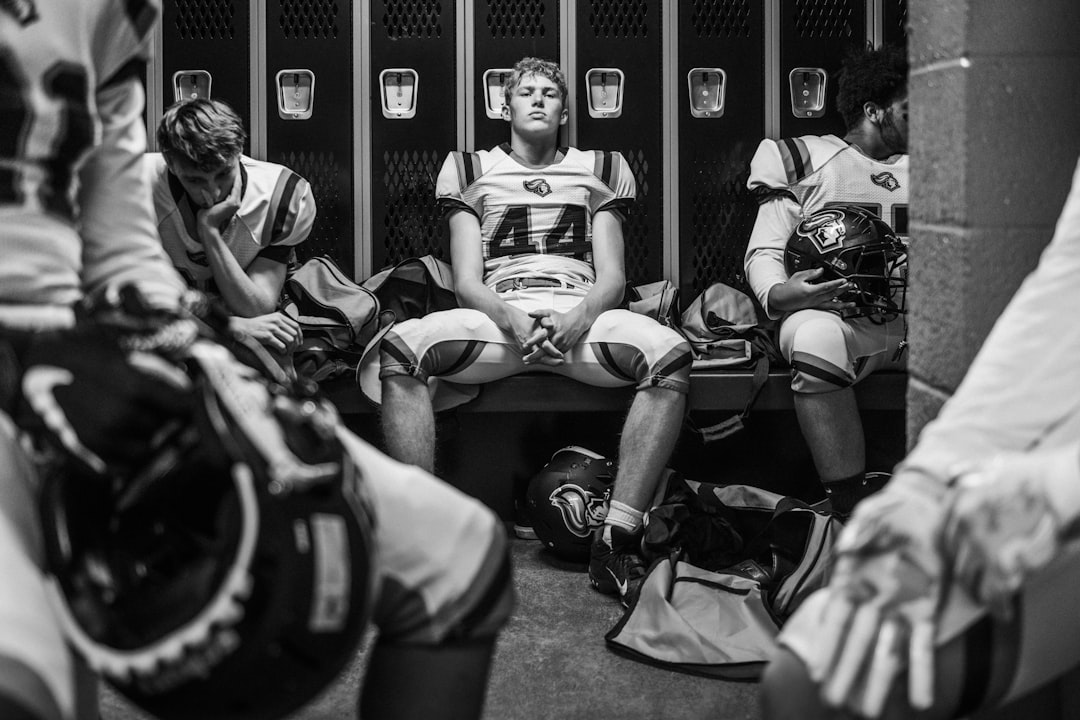
The pre-game locker room has its own physics. Everything slows down and sharpens at the same time. The smell of tape and skate leather. The specific rhythm of someone working their laces. The conversation that is and isn't conversation — the half-sentences, the jokes that aren't quite jokes, the silence that everyone understands means something.
And in the middle of all of it, the jersey.
Pulled on over pads, smoothed down, the number visible in the mirror above the sink. If your program had names on the back, someone behind you was wearing yours. You were wearing someone else's. Which sounds strange until you realize that was exactly the point: the locker room was where the individual became part of something with a shared identity.
The jersey was the mechanism of that transformation.
Marcus T., 34, Former High School Hockey Captain
Marcus played four years of varsity hockey in Michigan, the kind of program where making the team as a sophomore meant something you didn't take lightly. He still has the jersey from his senior season — the one with the captain's C sewn on the front — folded in a plastic bin in his garage. His wife has asked him twice whether he's ready to do something with it.
He is not.
"It's not about the hockey anymore," Marcus told our team when we asked him about it. "It's about who I was when I earned that. I was somebody's captain. The jersey is the only thing I have left that still proves that."
He ordered a custom jersey through iPlayedFor last fall — same number, same name, same color scheme — framed it, and hung it in his home office, which is where framing and preserving a jersey you earned really pays off. The original stays in the bin. The new jersey is the one he's willing to let people see.
What "Earning Your Spot" Actually Required
Hockey is one of the sports where the path to a roster spot is genuinely uncomfortable in ways players rarely romanticize until years later.
Tryouts in hockey are exhausting on purpose. Coaches are watching skating efficiency, edge work, board battles, read of the play — all simultaneously, across a sheet of ice moving at full speed. You cannot fake competence in a hockey tryout the way you might be able to in a sport with slower or more isolated evaluations. Every weakness is visible. Every hesitation costs you.
What this produces in players who make it is a specific kind of quiet pride that doesn't need external validation, a long way from the nerves of what it's like to make the team for the first time. The person who survived the cuts and got the jersey knows exactly what they went through to get it. They don't need anyone to tell them it was hard. They were there.
In my experience as a former player, this is part of why hockey players tend to hold their team jerseys with unusual reverence compared to players from some other sports. The jersey represents not just belonging, but the willingness to be evaluated and found sufficient. That combination (belonging + sufficiency) is psychologically powerful in a way that carries well past the last shift.
The culture of competitive hockey reinforces this through tradition. The handshake line after a playoff loss. The first-to-the-ice tradition in some programs. The unwritten rules about what you do and don't say in the locker room after a loss. All of it accumulates into a specific character that players internalize and carry forward into everything they do after the sport ends.
The jersey is the most tangible piece of that character. It is the object that you can still hold.
Why the Jersey Stays With You
Former athletes carry their sport differently than non-athletes carry most other formative experiences.
Part of this is physical: the sport happened in your body, in your muscles, in your balance and reflexes and pain tolerance. You cannot separate the memory from the sensation. A former hockey player, decades out from their last game, will feel their edges instinctively on ice they have no business skating confidently. The body remembers what the mind only partially holds.
But the jersey is different. It is the object-level memory of the sport — the thing you can still see, still touch, still hold in your hands the way you held it in that locker room before the game started.
Research on material memory and identity (the field that examines why humans assign significance to physical objects) consistently finds that objects which marked transitions in identity (graduation, achievement, belonging) are retained and valued at rates far exceeding their economic worth. A hockey jersey that cost a program $80 to produce may be the most psychologically significant object in a former player's possession.
Game-worn jerseys earn that status because they are, literally, one of a kind. The Hockey Hall of Fame describes the jerseys in its collection as "battered and bruised, ripped and torn, stitched and stained" — every one a physical record of a specific player's season. And that meaning has followed players to the very end. When Don Johns, who played a single game for the Montreal Canadiens in 1966, died, his No. 25 sweater was placed beside the altar at his funeral. The Canadiens' alumni director saw the same sweaters at the funerals of other former players and said it was "amazing how proud these men were of their short time with the Canadiens." One game. A lifetime of identity.
This is not sentiment. This is architecture. The jersey was doing real identity work during the years you wore it, and it continues doing that work as an artifact because the identity it represents has not disappeared. It just doesn't have a locker room to go to anymore.
The Name on the Back Was Always Yours
One of the realities of custom team jerseys is that they create a kind of document of a specific version of you.
Your name, at the age you played, in the program you were part of, with the number you claimed. That document captures something specific — not who you are at every point in your life, but who you were in that particular crucible, on that particular team, in that specific season of your athletic life.
For some players, that version of themselves is the one they are proudest of. Not because adult life hasn't produced real achievements, but because the clarity of athletic identity (what you were trying to do, whether you succeeded, what it cost you) is rarely replicated in the more complicated terrain of adult roles.
On the ice, you knew who you were. You knew what you were responsible for. You knew when you'd done it well. The jersey was the uniform of that clarity.
Bringing that back, through a custom piece built the way you remember it, is not nostalgia exactly. It is more like acknowledgment. A way of saying: that version of me was real, and it mattered, and I want it present in my current life in a form I can look at.
What Custom Hockey Jerseys Mean to the Athletes Who Order Them Now
When former players order a custom hockey jersey today — whether for a beer league team, a charity game, a wall display, or simply to have it — they are almost never ordering fabric.
They are ordering the confirmation that the thing happened. That they played. That they had a number. That their name went on the back of something that meant something to a locker room full of people who knew exactly how hard it was to get there.
The quality of the jersey matters to them because the quality of the original mattered. A jersey that looks cheap communicates that the thing it represents was cheap. Former athletes do not feel that way about what they went through to earn their spot, and they will not accept an object that implies otherwise.
This is why players who come back to the sport for recreational leagues treat their jerseys with the same seriousness they did the first time. The beer league game may be lower stakes. The jersey is not lower stakes. The jersey is still the jersey. It still carries the name. It still carries the number. It still carries what those things have meant across every season the player has identified with them.
The culture of earning your spot on the ice does not expire when the competitive career ends. It goes into the object. It stays there.
Your jersey is still out there waiting.
Design yours in minutes and see your name and number exactly the way you remember it.
Frequently Asked Questions
What makes a hockey jersey feel authentic rather than generic?
The construction details matter more than most people expect. Authentic-feeling jerseys use tackle twill lettering — the raised, stitched numbering and name blocks — rather than heat-applied decals. The weight of the fabric, the quality of the mesh panels under the arms, and the accuracy of the color matching all contribute to whether a jersey reads as legitimate or as a costume. Former players in particular notice the difference immediately, because they spent years wearing the real thing.
Can a custom hockey jersey be made to match an old team's design exactly?
Yes, with the right information. Custom jersey builders can work from color codes, logo files, or even photographs of old jerseys to rebuild a specific design. The more specific the reference material — exact color hex values, historical design documentation, high-resolution photos of the original — the more accurate the result. Some players work from memory and a few reference photos; others have the original jersey in hand and want something they can actually wear without risking the original.
Is it worth ordering a custom jersey for a recreational or beer league team?
Emphatically yes, and not just for the obvious reason that matching jerseys help on the ice. The culture argument is just as strong: recreational hockey is populated almost entirely by former players who took the sport seriously at some level. Walking into a beer league locker room in a well-made, properly customized jersey signals that you still take the sport seriously — that the game means something beyond the final score of a Tuesday night pickup game. That signal matters to other players, even when no one says so out loud.
How long does a quality custom hockey jersey typically last with regular use?
A properly constructed hockey jersey — built for actual ice use rather than display — should last several seasons of regular recreational play with appropriate care. The key variables are the quality of the stitching on number and name applications (tackle twill outlasts heat transfer significantly in game conditions), the durability of the fabric under repeated washing, and the reinforcement at stress points like the collar and side panels. Jerseys intended primarily for display or occasional wear will last considerably longer than those in regular game rotation.
See also: personalized gear hits differently than something pulled off a shelf | what it means to say you played | how athletic identity shapes who you become after the game ends | custom softball jerseys follow the same logic | before you order, make sure you get the sizing right