


You searched for a jersey, saw a number like 48 or 52, and had no idea what it meant. You're not alone. Most people shopping for jerseys today grew up with S, M, L, XL — so when a jersey size chart shows numbers like 40, 44, or 60, it stops them cold.
This guide explains the numeric system simply and completely. You'll know your size before you get to the checkout.
Why Jerseys Use Numbers Instead of S, M, L, XL
The numeric sizing system on jerseys goes back to the mid-20th century, when athletic apparel was sized the same way dress shirts and suits were — by chest measurement in inches. A size 44 jersey was literally built for a 44-inch chest. Straightforward. This tradition has roots in standard athletic apparel sizing practices that date back decades before S/M/L/XL became the retail norm.
As consumer clothing shifted toward the simplified S/M/L/XL system in the 1970s and 80s, most casual apparel followed. But authentic athletic jerseys — the kind worn by real teams, organized leagues, and now commemorative manufacturers — held on to the numeric system. Why? Because numeric sizing is more precise. It gives manufacturers a specific dimension to cut to, which matters when you want something that fits like a real jersey and not a generic shirt.
Today, if you're looking for a jersey that carries the same feel as what you wore on the field — your name, your number, your school colors — you're going to encounter this sizing system. Understanding it takes about two minutes.
The Numeric Jersey Size Chart (40–60)
Here's the core of the jersey size chart, translated into chest and waist measurements and their closest modern equivalent sizes. Wondering whether a 44 is a medium or large, or what a 52 means in inches? The table below covers every numeric size from 40 through 60.
| Numeric Size | Chest Measurement | Waist Measurement | Modern Equivalent |
|---|---|---|---|
| 40 | 40–41 inches | 32–33 inches | Small / Medium |
| 44 | 42–44 inches | 34–36 inches | Medium / Large |
| 48 | 45–47 inches | 37–39 inches | Large / XL |
| 52 | 48–50 inches | 40–42 inches | XL / 2XL |
| 54 | 51–52 inches | 42–44 inches | 2XL |
| 56 | 53–54 inches | 44–46 inches | 2XL / 3XL |
| 60 | 55–57 inches | 46–48 inches | 3XL / 4XL |
So what does each size actually mean? A size 44 means a chest measurement of 42-44 inches, which is equivalent to a modern Medium or Large. A size 48 means 45-47 inches, equivalent to a Large or XL. Size 52 means 48-50 inches (XL to 2XL), and size 60 means 55-57 inches (3XL to 4XL).
You might notice the chart skips sizes 42 and 46. Those in-between sizes exist in some vintage and European jersey sizing systems, but the standard numeric chart jumps in increments of 4 — 40, 44, 48, 52, 56, 60. If 42 or 46 is your chest measurement, go up one size for that authentic game-day feel.
One thing to know: jersey sizing tends to run slightly larger than everyday clothing. A size 48 jersey has room to layer over shoulder pads or move freely during play. That history is baked into the cut — and fabric matters just as much as the number, which our custom jersey fabrics and fit guide breaks down for former athletes ordering as adults.
How to Measure Yourself for a Jersey
You need two measurements and a flexible tape measure.
Chest: Wrap the tape around the fullest part of your chest, just under your armpits and across your shoulder blades. Keep it level and snug but not tight. That number in inches is your starting point on the jersey size chart.
Shoulders: Measure from the tip of one shoulder across to the tip of the other. This matters more for football-cut jerseys, which are built wider through the shoulders.
If you're right on the border between two sizes — say, 44 inches — go up. Jerseys are meant to have some ease to them. A size 48 on a 44-inch chest will feel comfortable and authentic. A size 44 on a 44-inch chest may feel snug depending on the cut.
Check the full iPlayedFor size chart for a visual reference before you order.
Jersey Size Quick Reference: Height and Weight Guide
What if you don't have a tape measure? You can still find your jersey size using nothing more than your height and weight. While chest measurement is the gold standard, this height and weight lookup gives you a reliable starting point — no tape required.
Use this jersey size chart as a quick reference to answer "what size jersey should I buy?" based on your build and body type.
| Your Build | Height | Weight | Numeric Size | Modern Equivalent |
|---|---|---|---|---|
| Slim/Small | 5'6" — 5'9" | 130–155 lbs | 40 | S/M |
| Average | 5'8" — 5'11" | 155–185 lbs | 44 | M/L |
| Athletic | 5'10" — 6'1" | 180–210 lbs | 48 | L/XL |
| Broad/Stocky | 5'11" — 6'3" | 210–240 lbs | 52 | XL/2XL |
| Big/Tall | 6'0" — 6'4" | 240–270 lbs | 54–56 | 2XL/3XL |
| Plus Size | 6'0" — 6'5" | 270–300+ lbs | 60 | 3XL/4XL |
How to read this table. Find your height and weight combination, then check the corresponding numeric size. This is especially helpful for custom jersey sizing, since you're ordering based on your actual body dimensions rather than guessing at a retail size off the rack.
This approach also works as a football jersey size chart when you're looking at the looser, athletic cut that game-style jerseys have. The room through the shoulders and chest is already built into the size ranges above — so if you're an athletic 6'0" and 200 lbs, size 48 is your sweet spot for both chest and shoulder comfort.
Important caveats. This table is a quick proxy, not a replacement for chest measurement. Two people at 5'11" and 185 lbs may wear different sizes depending on where they carry their weight. If you have broad shoulders or a muscular upper body — common for former football and baseball players — lean toward the next size up. If you'd describe yourself as lean or light-framed, the lower end of your range is probably right.
Borderline? Take the bigger size. If your height and weight place you right between two rows, choose the larger number. A slightly roomy jersey looks and feels authentic — that loose cut is part of the game-jersey tradition. A jersey that's too tight doesn't read as athletic wear; it reads as a mistake.
This height and weight guide works alongside the chest measurement method above. Use both together to confirm your size, and you'll have complete confidence before you place your order.
Player Fit vs. Standard/Regular Fit
When you see numeric sizing like 44 or 52 across different brands, the number represents the same chest measurement — but the fit can feel completely different depending on which cut the manufacturer uses. There are two main fit types you will encounter.
Player fit (also called slim fit or athletic fit) is cut closer to the body. The sleeves are narrower by about two to three inches, and the torso tapers more through the waist. This is the fit you see on authentic on-field jerseys worn by active athletes — it is designed to reduce fabric drag and stay close to the body during play.
Standard fit (also called regular fit or fan fit) is cut looser and roomier throughout. It gives you more space through the chest, arms, and body, which makes it the more comfortable choice for wearing over a hoodie, for layering during cold-weather games, or if you simply prefer a relaxed feel.
Why does this matter for sizing? The same numeric size — say, a 48 — will fit noticeably tighter in a player cut than in a standard cut. If you are ordering a player-fit jersey, you may want to go up one size to get the same level of comfort you would have in a standard fit. If the product description does not specify which fit type it uses, assume it leans toward standard fit — that is the safer default for commemorative and fan apparel. If adult sizing feels nothing like the jersey you wore in high school, our men's custom jersey fit guide walks through why and how to adjust.
Should You Size Up or Size Down?
Most people should size up, not down. Here's the thinking:
If you want the classic look — the kind of relaxed, over-the-shoulder fit that actual game jerseys have — go with your chest measurement size or one above it. Jerseys are not meant to be form-fitting.
If you want a more fitted look — maybe you're displaying it, framing it, or wearing it to a reunion where you want it to sit closer — you can drop one size. But go below your measurement by more than one size and the sleeves and shoulders will pull.
Layering: If you plan to wear anything under it — a long-sleeve shirt, a hoodie — go up a size automatically. Game jerseys were always worn over undershirts and base layers. The fit accounts for that.
When in doubt, pull up the iPlayedFor size chart, enter your chest measurement, and go from there.
Sport-Specific Sizing Notes
Not all jerseys are cut the same way, even within the numeric system.
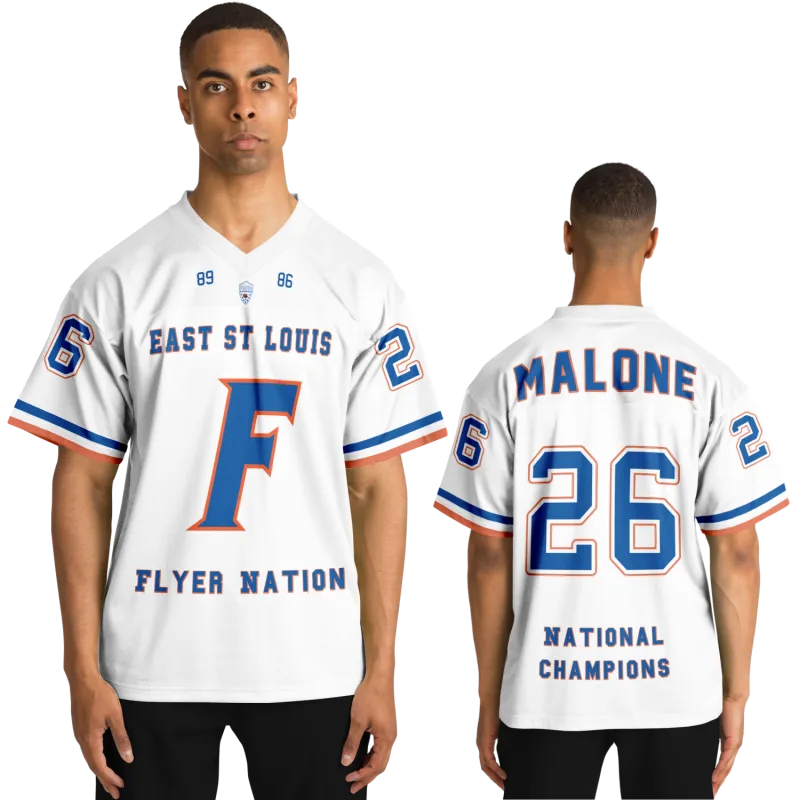
Football jerseys are cut wider through the shoulders and shorter through the body. They're designed to go over pads, which means the torso tends to run roomier than you'd expect. If you played football and remember your jersey as oversized, that's intentional — size up one if you want that same authentic feel. Ordering with shoulders that are bigger than they were at 17? Our custom football jersey sizing guide for adults walks through getting that wider cut right.
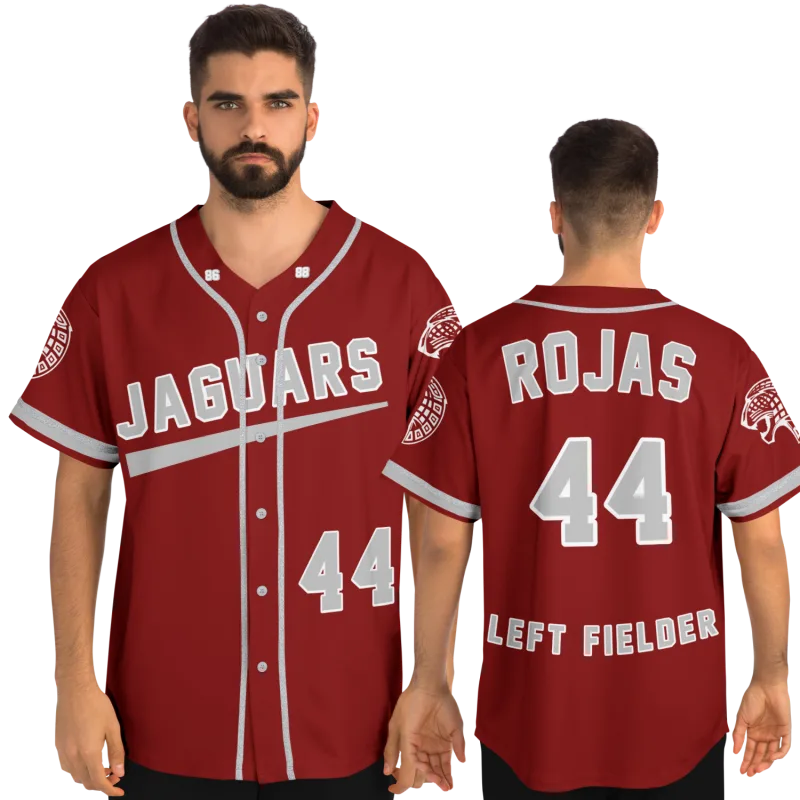
Baseball jerseys are longer in the body and slightly more tapered through the torso. A size 48 baseball jersey will feel different from a size 48 football jersey, even though the chest measurement is the same. Baseball cuts assume you're tucking it in — the longer hem is part of the design.
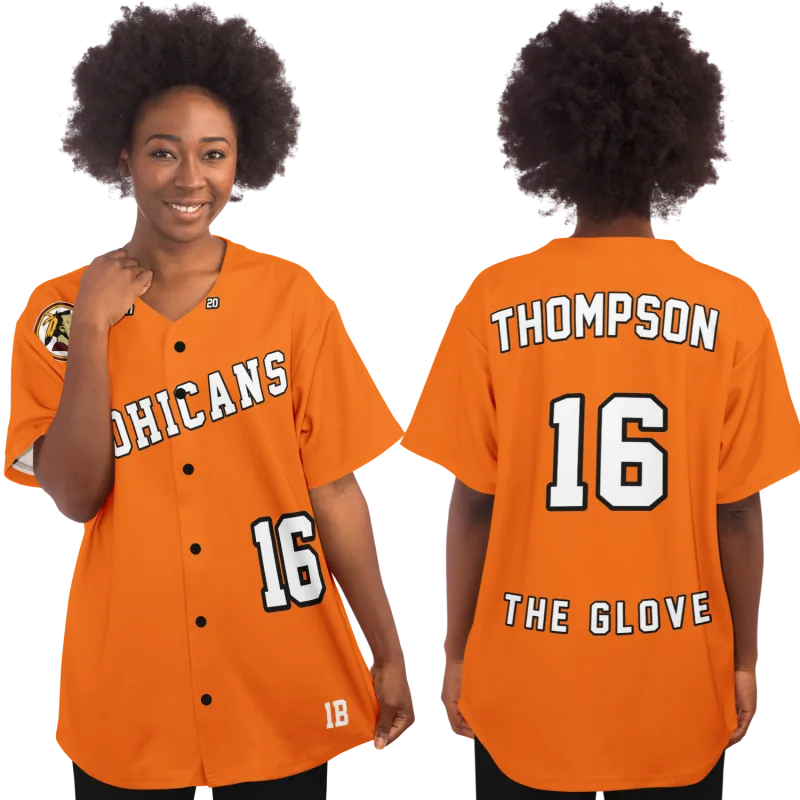
Commemorative jerseys — the kind you'd order to honor your playing days, recognize the coach or teammate who gave everything, or create a custom jersey for a class reunion — follow the same numeric system as game jerseys. For softball players specifically, our detailed guide to custom softball jerseys covers sizing, style options, and design tips specific to the diamond. At iPlayedFor, your jersey is built to the same cut standard used for actual team apparel. When you design it, the sizing you enter maps directly to these chest measurements, so what you order is what fits. Before you finalize your order, our custom jersey quality checklist walks through every detail to confirm — from stitching to color accuracy — so you know your jersey will look right when it arrives.
Frequently Asked Questions
What size is a 48 jersey?
A size 48 jersey corresponds to a chest measurement of approximately 45–47 inches and fits closest to a modern Large or XL. It's one of the most common sizes for adult men who played sports through high school and college.
What size is a 44 jersey?
A size 44 jersey fits a chest of approximately 42–44 inches, equivalent to a modern Medium or Large. It's a good fit for someone who wears a large in everyday clothing but prefers the relaxed jersey feel.
What does size 60 mean in a jersey?
Size 60 is one of the largest standard jersey sizes, designed for a chest of 55–57 inches. In modern sizing, that lands around 3XL to 4XL. If you're a big guy who played on the line, size 60 is where you'll likely land.
What size jersey should I buy for a 42-inch chest?
A 44 is your best starting point. It'll give you a comfortable, authentic fit without pulling across the chest. If you want the looser game-day feel, go to a 48.
What size is a 40 jersey?
A size 40 jersey fits a chest of approximately 40-41 inches and is equivalent to a modern Small or Medium. If you're wondering whether size 40 is a medium or large, it's closer to a small-to-medium — best for lean or smaller frames.
What size is a 42 jersey?
Size 42 is an in-between size that corresponds to roughly a 41-42 inch chest. It's not a standard increment in the most common 40-44-48 chart, but some vintage and European jersey sizing systems include it. If your chest measures 42 inches, a size 44 is your best starting point for a comfortable fit.
What does size 50 mean?
Size 50 is an intermediate size that falls between 48 and 52, with a chest measurement of approximately 47-48 inches. It appears on some jersey models but is less common on standard charts. In modern sizing, it's roughly equivalent to a large to XL.
What size is a 52 jersey?
A size 52 jersey fits a chest measurement of 48-50 inches, equivalent to a modern XL or 2XL. If you have broad shoulders or a stockier build — common for former football and baseball players — 52 is often the right choice.
What does size 54 mean?
Size 54 corresponds to a chest of 51-52 inches and maps to a modern 2XL. It sits between the more common 52 and 56 sizes and is worth checking if you're on the broader end of the XL range.
What does size 56 mean?
Size 56 fits a chest of 53-54 inches, equivalent to a modern 2XL or 3XL. It's a frequent choice for taller, athletic builds and is commonly listed alongside 54 and 60 in extended size charts.
What is jersey size XL in number?
Wondering about the jersey size XL in number? A modern XL maps to a numeric size 48 or 52 — size 48 fits closest to a Large/XL, while size 52 is a true XL-to-2XL. For the 2XL jersey size, look for a size 52 to 56, with 56 (or XXL on extended charts) covering the broadest shoulders. When in doubt, let your chest measurement — not the letter — pick the number.
Do jerseys run true to size?
Jerseys run slightly roomier than everyday shirts — they're cut to layer over a t-shirt or pads, not to hug the body. Match your chest measurement to the numeric size chart above and you'll get an authentic, comfortable fit. That extra room is the point: a jersey that fits like a slim t-shirt doesn't feel like a jersey at all.
Can I wear a hoodie under my jersey?
Yes — and it's one of the most common reasons people size up. If you plan to layer a hoodie or long-sleeve shirt underneath, go one size above your chest measurement. A size 48 chest becomes a size 52 jersey, and the extra room through the body and shoulders makes layering comfortable without looking oversized.
Do these sizes work for kids or youth jerseys?
No. Youth and kids' jerseys use a different sizing system entirely — typically YS through YXL or junior cut sizes — not the adult 40–60 numeric range covered in this chart. This guide is for adult sizing only. If you're shopping for a young athlete, check the youth-specific size chart on the product page.
Sizing a jersey shouldn't be the thing that stops you from owning one. You wore a number for years. You earned it. The number on the back carries the weight of your identity as an athlete — it's more than just a size measurement, and each number carries its own history across every sport. Now you can put it back on.
Start with your chest measurement, match it to the jersey size chart above, and go one size up if you want the real feel. That's it.
If you're working from a yearbook photo of yourself in uniform, you can design your jersey from an old photo with our step-by-step guide to matching your original colors and details.
When you're ready, start designing your jersey at iPlayedFor. Your name. Your number. Your school colors — built to last with colors that never crack, peel, or fade.