
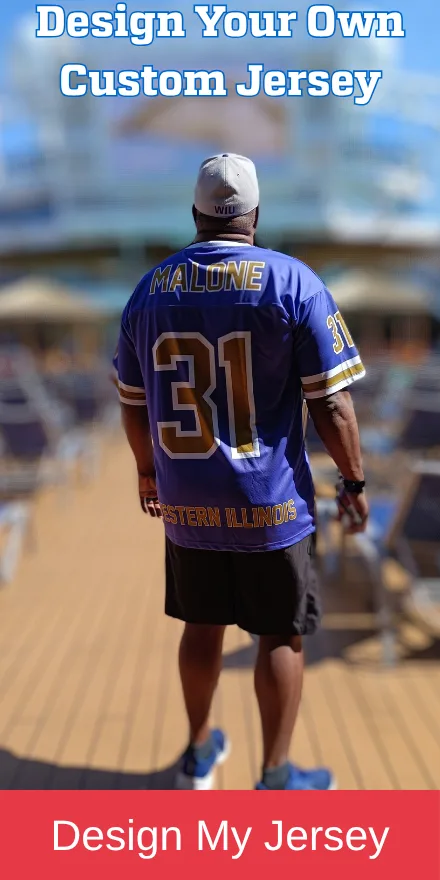
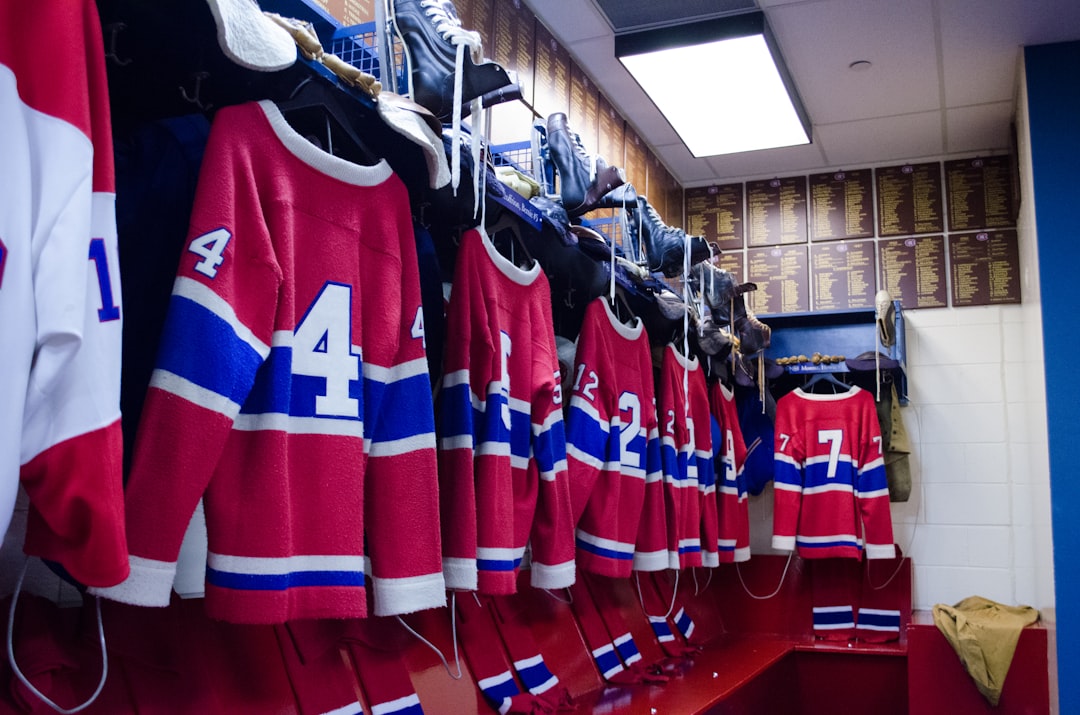
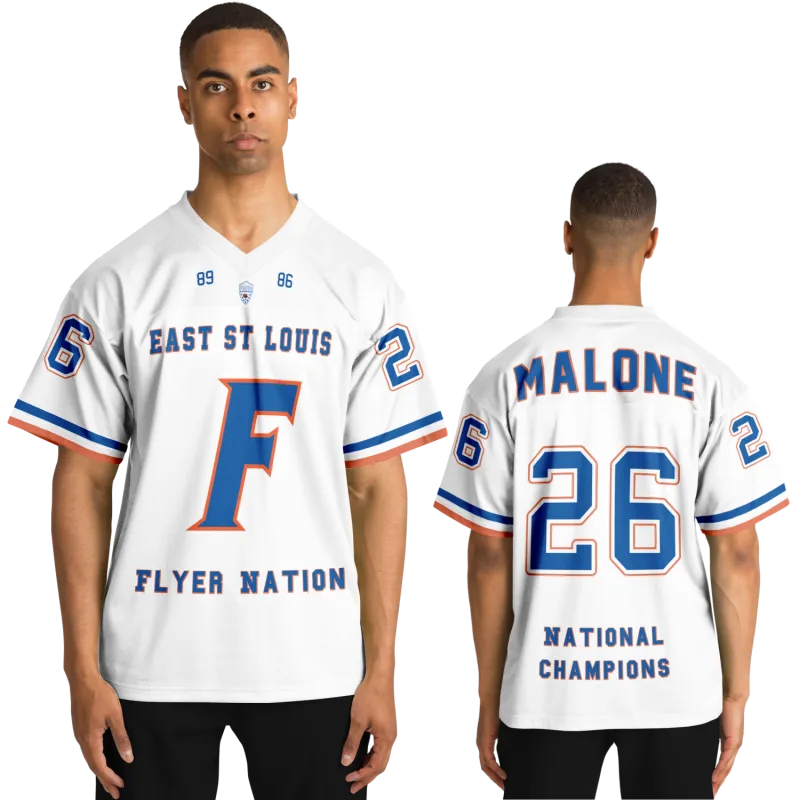
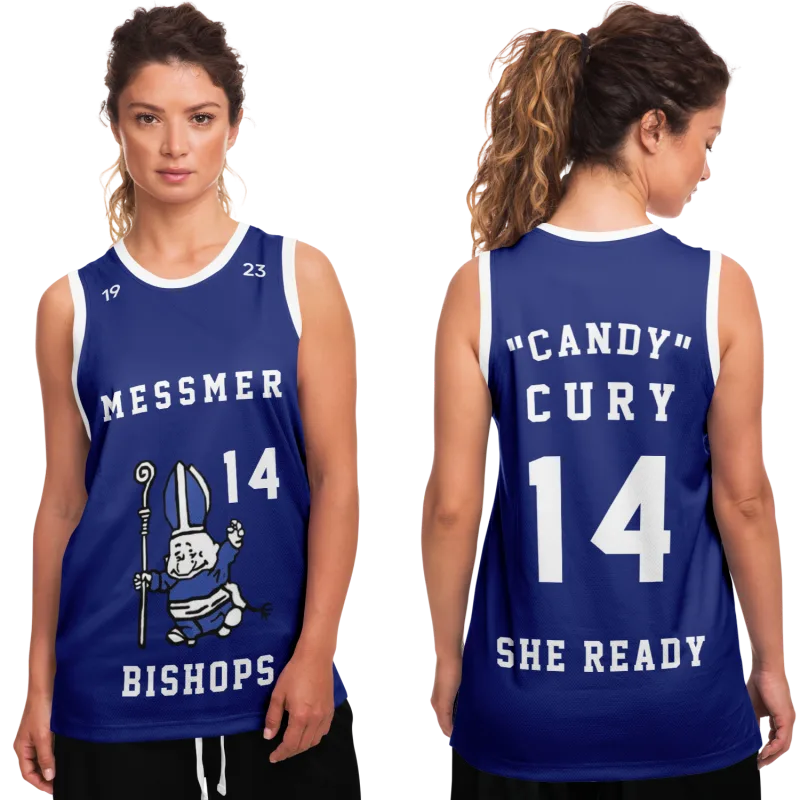
There's a specific moment that almost every former athlete knows.
You're cleaning out a closet, or scrolling through old photos on your phone, or watching a game on TV — and you see a jersey. Your number. Your colors. And something in your chest does a thing it hasn't done in a while.
That's not nostalgia exactly. It's closer to recognition. That was me.
Maybe it happens in the aisle of a sporting goods store, or when your kid tries on a jersey for their own team, or when a group chat resurrects a photo from senior night. The memory is bigger than the garment, but the garment becomes the proof that the memory was real. That's the real reason a custom jersey matters. It is not about reliving a single season; it is about giving the person you became a wearable reminder of the person you were.
If you've been thinking about getting your own custom jersey — your name, your number, the sport you played — and you're not sure how to actually make it happen, this guide is for you. Ordering a single jersey for yourself is its own kind of project, and it helps to know what's different when you're not buying for a whole team. We'll walk through how to customize a sport jersey from scratch, decision by decision, so you end up with something that looks exactly the way it should: like it was made for you, because it was.
Before we walk through the decisions, know this: you do not have to be the athlete who started every game. If you earned a roster spot, wore the colors, and kept the friendships, the jersey belongs to your story. The details matter because your story had details. We will treat them that way.
Why Most First-Time Jersey Orders Go Wrong
Before you start picking colors and fonts, it helps to understand where the process tends to break down — because it almost always breaks down in the same two places.
The first is decision overload. Custom jersey builders give you a lot of choices fast: fabric type, cut style, sublimation vs. tackle twill, number placement, name arc, color fills, outlines, shadow effects. If you don't have a mental framework going in, you start clicking randomly and end up with something that doesn't look like what you remembered.
The second is assumption gaps. Most people assume the platform knows what "standard" looks like for their sport. It often doesn't — or it gives you a generic default that doesn't match the specific look you're going for. A football jersey has different standard number sizing than a basketball jersey. A baseball jersey's name placement follows different conventions than a soccer kit. If you don't bring that knowledge into the builder, the defaults will fill the gaps for you, and not always correctly.
One more quiet trap: people rush the first draft. They choose a template quickly to see something on screen, then fall in love with a placeholder. Once that happens, it becomes harder to make changes. Treat the first draft as a rough sketch, not the final product. The best first draft is slow and unglamorous, but it saves you from rework.
The athletes who get the best results treat the customization process like a design brief — not a shopping cart. They know what they want before they start clicking. This guide gives you that brief.
Step 1: Lock In Your "Source of Truth" Before You Touch the Builder
The single most important thing you can do before opening any jersey customization tool is to identify your visual reference.
This sounds obvious. It isn't. "I want it to look like my old jersey" is not a brief — it's a memory, and memories compress details. What you actually need is a source of truth: a specific, visual reference you can return to when you're making every downstream decision.
How to build your source of truth:
- Find the clearest photo you have of yourself in the original jersey — or the closest equivalent you can locate (team photos, game footage screenshots, old program scans).
- If the original jersey no longer exists or the photo isn't clear enough, find a reference image of the same uniform from the same era. Team websites, athletic department archives, and sports photo databases often have high-resolution historical images.
- Write down the specific details you can confirm visually: exact colors (note whether they look more matte or shiny in photos), number font style, whether the name is arched or straight, sleeve stripe patterns, any logo or patch placement.
That written list becomes your checklist for every step that follows. Every time the builder offers you a choice, you return to the list. This is what keeps the final product from drifting.
Every former athlete remembers the feel of their own uniform — but the details that make it look right are more specific than memory alone can hold. Write them down.
If you wore a home and away version, choose the one that carries the strongest memory. Do not try to average the two. A source of truth has to be singular, even if you eventually build another jersey later. Mixed details usually produce a jersey that feels familiar but not quite right.
If the jersey you're rebuilding was a specific school uniform, it's worth seeing how the same process plays out for your sport before you start clicking. Football players can follow the reference-first walkthrough for recreating a high school football jersey, and basketball players can use the matching step-by-step for rebuilding a high school basketball jersey.
Step 2: Choose Your Fabric and Construction Method
This is the decision most guides bury in fine print. It matters more than almost anything else, and it's worth understanding before you commit to a platform.
There are two primary construction methods for custom jerseys:
Sublimation printing fuses the design directly into the fabric using heat. The colors are part of the material — they don't crack, peel, or fade with washing. Sublimation is the standard for athletic wear today because it's durable, lightweight, and allows for complex multicolor designs without adding weight or texture to the fabric. Here's why it doesn't crack: the design is printed onto the fabric before the panels are cut and sewn, so the ink becomes part of the fiber instead of a layer sitting on top. Printing onto an already-finished garment leaves white cracks and gaps at the seams and stretch points — one reason sublimation is the default for a jersey you'll actually wear. If you're recreating a modern-style jersey or want full-color graphics, sublimation is the right choice.
Tackle twill and embroidery is the older method — the one most jerseys from the 1980s and 1990s used. Numbers and letters are cut from twill fabric and sewn onto the jersey, creating that raised, textured look and feel. If you're recreating a jersey from that era and authenticity to the tactile experience matters to you, tackle twill is worth seeking out. It typically costs more and has longer production times, but for certain athletes and certain memories, it's the only answer. Either way, the stitching and fabric are what decide how a jersey holds up over time — here's what to look for in stitching, fabric, and numbers before you order.
Both methods start with fabric, and the fabric itself has changed dramatically since the uniforms most of us actually played in — here's what to look for when you order today.
For fabric weight and feel: Most custom jersey platforms offer mesh (standard athletic, breathable, lightweight) and heavier jersey knit options. Mesh is almost always the right choice for a jersey you'll actually wear. Heavier fabrics are better suited for fan wear or off-field display pieces.
Ask yourself how you plan to use the jersey before you choose a fabric. A jersey that will be worn to tailgates, reunions, or pickup games should prioritize breathability and stretch. A jersey that will live on a hanger or in a frame should prioritize visual weight and how the colors sit against the backdrop. The same design can look completely different on lightweight mesh versus a heavier knit, so this is not a detail to skip.
One note on sizing: athletic jersey sizing is not the same as retail shirt sizing. Most custom platforms provide a size chart — use it. Measure your chest and cross-reference rather than guessing based on your usual t-shirt size. Former athletes especially tend to assume their playing-days size still applies. It may not, and it's a much easier fix before you order than after — here's what to know about sizing when your shoulders are bigger than they were at 17.
If you are between sizes, think about how you want the jersey to fit. Modern athletic jerseys wear closer to the body, but a relaxed fit gives you room across the chest and shoulders. Many former athletes prefer one size up from the chart recommendation if they plan to layer a hoodie underneath. Your playing-days jersey may have been tight across the pads; today it can be cut for the way you actually live.
Step 3: Build Your Design Layer by Layer
This is where most people jump in immediately and where patience pays off. The most accurate custom jerseys are built in a specific sequence — not by clicking around until it looks right, but by working through the design systematically.
Layer 1: Base color and body template
Start with the body. Select your primary jersey color first, then your secondary. If your team had a color-blocked design — different panels on the sides, sleeves, or yoke — map those out before adding any text or numbers. Getting the base wrong means everything you layer on top of it will also look off.
A common mistake is starting with the number before the base color is set. The number is emotionally central, but visually it sits on top of the base. Lock the base first so the number contrast reads correctly. If you are unsure about the exact shade, compare the builder's swatch to your source photo in natural light, then check again on a second screen. Color shifts on phones and monitors are real.
Layer 2: Number
Your number is the most visually dominant element on a jersey. Get this right and the rest follows easily. Key decisions:
- Font style: Block numbers are standard for most football and baseball jerseys. Outlined fonts with a contrasting border are common in basketball. Colleges and high schools often used custom fonts — this is where your source of truth photo earns its keep.
- Color and outline: A single-color number with one outline is clean and classic. Two outlines (a primary color and a shadow color) add depth and match the look of many collegiate and professional jerseys from the 1980s–2000s. Three outlines starts to look busy — use this only if your reference photo confirms it.
- Size and placement: Chest number (front, center, typically 8–10 inches for football/basketball) and back number (typically 10–12 inches) follow sport-specific conventions. If you're unsure of the standard for your sport, look at your reference photo and measure proportionally.
One useful trick is to enlarge the preview and look only at the number for thirty seconds. Then look away and ask yourself what you remember: the shape, the color, the outline, the thickness? If any one detail pulls your attention for the wrong reason, go back and adjust it before you move on to the name.
Layer 3: Name
Name placement depends on the sport and era.
- Football and basketball: name typically appears on the back, above the number, in a straight or slightly arched line.
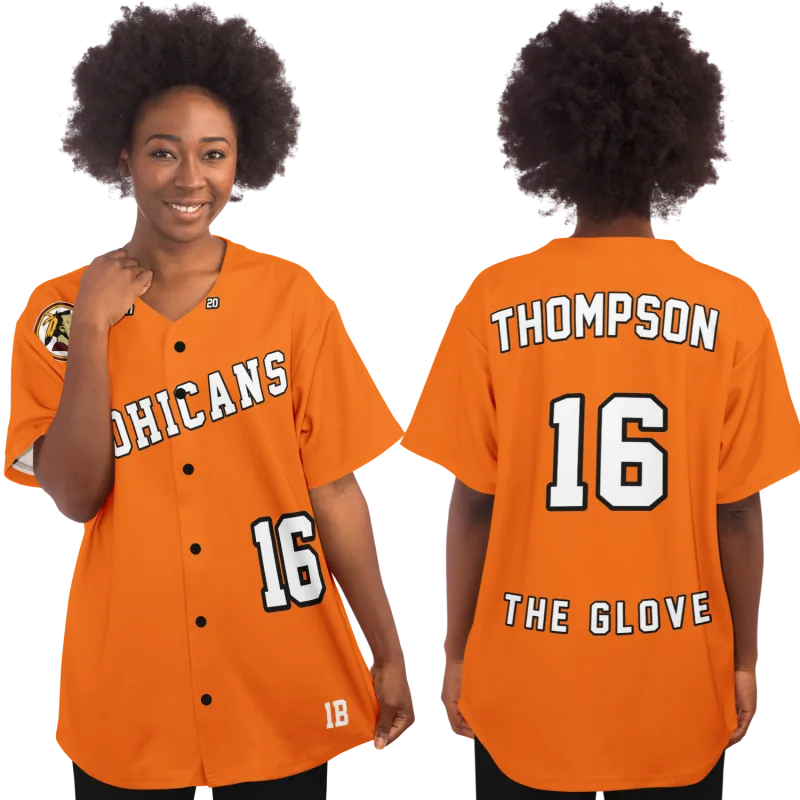
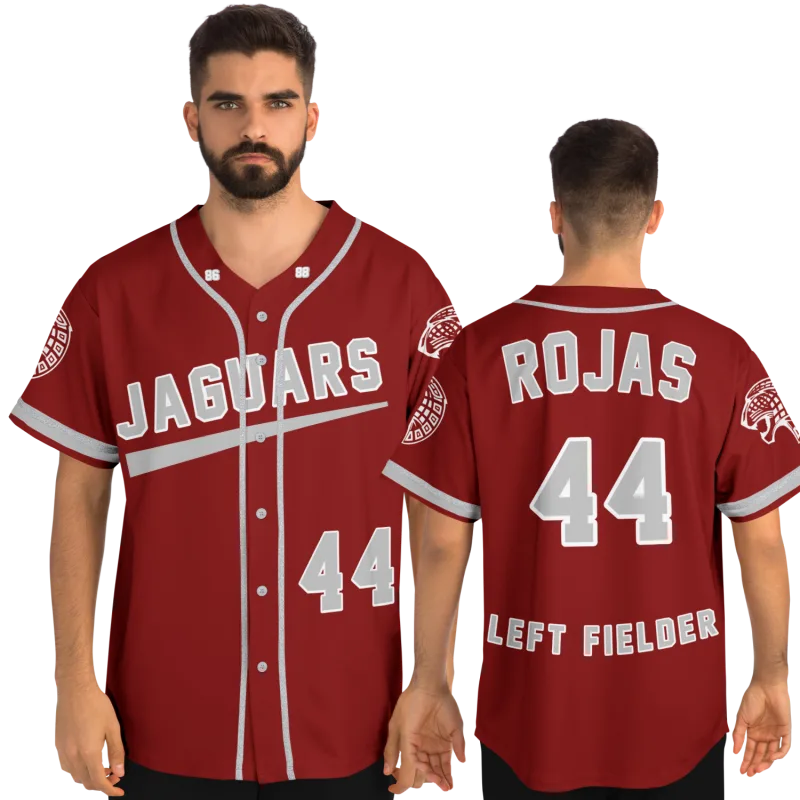
- Baseball: name appears on the back above the number, often in a script or block font that matches the team's typeface.
- Soccer kits: name appears above the number on the back, usually in a condensed block or gothic font.
Name height is often 2–3 inches for back names. Front names (used in some sports and eras) are typically smaller — around 1.5–2 inches. Again: your source of truth photo is the reference, not the platform default. If you're still deciding what name and number to commit to in the first place, here's how to choose what goes on a jersey when it's just for you.
Names with apostrophes, hyphens, or non-English letters deserve an extra look in the preview. The font you choose can render these characters in unexpected ways, and an accent may be dropped if the font does not support it. When in doubt, type the name into a separate note and copy it into the builder rather than relying on memory.
Layer 4: Stripes, piping, and secondary design elements
Sleeve stripes, side panels, collar details, and shoulder piping are what separate a generic jersey from a specific one. These elements are often what your memory holds most clearly — the specific width of the stripe down the side, the color combination on the sleeve. Add them last, after the number and name are confirmed, because changes to the base after these elements are placed will require repositioning.
A Story from the Field
Marcus T., 44, played defensive back at a Division II school in the Midwest for three seasons before graduating and spending two decades in construction management. He'd been thinking about getting his jersey recreated for years — mostly as something to hang in his home office — but kept putting it off because he wasn't sure he could get the details right ordering online without help.
He dug out a team photo from his junior year, wrote down every detail he could confirm visually, and used that list as his checklist through the builder. The piece that surprised him most: the font on his number was not the platform's default. His school had used a slightly condensed block style with a single white outline on a dark background — something he only caught because he'd taken the time to look at the photo carefully. He flagged it, found the closest match in the builder's font library, and the finished jersey was, in his words, "exactly right." It's on the wall of his office now.
Getting the source of truth right made everything else easy.
Not every story ends with a dramatic discovery. Some athletes pull up an old photo and find their jersey was simpler than they remembered. That is fine. The point of the source of truth is not to prove your memory wrong; it is to give the design a steady anchor. When your mind and the photo agree, you can click through the builder with a quiet kind of certainty.
Step 4: Review, Proof, and Order with Confidence
The preview is not the finish line — it's the last checkpoint before a decision that costs real money and takes real time to reverse.
Before you submit your order, work through this review sequence:
- Compare against your source of truth photo side by side. Open the photo on your phone while the preview is on your screen. Check number font, number color, outline color, name placement, stripe colors, and base color in sequence. Not all at once — one element at a time.
- Check spelling. This sounds obvious. It's the most common error in custom jersey orders. Your name, especially if it has an unusual spelling, needs to be verified character by character in the preview — not read as a word.
- Confirm the size selection is still correct. It's easy to accidentally change a dropdown while editing. Confirm the size matches what you intended.
- Read the production and shipping timeline. Custom jerseys are not off-the-shelf items. Standard production times range from 10–21 business days depending on the platform and construction method. If you need the jersey for a specific date, confirm the timeline before ordering, not after.
Once you've worked through the checklist and the preview matches your source of truth: order with confidence. You've done the work. And once it arrives, the way you care for it is what keeps those colors looking the way they did on day one — here's how to keep the colors from ever cracking, fading, or peeling.
Print the preview or save it to your phone overnight. A fresh look the next morning often reveals errors that were invisible during a focused editing session. If you have a teammate from that era, share the preview and ask them to point out anything that looks off. They will notice things you no longer see because you have been staring at it too long.
What Separates a Good Jersey from a Great One
The difference between a custom jersey that looks generic and one that looks exactly right almost always comes down to one thing: specificity at the number font and outline stage.
Generic jerseys use whatever font the platform defaults to. Great jerseys use the font that matches the sport, the era, and the specific program. If the builder doesn't have a close match, the closest available option — combined with the right outline color and thickness — will get you 95% of the way there. That last 5% lives in the texture of tackle twill versus the smoothness of sublimation, and in whether the base color is the right shade.
Our team recommends spending more time on the number design than on any other single element. Everything else on the jersey is contextual decoration. The number is the identity.
There is also a difference between a jersey you like and a jersey you will actually wear. A jersey you like will live in the back of your closet. A jersey you will actually wear fits the way you want, matches the memory closely enough to make you smile, and feels good when you throw it on for a game watch. If you are stuck between two options, ask which one you would reach for first on a fall afternoon. That answer usually decides it.
Your jersey is still out there waiting.
Design yours in minutes and see your name and number exactly the way you remember it.
Frequently Asked Questions
Can I customize a jersey for a sport that isn't football or basketball?
Yes — and the process is the same regardless of sport. The key differences are in number sizing conventions, name placement, and the specific design elements (piping, panel cuts, collar style) that are standard for each sport. Baseball jerseys, soccer kits, lacrosse jerseys, hockey sweaters, and volleyball jerseys all have their own conventions. For baseball players, deciding what goes on a baseball jersey is its own set of choices worth working through first. Use a reference photo from your playing days and match to those conventions rather than accepting platform defaults. Most quality custom jersey platforms support a wide range of sports with sport-specific templates as starting points.
How do I know what font my old school used?
Start with team photos from your playing era — even if the image isn't high resolution, you can usually identify whether the font was block, outline, script, or condensed. If you have access to the school's athletic department website or social media archives, historical uniform photos are often available. For older uniforms, sports photography archives and athletic program collections (many universities have digitized these) can provide clear reference images. If you can't identify the font by name, you don't need to — bring the clearest photo you have and match to the closest style available, paying attention to how the letterforms and numbers are shaped. A good platform will let you compare your match against the photo in the proof, and that proof step is where you confirm it before anything is printed.
What file do I need if I'm using my own logo or crest?
The cleanest file you can find. A vector logo file (often an .svg or .ai) gives the sharpest result because it holds its edges at any size, and a high-resolution .png or .jpg works well too. A good phone photo of your old jersey is fine as a reference to design from, but a small, low-resolution image pulled off social media will print soft — you'll see the blur in the fabric.
How do I tell the builder which school colors to use?
Be more specific than the color's name. "Blue" covers a hundred shades, so give the builder the closest reference you can — your school's color name, a paint chip or spirit-wear swatch, or a hex or Pantone code if you have one. Screens and fabric render color differently, so a swatch you can hold next to your photo is the most reliable guide.