

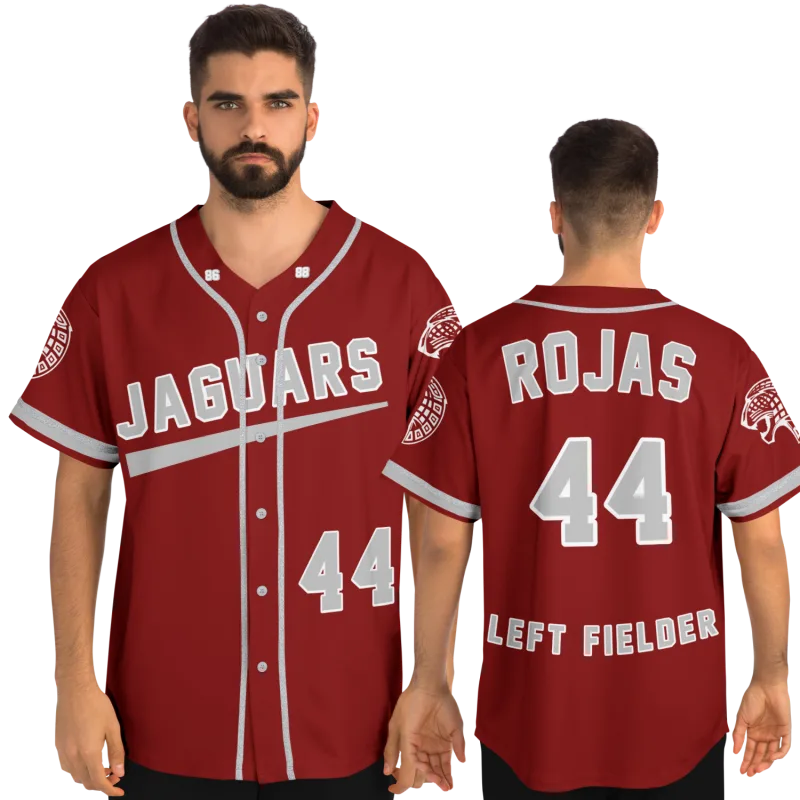
There was a number. You knew it the way you knew your own handwriting — instinctively, completely, without ever having to think about it.
It was stitched across your back. It appeared in every team photo, on every roster sheet, in every public-address announcement when you did something worth announcing. And long before you ever considered ordering a custom jersey with retired number to honor what that number meant, it was simply part of you. Not assigned to you. Part of you.
That is where this starts. Not with a product, not with a transaction, not with nostalgia packaged as something it isn't. This starts with a number on a piece of fabric — and the honest observation that for a lot of former athletes, that number never fully left.
The Moment You Became a Number
Every former athlete remembers the first time they saw it. A coach read names and numbers off a clipboard. A team manager handed you a jersey folded in a plastic bag. You shook it open, found the number on the back, and something settled — not dramatically, not the way movies tell it, just quietly and specifically.
That was yours now.
The psychology of athletic identity is more deeply connected to uniform numbers than most sports culture openly acknowledges. Research into self-concept in competitive sport finds that athletes who identify strongly with their sport internalize the visible markers of that identity — the uniform, the position, the number — as extensions of the self rather than external labels. The number is not something you wear. It is something you become.
Which explains why the moment you stopped wearing it felt different than you expected.
Not catastrophic. Not even necessarily grief. Just — different. Like a chapter that closed before the sentence finished.
What Your Number Actually Communicated
Numbers in sport are not random, and the athletes who wore them were never unaware of that fact.
The Mythology Attached to Specific Numbers
Every sport has its own number mythology. In basketball, certain digits carry the accumulated weight of everyone who inhabited them well. In football, position groups claimed number ranges before any individual could — a linebacker wearing 52 was already in conversation with every linebacker who wore 52 before him, at every level of the game. In soccer, the number 10 is its own complete vocabulary. In baseball, the numbers hanging retired from stadium rafters are not merely honors — they are declarations that a number was so thoroughly claimed by one identity that no future player should have to share the comparison.

When you wore your number, you were entering that conversation. Whether your sport was played in front of ten thousand people or forty-three, the number on your back placed you in relation to everyone who wore it before you — at your school, in your town, in the longer history of the game itself.
That is not a small thing. That is lineage.
What Your Teammates Knew Without Being Told
In our experience talking with former athletes across sports, one observation comes up consistently: the number was never just outward communication. It was internal architecture.
Your teammates knew your number before they knew your middle name. Coaches called it in the thick of practice when they did not have time for names. Opponents tracked it. Your family scanned for it in a crowd when the action compressed and they needed to locate you fast.
The number was a coordinate. It placed you in the world of the game with a precision that names — which sound alike, which get mispronounced, which take longer to process under pressure — never quite could.
What your number communicated, without a single word spoken:
- Where you fit inside the structure of the team
- What role the coaching staff believed you were ready to handle
- Your standing within the competitive hierarchy of your position group
- Which part of the field, court, or ice belonged to you
None of that required explanation. It was encoded in the number itself, readable by anyone who understood the game.
The Numbers That Got Retired — And the Ones That Deserved To
Some numbers are retired officially. The ceremony is real: the banner goes up, the number is pulled from circulation, no future athlete on that team wears it again. It is the sport's formal acknowledgment that a number was so completely inhabited by one person that it should rest with them.
But that formal retirement applies to a small fraction of athletes. The rest retire their numbers in a different way — in the sense that the number becomes permanently associated with who they were during a specific season of their lives, even if the team issues it to someone else the following year.
Carla M., 38, played four years of collegiate volleyball as a libero — always number 11. "I knew exactly what I was every time I walked into a gym," she said. "I was 11. My teammates from those years still text me with that number when they're joking around. It's been close to fifteen years and it's still how they place me." Carla ordered a custom jersey bearing her number — in the colors she wore, in the style she remembered — after her daughter started playing club volleyball. She wanted her daughter to see what the position looked like when it was fully inhabited by someone who loved it.
That is what numbers do when they are genuinely retired, officially or not. They carry the record of full inhabitation.
The Identity Question That Follows Every Former Athlete
Here is what nobody warns you about when your playing days end: the identity does not dissolve cleanly.
You spent years — in some cases more than a decade — inside a structure that told you exactly who you were and where you stood. Position. Number. Roster spot. Starting lineup or not. These were not abstract classifications. They were daily, concrete reminders of your identity within a competitive order that you earned your place in through specific, measurable effort.
Then that structure ends.
And the identity that was built inside it has to find somewhere to go.
If you played, you know this feeling. The first off-season that is permanent feels categorically different from the off-seasons that were temporary. There is no conditioning program to restart. No roster announcement to wait for. No number to put back on.
What former athletes consistently describe — and what those of us who have spent long enough around competitive sport recognize — is that the number becomes a touchstone. Not an obsession. Not a source of grief. A specific, concrete anchor to the version of themselves that was built inside competition.
The number does not mean "I used to be better." It means "I was someone specific, in a specific place, doing something specific that required everything I had."
That is worth holding onto.
How Athletes Carry Their Numbers After the Final Whistle
Athletes find ways. They always do.
Some keep the original jersey — the actual one, worn and washed and lived in for seasons. Some frame it. Some pass the number forward: a younger sibling, a child, a player they coach who reminds them of something they recognize in themselves.
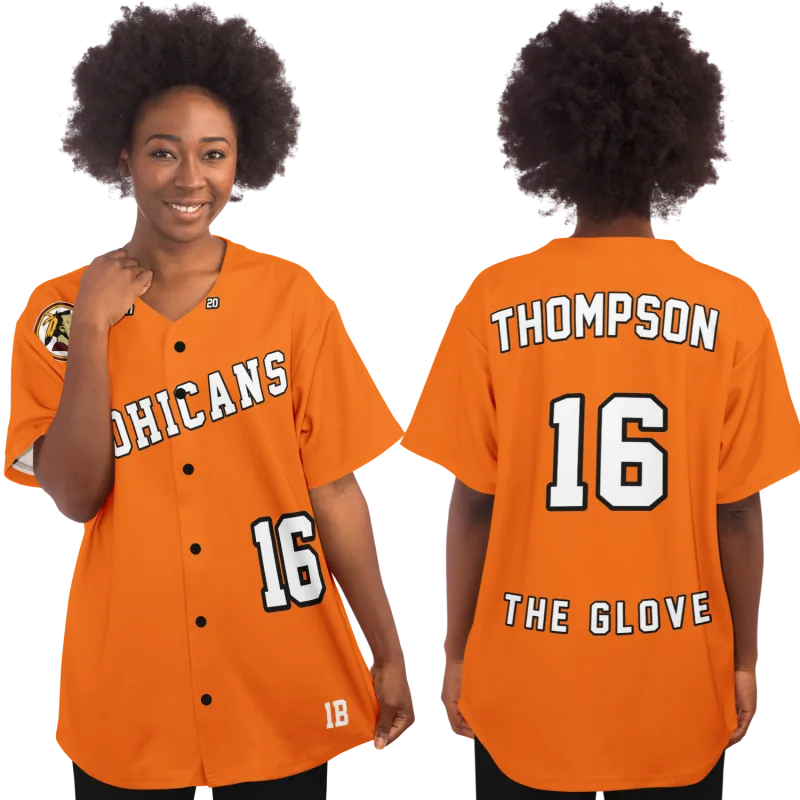
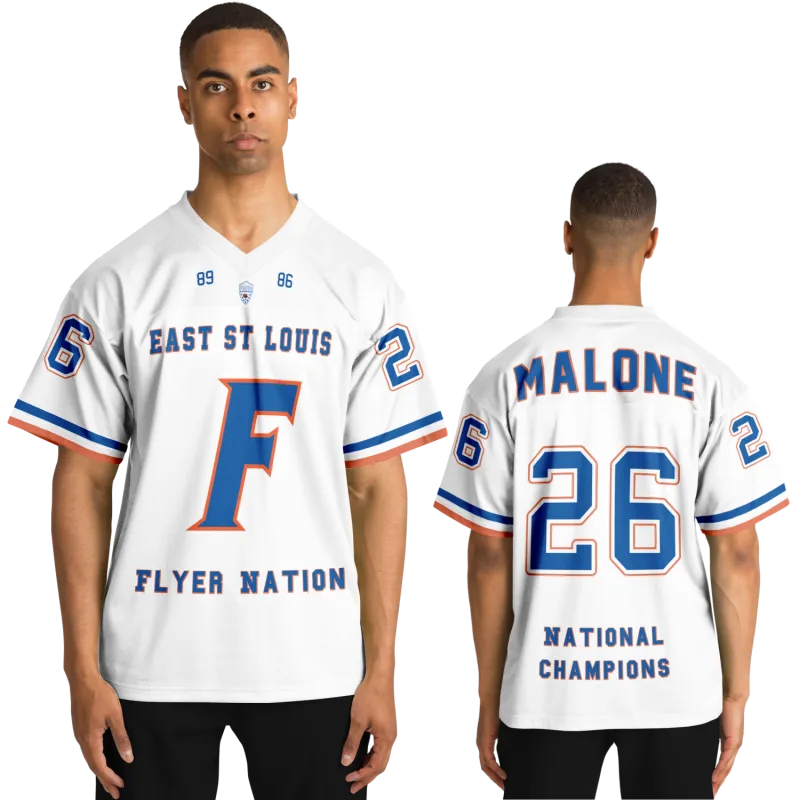
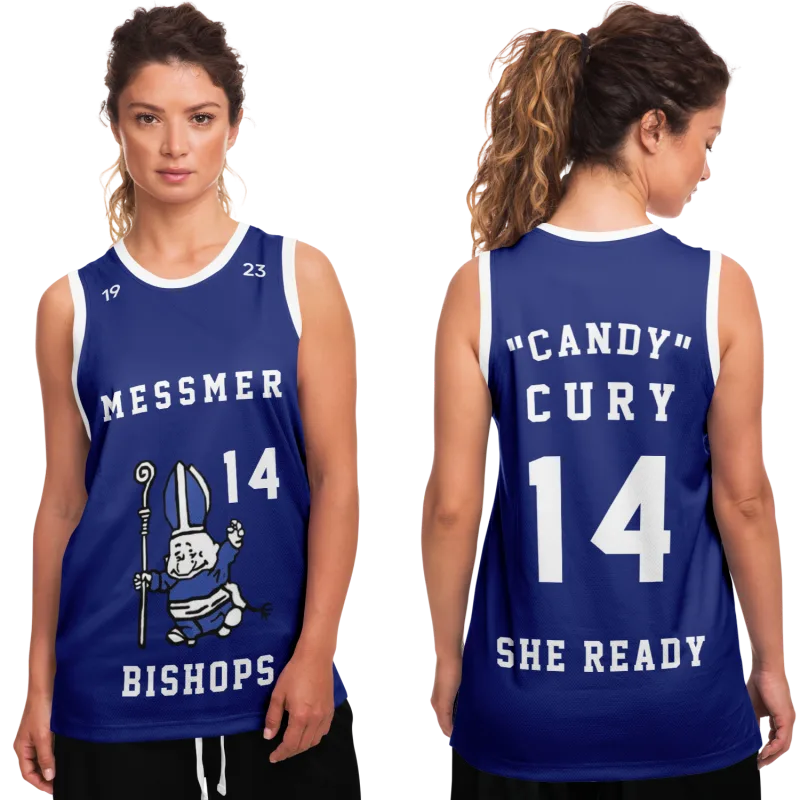
Some search for a custom jersey with retired number because the original jersey is gone, or it no longer says what they want it to say, or they want something that represents the sharpest version of the memory rather than a degraded piece of twenty-year-old fabric that smells like a storage bin.
The reasons vary. The impulse is the same.
There is a version of yourself that was built inside that sport, and your number was the most visible component of that version. Choosing to honor it — on your own terms, in a form you control, designed as a tribute to that chapter of your story — is not regression. It is not living in the past. It is an adult decision made by someone who knows which seasons of their life were defining and wants those seasons acknowledged in the present.
Four things former athletes commonly do with their numbers after competition ends:
- Keep the original jersey preserved — framed, stored, treated as the artifact it is
- Commission a custom version in the style they remember, built to represent the memory at its best
- Pass the number to a younger athlete in the family or a player they coach
- Use it as a permanent reference point in how they talk about sport, competition, and identity with the people around them
None of these are wrong. All of them are ways of saying: that number was part of who I became, and I am not going to pretend it wasn't.
The Difference Between Nostalgia and Identity
This distinction is worth being direct about.
Nostalgia is backward-facing. It is the emotional experience of something that is gone and cannot return. Nostalgia is real and valuable — it connects us to what we loved — but it is fundamentally oriented toward loss.
Identity is different. Identity is ongoing. It is the recognition that who you are now was assembled, in part, from who you were then. The version of yourself that competed — at whatever level, in whatever sport, in whatever era — is not a museum piece sealed behind glass. It is part of the living architecture of the person you are today.
The number you wore is not a relic. It is evidence. Specifically: evidence that you were, at a specific moment in your life, someone who showed up every day for something demanding, something competitive, something that required you to earn your place continuously.
That is not past tense. That is character. And character is always present tense.
When a former athlete orders a custom jersey as a tribute to the number they wore, the best of them are not trying to reverse time. They are acknowledging continuity — between the person who earned that number and the person they are now. The jersey is not a claim that the past was better. It is a statement that the past was real, and that what was built there still stands.
The number goes on the jersey. The jersey goes on the wall, gets worn to a child's game, or becomes part of how a former athlete presents themselves in their own space.
And when someone asks about it — and they always ask — the former athlete does not have to explain everything. They can just say the number.
Anyone who played anything understands.
Your Jersey Is Still Out There Waiting.
Design yours in minutes and see your name and number exactly the way you remember it.
Frequently Asked Questions
Can I order a custom jersey with a retired number from my old team or school?
Yes — a custom jersey honoring the number you wore is available regardless of whether that number was officially retired by a team or institution. What you are creating is a personal jersey in the style you remember, bearing the number that was yours. This is a tribute piece built around your own playing history, not licensed team merchandise. Your number, your name, your sport — that is a personal custom piece, and it does not require institutional authorization.
What sports are available for custom jersey orders?
Custom jerseys are available across a wide range of sports, including football, basketball, baseball, softball, soccer, hockey, volleyball, lacrosse, and more. The design process lets you select sport, cut style, colors, name, and number — including the exact number you wore — so the finished jersey reflects your actual experience rather than a generic athletic template.
Is a custom jersey a meaningful gift for a former athlete?
It is one of the most specific gifts you can give a former athlete, precisely because it requires you to know their number. If you know the number someone wore — the sport, the colors, the name that went across the back — you have everything you need to commission something that will carry more weight than almost any other object you could hand them. The specificity is what makes it land. Generic athletic gifts are everywhere. A jersey with the right number on the back is singular.
How do I choose a jersey style that reflects what I actually wore?
Start with the sport and the details you remember. Different sports have distinct jersey conventions — cut, fabric weight, collar construction, number placement, font style. The design tool at iPlayedFor lets you build each of these elements individually so the result reflects what you actually wore, not a generic athletic silhouette. If you remember specific details — a color block pattern, the way the number font was shaped, how the name sat across the shoulders — those are the details to bring into the design process.
Is ordering a jersey in the style I wore different from buying licensed team merchandise?
Yes, and the distinction matters. Licensed team merchandise is produced under formal authorization from a team or league and is designed to represent the organization. A custom jersey built around your personal number and name is a tribute to your own playing history — designed in the style of the sport you played, bearing your identity, not the team's trademark. These are fundamentally different things, and the custom version is the one that actually belongs to you.
See also: personalized sports gifts that actually make a former athlete feel seen | the athletic identity you built around that number doesn't disappear when the season ends | why high school sports experiences carry such lasting emotional weight for adults | how to preserve those memories in a custom sports shadow box