

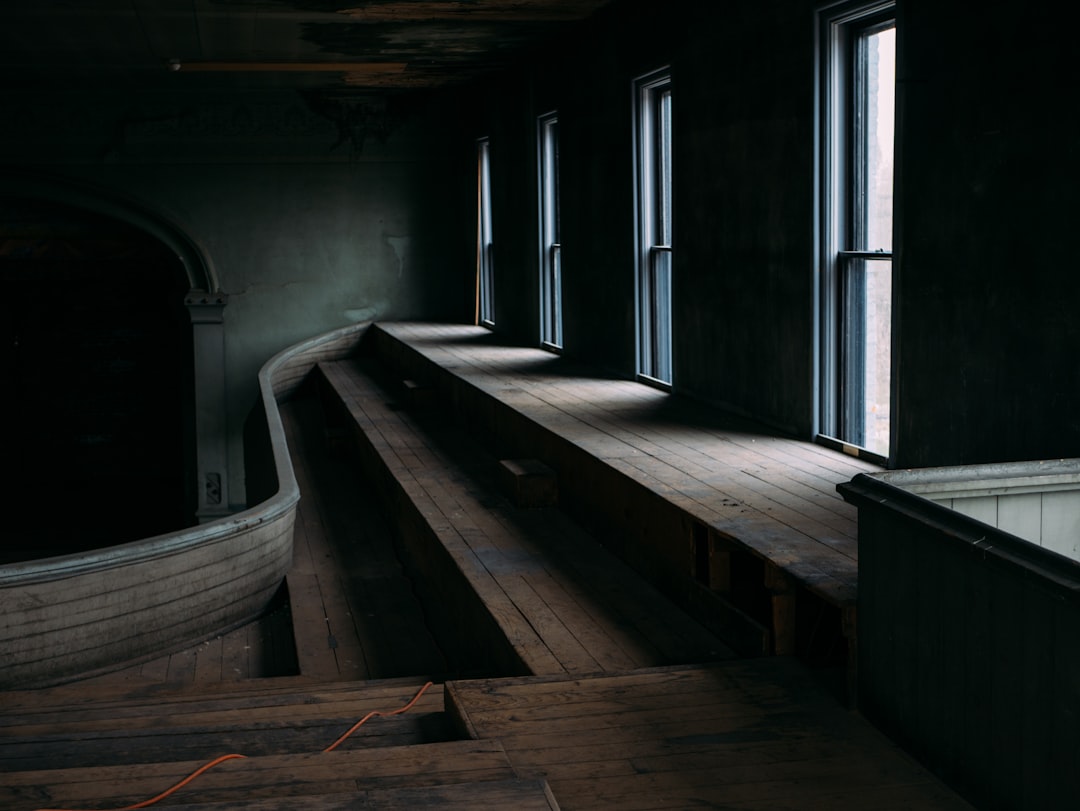




You don't plan it. You're driving past the old neighborhood, or you're back for a funeral, a wedding, a class reunion you almost skipped — and then there it is. The field. The gym. The parking lot where the team bus used to idle on cold Friday mornings. And something in your chest does a thing it hasn't done in years.
Visiting your old high school sports field is not like visiting any other place from your past. It's not like driving by the house you grew up in, or walking into the diner where you had your first job. Those places hold general memory. This place holds you at your most alive: the version of you that ran until your legs stopped working, that heard your name called over a crackling PA system, that belonged to something with a schedule and a uniform and a scoreboard.
This article is for the former athlete who is thinking about going back, or who just did, and is still processing what happened. We'll cover what the experience actually feels like, what you're likely to find when you get there, how to navigate the practical reality of alumni access, and how to make the most of the moment rather than just stand there feeling vaguely wrecked.
What Actually Happens in Your Body When You Go Back
The sensory experience of returning to where you played sports is not subtle. It is specific, physical, and often immediate in a way that catches people completely off guard.
Before any of this hits, though, there are the days leading up. Former athletes who have made the trip back describe a specific kind of anticipation: not quite excitement, not quite dread, something closer to the feeling before a game you knew mattered. Some report anxiety dreams in the nights before: the field appearing in sleep, the gym floor stretching impossibly long, a locker room door that won't open. Others describe a restlessness they couldn't name until they were actually in the car, driving toward the school, and noticed their hands gripping the wheel harder than normal. The nervous system doesn't distinguish clearly between returning to a place of high emotional significance and preparing for an event that carries real stakes. Your body registers the approach before your mind has finished deciding what the approach means. If you feel a little unsteady in the hours before you go, that's not a reason to turn around. It's evidence that the place actually mattered.


The smell is usually first. Every gym has one — a compound of rubber flooring, old wood, industrial cleaner, and something that defies classification but is instantly, perfectly recognizable. You haven't smelled it in fifteen years and your brain catalogs it in half a second: here. You are here. That smell isn't a random trigger: why certain sports smells stay locked in your brain forever gets into the specific neuroscience of how your brain stores sensory memory from playing days.
Then the scale of the place recalibrates. Most former athletes describe the same phenomenon: the gym is smaller than they remembered. The hallways are narrower. The distance from the locker room to the field, which used to feel like a gauntlet, turns out to be about forty yards. Your body remembers the distances as they felt when you were in them: enormous, consequential, loaded with stakes. Reality is more modest. It's actually moving rather than disappointing, in a way that's hard to explain to anyone who hasn't experienced it.
What you remember in specific detail will surprise you. Almost no one remembers the scoreboards or the trophies in the case near the front office. What people remember is granular and physical: the exact corner of the gym where the floor had a soft spot. The way the afternoon light came through the west-facing windows at practice. The specific sound the gate made when it opened onto the track. The spot on the field (not "the field" generally but the exact location) where something significant happened to them personally.
These are not memories of events. They are memories of being inside a body that was working as hard as it could. There's a reason those memories don't fade the way ordinary ones do. The neuroscience of why certain sports moments stay with you forever explains what's happening in your brain when a memory gets encoded at this depth.
The Practical Reality: Can You Actually Get In?
This is the question most former athletes don't think to ask until they're standing at a locked gate. The answer, in most cases, is yes, with some conditions worth knowing before you make the trip.
Public school campuses and open access
Most public high school athletic facilities are not continuously monitored during off-hours, and many tracks and outdoor fields are accessible to the general public during non-school hours. In practice, this means walking the track on a Saturday morning or standing at the fifty-yard line on a summer evening is rarely an issue. The bleachers may be locked; the scoreboard will definitely be off. But the field itself (in most cases) is just there.
Indoor facilities are a different matter. Gyms, fieldhouses, and weight rooms are secured during off-hours and require active permission. The approach that works: contact the school's athletic director directly, explain that you're a former athlete, and ask if there's a time you could come by. This works more often than people expect. Athletic directors, as a category, are people who went into their profession because they believe in what sports does to young people. A former athlete wanting to walk the gym where they played is not a nuisance call. It's a call they usually enjoy getting.
What to say when you call
Be specific. "I played basketball here from 2003 to 2006 and I'm going to be in town next weekend, is there any chance I could walk through the gym for a few minutes?" This is more successful than a vague "I used to go here and I'd love to stop by." The specificity signals that you're a real person with a real connection, not a liability risk.
If there's a home game or event that weekend, ask if you can attend — this is often the easiest path to access. You'll be on the campus legitimately, and the current environment (the noise, the crowd, the smell of concession stand popcorn) will layer over your memory in interesting ways.
The alumni event shortcut
The most reliable (and, honestly, the most welcoming) way to get back on the field or gym floor legitimately is to skip the cold call and show up for an event the school is already throwing for former athletes. Alumni games, homecoming weekends, stadium dedications, and "honor walk" nights are built around alumni, which means you're expected, you're wanted, and you get full campus access without anyone having to size you up as a liability risk.
These events are more common than most people realize, and they span every sport — baseball, soccer, and basketball alumni games are the most frequent, but almost any program with a few decades of history runs some version of one. The payoff goes beyond convenience: it is the difference between walking an empty gym alone and stepping onto the field surrounded by people who remember the same version of you. If you've ever thought about playing in a high school alumni game, an upcoming event is often the cleanest way back in.
And that's the point worth holding onto: returning is about the person you were, not just the building.
Visiting during school hours
If you plan to go back while school is in session, the rules are different, and they have more to do with modern security than with sports. Start at the front office before you do anything else. Even if you used to walk that building every day, you are a visitor now, and the front office is where visitors begin. You'll typically sign in, show ID, and receive a visitor pass or badge you're expected to wear where staff can see it. Some districts run your name through a quick check as part of signing in. None of this is personal; it's the same protocol every parent, contractor, and substitute teacher follows.
Once you have the pass, stay in the areas you've been given permission to be in. Doors that are locked are locked for a reason, and posted no-trespassing signage means the same thing for alumni that it means for anyone else. The biggest mistake former athletes make is treating the building like they still belong in every corner of it: wandering the halls, ducking into the old locker room, following the old shortcut to the gym. People who do this describe being stopped by a teacher or an administrator, asked where their pass is, and sometimes told to leave. It can feel like being treated as a trespasser in a place you once owned, and that feeling stings in a way that can sour the whole visit.
The fix is simple: ask. Tell the front office you're a former athlete hoping to see the gym or the field, and ask if someone can point you to where you're allowed to go, or whether the athletic director is available. A request made politely up front almost always beats an assumption made silently.
What Has Changed — And What Hasn't
Marcus T., 38, a former high school wrestler from suburban Ohio, drove two hours back to his old school for a cousin's graduation and ended up standing in the gym doorway for ten minutes before he could make himself walk in. "The mat was a completely different color," he said. "But the ceiling was exactly the same. The same water stain in the upper left corner. I don't know why that got me."
That's the consistent report from former athletes who go back: the changes are visible and sometimes jarring, but the constants are what break you open.
What has likely changed:
- Flooring, especially in gyms — resurfaced wood, new synthetic turf, updated tracks are common
- Scoreboards, which have often been modernized or replaced entirely
- Weight room equipment, usually significantly upgraded over fifteen years
- Locker rooms, which are frequently renovated with Title IX-driven improvements
- Team records and banners, which may or may not still be displayed
What almost never changes:
- The dimensions of the space — a gymnasium is the same footprint it was when you played in it
- The view from the visitor bleachers to the home bench
- The way sound moves in the space — the acoustic signature of the gym
- The sight lines from the field to specific landmarks (the water tower, the tree line, the scoreboard frame even if the board is new)
- The light — how afternoon practice light enters a specific gymnasium or falls across a specific field
This is worth knowing before you go, because the impulse when something has changed is to feel loss. The more useful frame: you're not looking for a museum of your past. You're returning to a place that continues to exist and be used, and some of what made it yours is structural and permanent.
The Emotions You're Not Expecting
Most former athletes who go back report being surprised, not by the emotion itself, but by which emotion arrives and when.
The joy is expected. The grief is not, at first.
Standing on the field where you played, you are not just encountering a place. You are encountering a version of yourself that no longer exists in the same form — younger, faster, less complicated, surrounded by a specific group of people who scattered to their own lives. The field doesn't know this. It is indifferent. And that indifference, for some people, is the thing that finally makes the feeling land.
What you are not guaranteed to feel: pure, uncomplicated nostalgia. What you are more likely to feel: a layered experience that includes joy, wistfulness, something that functions like grief, and something that functions like gratitude, not always in a predictable sequence.
What helps, practically:
- Go during a quiet time (early morning, weekend afternoon) rather than during a school event, if your goal is to spend time with the place itself rather than with the current life of the school
- Bring someone who was there with you, if that's possible. The act of pointing and saying "that's where we used to..." is its own form of processing
- Don't rush it. The instinct is to feel the feeling and then leave before you feel too much of it. Staying a little longer than is comfortable tends to produce the experience you actually came for
The drive home is its own part of the experience, and former athletes consistently report that it's where the visit actually settles in. You leave the field, get back in the car, and for the first several minutes you don't say much, even if someone else is with you. What's happening during that quiet is a kind of integration: the sensory memory you just reactivated is settling back into your present self, and the two versions of you — the one who played here and the one who just walked it — are finding their relationship to each other. In the days that follow, people describe a subtle shift. Not dramatic, not life-altering. But something in the way they hold that chapter of their life feels different: less distant, more accessible, as if the visit reminded their body that the person who played here still exists. Some report calling an old teammate the next day, unprompted. Some just carry a quieter version of the feeling into the week ahead. Almost no one describes the visit as something that ended when they left the parking lot.
Walking Your Old Practice Field: How to Make It Matter
There's a difference between a drive-by look and a real visit, and the difference is intention.
Walking your old practice field with intention means treating it as what it actually is: a deliberate act of honoring a chapter of your life that shaped you. Not in a ceremonial or over-serious way. In the way that a person who has lived somewhere meaningful returns to that place and takes it in, slowly, rather than photographing it and leaving.
Here's an approach that works:
-
Go alone first, if possible. The presence of other people (even people who were there) changes what you have access to internally. Give yourself thirty minutes on the field or in the gym before you invite anyone else into the experience.
-
Find your spot. Not the general space: the specific location that held something for you. The starting block. The free-throw line. The corner of the end zone. Stand there. Notice what your body does.
-
Let yourself be specific in your memory. Not "we had good games here" but the specific play, the specific moment, the specific conversation in the specific location. The specificity is where the feeling lives.
After that, if you want to bring someone — a former teammate, a parent who watched you compete, your own kid — the visit becomes something you can share. But the first pass belongs to you. And if the walk stirs something deeper — an impulse to actually play again, even just one more time — why former athletes still feel the pull to return to the field one more time is a story that repeats itself every alumni weekend.
And after the visit — when the impulse to hold onto something physical kicks in — your jersey belongs on the wall, not in a box in the attic. Sometimes walking the field is what reminds you that the number you wore still means something worth displaying.
High School Nostalgia and the Former Athlete's Identity
Going back to your high school gym is less about a building than about the person you were when the building was the center of your world.
For many former athletes, the years they spent competing in high school represent a period of identity that was unusually clear. You were a wrestler. A point guard. A middle-distance runner. The role was defined, the community was specific, the feedback was immediate and legible — the clock, the scoreboard, the coach's expression, the sound of the crowd. Most adult life is considerably more ambiguous than that.
Returning to the space where that clarity existed is, in part, a return to a version of yourself who knew exactly what they were doing and why. That's worth something. Not as an escape, and not as a fantasy about a simpler time — but as a reminder that you were capable of that kind of commitment and that kind of belonging.
The field doesn't give that back to you. But standing on it reminds you that you already have it — and knowing when athletic nostalgia is healthy and when it crosses into something else is part of holding that memory in the right frame.
Your jersey is still out there waiting.
Design yours in minutes and see your name and number the way you remember it.
Frequently Asked Questions
Can I visit my old high school sports field or gym without an appointment?
For outdoor facilities — tracks, fields, stadiums — at public schools, access during non-school hours is often possible without prior arrangement, though this varies by district and state. Locked gates and posted hours are always respected. For indoor facilities like gyms and fieldhouses, it's worth a direct call to the school's athletic director to ask about access. Most are receptive to former athletes making the request, especially if you're specific about who you are and when you played.
Is it normal to feel emotional when returning to where you played sports?
Completely normal, and reported consistently by former athletes across every sport and level of competition. The sensory environment of a gym or field — the smell, the acoustics, the scale of the space — triggers memory in a way that is more immediate and physical than most other forms of nostalgia. Feeling grief alongside joy, or feeling unexpectedly moved in a quiet moment, is a standard part of the experience. There is nothing unusual about needing a minute.
What if the facility has been completely renovated or demolished?
This happens, and it changes the experience without eliminating it. If the building is gone, the address or the land itself can still hold meaning — standing where the gym used to be is not the same, but it is not nothing. If the facility has been renovated, focus on the structural constants: sight lines, footprint, the way light enters the space. The dimensions of a regulation basketball court haven't changed. The distance from home plate to the outfield wall is the same. The space is different; the geometry is yours.
Should I bring my kids or family when I visit?
There's no single right answer. Going alone first tends to produce a more personal experience. Bringing family — especially your own children — adds a different dimension: you get to show them the place that shaped you, which is its own form of connection. If you bring kids, give yourself permission to name what the place means to you specifically rather than offering a general tour. "This is where I ran the race I trained for all year" lands differently than "this is where I used to have track practice."
See also: the psychology of why high school sports still matter to adults | why your senior season memories feel so vivid even now | the grief of leaving your athletic career behind at 18 | what it meant to play under the lights on your home field | reconnecting with former high school teammates