



You told yourself you were done.
The body said so. The schedule said so. Life, with its mortgages and meetings and kids who need to be somewhere at 6:15 on a Saturday, said so louder than either of them. You put the cleats in the garage, the jersey in a box, and you moved on like a reasonable adult is supposed to do.
And then someone sent a group text about the former athlete alumni game.
And something happened in your chest that no amount of reasonable adulting could fully explain.
This article is for that feeling. Because it's not nostalgia — not exactly. It's something older and more insistent than that. It's the part of you that never actually retired, no matter how many years ago you walked off that field for the last time.
The Identity That Doesn't Clock Out
Every former athlete carries a version of the same quiet secret: the sport never really ended. The games ended. The practices ended. The season (official, scheduled, with referees and box scores and a ride home on a bus that smelled like tape and floor wax) ended. But the identity? That one kept showing up to work without anyone's permission.
You still clock the field when you drive past it. You still read the stat line instinctively, even when the team playing means nothing to you personally. You still feel the specific weight of a ball in your hands — or a stick, a racket, a set of oars — as something that belongs there. Not as a visitor. As a resident.
This is what sports psychology researchers have consistently documented: athletic identity is among the most persistent self-concept markers a person carries. It doesn't dissolve when eligibility does. For many former athletes, the gap between "who I was on the field" and "who I am now" becomes one of the more quietly disorienting features of adult life: not a crisis, but a low-frequency hum that never fully goes away.

The alumni game is one of the few things that turns off the hum. For a few hours, the gap closes. The identity that has been sitting in the waiting room of your life gets called back into the room.
That's not a small thing. That's everything.
What the Alumni Game Actually Tests
Here is what nobody says out loud in the group chat, but everyone is thinking:
Can I still do it?
Not "can I play the way I played at 19" — even the most delusional among us has made peace with the fact that the body has opinions about that question. The real question is quieter and more specific than that. It's: Is the thing that made me an athlete still in there?
The competitiveness. The reading of the play before it develops. The muscle memory that kicks in before the conscious brain catches up. The ability to be, for one concentrated stretch of time, fully present in a way that adult life rarely demands and almost never provides.
This is what the alumni game tests. And this is why it matters so much more than it should, given that the stakes are objectively zero and your hamstrings filed a formal complaint approximately forty-five minutes into warmups.
Every former athlete remembers the first time they got back on the field (or the court, the ice, the diamond) after a long absence and felt it click. The way the body finds its posture without being told. The way the eyes start tracking movement with a specificity that doesn't happen at a desk or in a car or at a dinner table. Something reorganizes. Something that had been stored horizontally goes vertical again.
That click is why grown adults with real jobs and real injuries and real reasons to stay home still show up. They are not chasing the past. They are confirming the present.
The Reunion Is the Point — But Not in the Way You Think
There's a version of the alumni game story that's mostly about reconnecting with old teammates. Catching up. Swapping stories about the coach who ran you into the ground and who you now, with the benefit of distance and a fully developed prefrontal cortex, recognize was actually kind of right about most things.
That version is real and it matters. But it undersells what's actually happening when former athletes gather on a field they haven't stood on in years.
What's happening is collective identity confirmation.
When you show up and see people who knew you as an athlete (who knew exactly how you moved, what you were capable of, what role you played and how seriously you took it), something happens that your current daily life almost never provides. You are seen, fully, as the person you used to be. And that person doesn't feel like a past-tense character. They feel like the most essential version of you, the one that knew exactly who they were because every practice and every game made that question irrelevant.
Marcus T., 38, played four years of college baseball before a shoulder injury ended his career earlier than he'd planned. He described his first alumni game back as "the only time in fifteen years I didn't feel like I was pretending to be someone who had it figured out." He played shortstop. He dove for a ball in the fifth inning and came up with dirt on his jersey and everyone on the field — both sides — made the sound. He said that sound was worth every bit of soreness he felt for the next four days.
That sound. The one teammates make when someone does something real. You don't hear it in conference calls.
The Specific Hunger That Brings You Back
If you've played organized sports at any serious level, you know there is a specific hunger that recreational activity doesn't satisfy. A casual jog doesn't feed it. A gym session doesn't touch it. Even a competitive adult recreational league, which is fine, which is genuinely good, gets close but rarely closes the gap entirely.
The hunger is for consequence within a structure you know.
Adult life offers plenty of consequence. The stakes are often much higher than anything that happened in competition. But adult stakes are diffuse and slow and almost never resolve cleanly within a fixed time limit with a clear scoreboard. You can't look up at a clock and know exactly where you stand. You can't run out the game, hold the lead, finish the race.
Sport gave you that. It gave you a container — specific, bounded, with rules that everyone understood — inside which everything was clear. Your role. Your objective. What winning looked like. What you owed the person beside you.
The alumni game gives you that container again, briefly. And the hunger that it satisfies is the hunger of someone who needs to feel, just once more, what it's like to be inside a system that makes sense all the way down. It's a present-tense need, and it has nothing to do with going backward.
What You're Really Proving When You Show Up
Let's say it plainly: the alumni game is not about proving you're still young. The people who go into it needing to prove they're still 20 are the ones who limp off the field having confirmed the opposite in the most public way possible.
The people who get the most from it are the ones who show up to prove something else entirely. Something harder to fake and more worth confirming.
They show up to prove that competition still lives in them. That the instinct to prepare, to push through discomfort, to execute under pressure — that these aren't relics of a younger body but properties of a particular kind of person. A person who has, if anything, gotten more capable of the mental side of performance even as the physical side has made certain... adjustments.
The former athletes who describe alumni games most vividly (who carry the memory of them longest, who organize subsequent ones) are the ones who showed up completely. They competed within whatever their current capacity was, without apology and without pretense, and found that the identity held. Playing their best, it turns out, was never the point.
That's the proof they came for.
The Jersey Is Part of It
This is worth naming directly, because the jersey carries real meaning.
The jersey does something.
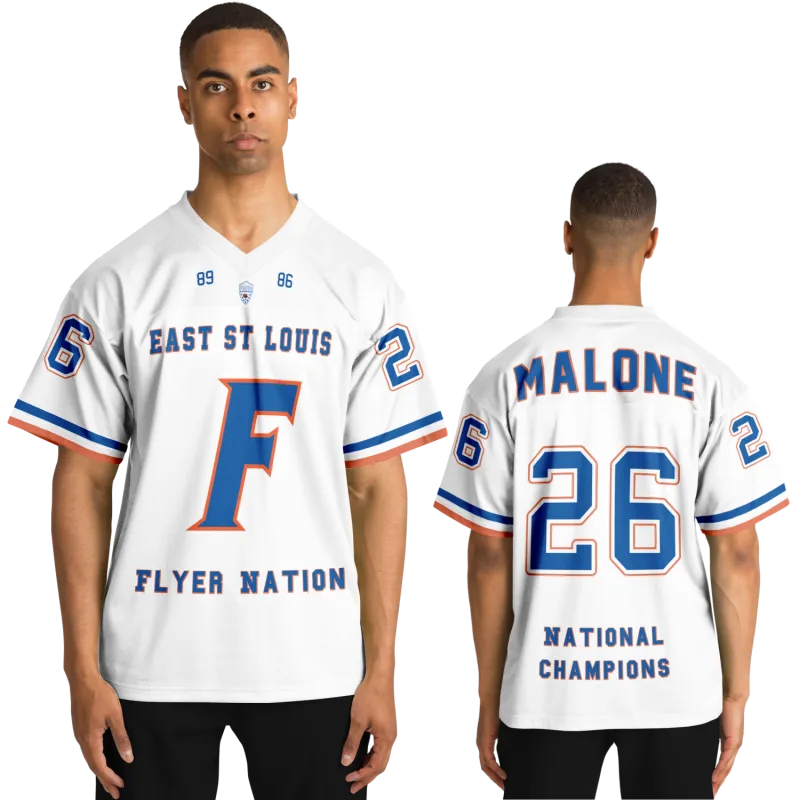
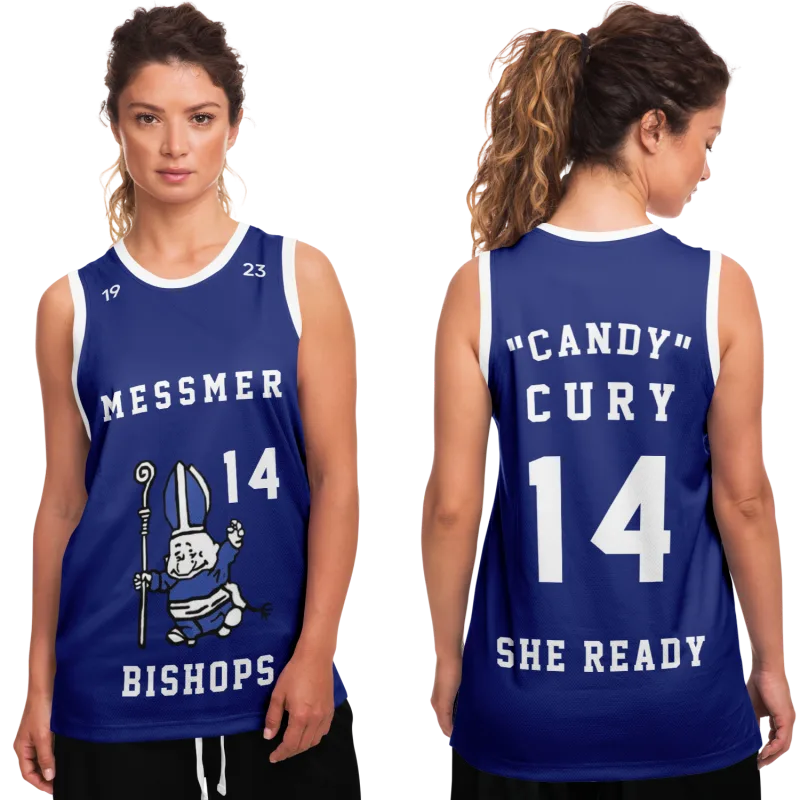
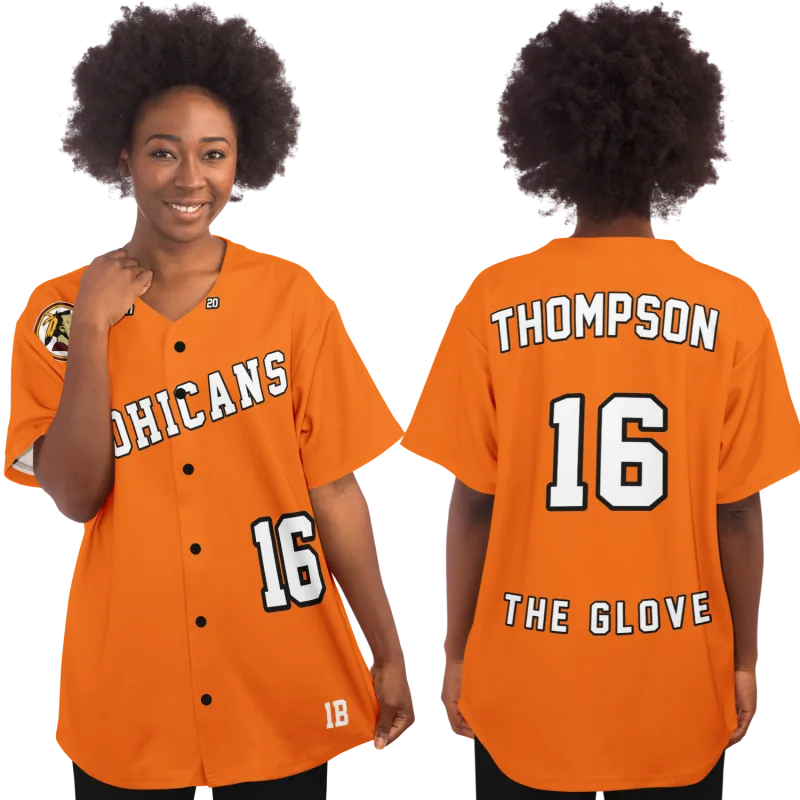
When you put on a jersey with your name on the back and a number you wore for the years that mattered, you are not playing dress-up. You are performing an act of continuity — reconnecting with the self-identity that putting on the jersey shaped in the first place. You are saying, with fabric and color and stitching: I was this person. I am still this person. This is not a costume — it's a flag.
The ritual of suiting up — even imperfectly, even with modifications demanded by a body that has been through fifteen or twenty more years of life than it had the last time — is one of the oldest athletic rituals there is. It separates what is about to happen from ordinary time. It signals to the body and the mind that different rules apply for the next few hours.
There's a reason teams that have been apart for years will order new jerseys for the alumni game rather than just show up in whatever they have. The jersey is not the accessory. The jersey is the statement. It says: we were a team. We are, even now, a team. And we showed up dressed for it.
The specific weight of a jersey with your name on it — your actual name, your actual number, the colorway you wore when you were the person you still, quietly, know yourself to be — that weight is not nothing. It's the physical form of the answer to the question the alumni game asks.
Your jersey is still out there waiting.
Design yours in minutes and see your name and number exactly the way you remember it.
Frequently Asked Questions
Why do former athletes feel such a strong pull toward alumni games even decades after they stopped competing?
Athletic identity is one of the most durable components of self-concept that sport creates. Research in sports psychology consistently shows that for athletes who competed seriously — particularly at the high school and collegiate levels — the sense of being an athlete doesn't retire when the eligibility does. It persists as a core identity marker. The alumni game activates that identity in a way that everyday life almost never does, offering a rare moment of coherence between who the person was and who they still understand themselves to be.
Is the alumni game actually good for former athletes physically, or is it mostly injury risk?
Both — the alumni game is genuinely good for former athletes physically, and it carries real injury risk, so the outcome depends almost entirely on the approach. Former athletes who return to competition with realistic expectations about current physical capacity — who compete within what their body can do now, not what it did at 19 — typically report positive physical and emotional outcomes. The injury risk is real, particularly for athletes returning to high-impact sports after extended absences, and proper warmup, appropriate intensity management, and post-event recovery matter more than most people prepare for. The athletes who get hurt are usually the ones who forget that the mental edge came back faster than the physical conditioning.
What makes a custom jersey meaningful for an alumni game rather than just wearing whatever you have?
A custom jersey with a name and number that matches what a player actually wore creates a specific form of continuity that pre-made or generic apparel doesn't. Aesthetics aren't the point; identity signaling is. When a former athlete puts on a jersey that says their name and carries their number, it functions as a physical act of claiming the identity: not as nostalgia but as a statement that the person who wore that number is still present. Teams that invest in custom jerseys for alumni games consistently report that the act of suiting up together — dressed as a team, not as a collection of individuals in mismatched gear — significantly intensifies the reunion experience.
Do alumni games matter more for athletes who had their careers cut short?
Yes — alumni games often carry an additional layer of emotional weight for athletes whose competitive careers ended abruptly or involuntarily, whether through injury, circumstance, or timing. For these athletes, the final official game was rarely a true ending — it was an interruption. The alumni game can function as a closing chapter that the original story never got to write. That said, athletes who played to the natural end of their careers and simply aged out of competition report their own form of intensity around alumni games, centered on confirmation rather than completion.
How do you organize an alumni game that actually delivers on the experience rather than falling flat?
The alumni games that work, the ones people talk about for years, share a few consistent features. They have structure: not just a casual pickup situation but an organized game with recognizable competitive form, including roles, rules, and some version of scorekeeping. They create conditions for the jersey ritual: teams show up looking like teams. They leave room for the informal version — the warmup, the pre-game, the post-game — which is where most of the reunion actually happens. And critically, they lower the expectation around physical performance while raising the expectation around full presence. Nobody needs to play like they're 20. Everyone needs to play like they mean it.
The practical half matters as much as the emotional one, and it starts with recruiting. Build the alumni contact list early — databases go stale fast, so verify emails and phone numbers before the first save-the-date goes out; once you actually reach people, most of them want to play. A workable timeline runs roughly twelve weeks out for the format, date, and facility; ten weeks for the contact database; save-the-dates around eight; invitations with RSVP around six; and final RSVP confirmation around four. Don't skip the unglamorous work: liability waivers and insurance, plus a check of your state association's sanctioning rules if alumni will scrimmage the current team — and leave room for the cheap memorable touches like a decade-by-decade recognition or a post-game dinner. For the full step-by-step, see our guide to planning a high school team reunion that actually works.
See also: what happens to athletic identity after the final whistle blows | the grief that comes with hanging up your cleats for good | how to find and reconnect with former high school teammates | adult recreational leagues where former athletes keep competing | how to start training again after years away from your sport