




There's a specific moment every former athlete knows. You lace up for the first time in years, step onto the court or the field or into the weight room, and for about four minutes — everything feels exactly like it used to. Your body remembers the movements. The rhythm comes back. You think: this is going to be easier than I thought.
Then minute five arrives.
If you're here searching for how to start training again after years off, you already know what comes next. The lungs that gave out. The legs that turned to concrete. The gap between who you were and who you are right now — and how disorienting it is to feel both at the same time. Most fitness guides don't acknowledge that gap. They're written for people who were never athletes, starting from zero. But you're not starting from zero. You're starting from somewhere complicated. And that changes everything about how your comeback should be structured.
This is the guide that accounts for what you actually are: a trained athlete whose body has been in storage, not erased.
The Former Athlete's Comeback Is Biologically Different
Before you build a single training plan, understand one thing that most return-to-sport guides completely miss: your nervous system and your cardiovascular system detraining at different rates. And this gap is where most comeback attempts fall apart.
Your muscle memory — the neuromuscular patterns that made you efficient, coordinated, and technically capable — degrades slowly. Research published in the Journal of Applied Physiology has shown that motor patterns encoded through years of sport-specific training retain structural traces in the nervous system long after active training stops. This is why you can pick up a basketball after a decade and still shoot with reasonable mechanics. The pattern is there.
Your cardiovascular capacity, on the other hand, declines significantly within weeks of inactivity. VO2 max — your body's ability to use oxygen under load — can drop measurably within 2 to 4 weeks of detraining, and continues falling from there. After years away, your aerobic engine is a fraction of what it was.


Here's why this matters practically: your body feels like it can perform at your old level because the movement patterns are still encoded. But your cardiovascular and metabolic systems cannot support what your mechanics are asking them to do. The result is athletes who move like they used to but gas out, break down, or get injured within the first few sessions — because they trusted the feeling of competence over the reality of their current conditioning base.
Your comeback plan has to respect both realities simultaneously: honor the patterns you still have, and rebuild the engine those patterns run on.
Why Most Comeback Attempts Fail in the First Two Weeks
The failure pattern is consistent. In our experience working with and writing for the former athlete community, it almost always looks like one of two things:
Too much, too fast. The muscle memory fires, the movements feel natural, and the former athlete trains at an intensity that matches their psychological confidence — not their actual current capacity. Soft tissue injuries follow within the first week or two. Tendons and ligaments decondition faster than motor patterns, and they take far longer to rebuild than cardiovascular fitness. A sprained ankle on day three becomes six weeks of nothing.
Discouragement without a framework. The athlete trains at an appropriate intensity, discovers how far they've fallen from their remembered level, and quits — not from injury but from the psychological weight of the gap. Without a framework that explains why the gap exists and how long it realistically takes to close it, the experience of being out of shape reads as permanent rather than temporary.
Both failure modes are preventable. Both require the same solution: a structured re-entry progression that separates psychological benchmarking from physiological benchmarking, and rebuilds both on separate timelines.
Your Comeback Training Plan: A Phase-by-Phase Progression
This is not a beginner program. It's a former athlete re-entry structure. The phases are shorter than they would be for someone without your background, and the progressions are steeper — because your nervous system will adapt faster than your conditioning base, and your plan needs to account for that.
Phase 1: Foundation Weeks (Weeks 1–3)
Goal: Rebuild connective tissue tolerance and aerobic base without triggering the muscle memory trap.
The hardest part of Phase 1 is deliberately underperforming relative to what you feel capable of. Your mechanics will feel fine. Your tendons, ligaments, and cardiovascular system are not fine yet. Training at felt capacity during Phase 1 is the fastest route to a forced rest you didn't choose.
What Phase 1 looks like:
-
Volume over intensity. Three to four sessions per week. Duration capped at 30–40 minutes. Intensity held below 70% of perceived maximum effort — meaning you should be able to hold a conversation throughout. This feels embarrassingly easy. It is correct.
-
Sport-adjacent movement, not sport itself. If you played basketball, you're doing agility ladder work and light footwork — not five-on-five. If you played soccer, you're jogging and doing dynamic stretching — not shooting or scrimmaging. The goal is to rehearse movement patterns without loading them at competitive intensity.
-
Structured mobility work. Twenty minutes of deliberate mobility — hips, ankles, thoracic spine — before every session. Not a warmup. A separate practice. Years of inactivity compress range of motion that your sport demands. Rebuilding it now prevents the compensatory movement patterns that cause injury later.
The signal that Phase 1 is working: by the end of week 3, your cardiovascular response to the same effort level is noticeably lower than it was in week 1. You're doing the same work with less perceived effort. That's your engine coming back online.
Phase 2: Reactivation Weeks (Weeks 4–7)
Goal: Reintroduce sport-specific demands at progressively increasing loads. This is where your muscle memory starts paying dividends.
Phase 2 is the most satisfying part of the comeback for most former athletes — because this is when the body starts responding in ways that feel familiar. The patterns that felt dormant in Phase 1 start firing cleanly. Movements that felt sluggish begin to have their old timing back.
What Phase 2 looks like:
-
Introduce sport-specific skills at moderate intensity. Full sessions, still not scrimmages or competitive play. Shooting drills. Passing patterns. Position-specific footwork. Technique at 75–80% effort — enough to test the pattern under load, not enough to expose you to competitive-level injury risk.
-
Progressive interval work. Two of your weekly sessions now include structured intervals that begin pushing your cardiovascular system: 30-second pushes followed by 90-second recoveries, built into sport-adjacent movement. Adjust the ratio weekly — the recovery window shortens as your engine rebuilds.
-
Strength work with specificity. If your sport required lower body power, you're squatting, lunging, and doing single-leg work. If it required upper body endurance or strength, you're pressing and pulling at moderate loads. The goal is not maximum strength — it's rebuilding the specific functional strength your sport demands of your specific position.
The signal that Phase 2 is complete: you can sustain 45 minutes of sport-specific technical work at 80% effort without your form deteriorating in the final ten minutes. That's the threshold.
Phase 3: Return-to-Competition Weeks (Weeks 8–12)
Goal: Full sport-specific load, with competitive exposure reintroduced.
This is where the real benchmarking happens — but by now, the benchmarking is honest. You've rebuilt enough base that what you measure in Phase 3 reflects your current actual capability, not the distorted picture you'd get from going full intensity on day one.
What Phase 3 looks like:
-
Scrimmage or competitive practice, introduced gradually. One competitive session per week in weeks 8 and 9. Two in weeks 10 and 11. Full competitive load by week 12 — if your body has responded without significant soreness accumulation or pain signals.
-
Performance benchmarking at the end of week 12. Time yourself, measure yourself, record yourself against a sport-specific standard. Compare this to where you were at the end of Phase 1. The gap will be substantially smaller than it felt on day one. This is the data you use to set the next 12-week block.
-
Recovery as a training input. By Phase 3, your intensity warrants deliberate recovery: 7–9 hours of sleep, protein intake at a minimum of 0.8 grams per pound of bodyweight, and at least one full rest day between high-intensity sessions. Recovery is not optional at this phase — it's where adaptation happens.
The Psychology of the Gap (This Part Most Guides Skip)
Marcus T., 34, played four years of varsity lacrosse in high school and ran Division III in college. He came back to a recreational league at 32 after six years of sitting behind a desk. The first month, he told us, was "humiliating in a way I didn't expect — not because of what other people thought, but because I remembered exactly what I used to be able to do and I couldn't make myself stop comparing."
That experience is nearly universal among returning athletes, and it's worth naming directly: the gap between your athletic identity and your current athletic reality is a psychological challenge that no training plan alone resolves. What resolves it is understanding that your identity as an athlete was never lost — it was always correct. What changed was your conditioning base, and that is the one thing on this list that is fully, predictably, structurally recoverable.
The former athlete has one significant advantage over anyone starting from scratch: they know what it feels like to be capable. They know the sensation of a movement executed correctly, the feeling of lungs responding efficiently to demand, the rhythm of a sport-specific effort. That knowledge does not degrade. It waits. The job of the comeback is simply to rebuild the physiological infrastructure underneath it.
Phase 1 is the hardest part psychologically. Phase 3 is the most rewarding. The athletes who get to Phase 3 are the ones who trusted the process during Phase 1 when the evidence of progress was invisible.
Sport-Specific Re-Entry Notes
Exercise after not playing for years looks different depending on the demands of your sport. A few specific considerations:
High-impact sports (basketball, soccer, volleyball, football): Tendons and ligaments in the ankles, knees, and hips are your highest injury risk in Phase 1. Unilateral strength work — single-leg squats, step-ups, lateral lunges — should be a primary focus before any cutting, jumping, or change-of-direction work is introduced. Do not skip this even if your bilateral movements feel stable.
Overhead sports (baseball, softball, swimming, tennis, volleyball): Rotator cuff integrity and shoulder capsule mobility require specific prehabilitation before sport-specific throwing or stroking loads are reintroduced. Bands, cable work, and thoracic mobility are Phase 1 prerequisites, not optional additions.
Endurance-base sports (cross country, track, rowing, cycling): Your cardiovascular deficit is the primary limiter, and your musculoskeletal system will often feel ready before your aerobic base supports the distances you remember. Build weekly mileage or volume by no more than 10% per week. This is not a guideline — it's the rate at which connective tissue in the lower leg and hip can safely adapt to endurance load.
Court and field sports with positional demands: Your position-specific fitness was highly specialized. A former offensive lineman returning to any athletic activity has different demands than a former cornerback. Identify the 2–3 physical qualities most critical to your position and build your Phase 2 and 3 specificity around those.
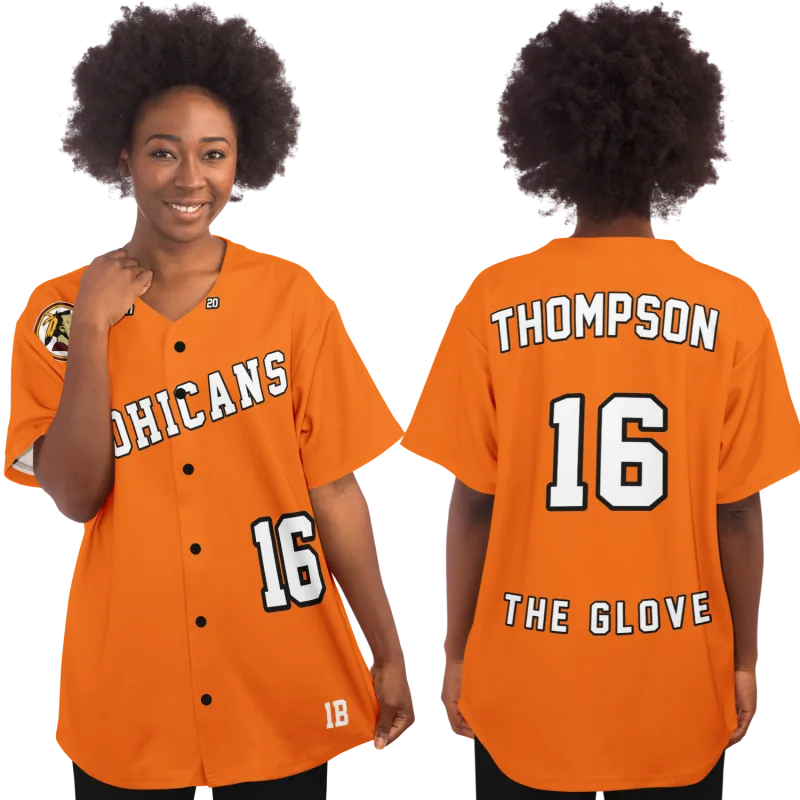
Your jersey is still out there waiting.
While you're getting back into the game, you might also dig out that varsity letter jacket from the back of the closet — here's how to preserve, restore, or display it so it doesn't spend another decade in storage.
Design yours in minutes and see your name and number exactly the way you remember it.
Not sure which numeric size is right? Our jersey size chart explains what 40, 44, 48, 52, 56, and 60 actually mean — sized by chest measurement, not S/M/L.
Frequently Asked Questions
How long does it realistically take to get back in shape for sports after years off?
For most former athletes, meaningful performance restoration takes 10–16 weeks of structured training. The timeline depends on three variables: how long you've been away from training, how consistently you train during the comeback, and whether you avoid the injury interruptions that reset progress. Athletes who follow a phased re-entry structure — rebuilding base before reintroducing sport-specific load — consistently return to competitive shape faster than those who attempt full intensity immediately. Expect weeks 1–3 to feel frustratingly easy. Expect weeks 8–12 to feel close to familiar. The gap closes faster than it feels like it will.
Is it normal to feel more sore than expected when returning to sport after a long break?
Yes — and it's specifically explained by one mechanism: delayed onset muscle soreness (DOMS) is more pronounced when you return to movements you haven't performed in years, even if those movements were once routine. Your muscles respond to the reintroduction of a stimulus they've lost adaptation to, just as a beginner's do. The key difference is that this response diminishes quickly in former athletes — typically within 2 weeks of consistent training — because the neuromuscular efficiency is still largely intact. Severe soreness in Phase 1 is a signal to reduce session volume, not a signal to stop.
What's the biggest injury risk when returning to sport after years of inactivity?
The single most common injury category for returning former athletes is tendon and ligament overload — specifically in the Achilles, patellar tendon, and rotator cuff, depending on the sport. These structures decondition substantially during inactivity and rebuild more slowly than muscle tissue or cardiovascular fitness. The failure pattern: muscle memory enables high-intensity movement before the supporting connective tissue has rebuilt the tolerance to sustain it. The prevention strategy is exactly Phase 1 as described above — deliberate underperformance in weeks 1–3 to allow connective tissue adaptation before sport-specific loads are reintroduced.
Should I tell a doctor or physical therapist before starting a comeback training plan?
If you've had any significant injuries during your time away from sport — or if you have any existing joint or cardiovascular conditions — yes, a physical therapist or sports medicine physician should evaluate your movement patterns and health baseline before Phase 1 begins. If you've been generally healthy and sedentary (not injured or managing a condition), Phase 1 as structured above is low enough in intensity that it does not require medical clearance for most adults. When in doubt, a single movement screen with a sports physical therapist — typically a 45-minute session — is one of the highest-return investments you can make before a comeback.
See also: the grief that comes with leaving your sport behind | how athletic identity shapes who you become after the final whistle | joining an adult recreational league as a structured way to ease back in | what high school sports instilled in you that your body still remembers