

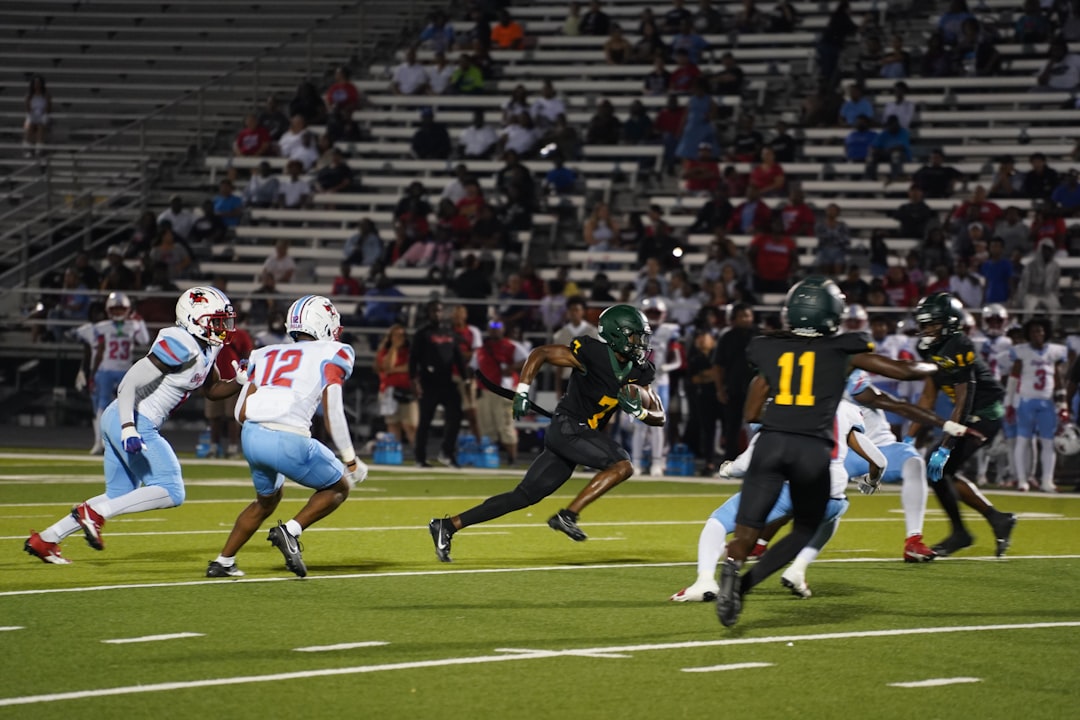




Two-a-days in high school sports are the most demanding, most defining, and most quietly mythologized ritual in American athletic culture — not the state championship, not the rivalry game, not the senior night ceremony under the lights, but those two weeks in August that had to happen before any of that was even on the table. If you went through them, you already know what this is about. If you didn't, there is no clean way to explain it from the outside. This is for the athlete who was there. The one who still thinks about it.
What Two-a-Days Actually Were — And What They Were Really For
The format, on paper, is straightforward: two full practice sessions in a single day, separated by a break, run during the hottest stretch of the year before school started. Morning session. Break. Afternoon session. Repeat for two weeks. Coaches called it preseason conditioning. Athletic directors filed it under skill development. Your parents described it as "that program you wanted to do."
You had a different name for it.
The stated purpose was physical — build the conditioning base, install the system, establish the depth chart before the first game mattered. Every coaching resource written about this format focuses on that layer: session structure, hydration protocols, rest-to-work ratios. That perspective is accurate. It is also entirely the view from the sideline.
What actually happened during those weeks was never written into any curriculum.
It was selection.
Not the kind where a coach cuts a roster, though that happened alongside it. This was a different mechanism entirely. The two-a-day was how a group of individuals who happened to share a uniform discovered whether they were actually a team. The heat was the test. The compounding fatigue by day three was the test. The afternoon session on day five — when your legs had formally lodged their complaint and the sun was cutting through the field at an angle that made the grass look like it was lit from below — that was the test.


Most people encounter only a few situations in their entire lives where they find out what they are actually made of, in a context that demands a real answer. No audience. No scoreboard. No escape route that wouldn't be visible to every person whose opinion mattered most to you. The two-a-day was one of those situations. It did not care what you said about yourself. It only paid attention to what you did.
The Anatomy of the Grind: What That Day Felt Like From Inside It
Every athlete who survived summer training in high school sports carries the same sequence in their memory, regardless of sport, regardless of school size — every August you spent preparing for the grind that was about to define them. The specific details shift. The shape of the experience does not.
The morning session had a texture that no in-season practice ever matched. The field held residual coolness from the night when you arrived. The air was thick but not yet at its full August weight — that arrived around ten. Your body was as rested as it was going to be at any point that day, which still did not mean rested. The opening drills felt mechanical because they were supposed to: high repetition, low-stakes execution, the body finding correct movement before the brain was fully operational. Coaches who understood the format used those early morning hours to install things at a level below conscious thought. The idea was that when the afternoon came and thinking felt expensive, the body would already know what to do.
Then the break. An hour. Sometimes ninety minutes. Enough time to drive somewhere cool, eat something, sit still, and absolutely not enough time to actually recover. This is the detail that surprises people who have never experienced it: the break was frequently harder than either session. You were tired enough to need real sleep. You were not tired enough to get it. You sat in air conditioning with your legs registering everything and watched the clock move toward the afternoon with complete knowledge of what was on the other side of it.
The afternoon session was a different creature. The dew was gone. The field smelled like exertion and cut grass and the particular heat that only August afternoons in full sun produce — what it was really like playing high school football, stripped of every embellishment. Your body had spent the break processing the morning rather than recovering from it, which meant by the time you were warmed up for session two, the physical reserves that usually ran things were already drawn down.
Something else ran things instead. Call it stubbornness. Call it the specific unwillingness to be the one who folded in front of the people whose respect you were still earning. Whatever it was, it turned out to be more durable than fresh legs. In our experience, the athletes who describe their best two-a-day moments almost always locate them in the afternoon of a late-week session — not in spite of the depletion, but inside it, when the usual protective layers burned off and something more reliable stepped in.
That was not a side effect of the format. That was the design.
There is one universal memory that connects athletes across every sport, era, and school size, and it has nothing to do with playbook installation: water. Specifically, how guarded it was. Backed by the now-debunked belief that drinking cold water during exertion caused stomach cramps, many coaches rationed breaks — a few seconds at the shared hose, one or two chances per session, while the August sun did what August sun does. You remember the salt dried white on your skin after practice ended. You remember the heavy, metallic taste of lukewarm water from a hose that had been baking on the field since morning. You remember the way time stretched between breaks, how the space between whistles seemed to double in the afternoon. The practice was dangerous — every medical body now agrees on that — and the rules changed for good reason. But you also remember what surviving it together did to a locker room. No one who shared that hose with you was ever just a teammate after that.
The Bond That Formed on That Field and Never Fully Left
One thing holds constant across every sport, every era, every school: the relationships that formed during preseason conditioning in high school are categorically different from the ones formed anywhere else in the athletic experience.
Not necessarily deeper than championship-run bonds. Different. The championship is the reward. The two-a-day is the forge — two-a-days were brutal, bonding, and unforgettable all at once, and the athletes who survived them have never been the same.
The National Institutes of Health has published research on how synchronized physical effort under stress accelerates social cohesion in ways that low-stakes collaboration simply can't match. You knew this without the citation. You knew it because of what happened around day four or five, when you stopped seeing the people around you as teammates in the abstract and started seeing them as the specific individuals who were getting through this particular thing with you right now, today, in this heat, on this field.
There was someone who made the same flat joke every time the whistle blew for another rep. There was someone who steadied your shoulder pad while you caught your breath, without comment, without making anything of it. There was someone who ran harder when you ran harder — not competing, just synchronized, because it turned out to be easier to push when someone was pushing right beside you.
The practice jerseys eventually gave up those grass stains. The memory of who ran those last four sprints with you — that one never washed out, especially for anyone who played high school sports in the 1990s, the last generation before the internet changed everything.
The Hardest Part of High School Sports Training That Nobody Names
Ask ten athletes to identify the hardest part of two-a-days and you collect ten different answers. The heat index by mid-morning on day two. The afternoon session on day six. The playbook installation when the brain had nothing left to retain new information. The coach who seemed to experience fatigue as a concept that applied to other people. The drive home when operating a vehicle felt like an optimistic assessment of your condition.
All of those answers are accurate. None of them is the hardest part.
The hardest part of the hardest part of high school sports training is the choice made on the second morning.
Day one runs on adrenaline and the novelty of the unknown. You know it will be difficult. It has not been yet. Momentum carries you through it.
Day two, you know exactly what is coming. You woke up sore in muscles you had not previously thought of as muscles. You slept badly because one night cannot return what the first day took. You got in the car with complete and specific knowledge of what the next twelve hours contained — both sessions, the break between them, the afternoon that would be harder than the morning, all of it already visible.
And you went.
That choice — voluntary, eyes open, no adrenaline available, full information about the cost — is the actual character-forming event of the two-a-day experience. Not the conditioning. Not the reps. The return. The second morning.
Athletes who describe two a day practices as genuinely formative are almost never talking about physical development when they say it. They are talking about the second morning. About discovering that they were the kind of person who went back. That turned out to be information worth having, and it transferred — it is how high school sports built your work ethic before you had a job, whether you realized it at the time or not. Every hard thing that came after those two weeks had a reference point already filed.
What You Carried Off That Field
The physical gains from summer training for high school athletes have a shelf life. The conditioning base erodes without maintenance. The playbook becomes irrelevant by the following season. Eventually, for every athlete without exception, the sport ends. The 6AM runner who still feels the call decades later knows this firsthand — the conditioning fades, but the person who built it never lets go.
What does not erode is the knowledge — not abstract, not theoretical, but stored in the body as actual lived memory — of what is possible when the conditions are poor, the body is loud about its objections, and quitting is a real option that no one would necessarily see you take.
The athletes who remember two-a-days most specifically are not, in our experience, the ones who had the best statistical careers. They are the ones for whom those weeks in August represented the most demanding sustained challenge they had faced to that point in their lives. For a sixteen-year-old, that is often exactly what it was.
The peer visibility. The physical load. The unsettled depth chart and the coaches and teammates who had not yet formed their opinion of you. That specific combination of pressures does not assemble itself again in most people's lives.
What you walked off that field carrying — after the last afternoon session ended, after the shower that registered as genuinely earned, after the meal that tasted like nothing before or since — was a reference point with no expiration date.
Every hard thing after it, the two-a-day was already in the file. I have done something like this before. I finished it. I can finish this.
That belongs to you whether you started every game or stood on the sideline. The reference point is not conditional on the outcome or the playing time or the statistics. You were there. You went back the second morning. You finished it.
That is what two-a-day practices memories are actually made of — and no one who wasn't on that field in August can fully understand what that means.
The Practice That Disappeared
Here is something the athletes who survived two-a-days may not realize: you are likely part of the last generation that experienced them as a universal rite of passage. The format you remember — two full sessions, one day, August heat, no exceptions — has been systematically dismantled over the past two decades.
The NCAA eliminated two-a-day contact practices outright in 2017, acting on data showing that 58 percent of football practice concussions occurred during the preseason and that August was the peak month for catastrophic heat-related injuries. The National Federation of State High School Associations followed with contact limits, mandated heat-acclimatization periods, and hydration protocols that made the traditional two-a-day functionally impossible at the high school level. One by one, state athletic associations adopted the new guidelines. What had been the standard became the exception, then the memory.
Other forces finished the job. Year-round strength and conditioning programs — now standard at most schools — eliminated the original rationale for two-a-days: the preseason crash course that compressed months of preparation into two weeks of August. School start dates crept earlier, shrinking the window that once belonged entirely to football. The calendar simply does not permit what it once did.
Whether the change was medically necessary is not really the question here. What is harder to measure — and what matters more to the people who were there — is what was lost. Those two a days, for football players especially, were never only about conditioning. They were a shared ordeal, the kind of experience that draws a dividing line between those who were there and those who were not. Future athletes will have their own tests, their own versions of hard. They will not have this specific one: two practices in one day, in full August heat, with nothing standing between you and the work except the people doing it beside you.
That makes what you carried off that field even more significant than maybe you realized at the time. You did not just survive a demanding preseason format. You experienced something that no longer exists in the form you knew it — a chapter of American athletic culture that closed quietly, without ceremony, and left behind only the athletes who still think about it.
Frequently Asked Questions
When did two-a-days stop in high school football?
The NCAA banned two-a-day contact practices in 2017 after data revealed that 58 percent of football practice concussions occurred during the preseason. High school state athletic associations adopted heat-acclimatization mandates and contact limits in the years that followed, making the traditional two-a-day format functionally impossible at the high school level. Year-round conditioning programs finished the job by eliminating the original need for a preseason crash course.
Why were two-a-day football practices banned?
The ban was driven by a growing medical consensus around preseason injuries. August was the peak month for catastrophic exertional heat illness among high school athletes, and NCAA research showed that concussion rates during preseason practices far exceeded those of the regular season. The combination of heat-risk data and head-injury data made the traditional two-a-day format indefensible from a player-safety standpoint.
Are two-a-days still a thing?
In the form anyone who played before 2010 would recognize, no. State-level heat-acclimatization rules now limit what can be done in a single day, and year-round strength programs have replaced the need for a two-week August crash course. Some programs still hold two sessions during certain training windows, but the unsupervised, all-in, sink-or-swim version that defined the experience for generations is gone from the rulebook.
What was the purpose of two-a-days?
Two-a-days served several purposes at once: they compressed months of conditioning into the narrow window before school started, gave coaches a high-pressure environment to sort the depth chart, and — most lastingly — bonded a roster through shared physical hardship. The format was designed as much to reveal who would keep showing up as it was to build fitness.
But the thing those August weeks were building toward — Friday nights under the lights, the reason high school football never really leaves you — that payoff is permanent. The format may have been written out of the rulebook, but what it produced was never bound by one.
Those August weeks were never just about conditioning. They were the foundation for what came next — the Friday nights when the town showed up and you understood what it meant to play for more than yourself. And decades later, when your son starts his first season — suddenly you remember everything about yours. The years collapse. You are seventeen again, on that August field, and it all comes rushing back.
Your jersey is still waiting — your name, your number, your school colors. Design yours in minutes and see it come to life before you pay a dollar.
Whether you played football under the Friday night lights or battled through basketball preseason in a sweltering gym — or played every sport your high school offered — your colors never crack, peel, or fade — and neither does what you earned that August.