





Being a former athlete raising a young athlete means you never watch your child's first practice the same way other parents do. You're standing on the sideline like everyone else (phone out, trying to get a decent angle), but something underneath the ordinary moment keeps shifting. Your kid is warming up for the first time, jersey a little too big, cleats still clean, movements still tentative. And you are simultaneously right here and somewhere twenty-five years back, and you cannot entirely separate the two.
This isn't a guide to managing that feeling, or a how-to on staying off the field when the other parents start drifting toward the coaches, or a checklist for keeping your expectations in check. This is something simpler and harder: a recognition of what this moment actually is, and why it lands the way it does.
The Season You Forgot You Were Still Carrying
Every former athlete carries a season they haven't finished grieving.
Maybe it was the last one: the final whistle, the walk back to the locker room when you knew, even if you didn't say it aloud, that this was the last time you'd do this. Maybe it was a season that ended wrong: an injury, a loss, a choice you made that you've replayed more times than you'd admit to anyone. Maybe it was one perfect season — the one where the team chemistry was right, the role fit, and the version of yourself you became on that field was the clearest version of yourself you'd ever been.
Whatever season it is, you've been carrying it. Not heavily. Not in a way that disrupts anything. It's just there, folded into some corner of your identity that doesn't surface often.
If you played, you know exactly what this is. That part of you that still measures distances on a field without meaning to. That still tracks defensive rotations watching a game on TV because you can't watch it any other way. That still feels something specific and nameable when you smell the combination of cut grass and synthetic turf and the inside of a helmet that's been sitting in the sun.


You are a former athlete. That doesn't go away.
It just goes quiet. Until your kid laces up.
What Comes Back, and Why It Comes Back So Fast
The psychological research on athletic identity is unambiguous: sport is one of the most durable identity frameworks humans build. A 2019 review published in the Psychology of Sport and Exercise found that former athletes maintain a strong athletic self-concept well into adulthood, even decades after competition ends, and that identity becomes most activated during what researchers call "role-relevant triggers." Watching your child step onto a field for the first time is about as role-relevant as anything gets.
But you didn't need a study to tell you that. You felt it before the first drill finished.
What comes back isn't only memory. It's embodied knowledge: the information stored in your muscles and your instincts, not in your conscious mind. The way your stomach tightens when something is close. The specific quality of focus that narrows the world to a single point. The feeling of being completely, entirely present — more present than you've been in years of meetings and commutes and late-night scrolling.
In my experience as a former player, the word former athletes reach for when they describe this moment isn't "nostalgic." It's real. Like that chapter of life had a texture and a density that a lot of what came after has been missing. And watching your child search for their version of it (even in the fumbled early drills, even in the jersey that doesn't fit yet) brings that realness back with a force that surprises you.
That's not a small thing. That's your identity reactivating.
The Difference Between Watching and Remembering
Here's where it gets layered.
You're not just a parent on the sideline. You're a former athlete watching a young athlete, and those are two entirely different sets of eyes operating at the same time. Every parent sees their kid out there. But you see something else underneath it.
You see the specific way your child holds their body when they don't know what to do next, and you recognize that posture. You wore it. You remember the feeling of being the new one, the unproven one, the one who hasn't earned anything yet and knows it. The one with everything still ahead.
You watch them make a mistake and you track not the error but the two seconds after it. The recovery. The way they reset. That response tells you something true about them — something that won't show up in any statistic. You know this because you learned it about yourself the same way.
There's a version of this that plays out in ballparks every spring. A kid starts flinching at the ball, terrified of anything thrown above the waist, the way a young left-hander often is. The former catcher standing behind the fence knows exactly what that flinch costs, how long it takes to unlearn, and what makes it worse. He also knows there is nothing he can say that would shorten any of it. Nobody could have talked him out of his own version; it had to burn off on its own. So he keeps his hands in his pockets and says nothing, practice after practice, and stays right there for the moment it finally does.
That's the former athlete's specific gift as a parent. You know things that cannot be said. You know the timeline of learning a sport in your body — not the theory of it, the actual experience of it. You know which fears burn off and which ones have to be faced directly. You know the difference between a bad week and a bad pattern. You've been here. Not in this child's story. In your own.
Every Former Athlete Remembers the Season That Made Them
There's a first season for every athlete that divided time.
Before it, you were a kid who played a sport. After it, you were an athlete. Something crystallized. Something became yours in a way it hadn't been before. Maybe it was the season you made a team you had no business making. Maybe it was the season you found your position — the specific role that fit so well it felt like it had been held for you. Maybe it was the season a coach said something you still carry, word for word, in a way you've never been able to fully explain to someone who didn't have a coach like that.
Every former athlete has that season. And watching your child search for theirs (whether it starts at summer camp, where the next generation of Friday night heroes is forged or at the first practice of the season) is a particular kind of love that the language hasn't caught up to yet.
Because you know what it means if they find it. Not professionally, not financially; you know what it builds in a person. The capacity to fail in public and come back the next day. The knowledge that effort and outcome are not separate things. The experience of being part of something that requires you to be more than you currently are and discovering that you can be.
You want that for your child. Not because playing made you successful in the ways the world measures success. Because it made you you. And you've been yourself your whole life since then, and you've noticed that it matters — the way a person who has competed knows how to compete, how to recover, how to be present under pressure.
That's what you're standing on the sideline hoping to give them. Not a stat line. Not a scholarship. The thing that playing actually does to a person from the inside.
The Hardest Thing About the Sideline
Here's what nobody prepares you for.
You have to watch. You cannot play.
This sounds self-evident. It isn't. Because you know (not theoretically, but in your hands and your feet and your read of the play developing) exactly what your child could do differently in this moment. You have the pattern recognition. You have, stored somewhere in your nervous system, the physical memory of executing this correctly. And you cannot transfer it. You cannot reach across the fence and pour two decades of athletic memory into your child's body.
They have to earn it the way you did: slowly, imperfectly, in real time, with real stakes.
The pull to coach from the sideline has little to do with ego. It comes from being a former athlete whose instincts haven't fully accepted that this game is not yours to play, and that competitive fire you spent years building doesn't just go quiet. The discipline of watching without directing turns out to be one of the more demanding things this role asks of you.
It also turns out to be one of the most important. The child who has a parent who trusts them to figure it out — who is present and excited and genuinely interested without being directive — learns to trust themselves. And self-trust, as any athlete who has competed at a pressure moment can tell you, is the whole game.
Here's the counterweight to all that discipline of not directing: you still get to choose what you praise, and it turns out to be one of the most consequential choices you make all season. Praise the result, and you quietly teach your child that the scoreboard is the report card — that a win is the only proof of worth. Praise the effort, and you teach them the thing a full playing career eventually teaches every athlete: that the work is the thing. The rep. The reset after a mistake. The courage to try something harder than they knew they could. The research on how children build resilience points one way — children praised for effort learn to struggle and keep going; children praised only for outcomes learn to fear the struggle. You know, in your bones, which of those two children becomes an athlete. So say the small, specific things out loud: I saw how hard you worked on that. I saw you get back up. They'll feel too small in the moment. They aren't.
What This Season Is Actually For
You might think your child's first season is for your child.
It is. But it's also for you.
In the years between your last game and this morning, you filed away a version of yourself. The version that competed, that pushed, that felt the specific aliveness that comes from real athletic effort. The seasons kept turning — back to school, back to the field — but the games went on without you in them. Life filled in with other things, good things, full things, and that version of you got quieter.
Your child's first season is a summons. Not back to competition — that chapter is what it was, and it was enough. But back to presence. Back to the part of you that knows what it means to be fully inside a moment, to care about an outcome, to have something real on the line.
There's a question worth asking yourself on the drive home, when the post-game quiet settles in: Am I here for my child's season, or am I trying to finish mine? Every former athlete stands somewhere on this line, and the pull toward the second answer isn't a failure — it's the natural gravity of an identity that still wants to be fed. But the two versions feel different once you name them. When you're present for your child, the outcome matters less than who they're becoming. When you're finishing your own season, your child's performance becomes a report card on you — and they can feel that weight even if you never say a word about it. Checking your why doesn't mean you stop caring, or stop wanting things for them. It just means you make sure the fire you bring to the sideline is warmth for them, not a furnace you still need feeding.
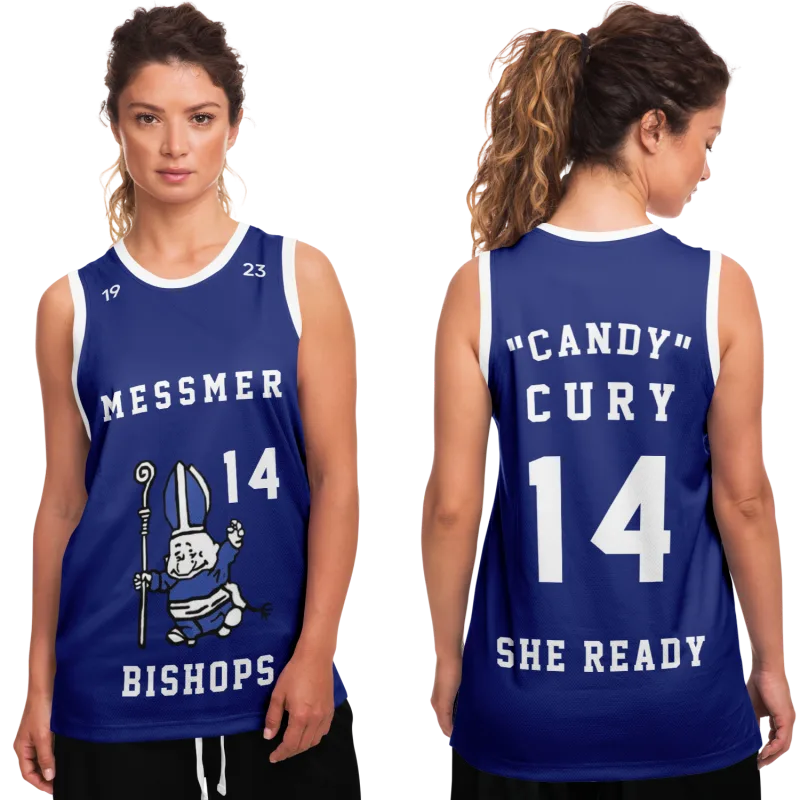
You are not just a parent watching a kid play a sport. You are a former athlete whose story is continuing in a form you didn't entirely anticipate. The jersey you're thinking about ordering with their name and number on the back — you already know what that means, because you remember exactly what yours meant. That feeling hasn't changed. It's just wearing a different name now.
Your jersey is still out there waiting.
Design yours in minutes and see your name and number exactly the way you remember it.
Frequently Asked Questions
How do I support my child in their first season without projecting my own athletic experience onto them?
The distinction comes down to listening versus leading. Ask your child what they thought about practice (what part felt hard, what they want to get better at) and let those answers shape the conversation, not your own read of what you saw from the bleachers. Your athletic experience is genuinely useful when offered as context: "I remember feeling that way when I was learning this." It becomes a problem when it arrives as instruction before your child asked for it. The former athlete raising a young athlete has a real advantage here: you know what it feels like from the inside, which makes you a better listener than a parent who never played.
What if my child is playing a sport I never played? Does my athletic background still transfer?
More than you'd expect. The sport-specific technique doesn't carry over, but everything underneath it does: how to manage nerves before a big game, how to recover from a mistake without losing your next rep, how to be a teammate when you're not the one getting recognized, how to work with a coach whose style doesn't match how you learn. These are universal athletic competencies. The fact that you played hockey and your daughter is playing soccer doesn't diminish what you understand about what she's going through. It just means you lead with questions about her sport rather than answers from yours — which, as it happens, is the right posture anyway.
How do I handle unexpected emotions watching my child compete — grief, ache, pride that feels too big?
Let them move through you without making them your child's problem. The unexpected emotion — the ache of watching someone else do the thing you used to love, the grief of a playing career that ended before you were ready, the pride so large it has no appropriate outlet — is not a dysfunction; it is information about how much that chapter of your life mattered. What you don't want is for your unprocessed feelings to become visible pressure on the sideline. If you notice yourself getting too activated (too loud, too invested in the result, too visibly affected), step back and give yourself space to process it separately. Your child's first season deserves a parent who is present for their experience. Which means you have to stay honest about yours.
See also: what it means to carry an athletic identity long after the final whistle | why high school sports still matter to adults decades later | the grief that comes when your playing days end at 18 | what high school sports taught you that nothing else could | why your senior season memories are still so sharp and vivid