




You wake up before the sun because that is what you have always done. Not because a coach or a training plan says so. But because somewhere deep in your bones, the call is still there — the same one that pulled you out of bed at 5:45 AM during high school cross country season, when the world was quiet and the only sound was your breath and your feet hitting the pavement.
You are a former cross country distance runner adult now. Your career is different. Your body is different. Your PRs may be behind you. But that 6 AM feeling? That never changed.
The Private Language of Distance Running
Distance runners speak a language that is nearly invisible to everyone else. Cross country races unfold on wooded trails where parents see only a flash of a singlet between trees before the next gap. Track distance events happen in the middle of the infield while the stadium watches sprints and relays. You run your 3200 with a few dozen people in the stands who are there because they love someone on the team, while the rest do not even realize a race is happening.
The language is this: split times. Heart rate zones. Mile repeat paces from a workout your senior year that you still remember down to the second. The internal negotiation of the third mile — just make it to that tree, then just make it to the next one — that ends when you cross the line and your body collapses into grass that has never felt more comfortable than it does in that moment.
If you have never been a distance runner, this sounds miserable. If you have been one, it sounds like greeting an old friend.
This is why you still lace up at 6 AM. Not because the morning is efficient or the roads are empty — though both are true. You lace up because the person you are at 6 AM is still connected to the person you were at 17. The same internal negotiation. The same willpower conversation with yourself. The same quiet pride of doing something hard before anyone else has opened their eyes. That thread has never broken.
What the Watch Knows That Nobody Else Does
Your watch knows things about you that your closest friends and family do not. It knows your mile repeats from college. It knows the 5K PR from your senior season that you still compare every new race against. It knows the route you ran every day during championship season — the one you still run when you go home for the holidays.


Distance runners have a relationship with time that is unique in sports. A football player measures time in quarters. A basketball player measures it in possessions. A distance runner measures it in the gap between one breath and the next, in the difference between a 5:45 mile and a 5:50 mile, in the twelve minutes that defines a 3200-meter race after two years of training for it.
That relationship does not dissolve when high school ends. It becomes part of how you approach everything. The discipline — that progress comes in small increments over long periods, that most of the work happens when nobody is watching — shows up in your career, your parenting, your marriage. You learned it on the trails and the track. You live it everywhere now.
The State Track Championship Moment That Never Left You
Track season comes every spring. Athletes across the country step onto the same blue tracks you once stepped onto. They are hearing the same starter pistol. They are feeling the same adrenaline spike that makes distance runners do something paradoxical: slow their breathing on purpose before a race they are about to run at maximum effort.
If you ran distance in high school, you remember your state meet — or your conference meet, or your sectional meet. The one where everything clicked. Or the one where nothing did. Distance runners remember both with equal clarity.
You remember the sound of your own breathing in the last lap, because it was the only thing you could hear. You remember looking at the clock and doing the math — can I hold this? Do I have another gear? — with your lungs burning and your legs begging you to stop. You remember crossing the line and not knowing whether to throw up or cry, and sometimes doing both.
That is the private glory of distance running. It is solitary. But the result is on the clock for everyone to see. You earned that time, that place, and the right to wear the jersey with your school's colors on it.
Cross Country Gave You Something Different
Track gave you the clock, the lanes, the precision of measured distance. Cross country gave you something else entirely. Cross country running is racing over open-air courses on natural terrain — a description that does not capture what it actually feels like. Cross country gave you the hills, the mud, the weather that turned a race into survival. It gave you the feeling of running through a park in November with leaves underfoot and your teammates spread across the course like beads on a string, each one fighting their own battle.
Cross country is what made you tough in a way track alone never could. There is no PR to chase on a hilly 5K in the rain — there is only the finish line. Cross country taught you to run when you could not see the end, to push when there was no clock, to trust that the effort mattered even when the results did not show up on a scoreboard.
That is the kind of toughness that stays with a person. It is the kind of toughness that has you lacing up at 6 AM on a Tuesday twenty years later, not because you have a race, but because the person who ran through the rain in November 2006 would expect nothing less.
The Jersey You Never Got to Keep
Here is the part that hits different for distance runners. In most high school sports, you get a jersey. You keep it. It hangs in your closet or ends up in a scrapbook. But in cross country and track, the jersey — often a lightweight singlet — is frequently a single-use piece of gear. You wear it for the season and return it. You never actually owned the thing you earned.
You have the medal somewhere, probably in a drawer or a bin you have not opened in years. You have the team photo. You have the finish times burned into your memory. But you do not have the jersey.
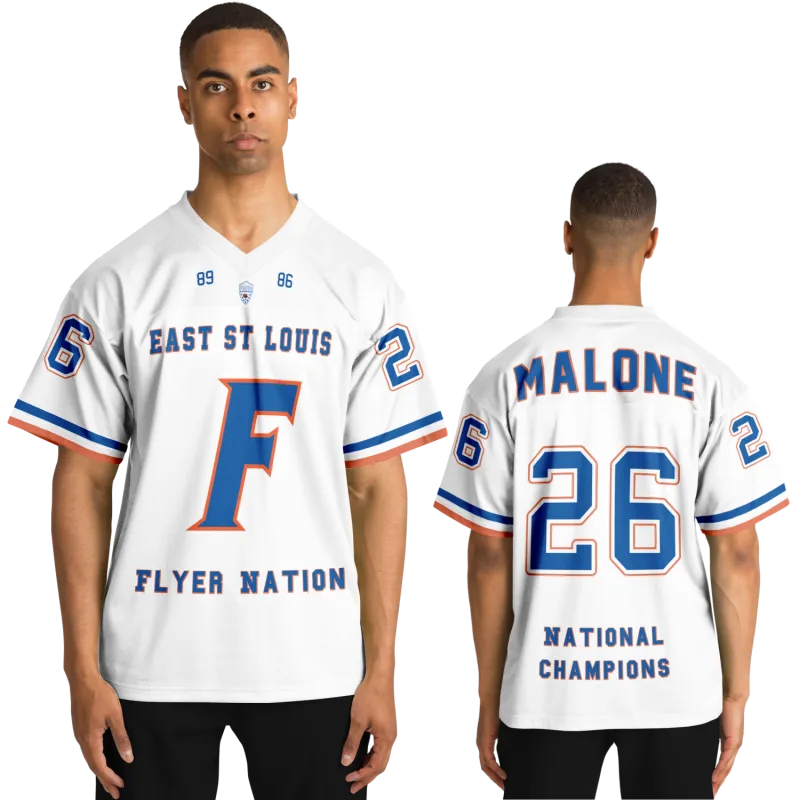
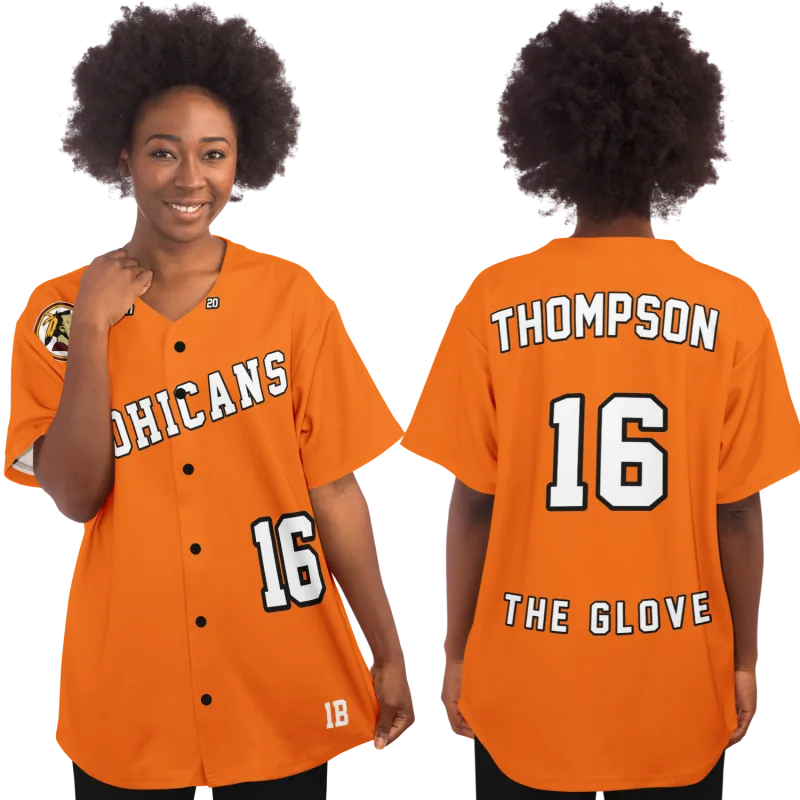
That is the gap iPlayedFor exists to close. We are the only company built specifically for former high school athletes who want to wear their number again. Your name. Your number. Your school colors. You design it yourself in about 60 seconds through our step-by-step design wizard. We print it with full sublimation — colors that never crack, peel, or fade — so the jersey you hold is the one you earned.
This is not a generic custom apparel site. It is not a fan jersey with a pro athlete's name across the shoulders. It is your jersey. Your sport. Your colors. The one you trained for through August heat, November rain, and May championship meets.
Wear It Again
The 6 AM miles are not going anywhere. Neither is your identity as a distance runner. That is not the kind of thing that fades when the season ends. It becomes part of who you are — the part that wakes up early, pushes through discomfort, and knows the value of doing hard things when nobody is watching.
You earned that identity. And now, for the first time, the number that was your whole identity at 17 is something you get to wear again.
Design your track and field jersey or cross country jersey today. Choose your school colors. Type your number. See a live preview of the jersey that 17-year-old you would wear with pride. If you still have that old team photo tucked away, you can even design it from an old yearbook photo.
Start designing — it takes about 60 seconds. Whether you are still chasing weekend PRs or have not raced in a decade, the jersey is real. The miles were real. And the person who ran them deserves something to show for it.