
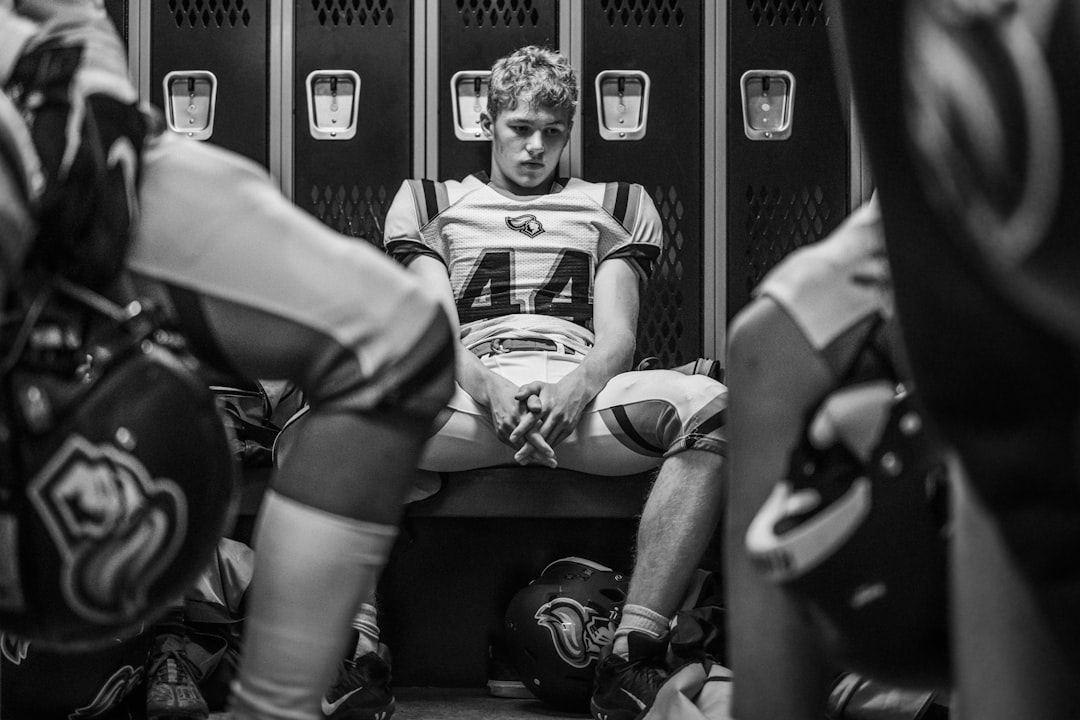
The multi sport athlete benefits in high school have been studied, argued over, and written about extensively — but almost always by people making the case to parents and coaches, not to the athletes themselves. If you played three sports, you aren't reading this to be convinced. You lived it. What you're looking for is someone who can finally articulate what that experience actually produced in you, beyond the standard talking points about injury rates and recruiting statistics.
This is that article.
What Switching Sports Every Season Actually Did to You
The public argument for multi-sport participation almost always starts with overuse injury prevention. Varying movement patterns, resting specific muscle groups, giving a pitcher's elbow or a runner's knee time to recover before the next season demands it. That's a legitimate benefit. It's also the least interesting thing playing multiple sports in high school built in you.
The more consequential thing that happened was this: every few months, you walked into a different gym, under a different coach, with a different group of teammates, and you had to reconstruct your athletic identity from scratch. No one held your place. No one explained your value to the new room. You had to demonstrate it again, starting on day one.
In the fall, your role might have been established and your reputation solid. By December, you were the newcomer in a different program trying to earn minutes or a spot in the rotation. That arc — built credibility, then reset to zero, then rebuild — ran three times a year for four years.
Twelve cycles of starting over while being expected to contribute. There is no single-sport path that generates that particular kind of pressure, and there is no substitute for what it builds. A player who commits to one sport in September of freshman year and stays there through May of senior year accumulates genuine depth. What they do not accumulate is range — the specific adaptability that only comes from having had the floor pulled out from under you repeatedly and learning to find your footing anyway.
The cognitive flexibility researchers now connect to multi-sport athletic backgrounds — reading unfamiliar situations quickly, performing without the comfort of established routine, adapting under pressure in environments that don't feel like home yet — was constructed in exactly those first two weeks of every new season. You weren't pursuing development. You were trying to make the team. The development followed regardless.
The Cross-Sport Skill Transfer No Coach Ever Named
Here is something that happened inside your athletic career whether anyone named it for you or not: what you learned in one sport kept surfacing in the others.
The lateral quickness you built on the basketball court showed up in your footwork on the soccer field. The breath control you developed in the pool changed your endurance in the fourth quarter in ways that teammates who hadn't swum couldn't quite replicate. The mental toughness that wrestling produced — that specific, undecorated variety forged from being alone on a mat with no teammate to absorb any part of the pressure — appeared in every high-stakes individual performance moment you faced afterward.
Sport scientists call this positive transfer: when a motor skill or cognitive pattern developed in one sport measurably improves performance in another. Research published in the Journal of Sports Sciences has documented this effect across multiple sport pairings, particularly in sports that share anticipation demands, reactive decision-making, or spatial awareness under pressure.
But the transfer ran deeper than mechanics. You also accumulated a working knowledge of how to be coached by fundamentally different kinds of people. Some coaches taught through film and quiet observation. Some coached through proximity and intensity. Some built team culture around genuine relationships; others built it through managed discomfort. You moved through enough different leadership styles that you developed an internal catalog — you learned what kind of environment brought out your best performance, what kind didn't, and how to produce in both regardless of your preference.
That is a form of emotional intelligence most 18-year-olds do not possess. You had it, because you had been tested in enough different contexts that you stopped requiring the context to feel familiar before you could perform in it.
Three Completely Different Teams — and What That Built
Each sport handed you a different team, and that fact carries more weight than it first appears.
In the fall sport, you were a defined version of yourself. Your role was understood, your relationships with teammates were established, and your competitive identity within that group had been built over time. By mid-December, that entire structure had dispersed into different hallways and different practice schedules. A new team was waiting. New trust to establish. New social dynamics to read and navigate from the beginning.
By spring, a third group entirely.
Over four years, you built real relationships inside three separate athletic communities within the same building. The bonds formed during early-morning cross country runs were not the bonds formed in a baseball dugout. The version of leadership you developed on the volleyball court was tested again — under different conditions, against different expectations — in the wrestling room six months later.
Maya R., 34, played volleyball, ran indoor track, and started at shortstop for her high school softball team in Ohio. She describes the volleyball team as the place where she learned to communicate without pause — there is no silence between good volleyball players, not during a live rally — and the track team as the environment where she learned what it meant to compete in complete isolation, with no teammate to share the weight of the result. "Softball combined both of those things," she says. "I knew when the moment called for being loud and when it called for going completely quiet inside myself. I didn't understand until I was well into my thirties that I'd learned those two things in different gyms, from different coaches, for entirely different reasons."
What Maya describes is something organizational researchers now recognize as a measurable developmental advantage: the capacity to move fluidly between collaborative and individual performance modes without losing effectiveness in either. Most athletes develop one mode deeply. Multi-sport athletes develop both, under genuine competitive pressure, in environments where the consequences of getting it wrong were real enough to make the lessons stick.
Sport Specialization vs Multi-Sport: What the Evidence Actually Demonstrates
The pressure toward early single-sport commitment has intensified steadily for two decades. Club programs, travel team schedules, year-round position-specific training — the entire infrastructure now signals that choosing one sport early and building everything around it is the pathway to advancement. Deviating from that path reads, in most youth sports environments, as a lack of seriousness.
The evidence runs in the opposite direction.
Studies tracking athletes through elite college programs consistently show that the majority of Division I athletes — including most of those who reached the professional level — played multiple sports through high school. Early specializers show higher rates of overuse injury, burnout, and voluntary athletic disengagement before the end of their teenage years.
The sports medicine community has shifted substantially on this question. The American Academy of Pediatrics has issued formal recommendations against single-sport specialization before age 15, citing both physical and psychological developmental risks that compound when a young athlete's body and identity are confined to one movement pattern and one competitive context across their entire formative development window.
The debate over sport specialization versus multi-sport development is almost always framed for the people making current decisions — parents, coaches, administrators. The adults who already ran the experiment are rarely asked what they found. Their data is the most relevant available.
Here is what that data looks like in specific terms:
Physical outcomes: - Lower rates of overuse injury across the full adolescent development window - Broader movement vocabulary and more complete muscular development from varied training demands - Greater cardiovascular versatility from exposure to different energy system requirements
Psychological outcomes: - Elevated resilience to failure — having failed across three different contexts, you developed the understanding that a bad outcome in one arena did not define your identity in another - A more durable athletic self-concept, because it was never entirely anchored to a single sport's results - Wider coachability, built from genuine repeated exposure to different leadership philosophies and motivational approaches
Social outcomes: - A peer network that extended across the school's athletic community rather than concentrating in a single team's orbit - Repeated experience building trust quickly in unfamiliar groups under competitive pressure - Interpersonal adaptability that accumulated from never being permitted to stay comfortable in one social environment for too long
None of these appear on a recruiting profile. All of them surface in the decades after the final game.
The Athletic Identity That Outlasted Every Season
A single-sport athlete could construct a complete identity around their sport. The position, the number, the team, the record — all of it formed a coherent self-concept that deepened over four years. When that sport ended, the clearest version of who they were athletically ended with it.
You never had that option. Every four months, your story required revision. You were the linebacker who was also the point guard who was also the second-seeded 160-pound wrestler. Those identities didn't merge into one another — they coexisted inside you simultaneously, and the act of holding all of them together while moving between them was its own sustained form of development.
What that produced was an athletic identity broader than any single sport, which meant it was more resilient than any single sport. When football ended, basketball was already underway. When basketball closed, track was beginning. And when the last season finally ended — when you walked out of that building for the last time with your career behind you — you carried something out that the single-sport athlete didn't carry in the same form.
You had the lived experience of having been genuinely competent at multiple things. Of having belonged, truly belonged, to multiple teams with different cultures and different standards. Of having reset and rebuilt, season after season, until rebuilding became something you did naturally rather than something that required courage.
Our team talks to a lot of former high school athletes. The ones who describe their athletic years most fully — not as a single peak moment but as a complete, layered experience — are almost always the ones who changed sports when the calendar told them to and figured out how to start over in a new room without losing what they'd already built.
That fullness belongs to you. It was constructed across three seasons, three gyms, three sets of teammates, and twelve separate rounds of proving yourself somewhere new. The number on your back changed with every sport. But it was always your name above it.
Why the Multi-Sport Athlete Is Genuinely Disappearing
Specialization rates in youth sports have climbed consistently for twenty years. The average age at which young athletes commit exclusively to a single sport now falls well before high school in most club pipelines, and the trend line has not reversed.
The structural causes are not complicated. Club programs require year-round attendance and treat participation in another sport's season as evidence of divided commitment. High school coaches at competitive programs increasingly favor athletes who have spent every off-season in sport-specific training systems. The college recruiting calendar has compressed far enough that a sophomore without a clear primary sport already registers as behind the curve in many evaluation frameworks.
The institutional data paints the same picture from the adult side. A comprehensive survey of high school athletic directors conducted by the National Interscholastic Athletic Administrators Association (NIAAA) found that 80 percent of ADs report student-athletes in their programs are now specializing in a single sport. The same survey revealed that 97 percent of athletic directors believe multi-sport participation is the ideal developmental path, and 100 percent of ADs identified parents as the number one source of specialization pressure. The adults running high school athletic departments overwhelmingly endorse the multi-sport model — and they overwhelmingly watch the single-sport model win, driven by parental anxiety about recruiting visibility.
The system is built to optimize for short-term competitive results and early recruiting legibility. It is not built to optimize for the athlete's long-term development, psychological resilience, or wellbeing after sport. The clinical evidence is unambiguous on this distinction. The incentive structures face entirely the other direction, and the incentive structures are winning.
The generation of athletes now moving through high school is in many cases technically more advanced in a primary sport at 16 than athletes from earlier generations were. They have also, in many cases, built narrower identities, smaller cross-sport networks, and more fragile competitive self-concepts. When the single sport ends — as every sport ends — there is one story to set down. You had three.
The difference in how that landing feels, and in what you carry forward from it, is not a minor variation. It is the whole thing.
The Numbers Parents and Coaches Need to Know Right Now
Everything you just read is grounded in what you experienced — the emotional and developmental reality of moving between sports for four years. But the conversation about multi-sport participation isn't just a retrospective one. It is happening right now in pediatric sports medicine offices, athletic department meetings, and living rooms where parents are asking the question: should my child play multiple sports or specialize early? The data being produced in those conversations directly validates the path you ran.
The strongest single signal: 88 percent of NFL draft picks in recent years were multi-sport athletes in high school. That figure does not come from a narrow survey or a single-season snapshot. It has held across multiple draft classes, across NCAA research, and across analyses by the NFL Players Association. The athletes who reach the absolute ceiling of professional football were, in overwhelming proportion, the ones who spent their high school years moving between gyms and fields rather than locking into one sport year-round. The benefits of not specializing in sports do not end at the high school level.
The injury research tells the same story from the other direction. A landmark study by Bell et al. published in the American Journal of Sports Medicine found that young athletes who specialized early were 1.8 times more likely to suffer overuse injuries than their multi-sport peers. These youth sport specialization risks are often underestimated by parents and programs focused on short-term results. The mechanism is straightforward: the same joints, tendons, and muscle groups undergoing identical loading patterns twelve months a year accumulate microtrauma that varied movement patterns naturally diffuse. The early sport specialization statistics carry a clear warning — this is not just about burnout. It is about structural damage that follows athletes into adulthood.
More recent work reinforces the finding from a different angle. A 2025 study published in the Journal of Strength and Conditioning Research (VanZile et al.) examined 110 male high school athletes across specialization levels and found that highly specialized athletes demonstrated measurably poorer dynamic balance compared to their moderate- and low-specialization peers. Jumping performance was statistically identical across all groups — meaning that specialization produced no detectable improvement in explosive power while measurably degrading the balance and stability that underpin virtually every athletic movement. The study adds a specific, quantifiable data point to something multi-sport athletes understood intuitively: narrowing your movement vocabulary does not make you more athletic. It makes you more fragile.
At the elite level, the pattern holds. A UCSF study examining NBA careers found that multi-sport athletes in the league played 19 percent more games over their careers and were twice as likely to receive professional awards, including All-Star selections and All-NBA honors. The same adaptability that kept you healthy through three seasons also appears to extend careers at the highest level of competition.
The youth participation data carries its own urgency. Current research shows that 70 percent of young athletes who specialize in a single sport will drop out by age 13. Burnout, overuse injury, and the emotional toll of year-round pressure in a single environment drive the departure. Meanwhile, the Michigan High School Athletic Association's most recent survey data shows multi-sport participation currently at 45.4 percent and rising slowly — suggesting that after two decades of intensifying specialization pressure, the pendulum may be beginning to shift back.
The path you ran through is the one the evidence still points toward.
Your Jersey Is Still Out There Waiting
The number on your back meant something different in every sport you played. But it was always yours.
Design yours in minutes and see your name and number the way you remember it.
Frequently Asked Questions
Were multi-sport athletes actually better than single-sport athletes in high school?
"Better" depends entirely on the metric. Single-sport specialists often reached higher levels of technical proficiency in their primary sport by late high school, particularly in disciplines built around narrow, deeply practiced skill sets. Multi-sport athletes consistently demonstrated advantages in adaptability, resilience to failure, breadth of coachability, and the capacity to perform effectively in unfamiliar competitive environments. By most developmental measures beyond sport-specific technique, the evidence favors the multi-sport background. Long-term research tracking athletes into professional careers reinforces this — the majority of athletes who reached the elite level report multi-sport high school histories, not early specialization.
Does playing multiple sports in high school actually help with college recruiting?
It depends on the sport and division level. At the D1 level in high-profile revenue sports, specialization pressure is real and coaches often prefer athletes whose entire developmental history has been focused on a single system. Across D2, D3, NAIA, and most non-revenue sports, coaches frequently cite multi-sport backgrounds as a positive indicator — it signals physical versatility, coachability across coaching styles, and the competitive resilience that comes from having been tested in genuinely different environments. Multi-sport athletes also show lower burnout rates, which matters practically to coaches who need an athlete to remain engaged and healthy across a full four-year college career.
I only played one sport in high school — did I miss out on something important?
Not necessarily. The benefits of being a multi-sport athlete are specific and real, but single-sport athletes who experienced genuine competitive adversity, high-quality coaching, and strong team cultures developed many of the same transferable capacities through a different path. What determines the quality of the developmental outcome is not the number of sports but the depth and variety of challenge — how often you were required to adapt, how many different competitive pressures you navigated, how frequently failure forced you to rebuild. Some single-sport athletes had richer developmental experiences than some multi-sport athletes, depending entirely on the environment they were in. The multi-sport structure simply created more frequent, more varied, more structurally enforced opportunities for that kind of growth to occur.
Why do youth sports programs push early specialization if the research favors multi-sport development?
The incentive structures of youth sports reward short-term competitive results and early recruiting visibility, not long-term athlete development. A club program whose financial stability depends on winning and retaining families benefits from athletes who have specialized early, regardless of what that specialization costs the athlete at 17 or 22. The American Academy of Pediatrics, the National Strength and Conditioning Association, and most sports medicine organizations have published formal recommendations against early specialization specifically because the clinical evidence contradicts the practices the market has normalized. The system was not designed around what was best for you. You developed the way you did in spite of pressures that were already building when you were playing. That context is worth understanding — it clarifies exactly what the multi-sport path you took was actually worth.
See also: what high school sports actually teach you that classrooms never could | the identity loss that follows when the sport is gone | why high school sports still matter so much to the adults who played them | the grief that hits when your playing days are over at 18 | 10 signs you're still a high school athlete at heart