

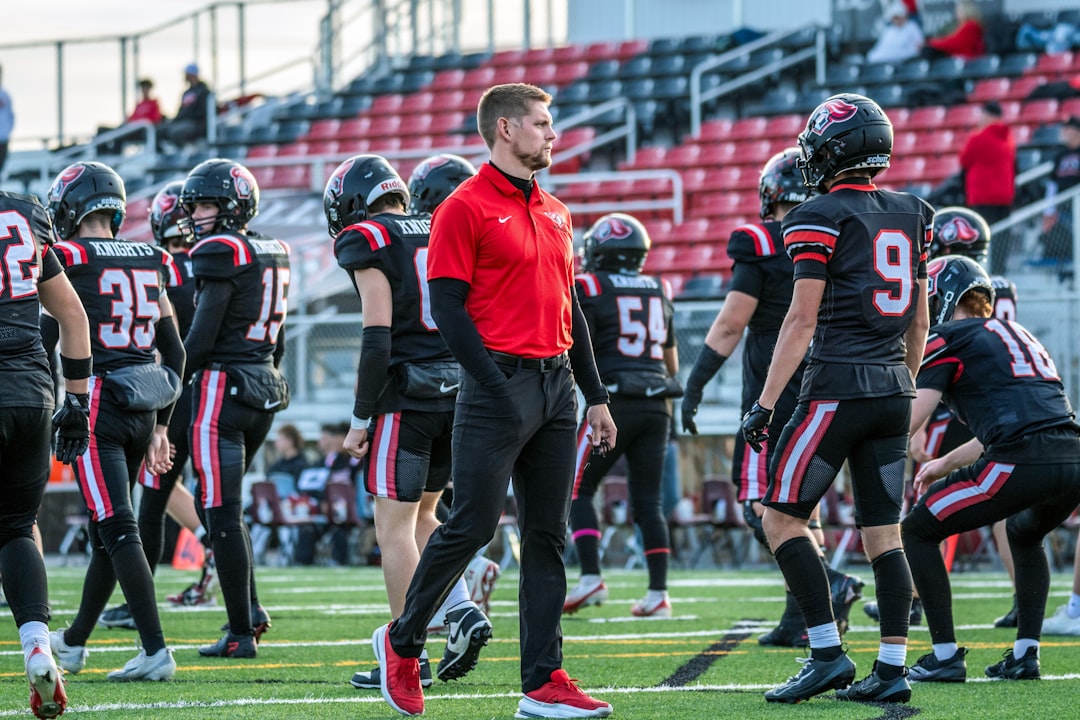




It's August. The alarm goes off at 5:45 AM and for one split second — before you're fully awake — you're back there.
Back on that practice field. The grass still wet from the overnight dew. The sun already threatening. Your shoulder pads not yet broken in, your cleats not yet familiar with the ground beneath them. The smell of cut grass and athletic tape and the particular kind of nervous sweat that only happens before something genuinely hard.
Two-a-days football. Two practices in a single day. Five, six, sometimes seven days in a row. The defining ritual of August for every player who ever laced up cleats at the high school or college level. The early mornings, the two-a-days, the film sessions — that was labor, and Labor Day is for athletes too.
You hated it. You'd do anything to be back.
That contradiction — the one you've carried for years since — is what this is about.
What Two-A-Days Actually Were (Not the Mythology — the Reality)
Let's be honest about what two-a-days football actually looked like before we spend a single word romanticizing it.
The first session started early. Depending on your program, that meant anywhere from 6:00 to 7:30 in the morning, before the August sun had a chance to fully establish its cruelty. Helmets on. Pads on. Install periods, walkthrough, individual drills. The coaches were not in a warm mood. You weren't in a warm mood. Nobody had slept enough. Nobody had eaten quite enough. The grass was wet and your ankles were tight and somewhere in the back of your mind you were already thinking about the afternoon.
Because there was always an afternoon.
The midday break lasted two to four hours depending on the program. You ate. You iced. You slept on a training table or a gym floor or the back seat of somebody's truck in the parking lot. You told yourself the afternoon would be easier.


It was never easier.
The second session was full pads, full speed, full contact. The temperature was now at its daily peak. Whatever physical edge you'd carried into the morning session was gone — burned off by the first practice and the incomplete recovery between them. Everything hurt in specific, nameable ways: the hip flexor you'd tweaked on Tuesday, the shoulder you'd landed on wrong, the blister developing under your left heel from three days of the same footwork drill.
And yet.
The coaches pushed. The veterans led. The freshmen — the ones who'd never been through it — showed you who they actually were in those afternoon sessions. And you showed yourself who you were too.
That part doesn't make it into the mythology as often as it should. Two-a-days weren't just conditioning. They were a diagnostic. Every player on that roster was being revealed — to the coaches, to their teammates, and most of all to themselves.
The Things Nobody Warned You About
The physical part — the actual football, the hitting, the conditioning — that was the part you'd expected. What you didn't expect was everything that happened around it.
The boredom. There were long stretches during install and film that moved at a pace that felt impossible to survive. You were nineteen years old with your entire body begging for movement, sitting in a dark room watching tape of a team you hadn't beaten in four years. The ability to stay locked in during those hours was its own form of training.
The strange intimacy of it. By day three of two-a-days, you knew things about your teammates you'd never have learned in a season's worth of regular practices. You knew who complained and who went quiet. You knew who picked people up and who needed to be carried. You ate together, struggled together, crashed together in that dead hour between sessions. Relationships that started in August training camp had a particular density to them — forged under conditions that didn't leave room for performance or posturing.
The way time worked differently. A single day of two-a-days could feel like a week. And yet the whole camp — two weeks, sometimes three — collapsed in memory into a single vivid sequence. The specific afternoon it rained and the field turned to mud. The night someone snuck food into the dorms after curfew. The morning your position coach pulled you aside and said something — four or five words — that you still think about.
The moment it clicked. Somewhere in the second week, usually, something changed. The pads started feeling like a second skin. The plays stopped being memorized and started being felt. Your body stopped fighting the schedule and started adapting to it. You went from surviving two-a-days to operating inside them. That transition — from endurance to performance — was the actual point of the whole exercise, even if nobody said it that way.
What Your Body Remembered That Your Mind Forgot
Marcus D., 34, played offensive line at a small Division II program in the Midwest. He says the thing he remembers most about two-a-days isn't the heat or the contact — it's the sound of his teammates at the end of the second session. "There was this specific sound that happened when a practice was finally over. Not celebration. Just everyone exhaling at the same time. Like a single collective breath. I haven't heard anything like it since."
That's the texture of it. The sound of a group of people finishing something genuinely hard together.
The body keeps a record of experiences like that. Not in a mystical sense — in a physical, neurological sense. The way you held your body in the huddle. The weight of your helmet after three hours in August sun. The specific feeling of pulling off your shoulder pads after the second session and the startling lightness that followed — like you'd briefly forgotten what your own body weighed without equipment on it.
These are not small memories. Research on state-dependent memory shows that experiences encoded under high physical and emotional intensity are recalled with greater vividness and specificity than ordinary memories — they bind to the body as much as the mind. That's why the smell of athletic tape or the particular squeak of cleats on a gym floor still does something to you decades later. Two-a-days weren't just experienced by your mind. They were printed into your muscles.
The Coaches You Didn't Understand Until Later
There was usually at least one coach during two-a-days who seemed, at the time, like he was making things harder than they needed to be.
He ran the extra lap. He added the conditioning at the end of the second session instead of the beginning, when everyone was most tired. He ran the same individual drill twelve times instead of six because the sixth rep wasn't good enough. He wasn't cruel about it — or at least the best of them weren't — but he was implacable. The standard was the standard.
You understand it now in a way you didn't at seventeen or twenty. The extra lap wasn't about fitness. It was about establishing that the standard doesn't move because you're tired. The twelfth rep wasn't about the rep — it was about learning what you were capable of when you had already decided you had nothing left.
The coaches who made two-a-days hard on purpose — the ones who could have eased off and chose not to — were the ones who showed up in your head later. Not during the easy things. During the hard ones. The interview you were nervous for. The deadline that was impossible. The moment when quitting would have been the reasonable choice and you chose not to because somewhere in your body was the memory of a second practice in August heat that you thought you couldn't finish, and then you did.
That's the transfer. That's what two-a-days were for.
The Jersey Was Part of It
Here's something that doesn't always make the story but should: the jersey mattered.
Not in a symbolic, capital-S way. In a specific, practical, daily way. When you pulled on your practice jersey at 6 AM for the first session of day one, something shifted. The same thing happened with your game jersey on Friday night or Saturday afternoon. The number on the back wasn't decoration — it was identity made visible. Your name above the number was the program saying: you are specifically here, and this is specifically yours.
Players who came up through serious programs can usually tell you their number without pausing to think. It's stored somewhere more immediate than ordinary memory. Two-a-days are part of why. You wore that number through the hardest weeks of your athletic life. It was on your back when you were at your limit. It was on your back when you came through it.
That number meant something because of what you did while wearing it.
The Version of You That Came Out the Other Side
The player who left training camp was not the same player who arrived.
This is true in the obvious, physical sense — you were in better condition, your timing was sharper, the playbook was internalized. But the more important change was harder to measure and more durable.
You had proven something to yourself. Not a general, abstract "I'm tough" — something more specific than that. You had proven that you could function at high output under compounding fatigue. That you could absorb physical discomfort without losing focus. That the version of you at the end of the second session on the fourth consecutive day was still competitive, still coachable, still present.
That proof doesn't expire. It doesn't belong to football. It travels with you.
The players who come back to old coaches years later — successful in careers and lives that have nothing to do with sport — often say some version of the same thing: I use what I learned in those weeks all the time. I just don't always call it by its name.
What they're describing is the transfer of the capacity built during two-a-days to the demands of a life that is also sometimes hard in compounding, consecutive ways. The ability to show up on the fifth day. To perform at the end of the second session. To not let the discomfort become the story.
If you've ever caught yourself still pushing yourself like you're 17 years after your last two-a-day, that's the transfer doing its quiet work.
What August Looked Like From the Outside
If you had a family member or someone in your life who watched two-a-days from a distance — who dropped you off in the dark and picked you up six hours later looking destroyed — they saw something you couldn't fully see from inside it.
They saw a group of people choosing, voluntarily, day after day, to return to something genuinely hard. They saw you walk off that field after the second session — barely upright, equipment half-off, eating whatever you could find before collapsing — and then show up the next morning and do it again.
That's not something most people get to see about themselves. Most people never have an August like that.
The ones who did carry it differently. Not louder — usually quieter about it, actually. But the experience sits somewhere in the foundation. When things get hard, it's there. When you need to remember that you can finish something that feels impossible, it's there.
Two-a-days gave you that. You probably didn't know it at the time. You know it now.
Your Jersey Is Still Out There Waiting
You put on a number in August that meant something. It still means something — maybe more now than it did then, because you know what you did while wearing it.
Design yours in minutes and see your name and number exactly the way you remember it.
Frequently Asked Questions
How long do two-a-days typically last?
Most high school and college two-a-day training camps run between 10 days and three weeks, depending on the level and the program. At the high school level, many states have regulated the number of full-contact two-a-day sessions permitted, which has shifted how some programs structure camp. College programs, particularly at the Division I level, traditionally ran longer camps before NCAA reforms in the 2000s began placing restrictions on practice time and contact during preseason. The general structure — two sessions per day with a recovery break between them — remains the defining feature regardless of total duration.
Are two-a-days still allowed at the high school level?
This varies significantly by state. Following growing awareness of heat-related illness and research on recovery between high-intensity sessions, many state athletic associations have modified their two-a-day regulations. Some states limit the number of consecutive two-a-day days, require mandatory rest days within camp, cap the number of contact sessions per day, or require specific heat protocols before full-contact practices can begin. The specific rules for your state's athletic association are the authoritative source on current regulations — these have changed meaningfully since the 1990s and early 2000s when two-a-days were largely unregulated.
What made two-a-days so physically demanding beyond just the extra practice time?
The compounding nature of the fatigue is what separated two-a-days from simply having more practice time. A single intense session produces muscular fatigue, microtrauma, and glycogen depletion. Under normal training conditions, 24 to 48 hours of recovery allows most of that to resolve before the next session. Two-a-days compressed the recovery window to two to four hours — not enough time for full physical recovery, which meant the second session was performed on a physically compromised body. Over multiple consecutive days, this cumulative fatigue built progressively. The training effect was real — the body adapts under precisely this kind of stress — but so was the injury risk, which is why heat management, hydration protocols, and structured rest became central concerns as sports medicine research caught up with traditional practice.
Why do so many players describe two-a-days as a positive memory despite how hard they were?
The psychological research on this is fairly consistent: experiences that are difficult, shared, and successfully completed tend to be recalled positively in retrospect — more positively than they were experienced in the moment. Two-a-days hit all three criteria. They were genuinely hard. They were experienced collectively, with teammates, in conditions that stripped away social performance and exposed authentic character. And they were completed — players came through the other side with something to show for it. That combination produces the specific kind of nostalgia that two-a-days generate: not a wish that it had been easier, but a wish to be back in something that mattered that much.
See also: why high school sports still matter to adults | the grief that hits when the season ends for good | what it means to your identity when you stop playing | why Friday night lights felt like nothing else | why your senior season memories are burned into your brain so clearly