

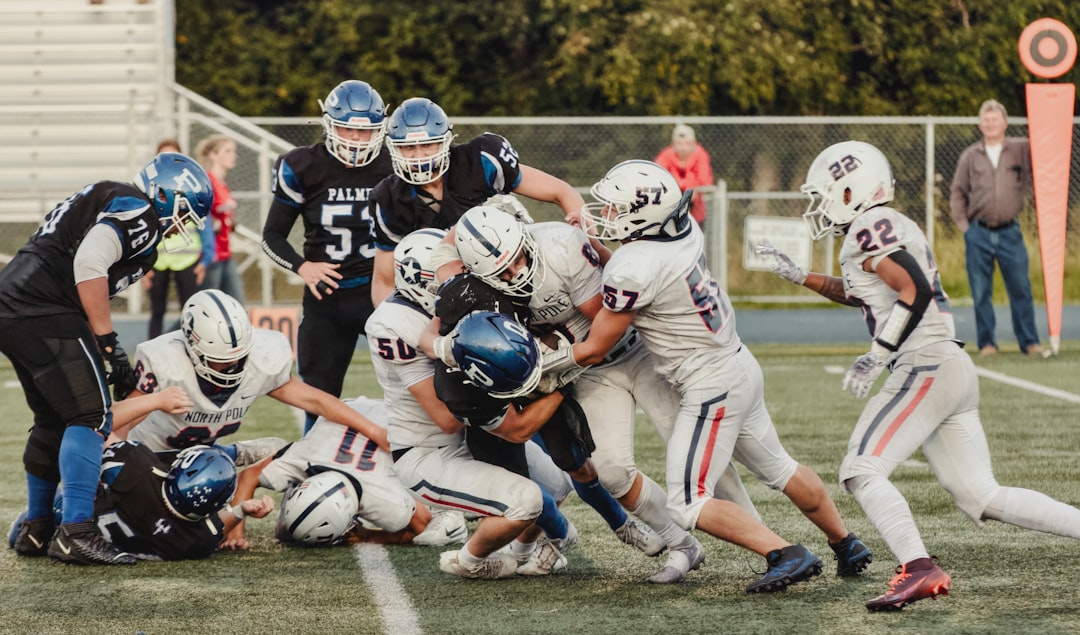
There's a specific weight that settles onto your head the moment you buckle a football helmet for the first time each season.
Not heavy in a burdensome way. Heavy in a this is real way. The kind of weight that tells your body something serious is about to happen before your mind has even caught up. If you played high school football, you know that weight the way you know your own name. It's one of the sensory memories of playing high school football that lives not in your brain but somewhere deeper — in your neck, your shoulders, the specific tilt of your head when you're locked in and ready.
Nobody teaches you that sensation. Nobody warns you it's coming. And nobody who wasn't out there on that field will ever quite understand what you mean when you try to describe it.
This article is not a highlight reel. It's not about touchdowns, wins, or Friday night scoreboard drama. It's about the physical experience of being a football player — the specific, visceral, body-level sensations that stayed with you long after the last game ended. The ones you'd forgotten until right now.
The Smell Nobody Talks About (But Every Player Remembers)
Let's start with the locker room, because that's where everything started.
The football locker room smell is not something you can describe to someone who hasn't encountered it. You can gesture at it (sweat, rubber, old tape, metal, something industrial) but the combination doesn't translate into language the way it does into memory. Walk back into a high school locker room today, twenty years later, and your body will recognize it before your conscious mind does. Your pulse will tick up. Your hands will want to start moving with purpose. You'll remember exactly which locker was yours.
What you're smelling is time compressed. Dozens of players, weeks of practice, the specific chemistry of young athletes working at maximum effort in a room that holds every previous version of that effort. The rubber of cleats. The synthetic foam of old pads. The sharp metallic edge of the helmet racks. The sweet-chemical smell of sports tape being peeled from a roll. Underneath all of it, a deeper, older smell — the ghost of every team that suited up in that room before yours.

Some players remember the pregame locker room differently than the practice-week locker room. Before a Friday night game, there was something underneath the familiar smell. Something electric and slightly chemical — equal parts nervous energy and whatever the equipment manager had been spraying on the pads. The combination is unreproducible outside of that specific context, and yet your body filed it under this is what readiness smells like.
Then there's the field itself.
The smell of a football field, natural grass or turf, arrives before the field does. Walking through the tunnel or out of the gate, before you can see the green, you can smell the earth and rubber mixing with night air. Natural grass fields carry the smell of bruised blades and turned soil, especially later in the season when the yard lines are ground down to mud and the end zones are chewed up from weeks of use. Turf fields have their own signature: the particular warmth of rubber crumb infill, something slightly synthetic and sun-heated, with none of the earth underneath it but all of the intention.
The smell of the football field on a Friday night in October (cool air, wet grass, the distant suggestion of a concession stand) is one of the most complete sensory packages a person can carry in memory. It arrives all at once.
The Weight You Wore
You never quite get used to the feeling of football pads. You get comfortable with them. You learn to move inside them. But the feeling of football pads going on (the specific sequence of pulling the shoulder pads over your head, settling the yoke across your collarbone, feeling the hard plastic chest plate drop into position) never becomes invisible.
The shoulder pads are the most significant physical object most teenage athletes will ever wear. They are architecture. They change the geometry of your body. Put them on and you are broader, harder, more angular. The foam pads press against your trapezius muscles in a specific spot that you will associate, for the rest of your life, with getting ready for something serious. The chin strap clicks into place and the world gets slightly narrower, slightly louder, slightly more present.
Then the jersey goes over the top and everything disappears underneath that single color. You are not a person anymore, in the best possible sense. You are a number. You are your position. You are part of something larger than your name.
The weight of all of it together (helmet, shoulder pads, hip pads, thigh pads, knee pads, cleats) is somewhere between thirty and forty pounds depending on your equipment. You stopped noticing it in practice. But in a game, when the adrenaline was running, the pads felt light in a way that shouldn't have been physically possible. The weight became part of you, not something added to you.
Every sport has its own version of that weight, and the weight of the bat in a baseball player's hands carries the same this is real charge.
Your cleats deserve their own paragraph. The specific feeling of football cleats on different surfaces is a catalogue of textures your feet still remember:
- Grass: The way cleats bite and release, the slight give of the earth, the drag of wet turf on your ankles
- The gym hallway on the way to the field: A hard, slippery, wrong-footed sound, cleats on tile, that felt transitional, like crossing from one world into another
- Artificial turf: Firmer, faster, the cleats skating slightly across the surface, the rubber granules kicking up with each cut
- Painted yard lines: The faintest difference in traction, a barely perceptible slip, enough for a player who paid attention to notice every single time
The Sounds That Go Everywhere With You
There is a particular sound that a football makes when it hits correctly, thrown accurately, caught cleanly, that is not quite like any other sound in sports. It is a sharp, dense thwack that you feel slightly in your hands even when you're not the one catching it. It is the sound of physics working correctly.
That sound of football hitting, helmet to helmet in a tackle, ball into a receiver's hands, a punt spiraling into a safety's arms, becomes a kind of grammar when you're inside the game. You learn to read what different impacts mean by sound before you can see what happened. The hollow pop of a blocked kick. The deep, padded thud of a tackle made in the open field. The bright crack of a perfect block. Each one distinct enough that your body made a glossary.
The pre-snap sound environment is its own thing entirely. The line is talking. Someone is calling a shift. The quarterback's voice, louder than you'd expect, trained to project through the noise, is calling out numbers that mean specific things to specific people. Underneath all of that, the sound of thirty helmets breathing. Shallow. Ready.
Then the count. Then the snap. And the sound becomes pure physics: impacts and movement and the particular way turf sounds when thirty bodies change direction simultaneously.
In the stands, none of this is audible. The crowd hears the result. Players hear the event. And the sound of a helmet hitting a helmet is the one that still arrives before the memory does.
The halftime locker room sounds different than any other room. It starts loud (coaches, adjustments, the physical noise of players sitting down and catching breath) and then, in the minutes before going back out, it goes quiet in a way that feels like pressure. Not anxious pressure. Focused pressure. The sound of twenty or thirty people deciding something together without speaking.
The Taste and the Touch Nobody Mentions
Marcus T., 34, a former defensive end from coastal Georgia, described it perfectly once: "The first time I put in a new mouthguard, I thought I'd never get used to it. By week three, I forgot it was there. Now, twenty years later, I can still taste the exact plastic flavor of that thing on a hot day."
The taste of a mouthguard is specific. It's not unpleasant exactly — it's just entirely unlike anything else you put in your mouth. The boiled plastic that's been molded to your teeth, the slight give when you clench down, the way it changes your breathing to something slightly more deliberate. Some players chewed their mouthguard constantly on the sideline. Some players hated every second of it. All of them remember it perfectly.
The water bottle at halftime. The particular cold of it after the heat of the first half, the way it tastes when you've been breathing through a mouthguard for thirty minutes. Sports drinks in the early 2000s had a specific sweetness that tasted exactly like effort being rewarded.
The texture of athletic tape deserves documentation. The way it felt being applied pre-game — a trainer's hands moving with practiced speed, the tape pulling slightly against skin, the finished result: a joint that felt certain. Ankles taped before every game until taping felt like a ritual rather than a precaution. Players who didn't need tape got it anyway, sometimes, because the process itself was part of becoming ready.
The cold. Friday night football in October or November in most of the country is cold in a particular way — not the cold of standing still but the cold of moving fast through cool air, of your hands being warm from effort but your face being hit by wind, of the breath that comes out visible every time you set up for a play. That cold is inseparable from what Friday night football feels like. Summer two-a-days were their own sensory experience, the heat, the wet air, the salt on every surface, but Friday night cold is the one most players carry as the defining physical sensation of the season.
There's another touch that stays with you, and it isn't the cold: the sting of the ball against your arm or ribs, sharp at the moment and warm with pride by the time it fades into a bruise.
When the Game Was Over
The walk off the field after the last game of your career, whether you knew it was the last game or not, had a specific physical quality that no other moment replicated.
The gear was still on, still the same weight it had been three hours earlier, but everything underneath it had changed. Win or loss, the body after a game felt differently than the body before one. Used. Present. Specific.
The hot shower after a game, especially after a cold night game, is among the most purely physical pleasures available to a high school athlete. The steam. The way the hot water hit shoulders that had been hit by other people for hours. The specific ache of a body that had done what it was built to do. The gradual return of sensation in fingers that had been numb from the cold.
Taking the pads off for the last time each season was its own release. Putting them back on the first day of the next practice, or of the next season, brought everything back at once.
For players who didn't get another season: that's what makes the sensory memories stick so hard. The body remembers what it was. The weight of the helmet. The smell of the locker room. The sound of cleats on tile. These are more than memories of football. They are physical records of a version of yourself that existed completely, briefly, and then ended — leaving behind a set of sensations that no amount of time fully erases.
Your Jersey Is Still Out There Waiting
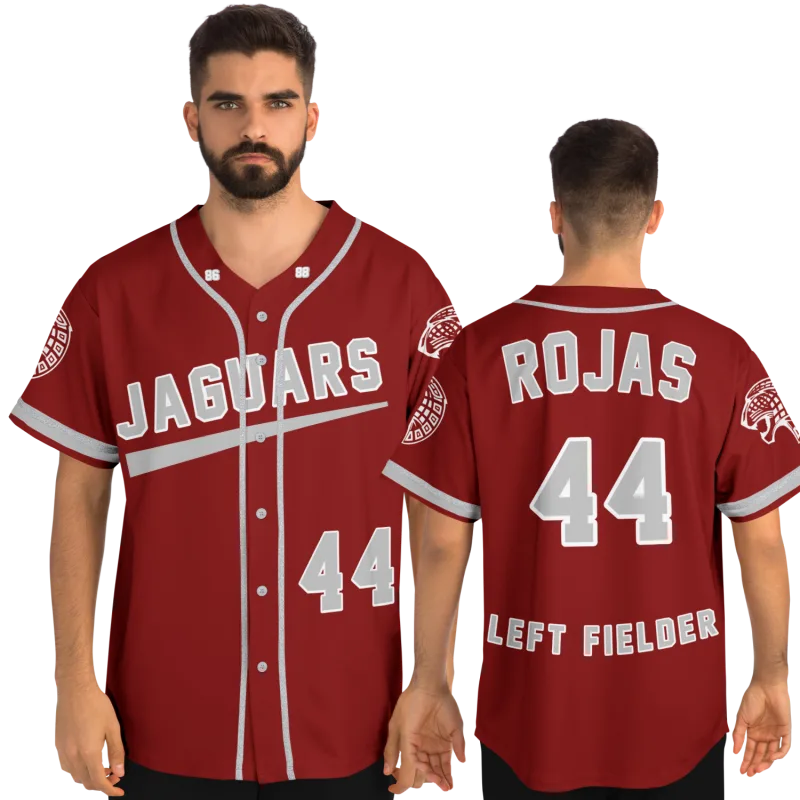
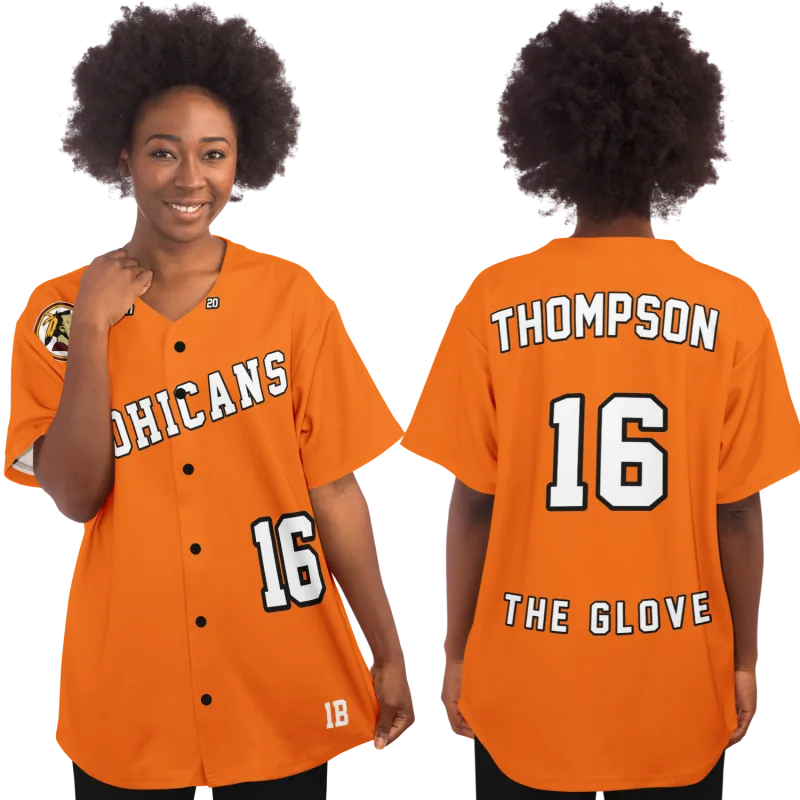
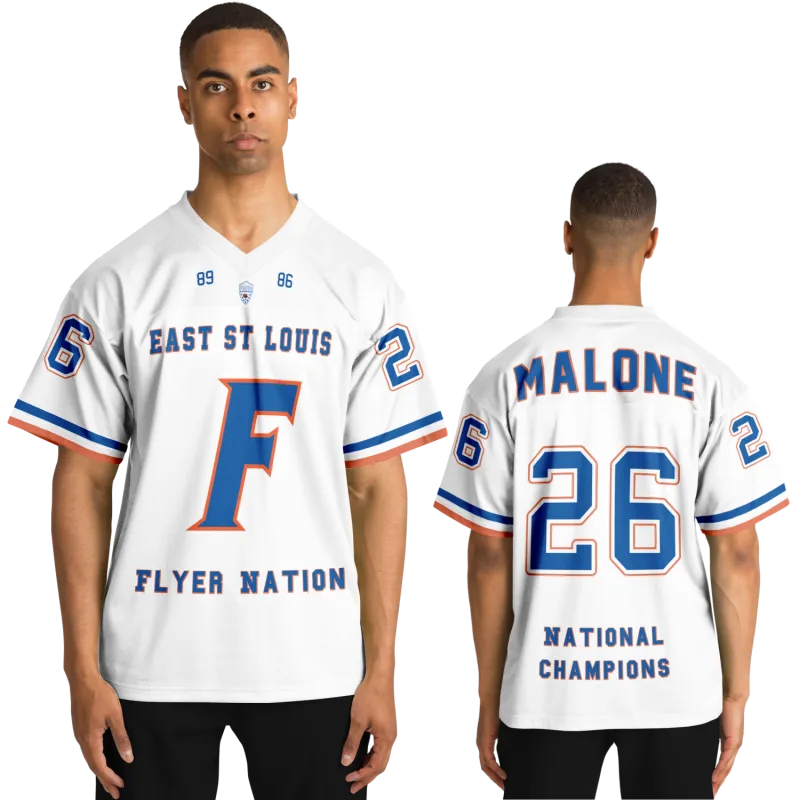
Design yours in minutes and see your name and number exactly the way you remember it.
Not sure where to begin? Browse the gallery for inspiration.
Frequently Asked Questions
Why do sensory memories of playing high school football feel so vivid compared to other memories?
Sensory memories, especially those tied to smell and physical sensation, are processed through the olfactory bulb and limbic system, which are directly connected to the hippocampus and amygdala. These are the brain structures most responsible for emotional memory formation. Because high school football involves extreme physical intensity, emotional stakes, and repeated multi-sensory input across an entire season, the memories it creates are among the most neurologically durable a person can form. The smell of a locker room or the weight of a helmet can trigger detailed episodic recall decades later because those sensations were encoded during high-arousal, high-significance events. Research published in Frontiers in Psychology has documented how olfactory-triggered memories tend to feel more emotionally vivid than memories triggered by other senses.
Do players who only played one or two seasons remember these sensory details as clearly as four-year starters?
In my experience as a former player, the clarity of sensory memory from football is less about duration and more about intensity and significance. A player who suited up for one season during which the game meant everything to them often carries those physical memories as vividly as a four-year starter. What determines how clearly the body remembers is not repetition alone but how emotionally significant the moments were during the experience. First-time sensations (first game, first hit, first time the pads went on in full equipment) tend to be especially clear for everyone, regardless of how long they played.
Is the smell of artificial turf different enough from natural grass that players remember them separately?
Almost universally, yes. Players who practiced or played on both surfaces describe the smell of each distinctly and without confusion. Natural grass fields, especially in late-season conditions, when the turf is churned and damp, carry an earthy, almost mineral smell that players associate with work and physicality. Artificial turf fields, particularly older ones with rubber crumb infill, have a warmer, more synthetic smell that some players describe as slightly chemical and sun-heated. Players who grew up entirely on turf and then played a game on grass for the first time often describe the smell of the natural field as unexpected (deeper, more alive) and it tends to stick in memory precisely because it was novel.
What's the single most commonly reported sensory memory among former high school football players?
In my experience, the smell of the football helmet, specifically the interior foam padding after weeks of use, comes up more consistently than any other single sensation. It is specific, immediately recognizable, and almost universally described as something that triggers complete memory recall. The second most commonly reported sensation is the weight of the shoulder pads settling into place during pre-game equipment, followed closely by the specific sound of cleats on the gym hallway tile on the way to the field.
See also: why high school sports still matter so deeply to adults | why your senior season memories feel so unusually sharp and vivid | what playing under the Friday night lights actually felt like | the psychology behind why you still dream about those games | the identity shift that happens when the sport is finally over