




There's a sound that does it every time.
Not the roar of the crowd. Not the announcer reading the starting lineups with that particular gravity announcers save for October. It's the ball — the specific, hollow percussion of the opening tip, leather against palm, floating up into the arena lights — and something in your chest moves that has no business moving anymore.
The NBA season start lands differently when you used to play.
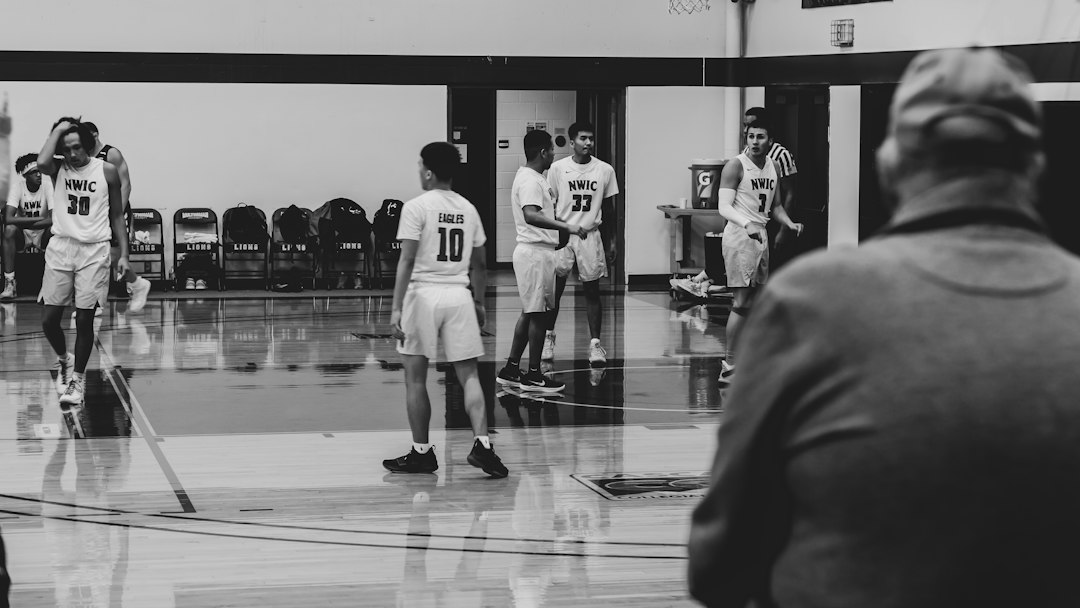
You watch the tip-off on whatever screen you've got, and for a split second you are not sitting in your living room. You are somewhere else entirely. You are in a gym that smelled like floor wax and old rubber, lacing up under lights that buzzed at a frequency you can still hear, heart doing something irregular in your chest cavity that had nothing to do with fitness and everything to do with the specific terror and joy of being about to play a game that mattered.
Every former player has this moment. Every single one.
This is that moment, written down.
The Thing That Happens When the Season Starts
It arrives without warning, which is the strange part.
You've known for weeks that the season was coming. You've seen the preseason scores, caught a highlight or two, maybe even made a mental note about a team you want to watch this year. The information entered your brain the way information enters your brain all the time — processed, filed, acknowledged.
And then the actual tip-off happens, and the information becomes something else entirely. Something physical.
Athletes describe this consistently across every sport — the way the competitive calendar still structures your nervous system years after you've stopped competing. Researchers studying athletic identity have documented that former players often experience what they call "affective resonance" with the competitive seasons they trained in — the body retains the emotional architecture of the sport long after the sport itself is gone.

Translation: your nervous system still thinks it's your season.
The NBA schedule announces itself on your skin, not just on your phone. And what comes flooding back isn't just memory — it's sensation. The specific weight of a ball in your hands before a game. The way your legs felt during warm-ups, loose but not yet loose enough. The sound of your own sneakers on a floor that hadn't been touched yet that evening.
These are not memories that live in your mind. They live in your hands. In the soles of your feet. In the particular way your shoulders set when you were about to defend someone who was better than you but you were going to make them work for every inch of it anyway.
The NBA season starts and all of it comes back.
Opening Night Was Never Just a Game
Ask any former player what they remember about their first real opening night — the first game that felt official, that had a scheduled start time and a scoreboard and people in the stands who weren't just parents — and watch what happens to their face.
It changes. Something unlocks.
Because opening night wasn't just a game. It was the confirmation of a whole off-season of work. Every summer sprint, every extra shooting session, every evening you spent in the driveway past dark because you had a specific thing you needed to fix and it wasn't fixed yet — opening night was when all of that either meant something or it didn't.
The pressure was real. The hope was real. And the love — the actual, uncomplicated love of playing — was the most real thing in the room.
Marcus T., 34, played point guard through his junior year of college before an ankle injury ended his playing career. He still watches every opening night of the NBA season from the same chair, he says, and he still does the same thing he did before every game he ever played: he goes quiet for about ten minutes beforehand. His wife has learned to read it. She doesn't say anything. She just lets him have it.
"I'm not thinking about anything specific," he told us. "I'm just — in it. In the feeling of it. I don't know how else to describe it."
He doesn't need to describe it. Every former player already knows.
What the Pros Are Feeling Right Now — And Why You Remember It
Here's what's happening in NBA arenas across the country as the season opens: veteran players are performing rituals they've had for years, the specific pre-game sequences they can't explain and won't change because to change them would be to risk something they don't want to risk. Rookies are doing something between terror and euphoria that their faces cannot quite contain. Role players who've been in the league for a decade are experiencing a specific, earned version of calm — the kind that only comes from knowing you've done this before and you can do it again.
All of it is familiar.
Not because you watched it happen — because you felt it happen. In your own gym, with your own team, at your own level, which was its own world with its own stakes and its own magic and its own absolute reality.
The NBA is the highest level. But it isn't the only level. And the emotional truth of opening night — that specific combination of anticipation and terror and love and readiness — is not something that scales with talent. It's something that belongs to every player who ever laced up and meant it.
The high school player who practiced that post move for three months and was going to use it tonight.
The college player who transferred to start fresh and this was the night it all finally began.
The rec league player, thirty-eight years old, knees complaining, who somehow still gets butterflies at tip-off.
All of them are in the same room that the NBA players are in right now. The room is made of feeling, not square footage.
The Details You Never Forgot (And Never Will)
Ask former players about their opening nights and the details that come back are never the scores.
The scores are gone. The details are permanent.
The smell of the locker room before the first game of the season — that specific combination of new tape, shoe polish, and whatever deodorant everybody was using that year. The sound of the PA system doing a sound check while you were still in warm-ups, the bass frequency of it vibrating through the floor. The particular quality of the crowd noise before tip-off, when it was still becoming itself, not yet a wall of sound but a building thing with its own direction.
The way your captain said something in the huddle — not inspirational, not scripted, just something true and specific to your team and that moment — and the way everybody's eyes went to the same place for a half-second before you broke.
The first defensive possession of the season: the moment when everything you'd practiced became real. Either it was there or it wasn't. Either your body remembered or it didn't.
For most of you, it was there.
That's what you remember on nights like this — not just that you played, but that you were ready. That the work you'd put in showed up when it needed to. That you were, in that specific moment, exactly what you'd trained to be.
That feeling doesn't require the NBA to validate it. It happened. It was yours. It still is.
The Jersey You Wore Is Part of the Story
There's a specific object at the center of every opening night memory, and it's not the ball.
It's the jersey.
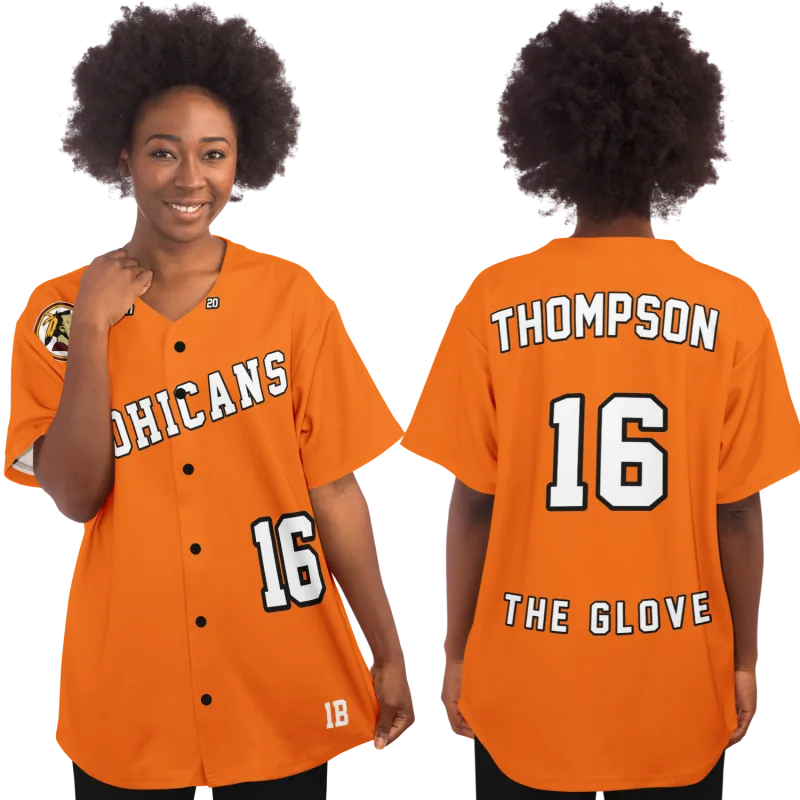
The way it felt when you first put it on that season — whether it was new and stiff or worn soft from the year before. The number on the back that was yours and nobody else's for the duration of that season. The name of your team across the chest, which was the name of something larger than the fabric but the fabric was how you wore it.
In our experience talking to former players across every sport and every level, the jersey is the artifact that carries the most emotional weight. Not trophies. Not photos. The jersey, because the jersey is what you actually wore. It's the thing that put you inside the game, not just near it.
A lot of those jerseys didn't survive. They were lost, retired, handed back, worn until they fell apart. And the loss of the object doesn't erase what it represented — but there is something to holding it again. Something to seeing your name and number exactly the way it looked on game day.
Opening nights bring that back. Every single one.
Your Jersey Is Still Out There Waiting
Design yours in minutes and see your name and number exactly the way you remember it.
Frequently Asked Questions
Why does the start of the NBA season feel so personal to people who never played in the NBA?
Because the emotional architecture of competitive sport is not specific to the level — it's specific to the experience. Anyone who played organized basketball at any level went through the same seasonal rhythm: off-season preparation, the approach of the new season, opening night, the run of the year. The NBA season start triggers that rhythm in former players because the nervous system doesn't distinguish between professional arenas and high school gyms. It recognizes the season. The personal feeling is recognition, not projection.
Is it normal to feel genuine emotion — not just nostalgia — when watching opening night after you've stopped playing?
Completely normal, and more common than most former players admit. Athletic identity researchers note that for many people who competed seriously, sport is not just something they did — it's part of how they understand themselves. When that identity no longer has an active outlet, seasonal markers like the start of a new NBA year can produce genuine emotional responses: not grief exactly, but something adjacent to it. Mixed with joy. Mixed with pride in what the sport gave you. The complexity of the feeling is the correct feeling.
What do most former players say they miss most about opening night?
Consistently, it isn't the competition itself — it's the certainty. Opening night was one of the only nights in a year when everyone in the room knew exactly what they were doing and exactly why it mattered. That kind of clarity is rare in adult life. Former players miss the feeling of being completely, unambiguously present for something — the crowd, the floor, the team, the moment. The game gave them that. And on nights like this, watching the tip-off from wherever they are now, they remember what it felt like to have it.
Does the feeling of opening night nostalgia fade over time?
For some former players, it softens. For most, it doesn't go away — it just changes shape. Players who've been out of the game for twenty years describe the same tip-off recognition that players who retired last year describe. What changes is how they relate to it: early on, it can feel like loss. Later, for most players, it feels more like gratitude. The sport gave them something that the passing of time doesn't diminish. Opening night is when they feel that most clearly.
See also: why athletic identity doesn't disappear after the final buzzer | the science of why those first-game memories stay so vivid | why saying 'I played' still means something decades later | the grief that comes when the season ends for the last time