

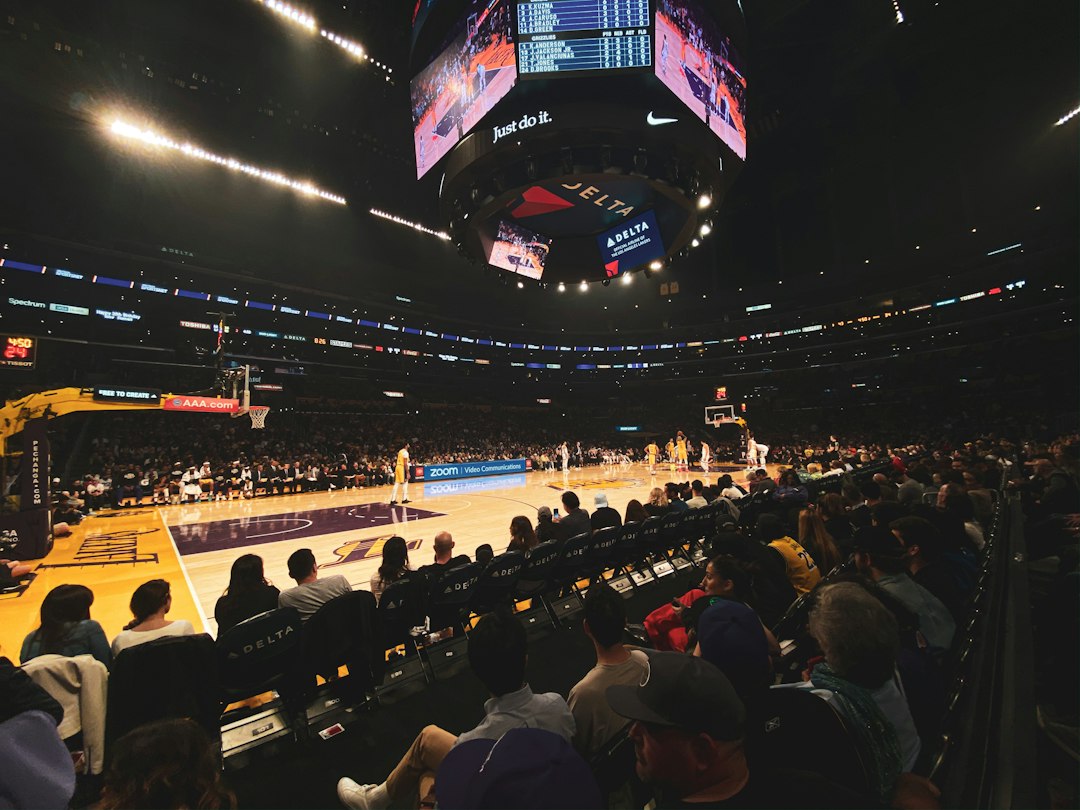




The gym smells like sneaker rubber and floor wax. The lights are off — all of them — and the crowd noise is bouncing off the rafters in a way that makes it impossible to know where the sound is coming from. Somewhere behind you, a speaker thumps a bass line that you feel before you hear it. Then, exactly at midnight, the lights explode on.
That's midnight madness basketball. And if you ever played in one, you know it never fully leaves you.
The tradition has become one of college basketball's most enduring rituals — a sanctioned first-practice celebration that turns what would otherwise be a quiet Monday morning drill session into a full-scale event. For players, it is the moment a new season stops being abstract and becomes real. For fans, it is the annual signal that winter is coming, and with it, something worth watching. For anyone who lived it from inside the locker room, it is something harder to describe and easier to feel.
This is about that feeling.
The Night That Changed What Practice Meant
Midnight Madness as a formal institution traces back to a single coach with a showman's instinct and a simple idea: if the rules say we can't practice until midnight on October 15th, why not make midnight October 15th into something?
That coach was Lefty Driesell at the University of Maryland. In 1971, Driesell invited fans to Memorial Coliseum to watch his Terrapins begin their official practice at the stroke of midnight — the first moment NCAA rules permitted. He called it the "greatest beginning to any basketball season" and marketed it with the kind of enthusiasm that made people wonder if the game itself could possibly live up to the opening act. It did. And the idea spread.
By the 1980s and into the 1990s, Midnight Madness had migrated from novelty to institution. Kentucky, Kansas, Duke, North Carolina — the programs that take basketball most seriously took the tradition most seriously too. What started as one coach's promotional instinct became something the sport genuinely needed: a moment of punctuation between the long summer silence and the first tip-off.


In our experience covering sports traditions, few rituals so cleanly capture the particular electricity of anticipation. Midnight Madness doesn't celebrate what a team has already done. It celebrates what they are about to do. That's a rare emotional frequency in sports, where most celebrations look backward. Midnight Madness faces forward — and makes that forward-facing moment feel like a privilege to witness.
What Actually Happens at Midnight Madness
For anyone who attended as a fan, the memories tend to blur into a single collage of noise and light and motion. But from the player's side, the night follows a more specific arc — one that most people who played it will recognize instantly.
The locker room before is quieter than it should be. There's music playing, but people aren't really hearing it. Everyone is aware that something is beginning. The season has no record yet. No losses. No bad games. No missed shots that the coaches will bring up in film sessions. Everything is still possible, and in the locker room at 11:45 PM, that possibility is almost physically present.
The tunnel is the transition. Different programs do this differently — some run out together, some are introduced individually, some come out to specific entrance music while their names are read over the PA system. But the tunnel is always the moment between the private world of the team and the public world of the sport. You can hear the crowd before you see it. That ten-second walk from dark to light is something no one who has done it forgets.
The introductions are for the fans, but they mean something to the players too. Your name, your number, your position — said out loud in a full arena. There is a specific quality of pride in that moment that is different from anything that happens during the actual season. During the season, your name gets called in the context of a score, a stat, a play-by-play. At Midnight Madness, your name gets called because you're here. Because this is beginning. Because the season belongs to you.
The drills and scrimmages that follow are genuinely competitive — coaches use the event to evaluate, players use it to make impressions — but they exist inside a carnival atmosphere that takes the edge off. The crowd laughs at the dunk contest. They gasp at the three-point competition. They cheer for freshman who will spend most of the coming season on the bench, because tonight, everyone is equal.
Then it's over. And the season starts for real.
Corinne M., 34, played point guard at a Division II program in the Midwest and still talks about her first Midnight Madness like it happened last year. "The thing I didn't expect was how permanent it felt," she says. "Like, I knew I was going to remember it — but I didn't know it would feel this specific. The exact song they played when I ran out. The exact way the floor looked under those lights. I still see it."
That specificity is what separates Midnight Madness memories from most other sports memories. It wasn't a moment inside a game. It was its own complete event, with a beginning and an end and a feeling that belonged entirely to itself.
The Traditions That Made It Legendary
Not every program's Midnight Madness is created equal. Some are basic — the lights come on, the players run out, a few drills happen, everyone goes home. But the programs that have turned the tradition into something genuinely legendary share a few common instincts.
They understand that the fans are the other half of the event. The best Midnight Madness events treat the crowd as participants, not spectators. Kentucky's Big Blue Madness, which regularly draws over 20,000 fans to Rupp Arena, became iconic precisely because John Calipari understood that the tradition belongs to the fan base as much as the team. The players perform for the fans. The fans create the environment that makes the players feel like what they're doing matters.
They use the format to reveal character. The dunk contest tells you something about who on the roster is confident enough to try. The three-point competition tells you something about who has put in work over the summer. The one-on-one matchups — when coaches allow them — tell you almost everything about who is going to compete when the season gets difficult. Players know this. The smart ones treat Midnight Madness as the first game of the year, not the preseason warm-up.
They create signature moments. Duke's Countdown to Craziness has featured appearances by celebrities, elaborate player skits, and performances that have nothing to do with basketball and everything to do with culture. These signature moments travel — they get shared, they get remembered, they become part of the program's identity in a way that a regular-season win against a mid-major never could.
They honor what the night actually is: a beginning. The programs that understand Midnight Madness best never let the spectacle overshadow the fact that this is October, a team is starting over, and everything that comes next will be determined by what happens in practice. The best Midnight Madness events feel like a launch — not a party for its own sake, but a genuine beginning with stakes attached.
The Memory That Stays With Players Long After the Season Ends
Ask any former college basketball player what they remember most clearly about their time in the program, and Midnight Madness appears more often than you'd expect — more often than specific wins, sometimes, and almost always more vividly than specific losses.
There's a reason for that.
Basketball seasons are long. They're physically punishing. They involve more disappointment than triumph for most players, and even for players on successful teams, the ratio of difficult days to transcendent ones tilts toward difficult. The mind protects itself. It smooths over some of the hard parts and keeps the luminous ones.
Midnight Madness is luminous in a specific way. It happens before anything has gone wrong. Before the coach has criticized your footwork in film session. Before you've had a bad shooting night in front of a home crowd. Before the team has faced whatever adversity the season will eventually produce. At Midnight Madness, you are the best version of what you might become — and the arena is full of people who believe that version of you.
That belief — offered before it has to be earned — is one of the rarest gifts a sport gives its players. Most trust in athletics is conditional. You earn it by performing. But at Midnight Madness, the crowd shows up before you've done anything at all, and the implicit message is: we believe in what's coming.
That's why the memory stays. Not because the event was spectacular, though it often was. Because it was unconditional.
The feeling extends beyond college basketball, too. Any player who has had a season opener — a first practice with a new team, a first game in a new uniform, a first tryout that led somewhere — carries some version of this memory. The specific electric charge of beginning. Of everything still being possible. Of your name meaning something to someone who hasn't seen you play yet.
That's midnight madness in its purest form, whether or not the clock literally read 12:00.
How Midnight Madness Connects to the Jersey You Wore
There's a material artifact from that night — or from the season that followed it — that most players still think about: the jersey.
Not just the garment. The specific combination of your number, your name spelled out across the back, the school colors that you wore for the first time in front of a full arena. That jersey was the physical form of the thing Midnight Madness represented. The beginning. The belonging. The specific role you played in something larger than yourself.
Most of those jerseys are gone now. Retired back to the athletic department, traded in at the end of the season, lost in moves and life transitions. The ones that survived are kept carefully — folded in drawers, framed on walls, pulled out for specific reasons and then put away again.
But the memory of wearing it? The memory of seeing your name and number under those lights, in that arena, at that hour?
That one doesn't go anywhere.
Your Jersey Is Still Out There Waiting
Design yours in minutes and see your name and number exactly the way you remember it — the font, the color, the number that was yours.
Frequently Asked Questions
When did Midnight Madness start in college basketball?
Midnight Madness as a formal tradition is generally traced to 1971, when University of Maryland head coach Lefty Driesell invited fans to watch his team begin their official practice at midnight on October 15th — the first moment permitted under NCAA rules. The idea spread gradually through the 1970s and 1980s as other major programs adopted it, and it became a widely recognized season-opening tradition by the 1990s.
Why does Midnight Madness start at midnight?
The midnight timing was originally tied to NCAA rules that governed when teams could begin official practices. October 15th at midnight was the earliest permitted start, and coaches like Driesell turned that constraint into a spectacle — if the rules say midnight, make midnight mean something. While the NCAA has since adjusted its practice-start rules and the literal midnight timing is no longer mandatory, the tradition of late-night or evening season-opening events has persisted because of the atmosphere it creates.
Do all college basketball programs hold Midnight Madness events?
Not all programs hold formal Midnight Madness events, though many do. Major programs with large fan bases — Kentucky, Duke, Kansas, North Carolina, and others — have turned their versions of the tradition into signature annual events that draw thousands of fans and significant media coverage. Smaller programs may hold lower-key versions, or no formal event at all. The scale varies considerably, but the underlying spirit — marking the official start of the season with something that feels like a beginning — is broadly shared across the sport.
What typically happens at a Midnight Madness event?
Most Midnight Madness events include formal player introductions, competitive drills or scrimmages open to fans, and various showcase elements like dunk contests and three-point competitions. Some programs incorporate entertainment elements — celebrity appearances, player skits, musical performances — while others focus more tightly on basketball. The common thread is that the event is open to fans, takes place at or near the official start of the practice season, and is designed to create a sense of occasion around what would otherwise be a routine first day of practice.
Can fans attend Midnight Madness events?
Yes — fan attendance is central to the tradition. Most Midnight Madness events are designed explicitly as fan experiences, with tickets distributed through the athletic department or offered as general admission. Some programs' events, like Kentucky's Big Blue Madness, fill arenas to capacity. It's worth checking with the specific program's athletic department for ticketing details, as policies and formats vary by school.
See also: why high school sports still matter so much to adults | why your senior season memories feel so impossibly clear | the grief that comes when the season ends for the last time