

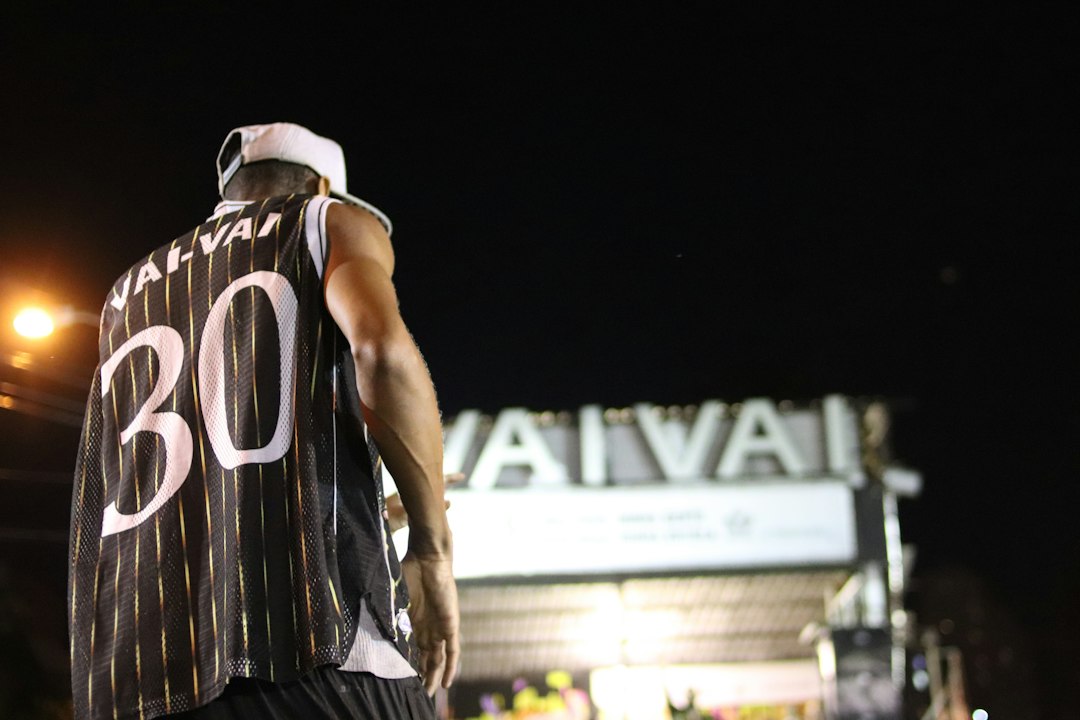




You still remember the number.
Not because you looked it up. Not because someone reminded you. It's simply there — the way certain things from that era of your life refuse to leave. The number on your back during those years is part of how you understood yourself. The name above it, in block letters or a font your town's sporting goods store used for every team they outfitted, is the name you heard called from the sideline.
Now you're ordering custom basketball jerseys — maybe for yourself, maybe as a gift for a former teammate, maybe for a father who still talks about that season — and suddenly the form is asking you to fill in fields you haven't thought about in twenty years. What name? What number? What size of lettering? What goes in that small text line some designs allow below the number?
These are not small decisions. The back of a personalized basketball jersey is the only part that carries real biographical weight. The front is the team. The back is you.
This guide works through every element you'll be asked to fill in — with specific reasoning for each choice depending on whether your jersey is being worn, framed, or given as a gift.
The Name Decision: What It's Called vs. What You Were Called
This is where most people spend five seconds and later wish they'd spent five minutes.
The name on the back of any professional basketball jersey — a New York Knicks basketball jersey, a Chicago Bulls basketball jersey, a Phoenix Suns basketball jersey — is a surname. That convention works because those players are known publicly by last name. But custom made basketball jerseys for former players don't follow the same logic, because you aren't branding yourself for an arena of strangers. You're documenting something personal.
Last Name: When It's the Right Call
Last name on the back is correct when:


- The jersey is being worn in a recreational or adult league, where the back serves the same functional purpose it always did — teammates call out names, refs sort out conflicts, the scorekeeper knows who scored
- The jersey is being framed and the person it honors was known by their last name on every team they played for, which is most people
- You're ordering as a gift for someone whose athletic reputation is genuinely tied to their surname — the last name carries the history
Nickname or First Name: When It Earns Its Place
There's a version of this decision where the surname feels too formal, too distant from how the actual experience lived. In our experience, this comes up most often when the player being honored had a nickname that was more real than their given name in the gym.
If your high school coach called you "Deuce" from your sophomore year forward — if that's the name that echoed in the gym, the name that made it into the local sports section, the name your teammates used on and off the court — then "DEUCE" on the back of a custom jersey is not a novelty. It's the accurate record.
First name alone works in a specific case: when the jersey honors a child or someone being celebrated by family, where "Marcus" or "Janelle" carries warmth that "HENDERSON" doesn't.
The Initials Option
Some basketball jersey design platforms allow initials instead of a full name — J.R., D.K., that format. This tends to read as retro, particularly for jerseys styled in a tribute to 1970s or early 1980s NBA aesthetics. If the design calls for it and the era matches, it's a legitimate choice. If the design is contemporary, initials can feel incomplete rather than intentional.
The Number: Not as Simple as You Remember
The number seems like the easiest decision. It isn't always.
When You Wore More Than One
Four years of high school ball. Two years of recreational league after college. A summer league in between. Different numbers for different teams, different reasons for each assignment.
The right number is the one attached to the season or team that the jersey is meant to honor — not necessarily the last number you wore, and not necessarily your favorite. Ask the specific question: what team is this jersey for? The answer usually clarifies the number immediately.
If the jersey is meant to honor a full career rather than a single season, the number you wore the longest is the right anchor.
The Pro Jersey Inspiration Factor
If you grew up watching the Orlando Magic basketball jersey with a specific number on it, or you wore the same number as your favorite 76ers player out of genuine admiration, that association is real and worth keeping. Just know it works both ways — people who know you will read your number and remember your career. People who don't will read it as a fan choice. For a jersey being worn publicly, that distinction occasionally matters to the wearer. For a jersey being framed or gifted, it almost never does.
Double-Zero and Single-Digit Numbers
Some numbers carry disproportionate weight in basketball culture. Zero, double-zero, and single-digit numbers read differently than mid-range numbers on a basketball jersey — they tend to look intentional, as if the player sought them out. If you wore one of these numbers during your playing career, that history is worth preserving exactly. If you didn't, and you're tempted to choose a cleaner-looking number for the jersey rather than your actual one, pause. The accuracy of the real number is part of what makes the jersey worth having twenty years from now.
Custom Basketball Jerseys: Getting the Detail Line Right
Some basketball jersey design options include a small text line below the number — a city name in certain templates, a year or season marker in others, or a customizable line that can carry a short phrase.
This is the element most people overlook and the one that can do the most quiet work.
Season Year or Years Active
"2003–2007" below the number on a framed jersey is a clean, archival solution. It anchors the jersey to a specific window of time. It's the difference between a jersey that could be anyone's and a jersey that is a specific record of a specific person's specific seasons.
For a gift, this is often the most meaningful addition — especially when the recipient didn't think to ask for it. A parent receiving a jersey honoring their playing years, with those years printed small beneath their number, is receiving something closer to a document than a piece of apparel.
Team Name or City
If the jersey template doesn't have a front graphic that identifies the team, a team name or city in the subtext line does the locating work. "EASTSIDE EAGLES" or "CHICAGO" beneath the number on the back connects the individual record to the collective one.
A Single Word or Short Phrase
This is riskier and more personal. Done well — "CAPTAIN," a graduation year, a word that meant something specific to that team — it adds a dimension the number alone can't carry. Done carelessly, it reads as decoration. The test: would the person wearing or receiving this jersey understand immediately why that word is there? If yes, it belongs. If there's any hesitation, go with the years instead.
Marcus T., 41, ordered a personalized basketball jersey for his father's 70th birthday. His dad had played point guard for a church league team in Detroit for eleven straight years. Marcus put the father's nickname ("BIRD," a reference to his passing game that the whole league knew), the number he wore every season, and the years "1978–1989" below. His father didn't say much when he opened it. He put it on over his dress shirt and wore it for the rest of the party.
Worn, Framed, or Gifted: How Intended Use Changes Every Decision
The same jersey — same name, same number — is a different design decision depending on what happens to it after it arrives.
The Jersey Going Back on a Court
If the jersey is returning to an actual court — adult recreational league, pickup game, alumni weekend — decisions should be made with function and legibility in mind. The name should be readable from distance. The number should be the one that belongs to you in the context of the team you're playing with. The fabric needs to hold up to real use.
Nike basketball jerseys and custom Nike basketball uniforms built for athletic performance are constructed differently than display-quality jerseys. When ordering custom Nike basketball jersey configurations or similar performance-grade options, confirm the build spec matches the intended use. According to USA Basketball's equipment guidelines, uniform legibility and construction standards exist for good reason at every level of organized play — a display-grade jersey on a real court degrades quickly and can create visibility issues for officials.
The Jersey Being Framed
For a framed jersey, legibility from distance matters less than visual weight and balance. Shorter names often center better in a frame. Numbers in the mid-range (10 through 45) tend to sit more symmetrically than single digits, though this is a secondary consideration — accuracy always comes first.
The detail line matters more on a framed jersey than on one being worn, because a framed jersey will be read slowly and closely. It becomes part of the room's record of who lived there.
The Jersey Being Gifted
When you're designing a jersey for someone else, you're making decisions based on what you know about their relationship to their playing career. Some former players remember their number instantly and would notice immediately if it was wrong. Others remember the feeling more than the specific details and would be equally moved by a thoughtful, well-intentioned choice.
If you know the correct number: use it, exactly. If you're not certain: ask someone who would know, or surface it naturally in conversation before placing the order. A jersey with the wrong number — even a loving one — creates a small friction the recipient will quietly notice every time they see it.
Getting the Typography and Lettering Style Right
This doesn't receive enough attention in most basketball jersey design discussions, and it shows in the finished product.
The font and lettering style on the back of a basketball jersey carries era and aesthetic information that determines whether the jersey reads as authentic or generic. Block lettering with a slight serif is associated with a specific decade of NBA aesthetics. Rounded block letters without serifs read more contemporary. Narrow, compressed fonts are associated with 1990s designs. Wide, arched lettering reads as classic.
If the jersey is meant to pay tribute to a specific era — the early 1990s Bulls look, the late 1990s Knicks basketball jersey aesthetic, the classic Orlando Magic basketball jersey palette — the lettering should match that era. Most custom jersey builders offer a range of font styles. Spend time here. The right font makes a specific number and name look like it belongs to a real athletic history. The wrong one makes it look like a general sports costume.
Colors on the lettering and number should match or complement the team's actual palette when the jersey is meant to honor a specific team. If it's purely personal — a new design for a new league — the lettering should contrast cleanly against the body color at every viewing distance. In our experience, the most common regret people share after receiving their jersey is a lettering color that looked right on screen and disappeared on the physical garment. When in doubt, go higher contrast than you think you need.
Your jersey is still out there waiting.
Design yours in minutes and see your name and number exactly the way you remember it.
Frequently Asked Questions
Can I put a nickname instead of my real last name on a custom basketball jersey?
Yes — and in many cases it's the more accurate choice. Custom basketball jerseys made for former players aren't following the convention of professional uniforms, where surnames exist for public identification in a large arena. If your nickname was how you were known on every team you played for, it belongs on the back. The only question worth asking: would the person wearing or receiving the jersey recognize that nickname as the right one? If yes, use it without hesitation.
What number should I use if I wore different numbers on different teams?
Use the number that belongs to the specific team or season the jersey is meant to honor. If the jersey is meant to honor a full career across multiple teams, use the number you wore the longest, or the one most associated with your most meaningful season. There's no convention requiring you to choose your most recent number — choose the one with the most significance in the context of what the jersey is commemorating.
Is it worth adding a detail line below the number, or does it look cluttered?
A detail line adds real value when it carries specific biographical information — years active, team name, season year — rather than a generic decorative phrase. A framed jersey benefits more from a detail line than one being worn, because it will be read up close and slowly. If you're ordering a jersey for actual court use, the detail line is less critical and harder to read in motion. When uncertain, years active ("2001–2005") is the cleanest and most universally meaningful choice.
How do I choose the right font for a jersey meant to pay tribute to a specific NBA team's era?
Look at reference images of the actual team's jerseys from the specific era you want to evoke. Most custom jersey design tools describe their fonts in terms that align with decade or style — "classic block," "retro arch," "modern compressed." Match the visual weight and letter shape to what you see in reference photos. A Chicago Bulls basketball jersey from 1993 uses very different lettering than a contemporary Phoenix Suns basketball jersey design. Getting the font right is what separates a jersey that looks like a genuine piece of athletic history from one that reads as a general sports item.
Do Nike custom basketball jerseys perform differently than standard custom jersey options?
Custom Nike basketball uniforms and similar performance-grade builds are engineered for athletic use — moisture management, cut, weight, and durability are all constructed to a higher standard than display-grade custom jerseys. If the jersey is going back onto a court for real play, investing in performance-grade construction pays off quickly. If it's for display, framing, or occasional casual wear, a display-grade option at a lower price point is a reasonable choice. Let the intended use drive the decision, not the label.
See also: personalized sports gifts that actually make a former athlete feel seen | the psychology of athletic nostalgia and why these moments still matter