
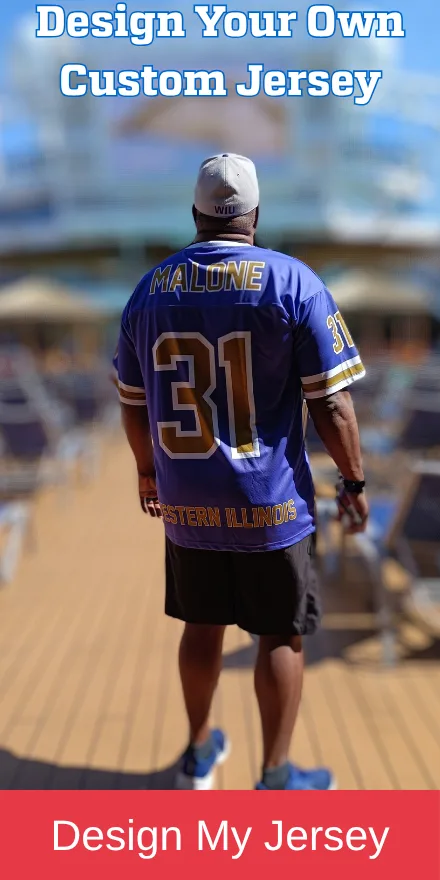
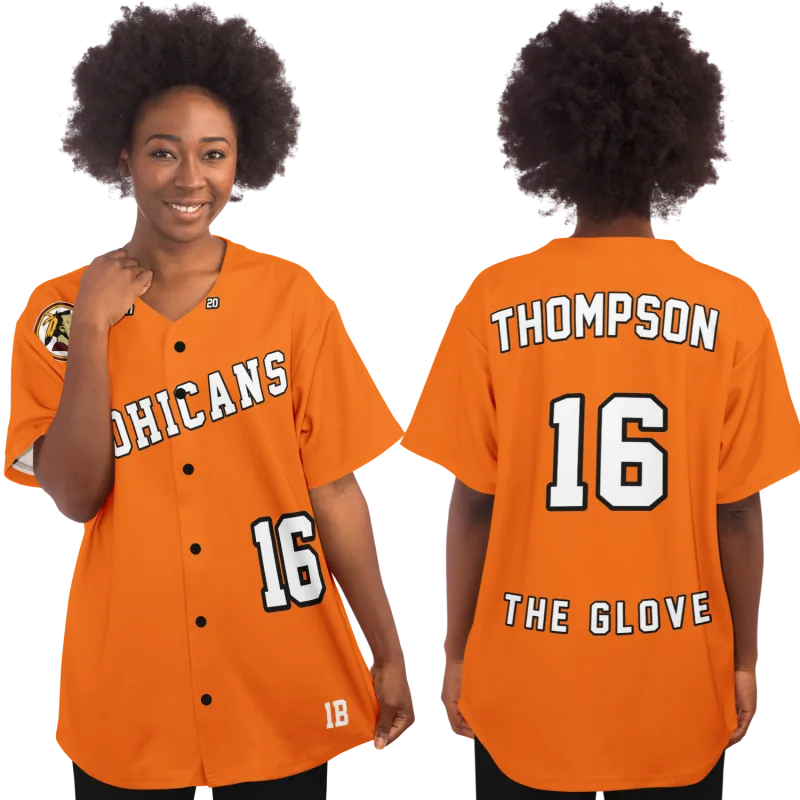
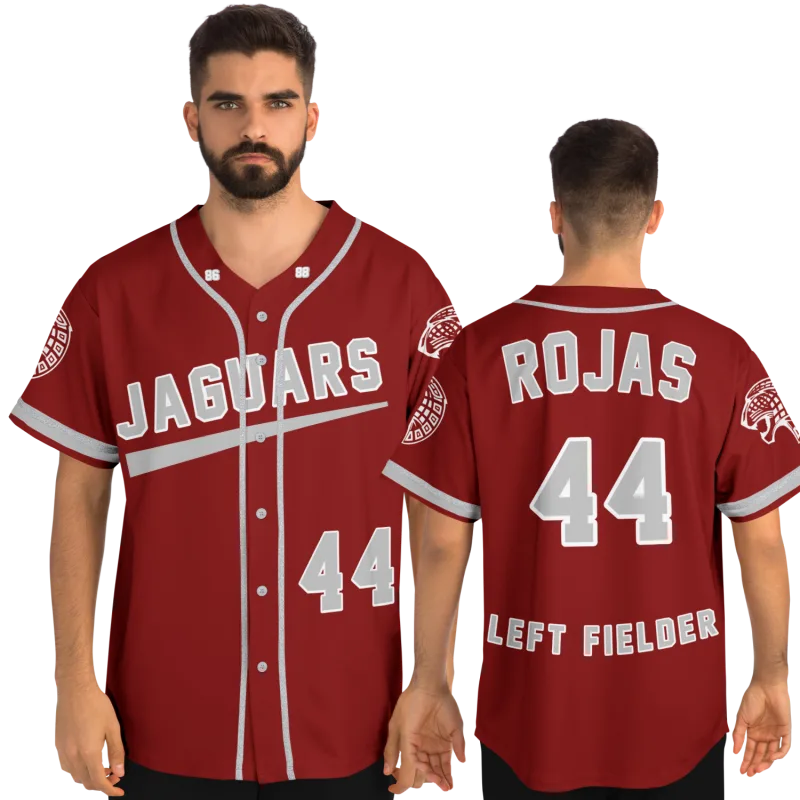
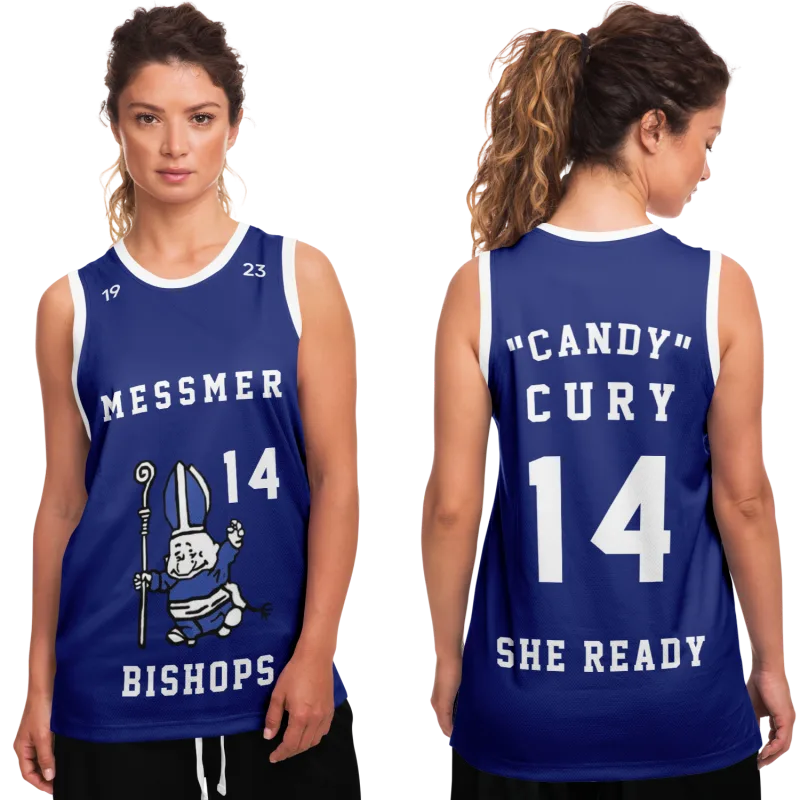
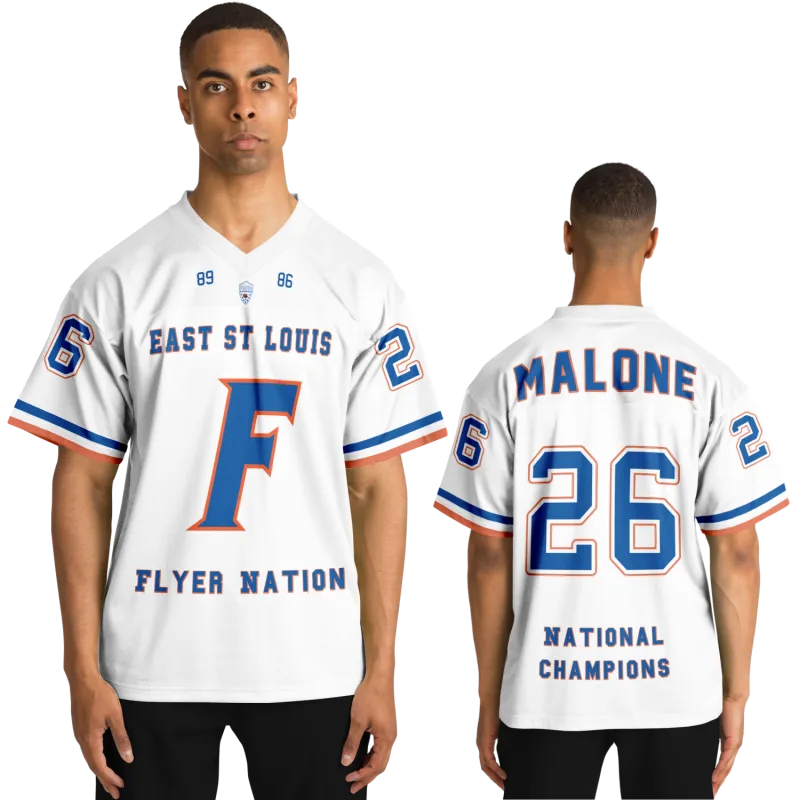
A custom basketball jersey built from your own memory — your name, your number, your school's exact colors — is something most jersey platforms aren't designed to help you create. They're built for coaches with rosters, not for one former player trying to recover a specific piece of their athletic history. This guide is written for that one player.
You remember the exact weight of it. The color was specific: not just blue, not just red, but your blue, your red — the one that meant something every time you pulled it over your head before tip-off. That jersey is somewhere in a box, faded and too small, or it's gone entirely — left behind in a locker room, handed to a sibling, lost in a move you didn't plan carefully enough.
And you want it back.
Not a tribute to someone else's nostalgia. Not a New York Knicks basketball jersey or a Chicago Bulls throwback hanging on someone else's wall. Yours. Your name. Your number. Your school colors exactly as they were.
The problem is that ordering a personalized basketball jersey as a single adult — one piece, for yourself, from a 20-year-old memory — is not what most jersey companies are built for. Their guides assume you have a coach, a spreadsheet, and sixteen players. You have a photograph, a fading mental image, and a name you want on a back panel one more time.
By the end of this guide, you'll have the specific information you need to track down your school's hex codes, identify the original font, confirm your number, and place a single-piece order that holds up.
The Real Challenge: You're Not Ordering a Team Jersey
Walk through the top search results for custom made basketball jerseys, and you'll find the same thing every time: bulk pricing tables, roster upload tools, and minimum order quantities. Useful if you're outfitting a program. Useless if you're one person trying to reconstruct a specific memory.
The single-piece recreation order is a different problem than the team order. Here's what makes it harder — and what makes solving it satisfying:
You're working from incomplete information. Most people attempting this don't have the original jersey in hand. They have a photo, maybe a game-day program, maybe just a clear mental picture. The spec sheet that the original manufacturer worked from doesn't exist for you.
The details matter more than they do in bulk orders. When a team orders 15 jerseys, minor color drift across the run is invisible. When you're ordering one jersey to match a specific memory, a color that reads as "slightly wrong" reads as wrong — full stop. Getting the hex code right isn't perfectionism. It's the whole point.
Single-piece pricing is a real consideration. Custom made basketball jerseys ordered individually cost more per unit than bulk orders. Knowing where to look and what to specify prevents paying premium prices for a result that misses.
The good news: every piece of information you need to get this right is recoverable. Here's how.
Step 1 — Recover Your School's Exact Colors
This is the step most people skip, and it's the one that determines whether the final jersey looks right or looks like a good guess.
Your high school has official colors. Those colors have hex codes — six-character alphanumeric values that tell any printer, embroiderer, or sublimation machine exactly what shade to reproduce. "Royal blue" is not a hex code. "Navy" is not a hex code. These are category names that vary by manufacturer. The hex code is the precise value, and it's what separates a jersey that looks right from one that looks close.
How to find your school's official hex codes:
-
Search your school district's or school's official website. Most schools that have updated their branding in the last decade include brand guidelines or at minimum a logo download page. Downloadable logo files often come with color references.
-
Go directly to your state's high school athletic association website. Many state associations maintain member school directories with official color designations — sometimes in Pantone values, which convert to hex codes with a quick lookup.
-
Contact the school's athletic department directly. A single email or phone call to the current athletic director asking for the official uniform color hex codes takes five minutes and produces a definitive answer.
-
Use a color identification tool on an old photograph. If you have a clear digital image of the original jersey — even a scan of a printed photo — tools like Adobe Color let you upload the image and extract dominant hex values. This works well for solid jersey fields; it's less reliable for small trim details.
The goal is to arrive at your manufacturer's order form with two or three specific hex codes: primary color, secondary color, and text/number color. Every reputable custom jersey platform accepts hex codes as color input. If a platform doesn't, find a different platform.
Step 2 — Identify the Original Font
This is where most recreation attempts lose their accuracy. The number on your jersey wasn't in a generic font. High school athletic programs — especially those that ordered through major uniform suppliers — used specific athletic lettering styles that have names, histories, and digital equivalents.
The most common high school basketball jersey lettering categories:
- Block athletic lettering — the standard, thick, squared-off number style used by the majority of programs. Sometimes called "college block." This is the baseline; if you're not sure what your team used, start here.
- Outlined block — same block construction but with a contrasting color outline around each character. Very common in programs that used two-color uniforms. Think of the outlined number style that became iconic on classic professional jerseys — the kind of bold, high-contrast look you'd recognize from a phoenix suns basketball jersey from the early-to-mid 90s.
- Slanted or italic block — the block letterform tilted forward, implying motion. Common in programs that wanted an athletic, aggressive visual identity.
- Varsity/serif athletic — less common in basketball than in baseball, but some programs used a serif letterform for name plates even when numbers stayed in block style.
How to identify which one your program used:
Look at reference photographs from your playing years. Yearbooks, local newspaper archives, school athletic department photo archives — any of these may have images of your team's uniforms. Your state's press association may maintain digital newspaper archives searchable by school name and year.
If you have teammates still in contact, someone almost certainly has photos. A quick message asking for a jersey photo from a specific year is usually answered within 24 hours.
Once you've identified the category, tell the manufacturer. Good custom jersey platforms provide lettering style previews — you can visually confirm the match before committing.
Step 3 — Confirm Your Number (and Why It Still Belongs to You)
This sounds like the easy part. For most people, it is. But "I wore #23" and "I'm confident the final jersey will say 23" are not the same thing if you're placing a spec with a manufacturer you've never used before based entirely on memory.
Two things to confirm before you finalize the order:
The number itself. If you're certain, move on. If there's any doubt — if you played multiple years and wore different numbers, if you're combining memories from more than one season — go back to source documents. A game program, a yearbook listing, a box score from your school newspaper. Your number is in one of these places.
The number placement. Standard basketball jersey number placement puts the number centered on the front chest and centered on the back. Non-standard placements existed — some programs ran smaller front numbers positioned higher on the chest, some ran oversized back numbers that extended lower than standard. If your memory or reference photos suggest a non-standard placement, note it explicitly in your order specifications.
Step 4 — Find the Right Manufacturer for a Single-Piece Order
This is the operational step most former players spend the longest time on — and where a clear framework saves real money and real time.
What to look for in a basketball jersey manufacturer for single-piece orders:
- No minimum order quantity, or a stated minimum of one
- Full color customization with hex code input — non-negotiable for accurate results
- Online design preview tools that show your specific colors, number, and name before you commit
- Stated production timeframe so you know what you're waiting for
The sublimation advantage for single-piece recreation:
Sublimation printing — where the design is dyed into the fabric rather than applied on top — is the technology that makes single-piece recreation practical. Color accuracy is excellent, durability is high, and there's no minimum run because there's no screen setup cost. Most custom basketball jersey platforms built in the last decade use sublimation as their primary production method for individual orders.
Nike basketball jerseys and custom Nike basketball uniforms — including Nike custom basketball jerseys sold through institutional channels — are built for programs placing multi-unit orders with team accounts. Nike basketball jersey custom options at the individual level exist, but the platform infrastructure is oriented toward program coordinators, not single-piece personal orders. A sublimation-based custom jersey platform built for individual customization is the right tool for this specific job.
The Moment It Comes Together
Marcus T., 38, had played point guard for a mid-sized program in suburban Illinois — a school known locally for its maroon and gold color combination. He'd tried twice before to get the color right and gotten it wrong both times: the first attempt came back as burgundy, the second as a brownish-maroon that was close but unmistakably off. On the third attempt, he found the school's official color specification through the state athletic association directory — Pantone 202C, which converts to hex #861F41. He submitted that exact code. When the jersey arrived, his daughter — who had only ever seen photographs of him playing — looked at it and said, "That's the right color." That was the confirmation he needed.
That moment, when someone who has only seen the photographs recognizes it as correct, is what the hex code step is designed to produce.
Step 5 — Write Your Order Specification
When you place the order, don't rely on the design tool alone to capture every detail. Write your specifications as a clear text note and include it in the order comments or customer notes field. This protects you if anything requires correction and gives the production team a reference beyond the digital file.
A complete recreation specification looks like this:
Front: Number [your number], centered chest. Lettering style: [block / outlined block / etc.]. Number color: hex [code]. Outline color if applicable: hex [code].
Back: Number [your number], centered. Name: [LASTNAME], centered above number. Name font: same as number, or specify if different. Name color: hex [code].
Jersey body: Primary color hex [code]. Side panel or accent color hex [code]. Collar and sleeve trim color: hex [code].
Size: Your current size — measure, don't guess. Athletic jerseys cut for performance wear differently than casual tops.
The more specific your written specification, the more precisely the production team can match what you've described — and the clearer your case is if anything needs to be corrected.
What to Do If You're Working Purely from Memory
Some recreation orders start with no photographs, no documents, and no contacts from that era. The jersey exists only in memory. This is workable, but it requires a different approach.
Start with what you know for certain — your number and your name. These don't require research.
For colors, look up your school's current official colors. High school athletic programs rarely change their core color identity. If your school currently uses royal blue and white, it almost certainly used royal blue and white when you played. The specific shade may have shifted slightly with updated brand standards, but the color family will be right.
For font, default to standard block athletic lettering. It's the most common style across high school basketball programs in every era, and it reads as correct even if it's not a perfect forensic match to the original — because the original was probably block lettering anyway.
A basketball jersey design built from memory using confirmed current school colors and standard block lettering will look right. It won't be an exact specification reconstruction, but it will be recognizably yours — which is the actual goal.
A Note on Pro-Team Color References
Here's a practical shortcut that works because it reflects how color standards actually developed: many high school programs built their color identity around professional team aesthetics. If your school was in Chicago and the uniform read as the same red as the team that played downtown, that red has a documented name and hex value. If your program was in Central Florida and the color read as the same teal as the arena an hour away, that shade is documented.
Looking up the official color palette for the Orlando Magic basketball jersey, the basketball jersey 76ers specifications, or the knicks basketball jersey standards gives you a documented hex value that may match your school's palette exactly — or give you a close reference point to adjust from. This isn't about ordering a tribute to a professional team. It's about using the documented precision of professional team branding as a color reference tool for your own personal project.
The basketball jersey Orlando Magic uses, for example, is built around a very specific shade of blue and a specific shade of black — both of which are publicly documented and have been consistent enough across eras to serve as reliable reference points. Same logic applies to any program whose colors mapped closely to a professional franchise.
Your jersey is still out there waiting.
Design yours in minutes and see your name and number exactly the way you remember it.
Frequently Asked Questions
Can I order a single basketball jersey, or do most places require a minimum quantity?
Most sublimation-based custom basketball jersey platforms have no minimum order quantity — or a stated minimum of one. This is the technology that makes individual recreation orders practical. Screen-printing-based manufacturers typically require minimums of 6 to 12 pieces, which is why the manufacturing method matters when you're ordering for yourself alone. Confirm the minimum before starting your design on any platform.
What if I can't find the exact hex code for my school's colors?
Start with the school's current athletic department — a phone call or email asking for the official color specification usually produces a definitive answer within a day. If that fails, use a color identification tool on a clear photograph of the original jersey, or reference the documented color palette of the professional team your school's colors most closely resembled. A specific, intentional hex value is always better than accepting a manufacturer's generic "royal blue" or "maroon" default.
How do I know what size to order for an adult recreation?
Measure yourself rather than relying on your recollection of what size you wore in high school. Athletic basketball jerseys are cut for performance and run differently from casual tops. Most custom basketball jersey platforms provide a size chart with chest and length measurements. Use a flexible tape measure across your chest at the widest point and compare to the chart. If you're between sizes, size up — a jersey that's slightly generous reads as authentic to the athletic context.
What's the difference between sublimation and screen-printed custom jerseys for a single-piece order?
Sublimation dyes the design directly into the fabric, producing colors that won't crack, peel, or fade with washing — and it allows full-color designs at any quantity including one. Screen printing applies ink on top of the fabric, which requires minimum runs to make the screen setup cost practical and produces a slightly raised texture on the printed areas. For a single-piece order with specific color accuracy requirements, sublimation is the right choice.
Can I choose a number different from the one I actually wore?
Yes. A recreation jersey is your creation. Nothing requires it to be a forensic reconstruction of the original. Some former players recreate the jersey they wore. Others recreate the jersey they would have worn if the program had assigned differently, or the number from the year they finally got the one they'd always wanted. The specification is yours to write. The only thing that makes it right is that it feels right to you.
See also: personalized sports gifts vs. generic alternatives | what to do with old varsity gear you still can't throw away | jersey size chart to make sure your numbers are right | the psychology of why recreating this jersey means so much