



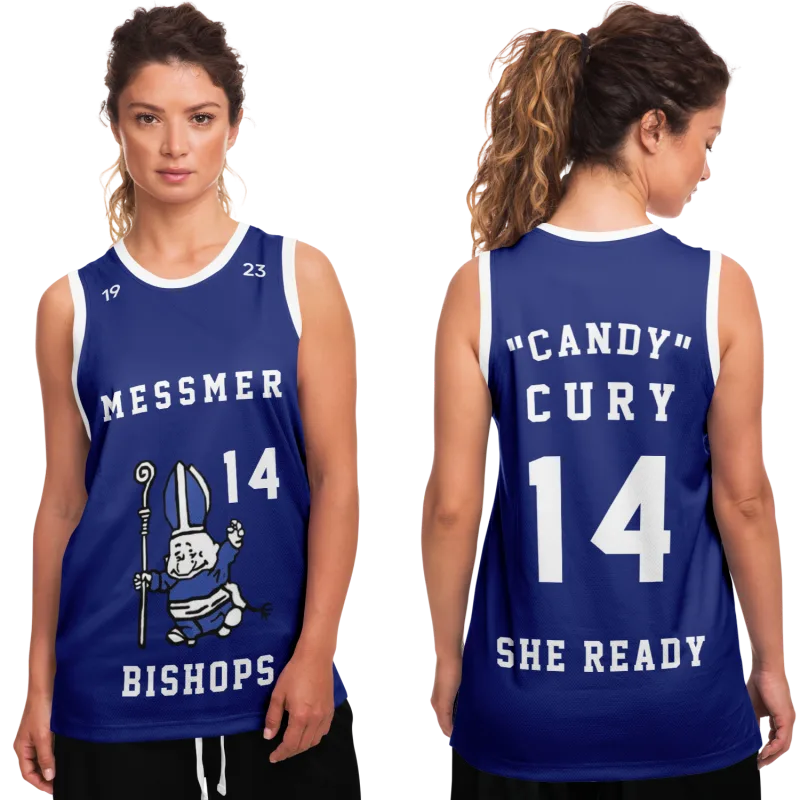

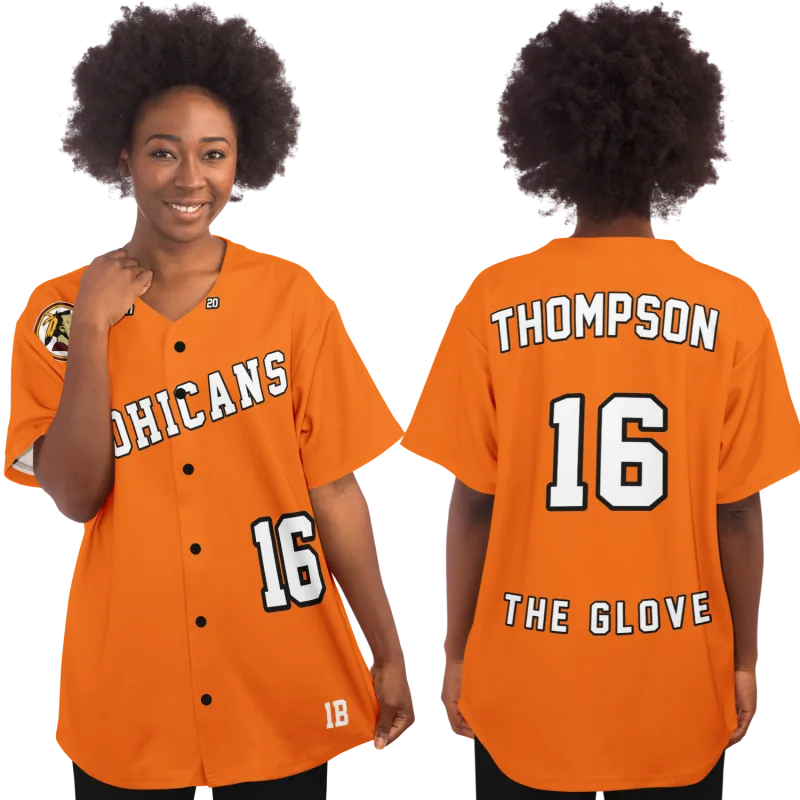
There's a particular kind of sadness that arrives sometime in late summer — the August before senior year ends, or the spring afternoon the final buzzer sounds on your last game. You don't always recognize it right away. It hides behind the noise of graduation and college plans and everyone telling you that real life is just beginning.
But underneath all of that, quiet and persistent, is the grief of losing high school sports. And for most former athletes, it goes completely unacknowledged — by coaches, by parents, by the culture at large — because the assumption is that high school sports are just a warm-up. A rehearsal. Not the thing itself.
For millions of people, they were absolutely the thing itself.
This article is for those people. Not the ones who went on to play in college or turned professional. The ones for whom the final game really was the final game — and who have carried something unresolved ever since.
When the Season Ends and You Don't Know Who You Are Anymore
Most psychological writing about athletic identity loss focuses on professional or collegiate athletes. The research, the counselors, the magazine features — they're almost all aimed at people whose careers ended publicly, with press coverage and transition programs and sports psychologists on retainer.
High school athletes get none of that infrastructure. And yet the identity loss is structurally identical.
Sports psychology research published by the American Psychological Association has documented what practitioners call "athletic identity" — the degree to which a person defines themselves through their role as an athlete. For many high school athletes, that identity doesn't form gradually. It forms suddenly, around age 13 or 14, when you make the team, when a coach sees something in you, when your name appears on the roster for the first time.
From that moment forward, your schedule is built around practice. Your social world is built around teammates. Your sense of personal value is built around performance. Your body carries a role. Your jersey carries your name.

And then, at 17 or 18 years old, it ends.
Not because you failed. Not because you were cut. Because time moved. Because the season finished. Because graduation happened. The thing that organized your entire adolescence simply stopped.
The identity loss after sports at the high school level is acute precisely because it happens at the developmental stage when identity is most fragile. You were still figuring out who you were — and the sport was doing most of that figuring for you.
What the Grief Actually Feels Like (And Why It's Hard to Name)
The reason so many former high school athletes struggle to articulate what they're experiencing is that grief has an expected script. Grief is supposed to follow a loss that other people recognize as a loss. A death. A divorce. A job ending.
Nobody sends condolence cards when your last game ends.
So the feeling sits without a name. It shows up as:
- A low-grade restlessness on Saturday mornings that used to mean game day
- Irritability during seasons — football season, basketball season, track season — when your body remembers what it used to be doing
- A specific hollowness when you drive past the field or the gym where you used to play
- The sensation, years later, of watching a high school athlete compete and feeling something closer to grief than to nostalgia
Life after sports depression is a documented phenomenon among former athletes at every level, but the high school version is particularly isolating because the cultural narrative dismisses it. "You were just playing high school sports" is the implied message. The word "just" does enormous damage.
In our experience covering this community for years, the people who struggle most aren't the ones who pine for the glory — they're the ones who miss the structure, the belonging, and the daily confirmation that they were good at something that mattered.
Those aren't small losses. They're foundational losses.
The Three Things the Sport Was Actually Providing
When you try to understand why missing high school sports hits so hard, it helps to break down what the sport was actually giving you — because it was giving you more than competition:
A container for identity. Your number. Your position. Your team. These weren't accessories to who you were — they were the primary architecture of who you were during the most identity-forming years of your life.
A daily answer to the question "where do I belong?" Practice wasn't just training. It was a guaranteed social world, a place where you had a role, a place where showing up meant something. The loneliness that follows athletic life isn't just about missing the sport. It's about the sudden absence of that answer.
A legible way to measure yourself. Points scored. Times clocked. Innings pitched. Weight lifted. Athletes live inside a system of objective feedback. When that system disappears, the question of "am I doing well?" becomes much harder to answer — and for many former athletes, it never fully gets answered again in the same clean way.
The Grief Nobody Prepares You For
Danielle R., 34, played varsity soccer through her senior year in a small town in Ohio where Friday night games were a genuine community event. She was the starting center midfielder for three years. When it ended, she told us, she cried exactly once — in the car on the way home from the final game — and then didn't allow herself to cry about it again for roughly a decade. "I kept thinking it was embarrassing to miss high school soccer that much. Like, grow up. But it wasn't about the sport. It was about who I was when I played it. I was someone specific. I had a purpose every single day."
That's the emotional logic underneath the grief of losing high school sports: the sport wasn't just an activity. It was the organizing principle of an entire self.
And here is what makes it especially hard to grieve: the loss arrives at the exact moment when everyone around you is celebrating. Graduation is framed as victory. Moving forward is framed as progress. Grieving the thing you're leaving behind — the locker room, the team bus, the smell of the gym before a home game — feels like a failure of gratitude.
So most former athletes pack it down. They go to college or they go to work. They make new friends. They tell themselves it was just high school. And somewhere underneath all of that, an 18-year-old version of themselves is still standing in a locker room after the final buzzer, not quite ready to take the jersey off.
What Psychological Research Actually Says About This
The framework that most accurately describes what former high school athletes experience is called role exit theory — first developed by sociologist Helen Rose Ebaugh to describe the process of leaving a primary social role. Athletes, along with clergy who leave ministry and military personnel returning to civilian life, are among the populations for whom role exit is most psychologically disruptive.
The disruption is proportional to the centrality of the role. And for high school athletes, especially those who played a varsity sport for multiple years in communities where that identity was publicly recognized and valued, the role was extremely central.
What role exit theory identifies — and what makes the high school version particularly complex — is the phenomenon of the residual identity. Even after the role is gone, the internal sense of "I am an athlete" persists. This is why former high school athletes who are now in their 30s and 40s will still introduce themselves in relation to the sport they played. Why the sight of a specific jersey number still produces a physical response. Why some people, two decades later, still miss playing high school sports with an ache that surprises them.
The residual identity isn't a pathology. It's evidence of how real the identity was. The grief is proportional to the authenticity of what was lost — and it feeds on the 'what if' of what could have been.
What Healthy Processing Actually Looks Like
There is no tidy five-stage model for this particular grief. But there are recognizable movements that former athletes describe when they talk about coping with the end of a high school athletic career and finding genuine peace with the transition:
-
Naming the loss for what it is. Not "I used to play sports" but "I lost something real, and it mattered, and I'm allowed to grieve it." The naming is surprisingly powerful. Most former athletes have never once said the word "grief" in relation to their sport ending.
-
Separating the identity from the activity. The goal isn't to stop being "an athlete" — it's to understand that the qualities that made you an athlete (discipline, competitiveness, commitment to a team, physical engagement with the world) are portable. They moved with you. They're still there. The sport was the container; you are what was in it.
-
Finding a physical form of memory. This sounds small. It isn't. Former athletes who maintain a physical connection to their sport — even symbolically — report lower rates of identity diffusion and higher overall life satisfaction. The body remembers what the mind tries to minimize.
-
Allowing the nostalgia without weaponizing it. There's a difference between honoring the past and using the past as evidence that the present is inadequate. The former is healthy integration. The latter is the loop that keeps former athletes stuck. Nostalgia is not the problem. Shame about feeling nostalgic is.
The Jersey and What It Carries
Here is something that former high school athletes tell us, often with slight embarrassment: they still think about their jersey.
Not in a desperate way. Not in a way that suggests they haven't moved on. But in the way that specific objects carry specific meaning — the way a smell can return you to a moment with complete fidelity, or a photograph holds something that cannot be described, only felt.
The jersey is not memorabilia. It's a record of a self that existed and was real and accomplished things that mattered. Your name on the back. Your number. Your team's colors. These are not trivial aesthetic choices. They were, for the years you wore them, the most legible external expression of who you were.
Many former athletes never had a copy. The school kept the uniform. The season ended and with it went the jersey. And something that deserved to be preserved — a concrete artifact of an identity that deserved to be honored — simply disappeared.
Your jersey is still out there waiting.
Design yours in minutes and see your name and number exactly the way you remember it.
Frequently Asked Questions
Is it normal to still grieve losing high school sports years — or even decades — later?
Yes. What you're experiencing has a name in psychology: residual athletic identity. The role of athlete was central enough to your sense of self during adolescence that its ending constitutes a genuine loss — and genuine losses don't expire on a culturally acceptable schedule. Former athletes commonly report that the grief resurfaces during specific triggers: watching a sport they played, driving past their old school, or attending a younger family member's game. This isn't a failure to move on. It's evidence of how real the identity was.
What's the difference between nostalgia and grief in this context?
Nostalgia is a warm, largely positive emotional experience of remembering the past. It acknowledges that something good existed. Grief is the specific pain of absence — the felt experience of something being gone. Former athletes often experience both simultaneously, which is confusing. The distinction that matters most clinically: if the memories produce primarily warmth and gratitude, that's nostalgia. If they produce a recurring ache or a sense of incompleteness in the present, that's grief. Both are normal. Only the grief requires active processing.
Is life after sports depression a real clinical concern, or just adjustment?
It exists on a spectrum. For most former athletes, what they experience is a significant but sub-clinical period of adjustment — low mood, reduced motivation, and identity confusion that resolves as they build new sources of meaning and belonging. For a smaller percentage, particularly those for whom athletic identity was extremely dominant and who lacked other strong identity anchors, the transition can tip into clinical depression. If what you're experiencing involves persistent hopelessness, significant disruption to daily functioning, or loss of pleasure in all activities (not just sport-related ones), speaking with a mental health professional who has experience with athlete transitions is genuinely worthwhile — not because you're broken, but because you deserve the same support that professional athletes receive as a matter of course.
How do I explain this grief to people who didn't play sports?
The most effective frame is this: imagine if the social world, physical identity, daily schedule, and primary source of personal meaning that organized your entire adolescence simply ended on a specific Tuesday in May — and everyone around you celebrated the ending as a beginning. The loss of high school sports isn't about missing a hobby. It's about the sudden absence of the entire scaffolding that your sense of self was built on during the most identity-formative years of your life. For people who played recreational sports occasionally, this can be hard to grasp. For people who were deeply embedded in a team culture for three or four years during high school, it requires no explanation at all.
See also: grieving the end of your athletic career | what happens to your athletic identity after high school ends | why high school sports still matter so much to adults | what happened to athletes who never got a scholarship